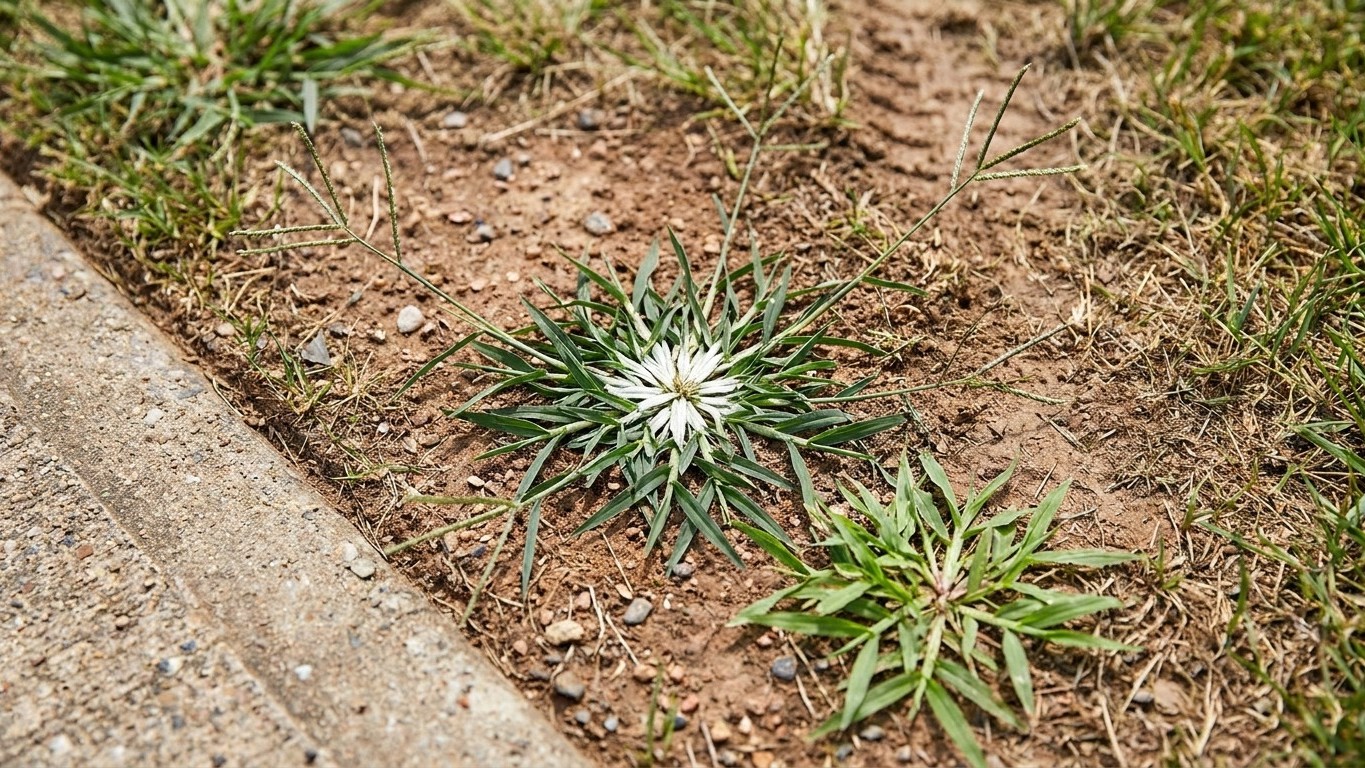

In Kansas, the best window to overseed a cool-season lawn (tall fescue or Kentucky bluegrass) runs from mid-August through mid-September, timed backward from the region’s first fall frost. Warm-season lawns (zoysia or bermuda) overseed in late spring instead, once soil has warmed. Which window applies depends entirely on what’s already growing in your yard.
The overseeding window in Kansas
Kansas sits in what turf specialists call the transition zone, a band of the country where neither cool-season nor warm-season grass thrives without some compromise. That single fact is why there’s no one answer to “when should I overseed” here. A tall fescue lawn and a zoysiagrass lawn need seed at opposite ends of the calendar.
For cool-season lawns, the fall window matters more than the spring one. Turfgrass guidance from Clemson Cooperative Extension and Penn State Extension points to roughly 45 days of active growing weather before the first fall freeze as the minimum a new seedling needs to root deeply enough to survive winter. Work backward from your first freeze date and that 45-day cushion lands you in mid-August to mid-September for most of the state.
The freeze date itself is where things get local. NOAA’s 1991-2020 climate normals put the first fall frost at one reference weather station between October 23 and November 2. That’s a single airport station’s data, not a statewide promise. Suburban yards and rural properties, especially anything sitting in a low spot or away from a city’s heat, tend to see that first frost land one to two weeks earlier than an airport reading. Elevation pushes it earlier still. Before you pick a sowing date, check your own county’s extension office or a nearby weather station rather than assuming the reference date applies to your yard.
Spring is the fallback window for cool-season seed, and the only real window for warm-season grasses like zoysia and bermuda. Those species stay dormant and brown from roughly October through April, then need consistently warm soil, not just warm air, before they’ll germinate. That’s a late spring project, not an early one.
The trade-off worth sitting with before you choose a species at all: a cool-season lawn in Kansas struggles through July heat, going patchy or dormant when temperatures spike, while a warm-season lawn spends five or six months of the year brown and dormant. Neither is a clean win. Overseeding timing is really a decision about which flaw you’re willing to live with.
The soil temperature that actually decides it
Calendar dates are a guess. Soil temperature is the actual trigger seed responds to, and it’s worth measuring rather than assuming. Cool-season seed, tall fescue and Kentucky bluegrass, germinates reliably once soil temperature sits between 50 and 65°F. Warm-season seed, zoysiagrass and bermudagrass, needs the soil considerably warmer, between 65 and 70°F, before it will sprout at all.
The catch is that soil doesn’t track air temperature in real time. It lags behind by days or weeks, warming slowly in spring and cooling slowly in fall because dirt holds heat longer than air does. A warm afternoon in early September doesn’t mean the soil four inches down has caught up. The only way to know for certain is to check it directly: push a soil thermometer two to four inches into the ground, away from direct sun, and take the reading in the morning before the day heats things up.
This is why the mid-August to mid-September fall window for cool-season grass works as a range and not a fixed date. Early in that window, Kansas soil is often still too warm, sitting above 65°F and better suited to weed germination than fescue. Wait too long and you risk running short on the 45 days of growing weather the seedling needs before frost. The sweet spot is the point where soil has cooled into the 50-65°F band with enough of the growing season left to establish.
Spring sowing works the same way in reverse. Warm-season grass seed sitting in soil that hasn’t yet cleared 65°F will simply sit there, vulnerable to rot and to birds, doing nothing until conditions catch up. Testing the soil costs a few dollars for a probe thermometer and removes the guesswork that a calendar alone can’t answer.
How much seed, and what it costs to guess
Seeding rates are one of the few numbers in lawn care that don’t shift by region, since they’re set by the seed’s own germination biology rather than local climate. What does shift is whether you’re building a lawn from bare dirt or thickening one that already has grass in it, and that distinction cuts the rate in half.
| Grass | New lawn rate (per 1,000 sq ft) | Overseeding rate (existing lawn) |
|---|---|---|
| Tall Fescue | 6 to 8 lb | 3 to 4 lb |
| Kentucky Bluegrass | 1.5 to 2 lb | 0.75 to 1 lb |
| Perennial Ryegrass | 6 to 8 lb | 3 to 4 lb |
| Zoysiagrass | 1 to 2 lb | 0.5 to 1 lb |
| Bermudagrass | 1 to 2 lb | 0.5 to 1 lb |
Those full rates, sourced from Clemson Cooperative Extension and Penn State Extension turfgrass guidance, are meant for a lawn started from scratch, where every seed is competing against bare soil rather than established turf. Overseeding an existing lawn only needs half that rate, since the grass already growing there is doing some of the coverage work.
Guessing high doesn’t buy insurance, it buys a worse lawn. Seedlings packed too tightly compete for the same light, water, and root space, and the stand thins itself out over the following year regardless of how much seed went down. Guessing low leaves bare patches that weeds fill before turf can, which is a slower and more expensive problem to fix than simply weighing out seed correctly the first time. A kitchen scale and the square footage of the area you’re covering (measured, not estimated by eye) gets you closer to the right number than any bag’s suggested handful.
The three weeks after you sow
Seed down is the easy part. What happens in the following three weeks decides whether that 45-day growing window before frost actually produces a lawn or just a thin, patchy attempt at one.
Germination itself, the point where seed cracks and sends up a first blade, happens within the first one to three weeks for most cool-season species once soil temperature sits in the right range. Until that happens, the top inch of soil needs to stay consistently damp, since a seed that dries out mid-germination doesn’t get a second chance. That usually means light, frequent watering rather than one deep soak, adjusted for whatever rain Kansas weather actually delivers that week.
Foot traffic is the other threat. New grass has no root depth to speak of for the first several weeks, and mowers, dogs, and kids running across a freshly seeded patch can tear seedlings out before they’ve anchored. Keeping the area off-limits, even with a temporary stake-and-string barrier, matters more than most people assume.
Mowing should wait until the new grass has reached roughly a third taller than its normal mowing height, then be cut back down gradually rather than scalped in one pass. That first mow also signals the seedling has rooted enough to tolerate some stress, which is a reasonable point to ease up on daily watering in favor of deeper, less frequent sessions.
All of this needs to happen inside the growing window that’s left before frost. Sow in early September and you’ve got roughly six or seven weeks before that reference frost date arrives, which covers germination and early rooting with some margin. Sow in late September, closer to the edge of the recommended window, and there’s less room for a slow-germinating patch or a cold spell to throw things off. Kansas State Research and Extension can help pin down realistic dates for your specific county at ksre.k-state.edu.
Common questions
Can I overseed a warm-season lawn in fall in Kansas?
No. Zoysiagrass and bermudagrass need soil at 65 to 70°F to germinate, and Kansas soil is cooling through that range in fall, not warming into it. Overseed warm-season grass in late spring instead, once soil has reliably cleared that threshold.
What happens if I sow cool-season seed too late in fall?
Seed sown too close to the first fall freeze may still germinate, but the seedling won’t have built enough root depth to survive winter cold, and it typically dies over the dormant season. That’s why working backward from your local frost date, with the roughly 45-day cushion turf extension guidance recommends, matters more than picking a date off a generic calendar.
Why does my neighbor’s lawn look different from mine if we’re both in Kansas?
Kansas spans a transition zone where both cool-season and warm-season lawns are common, and each behaves differently through the year. A fescue lawn stays green into winter but struggles in July heat; a zoysia or bermuda lawn handles summer heat well but goes brown from roughly October through April.
How do I find the actual first frost date for my property, not just the regional average?
The October 23 to November 2 window comes from one reference weather station’s 1991-2020 climate data, and rural or low-lying properties often see frost one to two weeks earlier than that station records. Checking with your county extension office, linked through Kansas State Research and Extension, is the most reliable way to get a number specific to your land.