
Wisconsin gardeners can grow a full range of culinary herbs outdoors from mid-spring through mid-fall, with the growing window running close to six months in the southern counties and considerably less near Lake Superior. The real planning question isn’t when to start, though. It’s which herbs survive the winter as permanent plants and which need to come inside as pots. That single fact, tied to the state’s hardiness zone, shapes the whole herb bed more than any calendar date does.
When the soil is warm enough in Wisconsin
Every herb grower here eventually asks the same question: when is it safe to plant? NOAA’s 1991-2020 Climate Normals, drawn from station USW00014839, put the last spring frost somewhere between April 16 and April 29. That’s a 30-70% probability band, not a fixed date, and it’s worth sitting with that distinction for a moment. A frost date tells you the odds of freezing air on a given day. It says nothing about the ground itself.
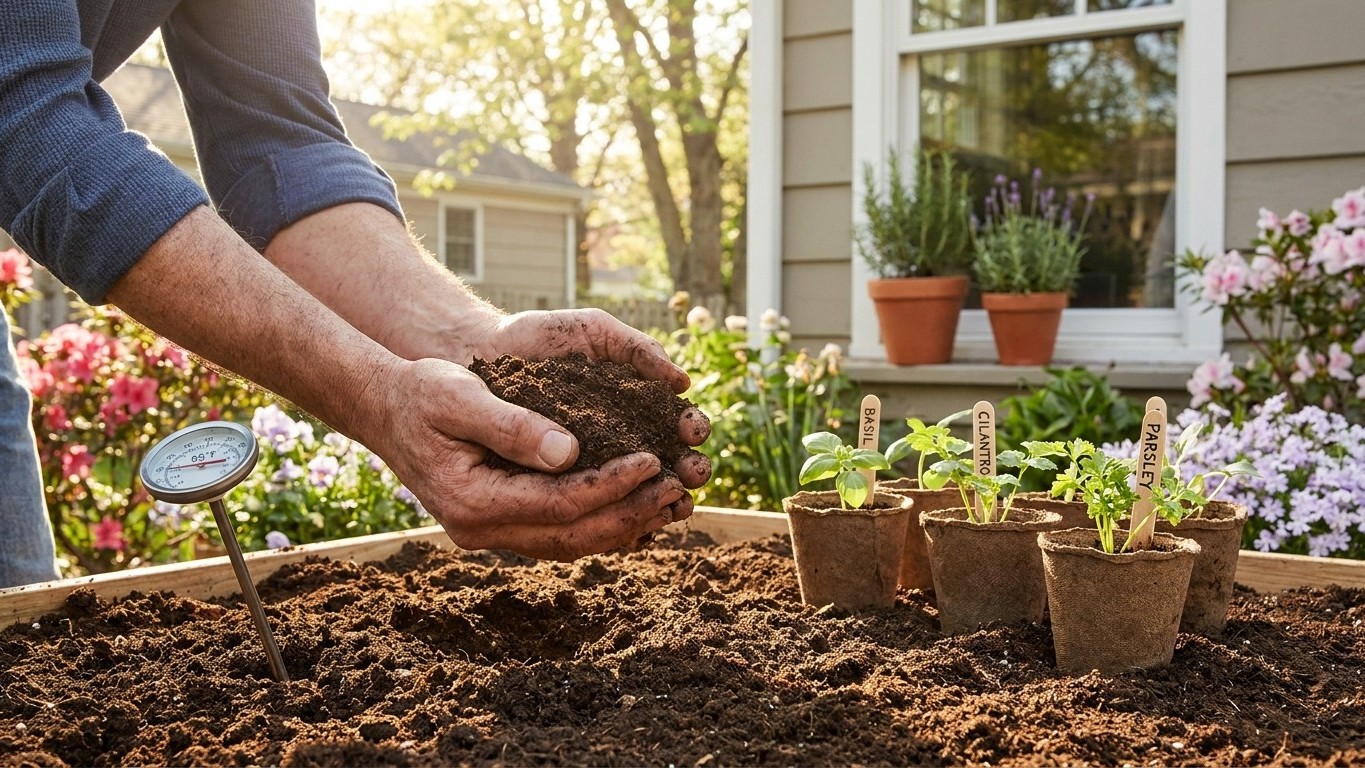
Soil warms slower than air. Even after the last freeze has passed and the thermometer reads comfortably above 50F in the afternoon, the top few inches of dirt can still be cold enough to stall a young herb’s roots. Basil planted into 55F soil will sit and sulk for two weeks rather than grow. Parsley and chives tolerate cooler ground and can go in earlier, sometimes weeks ahead of the frost-free window, because they’re built for cool starts. The gap between “frost is over” and “soil is ready” is exactly where a lot of transplants get set back before they’ve had a chance to establish.
Treat the April 16 to April 29 window as a planning range, not a guarantee. Some years the last freeze lands well before that band; other years it slips later, especially inland away from any moderating water. A frost date is a probability, not a promise, and no calendar substitutes for checking a soil thermometer before setting out anything tender.
This distinction matters more for herbs than for a lot of garden vegetables, because many culinary herbs, basil especially, are true heat lovers that stop dead in cold soil. Others, like the hardier perennial types, don’t care nearly as much and can go into the ground as soon as it can be worked. Sorting herbs by that tolerance, rather than treating them as one group with one planting date, avoids the most common early-season mistake in a Wisconsin herb bed.
None of this touches on medicinal reputations some herbs carry. A few culinary herbs are also known for traditional health uses; this page doesn’t evaluate those claims one way or the other, and the planting advice here is strictly about getting a plant established in the ground.
How long the season lasts here
Subtract the two frost windows and Wisconsin’s frost-free season runs roughly 171 to 196 days, depending on where in each band a given year lands and where in the state you’re gardening. That’s the stretch between the last spring frost (April 16 to April 29) and the first fall frost (October 17 to October 29), both drawn from the same NOAA station. Call it five and a half to six and a half months of open-air growing, which is a genuinely workable window for herbs, most of which mature far faster than that.
That length changes what’s worth doing mid-season. A six-month window leaves room for a second sowing of quick annual herbs like cilantro or dill after the first planting bolts or gets harvested hard in July. A shorter window, closer to the 171-day end of the range, makes the first sowing the only realistic one for slower annuals, and it tips the balance toward starting transplants indoors rather than direct-seeding, since every week saved at the front end matters more when the back end arrives sooner.
The length of the season also decides whether transplanting is worth the extra step of checking a seedling’s roots before it goes in the ground. In a long season, a root-bound start still has time to recover and produce. In a short one, that early stress can eat into the only harvest window available, which argues for starting herbs from smaller, fresher transplants or direct-seeding species that resent root disturbance in the first place.
One caution worth flagging: the fall frost date shifts noticeably depending on proximity to Lake Michigan. The lakeshore gets a real delay in first freeze thanks to the lake’s moderating effect, while inland southern Wisconsin typically sees its first freeze in early October, and the northern part of the state considerably earlier than that. Anyone gardening near the shoreline can reasonably expect extra weeks at the tail end of the season that an inland garden thirty miles away won’t get.
Gardeners working with the shorter end of that window, or planning a second round of quick herbs, will find more detail on timing a follow-up planting in this site’s succession sowing guide.
Heat and water in Wisconsin
Wisconsin summers are humid continental rather than scorching, and for herbs that fact matters less than what happens six months later. The number that actually organizes a Wisconsin herb bed isn’t a summer heat count at all. It’s the coldest month’s average daily minimum, which sits at 17.2F at the Milwaukee reference station, and the state’s hardiness zone range of 3b to 6a on the USDA Plant Hardiness Zone Map.
That zone range is wide, and it’s a territory-wide figure, not a single number. Milwaukee, on the warmer end near Lake Michigan, gardens quite differently in winter than a spot in the northern part of the state on the colder end of that range. Anyone making a planting decision based on hardiness zone should check where their specific location falls rather than treating “Wisconsin” as one climate.
What that cold does is separate herbs into two very different categories. Species rated hardy down into the 3b-6a range, things in the mint, chive, oregano, and thyme family among others, can survive a Wisconsin winter in the ground and come back the following spring as permanent plants. Species that aren’t rated for cold anywhere near 17.2F average minimums simply won’t make it through an unprotected winter here. For those, the practical answer is a container that comes indoors before the first hard freeze, not a spot in the permanent bed.
Summer itself brings a different set of concerns for herbs than for a hot, arid climate. Where a desert-region garden worries about scorch and drought stress, a humid continental summer like Wisconsin’s tends toward the opposite problem: moisture that lingers on leaves, slower ripening on sun-loving herbs that want more consistent heat than they get, and fungal issues like powdery mildew showing up on crowded plantings. Airflow between plants and morning watering that lets foliage dry by afternoon do more good here than shade cloth or heat mitigation ever would.
The upshot is that a Wisconsin herb bed gets planned around two different seasons pulling in two different directions: a manageable, moderately humid growing season that rewards good spacing and drainage, and a genuinely hard winter that decides which of those same plants get to stay in the ground at all.
Which herbs suit Wisconsin
Sort Wisconsin’s herb options by two questions rather than by name: does this plant tolerate the coldest month here, and does it need help staying dry in a humid summer? That framework does more useful work than any list of specific varieties could.
Hardy perennial types, the ones rated for winters at or below that 17.2F average minimum, are the closest thing to low-maintenance in this climate. Chives, oregano, thyme, and hardy mint species generally fall into this group and can be planted once and left to return year after year, provided they’re sited somewhere with decent drainage so winter wet doesn’t rot the crown. Sage often survives here too, though it benefits from a sheltered spot given the colder end of the state’s zone range.
Tender perennials are the opposite case. Rosemary, bay laurel, and similarly frost-sensitive types are commonly grown as perennials in warmer climates but won’t survive a Wisconsin winter in open ground anywhere in the state. The practical move is treating them as container plants that spend summer outdoors and winter on a bright indoor windowsill, which sidesteps the hardiness problem entirely rather than fighting it.
Fast annual herbs, basil, cilantro, dill, and their relatives, fit the season length discussed above. They germinate, mature, and finish within a single Wisconsin summer with room to spare, and a longer local season allows a second sowing where the first bolts early. Given the humid summer conditions, disease resistance and airflow matter more for this group than for the hardy perennials; basil in particular benefits from generous spacing to avoid the fungal problems that crowded, damp foliage invites.
| Herb type | Winter behavior in Wisconsin | Main season priority |
|---|---|---|
| Hardy perennial (chives, oregano, thyme, mint) | Survives in ground, returns yearly | Good drainage over winter |
| Tender perennial (rosemary, bay laurel) | Does not survive outdoor winter | Container culture, bring indoors |
| Fast annual (basil, cilantro, dill) | Not applicable, replanted yearly | Airflow and spacing against mildew |
None of this is a substitute for what a state extension service actually knows about local performance. Wisconsin’s herb varieties get trialled under real local conditions by the University of Wisconsin-Madison Extension, whose growing recommendations reflect this state’s soils and seasons in a way a general guide never can. That’s the resource worth checking, at extension.wisc.edu, before settling on specific varieties for a given county. Naming a cultivar here would mean guessing at something the extension service has actually tested, and that’s not a trade worth making.