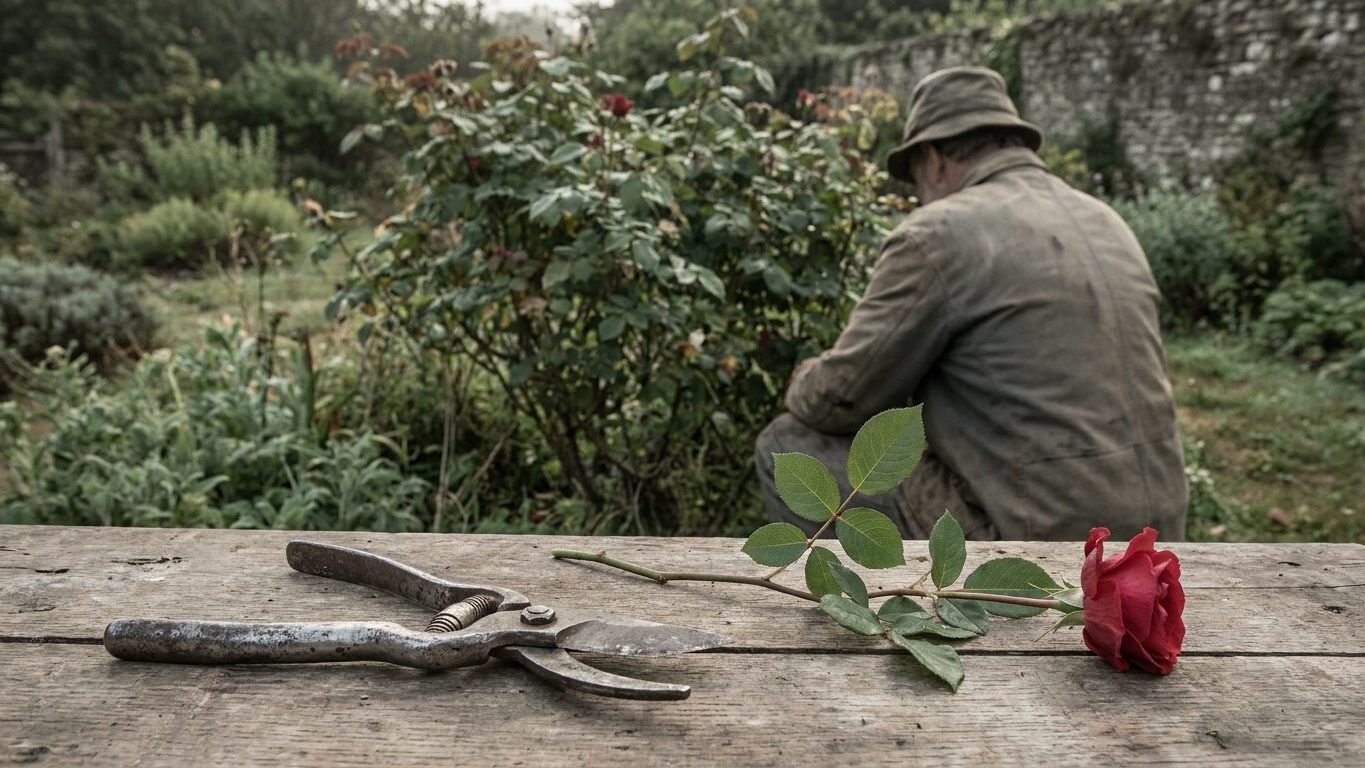

The right moment to cut a rose for a vase is not a date on the calendar but a stage on the stem: cut in the cool of the morning, once the sepals have folded back and the first one or two petals are starting to unfurl. Wait for full color and the stem sacrifices most of its vase life before it ever reaches the table.
Why this matters
Every cut you make on a rose triggers the same response as Deadheading: the plant pushes a new shoot from the leaf axil just below the cut. That is the mechanism, not some signal from the flower itself, so where and how you cut decides what grows back and how fast. A clean cut above a healthy five-leaflet leaf gives the plant a strong point to regrow from; a ragged cut or one made too low forces the plant to recover from a weaker spot.
Skip the timing and the stage, and the flower pays for it twice. A bud cut too tight, before the sepals have reflexed, often never opens at all in the vase because it lacks the reserves to finish unfolding once separated from the roots. A bloom cut fully open has already spent most of its life on the bush, so it collapses within a day or two indoors. Roses are rated HIGH maintenance for a reason, and cutting at the wrong stage is one of the fastest ways to waste a bloom the plant worked all season to produce.
When to do it
Forget the date and read the bud. The stage to watch for is the sepals folding back away from the petals, with the very outer one or two petals just starting to loosen and show color. On most repeat-flowering types this happens gradually over a day or two once the bud has fully colored, so checking the plant each morning matters more than any fixed schedule.
Cut only from stems that have hardened, never from soft new growth that has not ripened, since a soft stem wilts almost as fast indoors as it would on the plant in a heat wave. Watch, too, for Japanese beetle and rose chafer activity nearby; both feed directly on open blooms and can shred petals in the window between color break and full opening, so a bud you were saving for the vase can be ruined overnight. As the season winds down and day length shortens, ease off on cutting: every cut still pushes new growth, and soft late shoots that have no time to ripen before cold weather are a liability the plant does not need. Exact stop dates depend on your zone; the state-level page for your region covers that timing.
How to do it
Start with a clean bypass pruner or a dedicated pair of floral snips, wiped down with rubbing alcohol between plants if you are cutting from more than one bush. A dull or dirty blade crushes the stem tissue instead of slicing it, and crushed vessels take up water poorly no matter what you do afterward.
Work in the cool of the morning, when the stem is fully hydrated and turgid from the overnight hours. Bring a bucket of water out to the garden rather than carrying cut stems around in dry air; every minute a fresh cut sits exposed lets air into the water-conducting tissue, and that air pocket is what causes a rose to wilt hours later even in a full vase.
Choose your stem by the bud stage described above, then look down the stem for a leaf with five leaflets facing outward, away from the center of the plant. Cut at a 45-degree angle about a quarter inch above that leaf. The angled cut sheds water instead of pooling it against the cut surface, and cutting above an outward-facing leaf directs the next shoot away from the plant’s crowded center. Leave at least two sets of leaves below your cut on the remaining stem so the plant still has enough foliage to keep photosynthesizing and recover well.
Handle the stem by the leaves or gloved hand rather than gripping it bare-fingered: the sharp structures along a rose stem are prickles, not true thorns, growing from the outer skin of the stem rather than from the wood itself, but they still snap off sideways into skin easily enough to draw blood. Strip any leaves that would sit below the waterline in your vase, since submerged foliage rots quickly and fouls the water. Once inside, recut each stem underwater or immediately before placing it in the vase, removing another half inch, and use lukewarm water rather than cold, which the stem takes up faster.
| Bud stage | What it looks like | Vase outcome |
|---|---|---|
| Too tight | Sepals still clasped over the bud, no color break | Often never opens |
| Just right | Sepals folded back, color showing, one or two petals unfurling | Opens fully, longest vase life |
| Too open | Bloom already flat or reflexed on the bush | Collapses within a day or two |
What goes wrong
The most common failure is simple impatience: cutting a bloom that already looks perfect on the bush, not realizing it has already spent most of its usable life outdoors. The opposite mistake, cutting too tight in hopes of a longer-lasting bud, backfires just as often, leaving a green, closed knot that never opens indoors.
Cutting in the heat of the afternoon rather than the morning is a mistake that looks like it should not matter but does; a stem cut when the plant is already under moisture stress from midday sun wilts within the hour, before it ever reaches water. Leaving a cut stem out of water even briefly does similar damage by letting air into the stem’s vascular tissue, which then blocks water uptake for good.
The error that looks like extra care but is not: cutting unusually long stems for a dramatic arrangement, taking far more wood than the bloom needed. On a climber that flowers from new wood this mostly just costs the plant some leaf area, but on a rambler, which flowers from old wood, removing a long length of cane can mean cutting away the very wood that would have carried next year’s flowers. A long stem looks generous in the vase; on the plant it can be a pruning cut in disguise, made at the wrong time of year for the wrong reason.
Doing it differently
Container-grown roses have a smaller root volume and fewer total stems to draw on, so cutting sparingly matters more than it does for an established shrub in the ground; taking one or two stems at a time rather than a full armload keeps the plant from being set back. Greenhouse growers benefit from a more consistent bud stage across the crop, since temperature and light are controlled, which widens the practical cutting window compared with an outdoor bed at the mercy of weather.
Variety matters as much as growing method. Hybrid tea roses are bred for the long, single-stemmed bloom that suits a vase best, while floribunda and miniature types produce clusters, so it often makes more sense to cut the whole spray once the first bloom in it reaches the right stage rather than picking individual flowers apart. Climbing roses, flowering from new wood, tolerate a longer cut with less consequence than ramblers, which flower from old wood and reward restraint. Old garden roses and rugosas that bloom once a season have a narrower cutting window than repeat bloomers, so missing the stage on those means waiting until next year rather than next flush.
Common questions
Are rose thorns dangerous?
They are prickles, not true thorns. They grow from the outer skin of the stem rather than from the wood, which is why they can be rubbed off, but they still snap off sideways into skin easily and can cause a scratch or puncture worth cleaning.
What is the best time of day to cut roses?
Early morning, while the stem is still fully hydrated from the cool overnight hours. Cutting in the heat of the afternoon, when the plant is under moisture stress, shortens vase life before the stem ever reaches water.
Can you cut roses from own-root shrub types the same way as budded hybrid teas?
Yes, the bud-stage rule applies to both. The distinction between a budded rose and an own-root shrub matters for winter protection, since a budded rose is protecting the graft union and an own-root plant is protecting the crown, but it has no bearing on when a flower is ready to cut for the vase.
Do rose hips affect when you should stop cutting?
No. Dormancy follows day length and cold, not the presence of hips. What does matter is that every cut, including a vase cut, pushes a new shoot, so continuing to cut late in the season can encourage soft growth that has no time to ripen before frost.