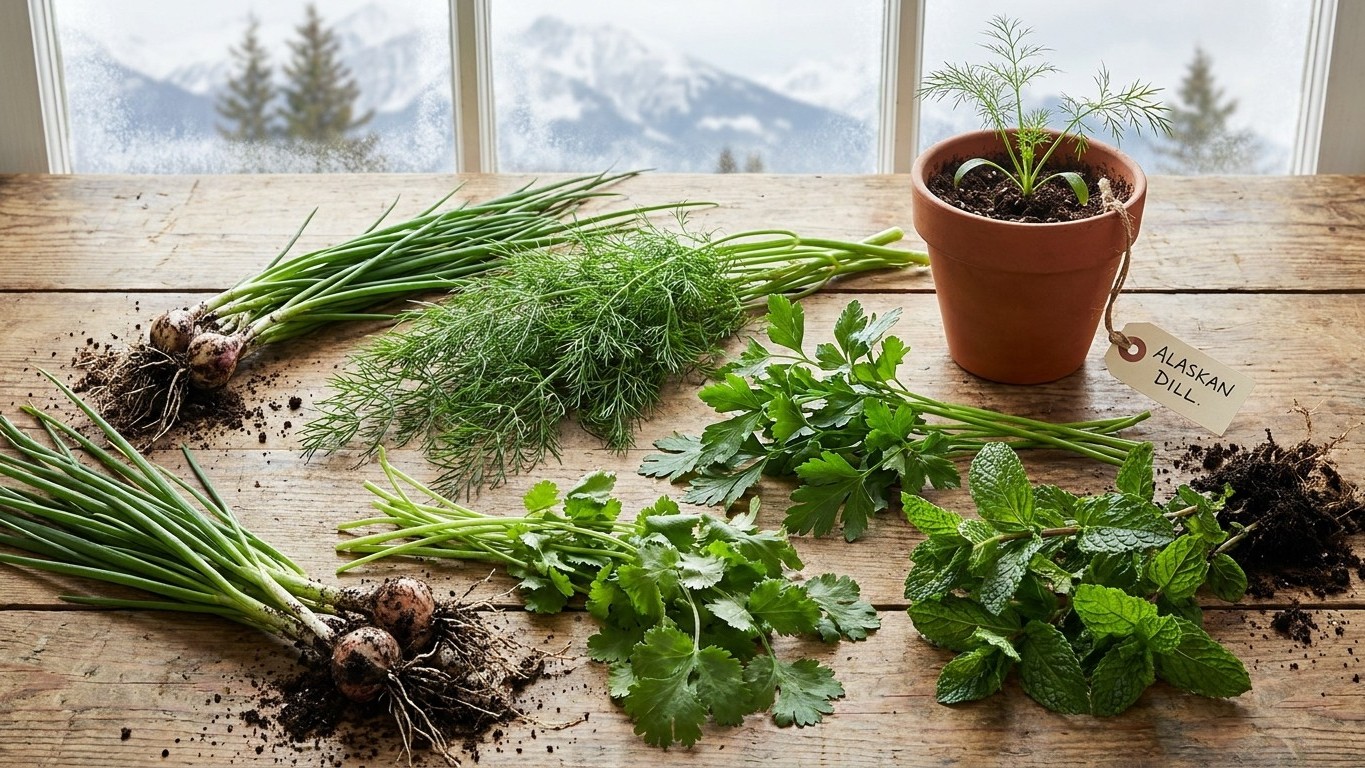

Nevada’s answer depends on elevation more than any other factor. In the low desert around Las Vegas, woody Mediterranean herbs like rosemary, thyme, sage, and oregano thrive because they tolerate heat and thin, alkaline soil. At altitude in Reno, Carson City, or the rural north, the growing season shortens dramatically and those same herbs need containers or winter protection, while quick annuals like dill and cilantro become the safer bet.
The short answer for Nevada
Nevada’s official hardiness range runs from 4a to 10a on the USDA Plant Hardiness Zone Map, a spread built entirely on one measurement: the average coldest temperature a location experiences in a typical winter. That’s an enormous range for one state, and it means there is no single “best herb list” that applies from Elko to Las Vegas. What the reference station data does tell us is how mild the low desert gets in winter: at the Las Vegas airport, the coldest month averages a minimum of 39.6°F. That’s mild enough for woody perennial herbs to hold their leaves through winter without dying back, which is exactly why rosemary and bay laurel behave almost like year-round shrubs in that part of the state.
For anyone gardening in that warm, low-elevation band, the decision by type is straightforward. Woody, drought-tolerant Mediterranean herbs, rosemary, thyme, sage, oregano, lavender, are built for exactly this kind of climate: hot, dry, sun-blasted, with soil that drains fast and rarely stays wet. They evolved on rocky hillsides around the Mediterranean basin, which is functionally similar to a lot of Nevada’s desert floor. Annual herbs that like consistent moisture and moderate heat, basil, cilantro, parsley, dill, still grow well here, but they need more attention: afternoon shade in the hottest months, and soil that doesn’t dry out between waterings.
Higher up, the calculus changes. At elevation, the season is shorter and the winter minimum is colder than anything the Las Vegas reference number describes. Rosemary that overwinters outdoors in the valley may need to come inside or into a greenhouse in Carson City. Fast annuals, cilantro, dill, chives, become more attractive precisely because they finish their life cycle before an early frost can end it. County-level frost data for the north or for mountain valleys is best taken from a local source, not from a statewide average.
The honest short answer, then, is a decision tree rather than a list: if you’re gardening in the hot low desert, lean woody and drought-tolerant; if you’re gardening at altitude or in the north, lean fast-maturing annuals and treat perennial herbs as container plants you can move.
What will not work here

Nevada is the driest state in the country, and that single fact eliminates a whole category of herbs before you even get to temperature. Herbs that want consistently moist soil, chervil, some mints, and most herbs bred for humid coastal climates, struggle in a state where humidity routinely sits in the single digits during summer afternoons. Watering once a week, a schedule that works fine in much of the Midwest or Southeast, simply doesn’t keep pace with evaporation here. Container herbs in particular can dry out completely within a day or two once summer heat sets in, and a once-weekly watering habit will kill thirstier herbs like basil long before they bolt from heat alone.
Humidity-loving herbs face a second problem beyond thirst: low humidity air pulls moisture out of leaf tissue directly, not just out of the soil. Herbs with soft, broad leaves and no waxy coating, like some basil varieties, can scorch at the edges even when the roots have plenty of water, simply because the air itself is drawing moisture out faster than the plant can replace it. Tighter, needle-like or fuzzy-leafed herbs, thyme, rosemary, sage, lavender, handle this far better because their leaf structure is built to resist water loss.
Short season is the second failure point, and it’s specific to the northern and higher-elevation parts of the state. A herb that needs a long, warm stretch to mature, some slower-growing basil varieties, or herbs typically grown as biennials, can simply run out of season before first frost arrives in places where winter closes in early. The reference frost dates come only from the Las Vegas airport, an extreme desert heat-island location that freezes far later in fall and thaws far earlier in spring than almost anywhere else in Nevada. Using those dates to plan a garden in Reno, Carson City, or rural Nevada would be a mistake; the real local window is likely months different in both directions.
Close spacing is the third trap, though it runs opposite to what gardeners coming from humid states expect. In a humid climate, tight spacing invites fungal disease. In Nevada’s dry air, that specific risk is lower, but tight spacing still causes problems by concentrating shade and blocking airflow around herbs that actually want as much sun and air movement as they can get. Crowding woody Mediterranean herbs together defeats the very thing that makes them good choices here: their tolerance for open, exposed, sun-baked ground.
What changes across Nevada
A hardiness range of 4a to 10a isn’t a detail, it’s the whole story of gardening in this state. Zone 4a means winters cold enough to kill many perennial herbs outright without protection. Zone 10a, at the opposite end, describes winters mild enough that frost-tender herbs can sometimes survive outdoors year-round. Those two zones exist within the same state’s borders, which means a statewide answer to “what’s the best herb” doesn’t really exist. There is no single Nevada growing season; there are several, layered by elevation.
Elevation is the mechanism behind that spread, more than latitude. Nevada is famously the most mountainous state outside of Alaska, and its valleys and basins sit at wildly different heights above sea level. A garden a few thousand feet higher than another, even within the same county, can have a growing season weeks or months shorter. That’s why a gardener in the low desert around Las Vegas can treat rosemary as a permanent landscape shrub, while a gardener at altitude nearby might need to dig it up or move it into a greenhouse before the first hard freeze.
What should shift for a reader in the north or at altitude isn’t just plant choice, it’s expectation. Perennial herbs that behave as reliable, years-long plants in the low desert may need to be treated as annuals, or as containerized plants brought indoors, farther north or higher up. Annual herbs that would bolt and finish quickly in low-desert summer heat often perform better and longer in cooler, higher-elevation gardens, simply because the heat stress that pushes basil and cilantro to flower early arrives later, or not as severely.
Two properties a short drive apart can sit in different zones depending on elevation and local terrain. The only reliable way to know is to check the current USDA Plant Hardiness Zone Map directly for a specific address, rather than relying on a statewide range.
Where to check this for your own county
Nevada’s own extension network, run through the University of Nevada, Reno, is the source built to answer those questions: extension.unr.edu. Every land-grant university runs one of these services, and Nevada’s is the one calibrated to actual conditions here, not to national averages or to a single desert reference station.
Two things are worth looking for specifically once there. The first is a local planting calendar, ideally one built around the extension office serving your own county rather than a statewide document. Nevada’s counties span that same 4a to 10a range discussed above, and a planting calendar written for Clark County in the south will list dates that don’t apply in Washoe County or in the rural, high-elevation counties further north and east. The second thing to look for is a list of herb varieties actually trialled in your area. Extension offices frequently test which specific cultivars of common herbs, which basil types resist bolting longest, which thyme varieties handle the local winter minimum, hold up under real local weather, not laboratory conditions or a seed catalog’s optimistic description.
A county-level recommendation will always beat a state-level one, and the range of conditions across Nevada is the state-level picture. It can describe the range of conditions across Nevada, the mechanism behind that range, and the broad categories of herbs that tend to succeed or fail. What it can’t do is tell a reader in a specific county the exact week to sow cilantro or the exact date their first fall frost tends to arrive. That level of detail lives with the local extension office, built from years of local observation rather than a single statewide dataset.
Checking this against your own garden
No planting calendar, statewide or countywide, replaces what a gardener’s own senses can tell them, and that’s especially true in a state as climatically varied as Nevada. Three simple observations outrank any calendar date.
- Soil warmth by feel. Press a hand into the top few inches of soil in early spring. If it feels cool and slightly damp rather than warming under midday sun, herbs that need warm soil to germinate, basil especially, will sit dormant or rot rather than sprout, regardless of what the calendar says.
- The first flush of new growth on woody herbs. Rosemary, sage, and thyme that overwintered outdoors will show fresh, tender green growth at branch tips once they’ve decided winter is truly over. That flush is a better signal of local spring arrival than any calendar date, because the plant is responding to actual soil and air conditions at that specific spot.
- Early flowering on fast annuals. Cilantro and basil that throw flower stalks earlier than expected are signaling heat stress in that particular microclimate, whether from reflected heat off a nearby wall, a south-facing exposure, or a run of unusually warm days. That’s useful information for next season: it tells a gardener their spot runs hotter than the general zone description would suggest, and that afternoon shade or a cooler placement might extend the harvest window considerably.
Read together, those three signs describe a garden’s actual microclimate far than a statewide hardiness range ever could, and they cost nothing more than a few minutes of attention each week during the transition seasons.