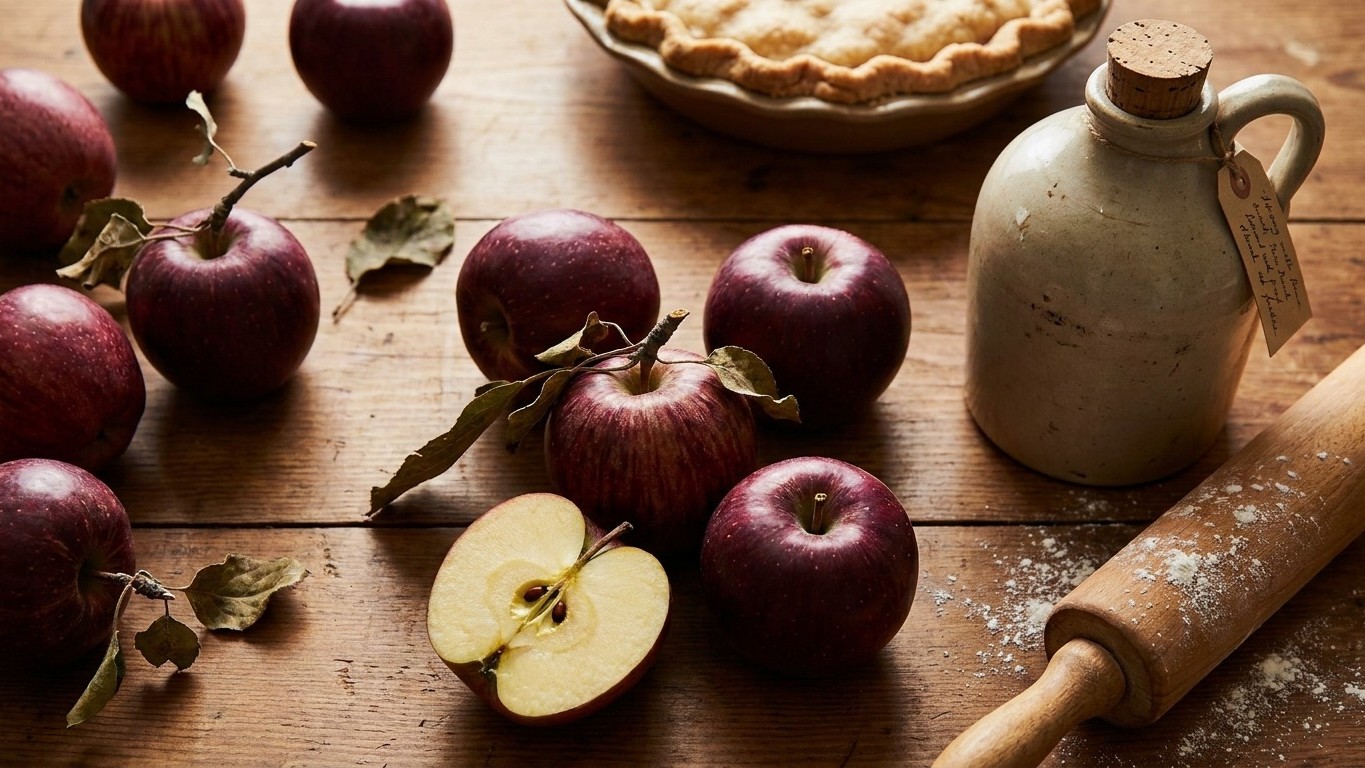

In Ohio, apple picking runs from mid-August into late October, with the exact date set by variety and by how close you are to the region’s frost windows rather than by the calendar. Early varieties like Gala or Zestar! come off the tree weeks before the first fall frost (October 5 to October 15 in zone 6a, per Ohio State University Extension). Late-keeping varieties such as GoldRush or Fuji hang until just ahead of that frost date, and that timing gap is also what decides which apples will still be edible at Thanksgiving.
When apples are ready to pick in Ohio
Ohio State University Extension anchors its Ohio Gardening Calendar on a last spring frost of May 5 to May 15 and a first fall frost of October 5 to October 15 for zone 6a. Those two dates bracket the entire apple season here: bloom happens shortly after the spring window closes, and harvest for the latest varieties has to wrap up before the fall window opens. Everything in between is the growing season a tree actually gets to work with.
Zone 6a is the reference point used for Columbus, but it’s not a stand-in for the whole state. Northern Ohio near Lake Erie gets a lake-effect buffer that pushes both frost dates later in fall and earlier in spring, stretching the harvest window. Southeastern Ohio’s hill country and river valleys can trap cold air overnight, which sometimes brings a local frost in ahead of the regional date. If you’re picking near Sandusky or Cleveland, expect a longer season than someone picking near Chillicothe or in the Appalachian foothills.
Reading the tree, not the month
Because frost dates shift by region, the safer method is watching the fruit itself. Background skin color is the first tell: on most varieties it shifts from green to a duller, yellower green as the apple matures, even on red varieties where the blush covers it. Seeds turning from white to brown or black is a second signal, and it’s more reliable than color alone because some varieties never fully lose their green cast.
The clearest field test is the twist test: cup the apple, tilt it horizontal, and give it a gentle twist. A ripe apple separates from the spur with almost no resistance. If you have to yank or pull downward, it’s not there yet, and pulling early fruit off with force can damage the spur that would otherwise produce next year’s crop. Early varieties in Ohio typically reach this point from mid-August into early September; mid-season varieties follow in September; the latest storage varieties often aren’t ready until the final two or three weeks before that October 5 to October 15 frost window closes in.
Which ones keep, and which must be eaten
Not every apple that grows well in Ohio’s climate is built to sit in storage. Keeping ability is a separate trait from hardiness or flavor, and it’s tied mostly to how thick the skin is, how much natural wax coats it, and how slowly the flesh breaks down sugars after picking. Early-season varieties tend to lose that battle fast.
Gala and Zestar!, both harvested in Ohio well before the first fall frost, are prized for eating fresh off the tree but decline within a few weeks even under decent conditions. Their thin skin and higher moisture content make them prone to going mealy. Honeycrisp sits in the middle: it stores noticeably better than Gala if kept cold and humid, but it’s sensitive to soft scald and bitter pit if storage temperatures aren’t managed closely, which is a common complaint from home growers who assume “cold enough” is the same as “cold and humid enough.”
At the other end, GoldRush, Fuji, and Granny Smith are the varieties Ohio orchards and extension guides point to for long keeping. GoldRush in particular is often picked last in the season, close to the fall frost date, and its dense flesh and thick skin let it hold texture for months rather than weeks when kept properly cold. Fuji follows a similar pattern: picked late, keeps long, loses less crispness over time than earlier varieties.
| Variety | Typical Ohio harvest timing | Storage life (cold, humid conditions) |
|---|---|---|
| Zestar! | Mid-to-late August | Weeks, not months |
| Gala | Late August–September | 4–6 weeks |
| Honeycrisp | Mid-to-late September | 2–3 months with careful humidity control |
| Fuji | Late September–early October | 3–4 months or more |
| GoldRush | Early-to-mid October, near first frost | 4+ months, among the longest-keeping |
The practical rule for anyone with more than one tree: eat the early varieties as they come off, and reserve cold storage space for whatever you pick last.
Storing them through a Ohio winter
Storage life depends far more on temperature and humidity than on the variety alone, and Ohio’s winter conditions actually work in a home grower’s favor if you know how to use them. Columbus’s coldest month averages a daily minimum of 22.0°F, according to NOAA NCEI Climate Normals (1991-2020). That’s cold enough that an unheated garage, enclosed porch, or root cellar dug into a hillside will often sit naturally in or near the 32°F to 40°F range apples need, without any mechanical cooling.
The target most extension guides describe for long-term apple storage is close to 30°F to 35°F with humidity around 90 to 95 percent. Ohio winters supply the cold reliably; humidity is the piece people forget. A dry basement or garage will shrivel apples even at perfect temperature, since the fruit keeps losing moisture through its skin regardless of how cold the air is. A layer of damp sand, perforated plastic bags, or simply an open bucket of water in the storage space helps hold humidity up without letting condensation sit directly on the fruit.
Practical storage habits that matter more than the space itself
- Store only unblemished fruit; a single bruised or nicked apple releases ethylene gas and accelerates spoilage in everything around it.
- Keep varieties separated rather than mixed in the same container, since faster-ripening apples shorten the life of slower-keeping ones stored alongside them.
- Check stored fruit every couple of weeks through winter and pull anything going soft before it spreads.
- Avoid storing apples near potatoes; potatoes release moisture and gases that speed apple decay.
Because Ohio’s coldest month doesn’t dip into extreme territory the way the northern Great Lakes or interior plains states do, most home storage spaces don’t need supplemental heat to stay above freezing, but they can still freeze solid during a hard cold snap if uninsulated. An unheated garage against an exterior wall is riskier than a below-grade root cellar built into a bank, which stays more stable across the whole season.
What goes wrong here
The most common failure in Ohio isn’t the tree’s hardiness, it’s timing around the two frost windows Ohio State University Extension publishes for zone 6a. Trees that bloom right as the last spring frost date (May 5 to May 15) is closing out are exposed if that frost arrives on the late end of the window. Early-blooming varieties take the brunt of this, and a grower who picked a variety for early ripening without checking bloom timing sometimes loses the whole crop to a frost that never should have surprised them.
A second recurring problem is confusing hardiness with flowering reliability. Hardiness is about whether the tree’s wood and buds survive winter cold at all, and Columbus’s 22.0°F average minimum in the coldest month is not extreme, so most standard apple varieties handle it fine structurally. Flowering well is a separate question tied to how much accumulated winter chill a variety needs before it will bloom properly the following spring. Ohio’s winters aren’t the mild, low-chill winters where growers reach for low-chill varieties to guarantee bloom at all, and that’s a point worth being direct about: a low-chill variety breaks dormancy on less accumulated cold, which means it tends to flower earlier, and earlier flowering in a zone 6a climate runs straight into that May 5 to May 15 frost risk instead of avoiding it. In Ohio, choosing a variety for reliable bloom timing rather than for minimal chill requirement is the safer bet, since the frost date is the actual limiting factor here, not a shortage of cold.
No local source in this research documents specific chill-hour requirements by variety for Ohio conditions, so growers weighing that tradeoff should treat published chill-hour numbers for a given variety as coming from wherever the nursery or that variety’s originating region sourced them, not from an Ohio-specific measurement.
Storage failures usually trace back to one of two habits: sealing fruit in airtight containers that trap ethylene and moisture unevenly, or storing apples in a space that swings above 45°F on warm winter days, which is common in attached garages that share a wall with a heated house.
Common questions
Can you grow apples anywhere in Ohio?
Yes, though conditions vary by region. Northern Ohio near Lake Erie gets a longer frost-free window thanks to the lake’s moderating effect, while southeastern Ohio’s hills and valleys can see earlier local frosts. Ohio State University Extension’s zone 6a frost dates (last spring frost May 5 to May 15, first fall frost October 5 to October 15) are a Columbus-based reference point, and growers elsewhere in the state should expect some variation from that.
How cold does it actually get for apple trees in Ohio?
At the Columbus reference station, the coldest month averages a daily minimum of 22.0°F, based on NOAA NCEI Climate Normals for 1991-2020. That’s the figure that determines whether a variety’s wood and buds survive winter here, and it’s well within the range most standard apple varieties tolerate.
Do I need to pick all my apples before frost?
Not necessarily, but timing matters. Ohio State University Extension’s fall frost window for zone 6a runs October 5 to October 15, and most late-keeping varieties like GoldRush and Fuji are picked in that same stretch, before a hard freeze, since a freeze on the tree can damage flesh texture even if the fruit looks fine outside.
Why did my apples shrivel in storage even though it was cold enough?
Temperature alone isn’t the whole equation. Apples need humidity around 90 to 95 percent to hold their moisture in storage, and a cold but dry space, common in unheated garages, will shrivel fruit even at the right temperature. Adding a humidity source, like damp sand or a loosely covered water container, usually solves it.