
In the Twin Cities, winter squash goes into the ground once the soil itself has warmed, which typically lands in mid-to-late May, well after the last frost risk has passed. Harvest has to wrap up before the first fall frost hits in mid-October. Between those two anchors sits a season that’s moderate by national standards but tight enough that the type of squash you choose matters more than any trick of technique.
When the soil is warm enough in Minnesota

The question everyone asks first is “when do I plant,” and the honest answer starts with a date that isn’t really about squash at all. NOAA’s 1991-2020 Climate Normals put the last spring frost for the Twin Cities reference station (USW00014922) somewhere between April 17 and April 30, based on the 30-70% probability band for a 32F freeze. That’s a range, not a single day, and it’s worth saying plainly: a frost date is a probability, not a promise. Some years the risk clears earlier, some years it lingers past the end of April.
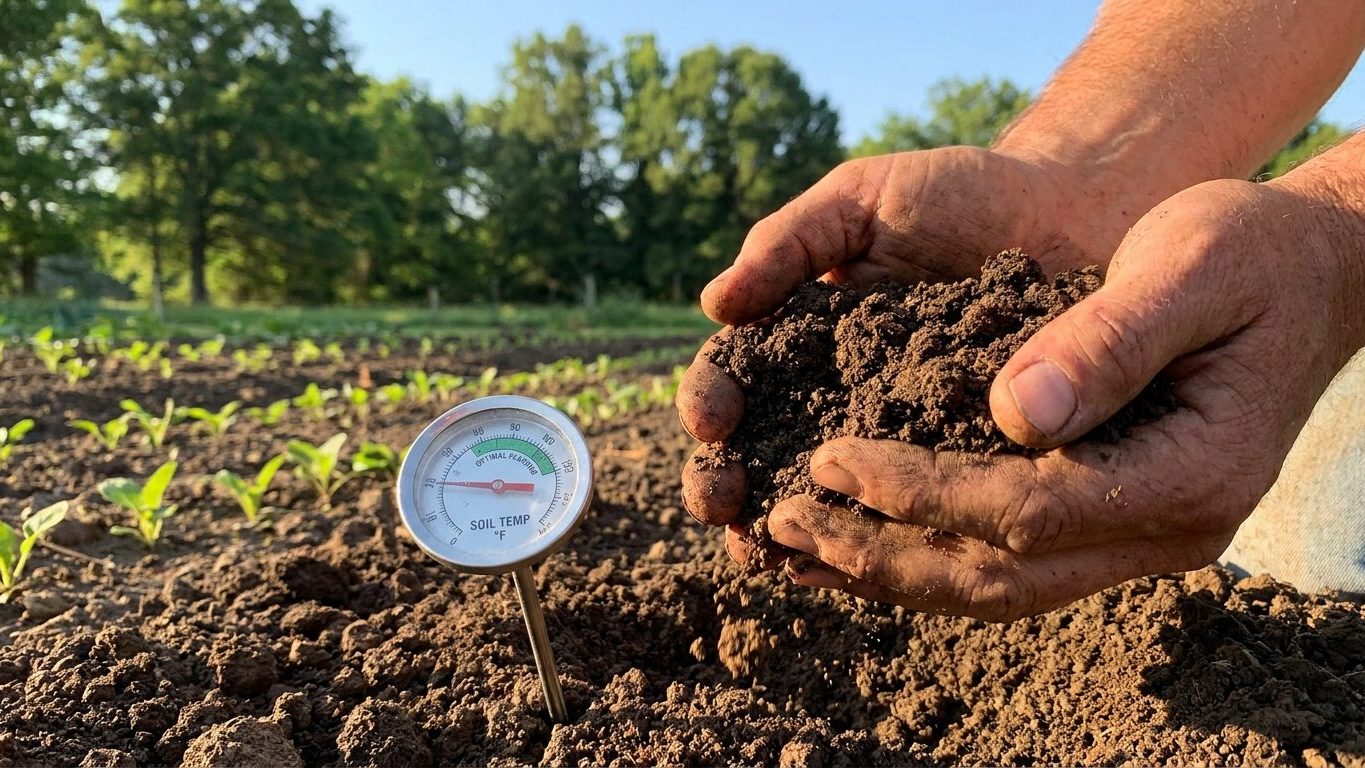
Here’s the part that trips people up. Winter squash doesn’t care about frost risk directly. It cares about soil temperature, and soil takes time to catch up once the air stops freezing at night. Seeds sown into cold, wet ground in early May will often just sit there, rot, or germinate so slowly that any head start is lost. The practical move is to treat the frost-free window as the outer boundary and wait for the soil underneath it to actually warm before committing seed or transplants. For most home gardeners in the Twin Cities area, that means the back half of the frost window, closer to late April into May, rather than the earliest possible day.
One caution matters more here than in most states: this frost data describes the mild southern part of Minnesota. Northern Minnesota runs two to three weeks tighter at both ends of the season, meaning a gardener near Duluth or International Falls is working with a noticeably shorter runway than someone in the Twin Cities metro. If you’re gardening north of the metro, shave those extra weeks off both the planting date and the harvest deadline before you plan anything else.
None of this is a substitute for checking your own dirt. A soil thermometer pushed a few inches down tells you more than any calendar date, and it costs less than a single flat of transplants lost to a cold snap. Squash seed sown into ground that’s still cold from winter simply wastes a growing week you don’t have to spare in a state where the season is already working against you.
How long the season lasts here
Put the two frost windows together and you get the real number that governs everything else: the length of the frost-free season. Using the earliest last-frost date (April 17) against the latest first-frost date (October 23), the longest possible window runs about 189 days. Using the later end of spring (April 30) against the earlier end of fall (October 11), the shortest realistic window runs about 164 days. Most years land somewhere in between, which puts the Twin Cities area at roughly five and a half to six and a half months of frost-free growing.
That range decides more than most gardeners expect. Winter squash isn’t a quick crop that ducks in and out of a garden bed in a few weeks. It needs most of the frost-free season to grow vine, set fruit, and then let that fruit sit on the vine long enough to fully mature and develop the hard rind that allows it to cure and store. A 164 to 189 day window doesn’t leave slack for a second sowing of winter squash the way a longer season further south might. In practice, the first sowing is the only sowing that counts here.
That reality changes how you weigh transplanting against direct seeding. Squash generally dislikes having its roots disturbed, which is why direct seeding is the standard advice in places with season to spare. In a state where the window runs closer to the shorter end, though, starting seed indoors three to four weeks before the soil-ready date and transplanting out carefully (using paper pots or another method that limits root disruption) becomes worth the risk. It buys back weeks the calendar doesn’t otherwise give you.
If you’re stacking other crops around the squash bed, faster vegetables can still fit two rounds into a Minnesota season even where the squash itself only gets one shot. The guide to succession sowing on this site walks through how to sequence quick crops around a long-season one like this without wasting bed space during the weeks the squash vines haven’t yet filled in.
Heat and water in Minnesota

Winter squash is the crop where the length of the season decides almost everything, because an immature fruit doesn’t just taste bland, it fails to cure and won’t keep in storage. That makes heat and moisture during the growing months less about comfort and more about whether the fruit actually finishes before frost ends the conversation.
Minneapolis averages just 10.6 days a year at or above 90F, based on the NOAA 1991-2020 Climate Normals for the reference station. That’s a modest heat load. This isn’t a hot-climate garden problem where fruit scalds or plants shut down from stress; it’s closer to the opposite. Cooler summer temperatures slow the rate at which squash fruit fills out and matures, which puts extra pressure on getting the earliest possible start and choosing types that don’t need an exceptionally long stretch of warmth to finish.
Rainfall follows a similar pattern of moderation rather than extremes. Summer months bring about 13.0 inches of rain across June, July, and August, with June the wettest at 4.58 inches, August close behind at 4.34 inches, and July the driest at 4.06 inches. That’s a reasonably damp summer by national standards, and it changes the disease conversation more than the irrigation one. Where a hot, dry territory needs irrigation to carry fruit through its filling stage, a cooler, damper one like this needs airflow and disease vigilance instead.
What a cool, damp summer actually brings
Powdery mildew and other fungal issues thrive in exactly this kind of weather, especially once squash vines sprawl and leaves stay wet longer after rain or morning dew. Wide spacing between plants, watering at the base rather than overhead, and picking varieties bred with some disease resistance all matter more here than in a hot, arid state where fungal pressure is lower but drought stress is the bigger threat.
Rainfall totals also never tell the whole story on their own. The same 13 inches behaves differently depending on whether a garden sits on sandy soil, which drains fast and dries out between storms, or heavy clay, which holds water for days and can drown roots after a wet stretch. A rain gauge on the actual plot, tracked over a season, tells a gardener more than any regional average ever will.
Which winter squash suit Minnesota
Everything above points toward the same conclusion: in a state with a season running roughly 164 to 189 frost-free days and a cool, occasionally damp summer, the earliest-maturing types of winter squash have the advantage. Acorn and delicata types tend to finish on the shorter end of the winter squash spectrum, which matters when the first sowing is the only one you get and every extra week of maturing time on the vine is a week the fruit is at risk from an early frost instead. Larger, longer-season types like big hubbards or the largest butternuts ask for more warm weeks than this territory reliably offers, and a fruit that hasn’t fully matured when frost hits won’t cure properly in storage no matter how it’s handled afterward.
Disease resistance deserves equal weight given the summer rainfall and dew pattern described above. Types and cultivars selected for resistance to powdery mildew and other common fungal pressures hold up better through a Minnesota summer than ones bred purely for size or storage length, since a vine that collapses from mildew in August never gets the chance to finish what it started.
What this page won’t do is name a specific variety, and that’s deliberate rather than an oversight. Cultivar performance shifts from one growing season to the next and varies by exact planting date, local microclimate, and even which side of a hill a garden sits on. The seed catalog description of “early” or “disease-resistant” is a starting point, not a guarantee for a particular yard in Duluth versus one in the Twin Cities suburbs. The University of Minnesota Extension service, at extension.umn.edu, publishes variety trial results drawn from actual Minnesota growing conditions across the state’s hardiness zones, which run from 3a in the north to 5a in the milder south under the USDA Plant Hardiness Zone Map. That range alone is a reminder that a variety trialled and recommended near the Twin Cities may behave differently three hours north, and the extension office is the source built to answer that question for the specific county a reader is gardening in.