
Winter Squash in Missouri goes into the ground once the last frost risk has passed and the soil itself has warmed, typically late April through mid-May depending on where you garden in the state. The vines then need the full growing season, right up to harvest before the first fall frost, to mature and cure properly on the vine.
When the soil is warm enough in Missouri

The last spring frost across Missouri falls somewhere between April 6 and April 20, according to NOAA’s 1991-2020 Climate Normals for the reference station used in these figures (32°F freeze probabilities, 30-70% band). That station sits well north of Kansas City proper, so the downtown station runs about five days earlier in spring, and southern Missouri tends to be milder still. If you garden near St. Louis or in the Bootheel, you’re likely on the earlier end of that window; up in the northern counties, lean toward the later date.
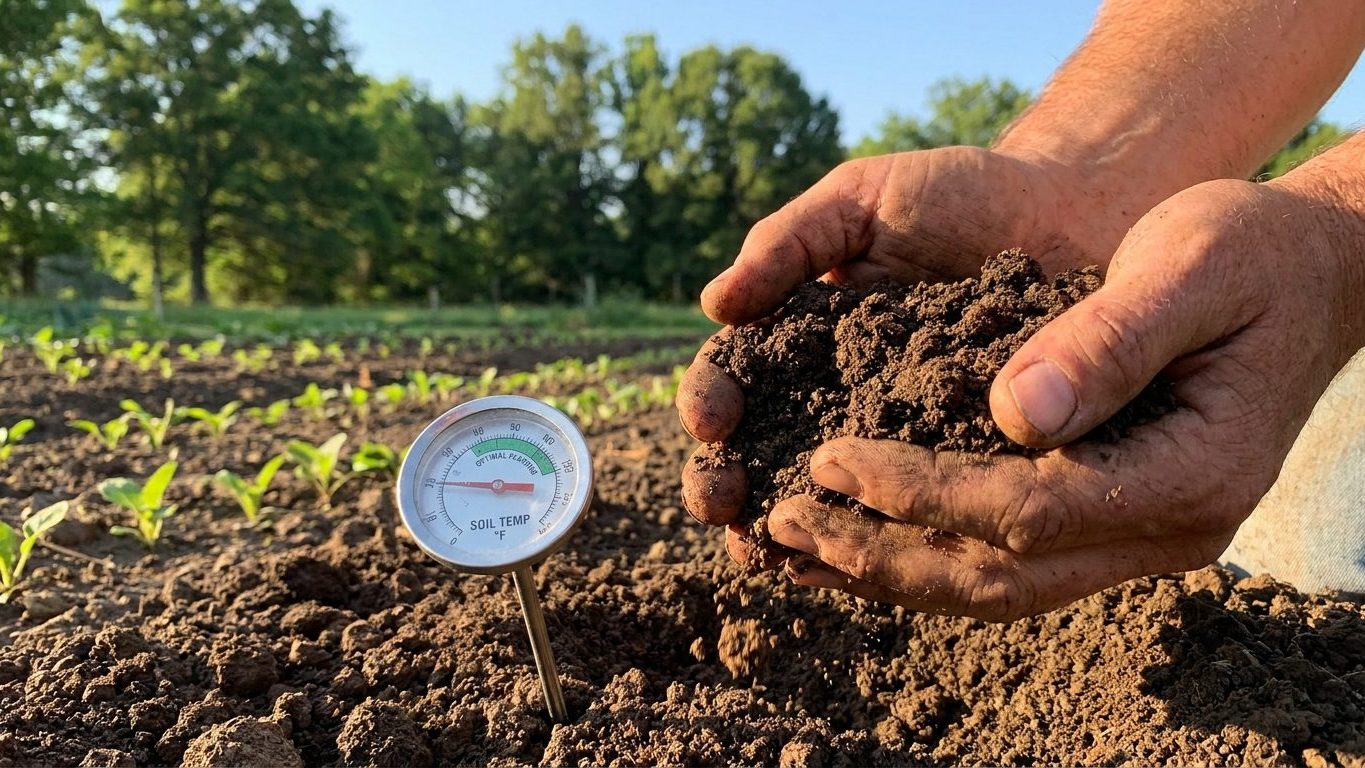
Here’s the part that trips people up: frost date and soil temperature are not the same thing. A frost date tells you when the air is statistically unlikely to drop to freezing. It says nothing about whether the ground six inches down has actually warmed enough for winter squash seed to germinate or for transplants to take off instead of sulking. Squash seed wants soil in the 65 to 70°F range, and soil lags behind air temperature by a couple of weeks in spring, especially in a wet year when the ground stays cold and soggy long after the calendar says spring has arrived.
That’s why gardeners who plant winter squash right on the frost-free date, and no later, often watch their seedlings sit motionless for two or three weeks. The soil hasn’t caught up yet. A better approach is to treat the frost date as a floor, not a target: wait until it has passed, then give the soil another one to two weeks before direct-seeding or setting out transplants. Push a soil thermometer into the bed and check for yourself if you want a real answer instead of a guess.
One more thing worth saying plainly: a frost date is a probability, not a promise. The 30-70% band means there’s still meaningful odds of a freeze on either side of that window, so gardeners who push earlier than April 6, even in a mild year, are taking on real risk to tender seedlings.
As for which winter squash types handle a Missouri spring best, that depends on local trial data this page doesn’t carry. Missouri’s extension service, at extension.missouri.edu, publishes variety performance notes for the state’s actual growing conditions, and that’s the source worth checking before you buy seed.
How long the season lasts here
Stack the two frost dates against each other and you get the real number gardeners need: the frost-free window in Missouri runs from as early as April 6 through as late as October 29 in a generous year, or as tight as April 20 to October 18 in a stingier one. That works out to somewhere between roughly 181 and 206 days, depending on where in the state you sit and how the particular year behaves. Either way, that’s a long season by winter squash standards, comfortably six months or more.
A window that wide changes what’s worth attempting. In a short-season territory, the first sowing is often the only sowing, and every week of delay matters because the plant is racing the calendar. Missouri doesn’t put gardeners in that bind. With 180-plus days on the table, there’s real room for a second, later sowing of quicker-maturing types if the first planting gets set back by a cold spring, a hail event, or a squash bug outbreak that takes down young plants. That flexibility is a genuine advantage over states with a tighter window.
It also softens the transplant-versus-direct-seed decision. In a short-season territory, starting seedlings indoors and transplanting them out is often the only way to squeeze a full-season type into the available days, even though winter squash resents root disturbance and transplanting always carries some setback risk. In Missouri’s longer window, direct-seeding once the soil has warmed is a perfectly reasonable default, and it sidesteps the transplant shock question entirely. Transplants still make sense if you want an earlier harvest or you’re working around a compressed personal schedule, but they’re a choice here, not a requirement.
If you’re weighing whether a second planting makes sense for your particular timeline, the succession sowing guide on this site walks through how to stagger winter squash plantings so the harvest doesn’t all land in the same two-week stretch of October.
Heat and water in Missouri

Missouri summers bring real heat load. The reference station (Kansas City) averages 32.7 days a year at or above 90°F, per NOAA’s 1991-2020 Climate Normals. That’s not the average summer temperature; it’s a count of days that push into genuine heat-stress territory for a lot of garden plants, winter squash included. Squash tolerates heat better than cool-season crops, but sustained days above 90°F still increase water demand and can stall pollination if it coincides with peak bloom.
Rainfall is where the picture gets more specific. Summer rain across June, July, and August totals about 14.1 inches at that same reference station, out of 39.3 inches for the year. But that 14.1 inches isn’t spread evenly: June averages 5.25 inches, July drops to 4.58, and August, the driest of the three, comes in at just 4.24 inches. That pattern matters for winter squash because August is exactly when fruit is filling out and sizing up on the vine, and it’s arriving right as the summer’s rainfall is at its thinnest.
This is the combination that decides how a Missouri squash patch actually performs: moderate-to-heavy heat load meeting a rainfall pattern that thins out just when the crop needs water most for fruit development. An immature squash pulled off the vine before it’s finished sizing and hardening its rind won’t cure properly in storage, no matter how careful the harvest and cellaring afterward. So the practical takeaway is that irrigation during August, not just in a drought year but as a routine expectation, is what carries the fruit through its filling stage rather than leaving it undersized or watery.
That 14.1-inch figure is also a normal, not a forecast, and it never reads alone. The same rain behaves differently on sandy soil, which lets it drain through within a day, versus clay, which holds moisture for a week or more; and a single summer thunderstorm tends to run off rather than soak in when the ground is already hard-baked from those 90°F-plus days. A rain gauge on your own plot, checked weekly through August, is the only way to know whether your particular garden needs supplemental water or already has enough held in reserve by heavier soil.
Which winter squash suit Missouri
Put the three sets of facts together and a reasonable picture emerges, even without naming a single variety. The growing window here runs 180 days or more, which means most winter squash types have enough time to mature fully before the first fall frost; season length isn’t the limiting factor the way it would be in a shorter-season state. That takes some pressure off choosing only the earliest-maturing types by default.
Heat and water are where the real decisions live. With close to 33 days a year above 90°F and a rainfall pattern that thins out precisely in August, types that hold up under sustained heat stress and that respond well to supplemental irrigation during fruit fill have a real advantage over the growing season here. Airflow around the vines and some shade at the root zone, achieved through spacing and mulch rather than any product, also help plants cope with that heat load without wilting through the hottest stretches.
Missouri’s spring rainfall, heavier than its August totals, plus the humidity that tends to follow, also makes disease resistance a legitimate first-line criterion when choosing what to grow, particularly resistance to the fungal issues that show up on squash foliage in a wet, warm spring before the drier summer sets in.
What this page won’t do is hand you a variety name, and that’s a deliberate choice rather than an oversight. Which specific winter squash types perform best in Missouri conditions is exactly the kind of question that state extension trials are built to answer, using seed grown under this state’s actual soil, heat, and disease pressure rather than a generic national recommendation. The University of Missouri Extension, at extension.missouri.edu, publishes those trial results and regional variety notes, and that’s the resource that turns “winter squash” into an actual planting decision for your specific county and soil type. A name picked from a national seed catalog, without that local trial data behind it, is a guess dressed up as a recommendation, and Missouri gardeners deserve better than a guess.