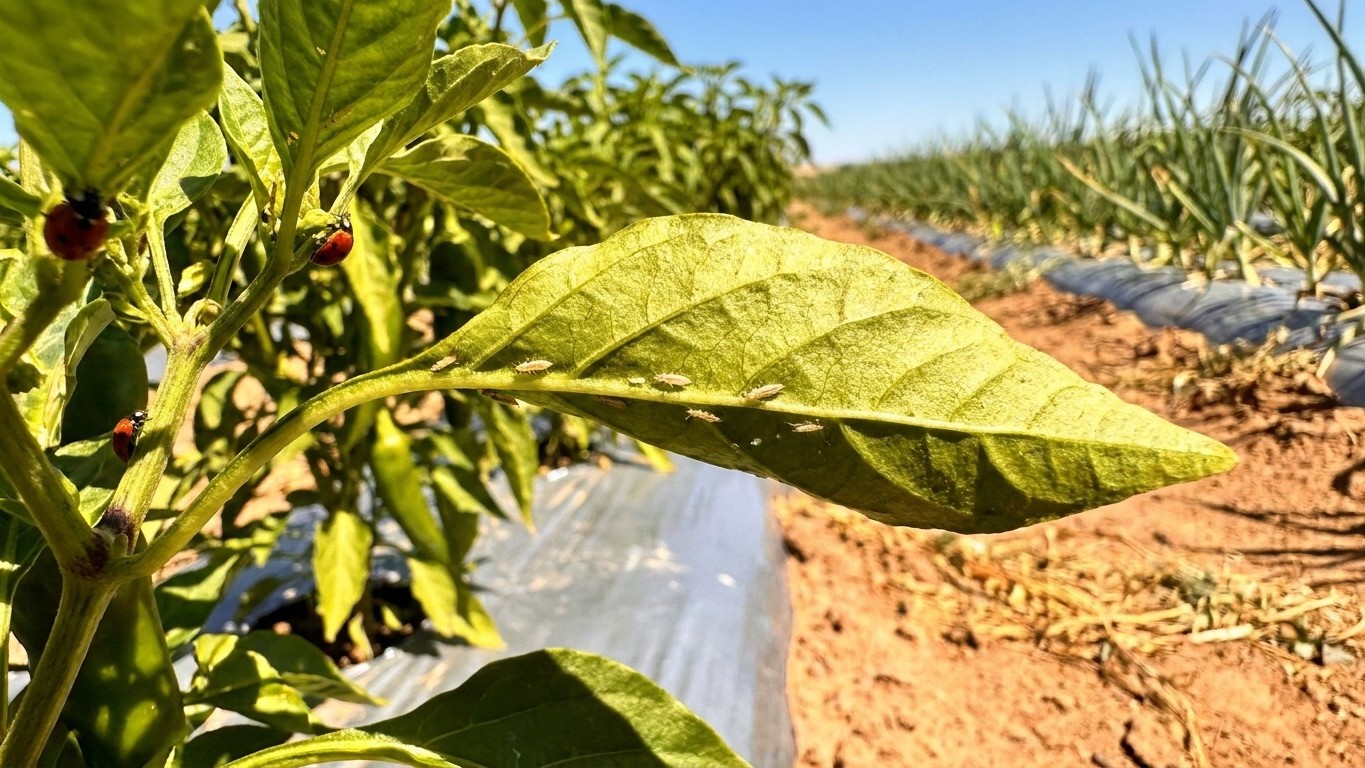

Thrips show up in New Mexico as soon as daytime temperatures push past 70°F, usually mid-April in the Rio Grande Valley and closer to late May at higher elevations like Santa Fe or Taos. They peak during the state’s hot, dry stretch from June through early August, right when chile peppers and onions are sizing up in the field. What stops them isn’t one product but a combination: reflective mulch, timed insecticide rotations, beneficial insects, and cutting off the weedy hosts that let populations overwinter.
That combination matters because New Mexico’s climate is unusually friendly to thrips. Low humidity, intense sun, and wide temperature swings between day and night don’t kill these insects the way a humid Southeastern summer might slow them down. Instead, the dry heat speeds up their life cycle. A western flower thrips can go from egg to reproducing adult in under two weeks when temperatures sit in the 80s, which is normal for Doña Ana County in June.
New Mexico’s Climate Creates a Long Thrips Season

Elevation changes everything here. In the low desert around Las Cruces and Deming, thrips activity can start as early as March on winter annual weeds and stretch into October. Up in the high plains near Clovis or the mountain valleys around Española, the season compresses into a tighter June-through-September window because cooler spring nights slow early buildup.
Monsoon season, typically mid-July through September, throws a wrench into things. Sudden humidity spikes and rain events knock down thrips numbers temporarily, but the moisture also flushes new weed growth that hosts the next generation. Growers who stop watching for thrips once the rains start often get caught off guard by a rebound population in late August, right as chile plants are setting their final flush of pods.
Wind is the other piece nobody talks about enough. New Mexico’s spring winds, the kind that rattle windows in Albuquerque every March and April, actually help thrips spread. These insects are weak fliers on their own but ride air currents for miles, which is part of why thrips pressure can jump overnight in a field that looked clean the week before.
Which Crops and Plants Attract Them Most
Onions and chile peppers are the two crops most associated with thrips damage in New Mexico, and for good reason: both are economically massive here. New Mexico ranks among the top onion-producing states, and chile is practically a cultural institution, with Hatch and Deming production drawing attention every fall. Western flower thrips and onion thrips both target these crops, feeding in the tight leaf folds of onions and the growing tips of chile plants where they’re hard to spot without pulling leaves apart.
The bigger concern isn’t just the direct feeding damage. Thrips transmit plant viruses, and in New Mexico that means Iris Yellow Spot Virus in onions and tomato spotted wilt virus in chile, tomatoes, and peppers. According to New Mexico State University Cooperative Extension, thrips-vectored viruses have caused significant yield losses in commercial onion fields in the southern part of the state, sometimes turning entire blocks of a field yellow and stunted before harvest. That’s a bigger financial hit than the insect feeding itself.
Home gardeners run into thrips on roses, gladiolus, and vegetable transplants, especially anything purchased from a greenhouse where thrips can hitchhike in on new growth. Ornamental beds around Albuquerque and Rio Rancho, watered on drip systems that keep soil dry between cycles, tend to see thrips move in faster than gardens on flood irrigation, since thrips prefer dry, dusty conditions over consistently damp soil.
Signs of Thrips Damage
Silvery streaking on leaves is the first tell, caused by thrips scraping plant cells and feeding on the sap that leaks out. On onion leaves this shows up as pale, papery patches that eventually turn brown at the tips. On chile pepper foliage, curled or distorted new growth is often the giveaway before you ever see the insect itself, since adult thrips are barely an eighth of an inch long and tend to hide in flower buds or leaf axils.
Black speck droppings, called frass, on the underside of leaves confirm an active infestation rather than old damage from a population that’s already moved on. If you shake a suspect flower or leaf cluster over a white sheet of paper, thrips will often fall out and you’ll see tiny yellow or dark tan slivers moving across the paper within seconds.
What Actually Stops Thrips in New Mexico
Reflective mulch is one of the more effective, lower-cost tools for field and garden settings. Silver or aluminum-coated plastic mulch laid under young onion or chile transplants confuses thrips navigation and cuts landing rates significantly compared to bare soil or black plastic. NMSU trials on chile pepper production have shown reduced early-season thrips counts with reflective mulch, which also has the side benefit of warming soil faster in spring.
Sticky traps, specifically blue or yellow sticky cards, help with monitoring more than control, but monitoring is half the battle. Placing a handful of cards at plant height around the perimeter of a garden bed or field edge gives an early warning before damage becomes visible on the plants themselves. Checking those traps weekly from April through September catches population jumps before they get out of hand.
Biological control has a real track record against thrips, particularly minute pirate bugs (Orius species) and predatory mites, both of which occur naturally in New Mexico agricultural areas but can be knocked back by broad-spectrum insecticide use. Preserving these predators by avoiding unnecessary spraying, especially early in the season before thrips numbers justify treatment, keeps a natural check in place that chemical-only approaches destroy.
Timing Chemical Treatments Right
When insecticide treatment becomes necessary, timing beats product choice. Thrips hide inside curled leaves, flower buds, and leaf sheaths, so spraying when populations are exposed, typically early morning when adults are more active on open foliage, improves contact and coverage. NMSU Extension recommends rotating insecticide modes of action rather than repeating the same product, since thrips populations in the Southwest have developed resistance to several older chemical classes after repeated use in commercial fields.
Systemic insecticides applied at transplanting, when legal and appropriate for the crop, offer season-long protection for onions and chile without repeated foliar sprays. This approach matters more in New Mexico’s commercial growing regions than in home gardens, where spot treatments and cultural controls usually suffice for a backyard bed of a dozen chile plants.
Weed management around field edges and garden borders removes the overwintering host plants that let thrips populations survive New Mexico’s relatively mild winters in the southern half of the state. Mustard family weeds and winter annual grasses along irrigation ditches and fence lines are common thrips reservoirs that get overlooked because they’re outside the cultivated area.
Regional Differences Worth Knowing
Southern New Mexico, including the Mesilla Valley and the area around Hatch, deals with the longest and most intense thrips pressure in the state because of the extended growing season and the concentration of onion and chile acreage. Growers there often start monitoring in March, well before the crop is at risk, simply because populations build so fast once temperatures cooperate.
Central New Mexico, around Albuquerque and the Rio Grande corridor, sees a more moderate season concentrated from May through September, with home gardens and smaller commercial operations facing similar pest pressure but on a smaller scale. Northern New Mexico’s higher elevations, above 6,500 feet in places like Taos or Angel Fire, rarely see the same intensity of thrips damage, since cooler nights slow reproduction even during peak summer.
One detail that surprises a lot of gardeners: thrips populations in New Mexico often spike right after a dry, windy spring followed by an early heat wave, a weather pattern the state sees almost every year in some form. Watching the forecast for that stretch, rather than waiting for visible leaf damage, gives growers and gardeners a genuine head start on control.