
Apple maggot flies start emerging in Ontario orchards and backyard trees in late June, with activity peaking through July and August and tapering off by mid-September. The exact start date shifts by a week or two depending on spring soil temperatures, but once the flies are out, the window for protecting fruit is short. Miss it, and the larvae are already tunneling through the flesh before you notice a single external mark.
When Apple Maggots Show Up in Ontario

The apple maggot fly (Rhagoletis pomonella) overwinters as a pupa in the soil beneath host trees. Emergence depends on accumulated warmth in the ground, not the calendar, which is why growers and extension programs track degree-days rather than fixed dates. In most of southern Ontario, from the Niagara Peninsula through the Georgian Bay fruit belt, that translates to first flight around the last week of June, with the heaviest pressure from mid-July into August.
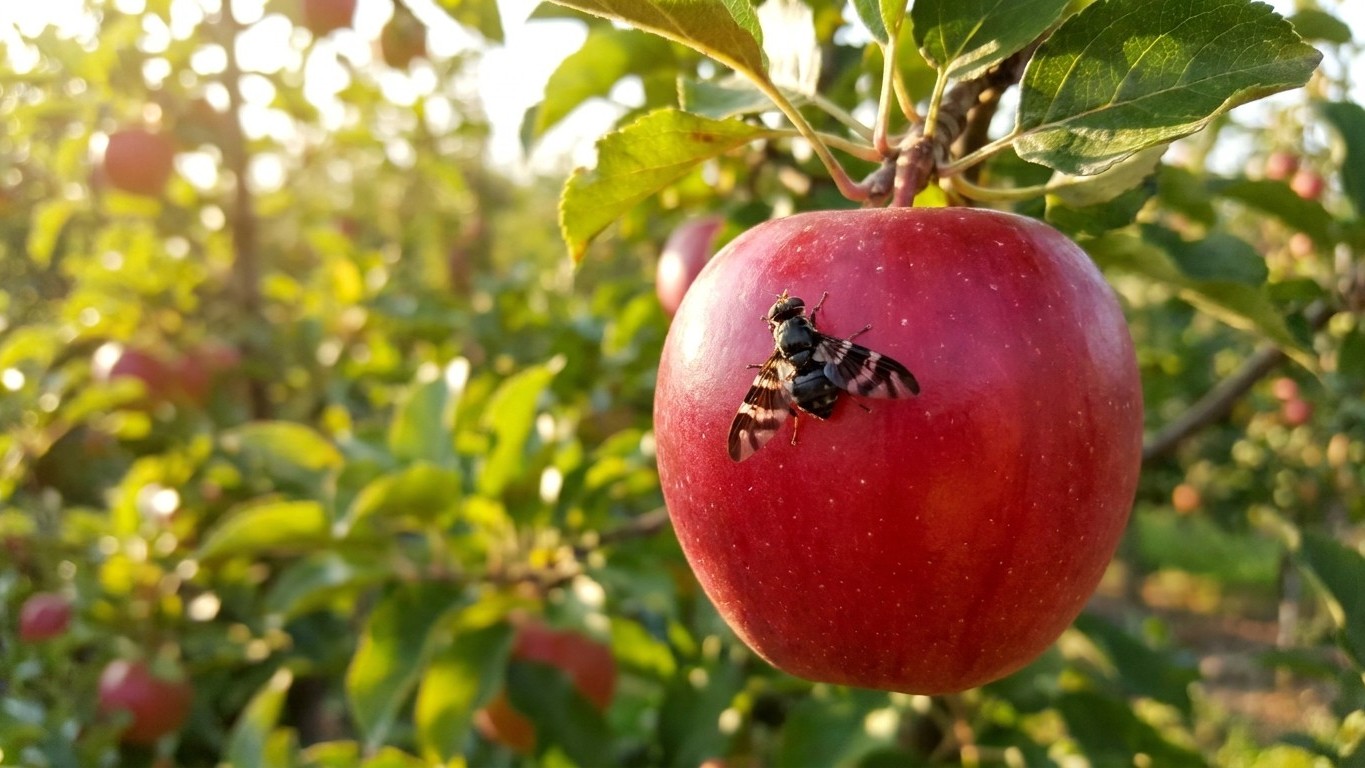
Adult flies are small, about the size of a house fly, with a black body, white markings, and banded wings that give them a distinctive resting posture. Females need roughly a week after emerging before they start laying eggs, and each one can lay eggs into dozens of fruit over her lifespan, which typically runs 20 to 30 days. That overlap of new emergence and continued egg-laying is why a single generation can stretch the damage window across two full months.
One detail homeowners often miss: apple maggot doesn’t need an orchard to survive. Its original host in North America is hawthorn, and wild hawthorn trees along fence lines, in hedgerows, and at the edge of woodlots keep populations going even where no one grows apples on purpose. A neglected crab apple tree two properties over can seed an entire neighborhood’s infestation.
Signs of an Infestation
The damage starts invisibly. Females puncture the skin with an egg-laying tube and drop a single egg just under the surface, leaving a tiny dimple that’s easy to overlook on a red apple. As the larva feeds, it tunnels in winding brown trails through the flesh, and the fruit around those tracks starts to break down and rot from the inside.
By late summer, infested apples often show a lumpy, uneven surface, sometimes described as looking dimpled or “measled.” Cut one open and the flesh will show brown, thread-like tunnels branching in random directions, occasionally with the small white larva still inside near harvest time. Heavily infested fruit drops early, weeks ahead of a normal harvest, which is itself a warning sign if you’re seeing apples on the ground in July.
Softer, thin-skinned varieties tend to show damage faster and more visibly than firm, late-season apples. That’s part of why summer varieties like Lodi or early Macs often look worse by the time they’re picked, even when the underlying maggot pressure is similar across a property.
What Actually Stops Apple Maggot
Control works best as a layered approach. No single tactic, on its own, reliably keeps a heavily infested tree clean, but combining monitoring, sanitation, and well-timed treatment gets most home growers to acceptable fruit quality.
Sticky Traps and Lures
Red sphere traps coated with sticky adhesive, hung in the tree canopy by mid-June, are the standard monitoring tool. The spheres mimic a ripening apple, and adding an ammonium-based lure increases catch rates significantly. One or two traps per small tree, checked weekly, tell you exactly when flies arrive in your specific yard rather than relying on a regional average. Some growers use yellow sticky panels alongside the red spheres, since yellow attracts newly emerged flies before they’ve located host trees, giving an even earlier warning.
Trap counts matter for timing sprays: once a trap catches even a handful of flies, that’s the signal to start treatment, not wait for visible damage on the fruit.
Sanitation and Cultural Control
Removing dropped fruit is the single most effective non-chemical step, and it’s the one most home growers skip. Larvae leave the fruit and pupate in the top few inches of soil, so windfall apples left on the ground through August and September essentially reload the population for next year. Picking up drops every few days, and either destroying them or burying them at least a foot deep, breaks that cycle over a season or two.
Removing or aggressively pruning nearby wild hawthorn reduces the alternate host population feeding flies into your yard. This isn’t always practical if the hawthorn sits on a neighbor’s property or along a public right-of-way, but where it’s an option, it meaningfully cuts pressure.
Some home growers use fine mesh or nylon footwear bags slipped over individual fruit clusters shortly after fruit set, physically blocking females from laying eggs. It’s labor-intensive but works well for a handful of trees where spraying isn’t desired.
Timing Insecticide Applications
For orchards and larger plantings, insecticide timing follows trap thresholds rather than a fixed spray calendar. Once traps show flies are active and egg-laying has likely started, a treatment window of roughly seven to ten days targets adults before they lay eggs, since sprays that only reach the fruit surface do little once larvae are already inside. Extension programs in fruit-growing regions of Ontario and neighboring states publish updated degree-day models each season, and checking those alongside your own trap counts gives a more accurate spray window than guessing from last year’s dates.
Homeowners with just one or two trees often get adequate results skipping chemical control altogether and relying on trapping plus rigorous drop cleanup, especially for varieties they don’t mind harvesting slightly early to beat peak fly activity.
Apple Maggot Beyond Ontario
The pest isn’t unique to this region. Apple maggot pressure runs heavy across the Great Lakes fruit belt, including Michigan, New York, and Ohio, where similar degree-day emergence timing applies. Growers just across the border in Michigan often see first flight within days of Ontario orchards, since Lake Erie and Lake Huron moderate spring soil temperatures similarly on both sides.
Drier, warmer regions farther south and west see much lighter apple maggot pressure, partly because the fly’s overwintering pupae are sensitive to extended dry heat and partly because commercial hawthorn and wild apple hosts are less common there. That regional variation is worth knowing if you’ve moved from a low-pressure area and are surprised by how fast fruit degrades in a Great Lakes backyard orchard.
Resistant or tolerant varieties exist but aren’t foolproof. Thicker-skinned, later-ripening apples tend to sustain less visible damage even under similar fly pressure, which is one reason commercial growers in this region lean toward later-season cultivars for fresh-market sales while directing early varieties toward processing, where minor cosmetic damage matters less.