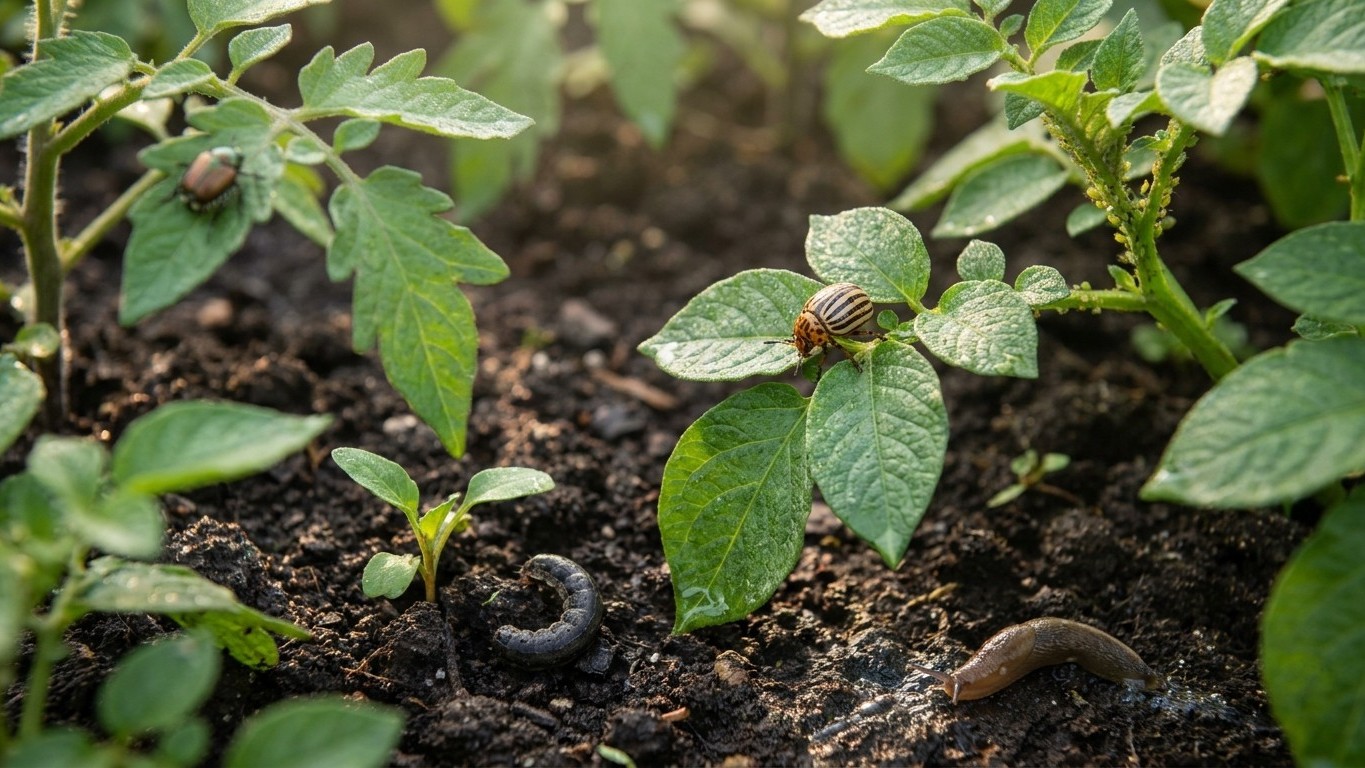

Southern Ontario gardeners deal with Japanese beetles, Colorado potato beetles, three-lined potato beetle populations, Aphids Ontario populations, and squash vine borers all summer long, while cutworms, Flea beetles Ontario populations, imported cabbageworm populations, and onion maggot populations hit in spring and wireworms and slug populations linger into fall, with spotted wing drosophila populations rounding out the late-summer lineup by targeting ripening berries and soft fruit. Spotted cucumber beetle populations in Ontario tend to show up right alongside these summer regulars, feeding on cucurbit blossoms and foliage during the hottest stretches, often alongside striped cucumber beetle populations that attack the same squash and cucumber plants earlier in the season. The exact mix shifts depending on where you garden in the province, since Windsor’s growing season runs weeks longer than Thunder Bay’s, but the pattern is consistent: cool, wet springs bring soft-bodied pests, hot humid summers bring beetles and mites like the Twospotted spider mite Ontario population, and damp falls bring slugs back out in force.
Ontario’s Climate Sets the Pest Calendar

Ontario spans several plant hardiness zones, roughly 4b in the far north down to 7a along the Lake Erie shoreline near Windsor and Leamington. That range matters more than most gardeners realize. A last frost date in late April around Point Pelee can happen while Sudbury is still waiting until early June to plant tomatoes. Pests track that same gradient. Insects that need several weeks of sustained warmth to complete a generation, like squash vine borer populations or the Colorado potato beetle populations, get an extra cycle or two in the south that never happens farther north, a pattern also seen with emerald ash borer populations in Ontario, which spread faster through the warmer southern counties than in the province’s northern reaches.
Humidity plays a role too. The Golden Horseshoe and the Niagara Peninsula sit close to the Great Lakes, which keeps summer air heavy and nights warm. That combination favors slugs, powdery mildew-linked aphid outbreaks, Viburnum leaf beetle infestations on ornamental shrubs, and fungal issues that follow pest damage. Drier, more continental pockets inland, like parts of eastern Ontario around Ottawa, see fewer slug problems but more spider mite flare-ups during dry August stretches.
Spring Arrivals: April Through June
The first wave shows up almost as soon as soil temperatures climb past 50°F. Cutworm populations clip young seedlings off at the base overnight, a frustrating discovery for anyone who transplanted tomato or pepper starts the day before, while seedcorn maggot populations attack germinating seeds and seedlings underground before they even emerge. Flea beetles riddle eggplant, radish, and brassica leaves with tiny shot-holes, especially during the first warm dry spell after a cold snap. Cabbage maggot populations also emerge early, laying eggs at the base of brassica seedlings where larvae tunnel into roots before gardeners even notice wilting foliage, while Swede midge populations target the growing points of the same brassica crops, causing distorted, blind, or multi-headed plants that are often mistaken for nutrient problems. Aphids cluster on new growth almost everywhere, damp mulch and garden debris give European earwig populations a head start on seedlings and soft new leaves, and eastern tent caterpillars build their silky nests in the forks of cherry, crabapple, and hawthorn branches across southern and central Ontario.
Asparagus beetle is a spring-specific problem worth flagging, since it targets one of the few crops actively growing that early in the season. Adults overwinter in garden debris and emerge right as spears push through the soil, feeding on tips and laying eggs that turn spears brown and scarred.
Row covers installed before pests arrive work better than any spray applied after damage appears. For flea beetles and cutworm collars, timing beats intensity almost every time in an Ontario spring.
Summer Surge: July and August
This is when Ontario’s pest pressure peaks. Japanese beetle populations have been established in southern Ontario since the 1930s and have expanded their range steadily since, now showing up as far as the Ottawa Valley in warm years. Adults skeletonize rose leaves, grape foliage, and linden trees in distinctive lacy patterns, feeding in groups that can strip a small shrub in days. One detail worth knowing: pheromone traps marketed for Japanese beetle control often attract more beetles to a property than they actually catch, making the infestation worse rather than better if placed near the plants you’re trying to protect.
Colorado potato beetle remains the top threat to potato and eggplant crops province-wide, with adults and their reddish larvae both capable of stripping foliage in a matter of days once a generation gets established. Squash vine borer targets zucchini and pumpkin vines, boring into stems and causing sudden wilting that looks like disease but is mechanical damage from larvae feeding inside the stalk. Tomato hornworm shows up later in summer, and its size (some reach four inches long) makes it alarming to find but manageable to hand-pick if caught early. Spider mites thrive during hot, dry stretches, especially on stressed plants near driveways or south-facing walls where reflected heat pushes temperatures higher.
Cabbage worms and cabbage loopers continue feeding on brassicas through midsummer, and a floating row cover left on from planting through harvest remains one of the few reliable barriers, since the adult moths and butterflies simply can’t reach the leaves to lay eggs.
Fall Pests and Overwintering Threats
September and October bring a different set of concerns. Slugs reappear as nights cool and rain increases, feeding on lettuce, hostas, and any tender fall greens. European chafer grubs become obvious in lawns this time of year as skunks and raccoons tear up turf hunting for them, a telltale sign of an infestation that started months earlier and went unnoticed underground. Wireworms, the larval stage of click beetles, continue tunneling through root vegetables like carrots and potatoes right up until harvest, leaving narrow feeding channels that show up only when you slice the vegetable open.
Fall cleanup matters more in Ontario than in milder climates, since so many pests overwinter as eggs, pupae, or adults in leaf litter and plant debris rather than migrating out. Removing spent squash vines, fallen fruit, and brassica stalks before the ground freezes cuts down significantly on what survives to reinfest the same beds next spring.
Regional Differences Across Ontario
Windsor-Essex and the Niagara Peninsula have the longest frost-free season in the province, sometimes 190 days or more, which means an extra generation of pests like Colorado potato beetle and a longer window for brown marmorated stink bug, a relatively recent arrival that’s been expanding through southwestern Ontario’s fruit and vegetable growing regions.
The Greater Toronto Area and the rest of the Golden Horseshoe combine warmth with lake-driven humidity, making it one of the province’s strongest Japanese beetle territories and a consistent hot spot for slug damage in shaded, well-watered gardens.
Eastern Ontario, including Ottawa and the St. Lawrence corridor, runs a shorter season than the southwest but still sees heavy Colorado potato beetle and aphid pressure, with drier summers occasionally triggering spider mite outbreaks on vegetables and ornamentals.
Northern Ontario, from Sudbury up through Thunder Bay, has a noticeably compressed growing season, sometimes 100 days shorter than Windsor’s. Heat-loving pests like squash vine borer and Japanese beetle are far less established there, but cutworms, slugs, and aphids remain reliable problems even in cooler summers, since those species tolerate a wider temperature range.
Invasive Species Ontario Gardeners Should Watch
A few non-native pests deserve separate attention because they threaten trees and landscape plants rather than just annual crops. Emerald ash borer has killed the overwhelming majority of untreated ash trees across southern Ontario since it was first detected in the province in 2002, and it continues to spread into new municipalities. Spongy moth (formerly known as gypsy moth) goes through boom-and-bust population cycles, with outbreak years causing widespread defoliation of oak, maple, and birch across the province, most recently affecting large areas of central and eastern Ontario.
Brown marmorated stink bug continues expanding its Ontario range and now damages tree fruit and vegetable crops in several regions. Spotted lanternfly has been detected in parts of the province but is not yet considered established, and gardeners who spot one are asked to report it rather than simply destroy it, since early detection affects how quickly containment efforts can respond. The Canadian Food Inspection Agency tracks regulated pests and provides current distribution information for anyone unsure whether an insect they’ve found is a routine garden pest or something that needs to be reported.
Prevention and Control That Works in Ontario Gardens
Most of what keeps pest pressure manageable in Ontario comes down to timing and habitat, not spraying. A few practices consistently make the biggest difference:
- Rotate annual crops like tomatoes, potatoes, and squash to different beds each year to break up soil-dwelling pest cycles like wireworm and Colorado potato beetle.
- Install row covers before pests emerge in spring rather than after damage appears, removing them once plants flower if pollination is needed.
- Water vegetable beds in the morning instead of evening, since wet foliage overnight favors slugs and fungal problems that follow insect feeding damage.
- Leave some undisturbed soil or mulch for ground beetles and other predatory insects that feed on cutworm larvae and aphids.
- Clear fallen fruit, squash vines, and brassica debris before the ground freezes to reduce overwintering populations for the following spring.
For beetle and grub problems in lawns, the timing of any soil treatment matters as much as the product. Japanese beetle and European chafer grubs feed close to the surface in late summer and early fall, then move down four to eight inches to overwinter once soil temperatures drop, which is why treatments applied after that downward migration tend to underperform compared to ones applied while grubs are still feeding near the surface.
Pest-by-Pest Guides for Ontario Gardens
Once you’ve got a handle on the seasonal pattern, it helps to look at what each pest actually does and when. If your roses or vegetable seedlings are curling up, check aphids, which move in as soon as nighttime temperatures settle above 50°F. Backyard apple trees have their own timeline, covered in apple maggot, with flies emerging in late June and running through summer. For anyone finding chewed foliage and swarms at dusk in midsummer, Asiatic garden beetle lays out when adults come up from the soil. Gardeners growing asparagus should watch for the timing described in asparagus beetles, which arrive right as spears break ground. Seedling damage in May is often the work covered in flea beetles, while orange-red nymphs on mint and other herbs point to the fourlined plant bug. Squash and pumpkin growers will want squash bug, timed to when vines start sprawling, and anyone seeing bronzed, stippled leaves in dry weather should read twospotted spider mite.
Related guides
- Garden Pests in Manitoba: What Shows Up, When, and How to Stop It
- Garden Pests in Quebec: What Shows Up, When, and How to Stop It
- Garden Pests in Prince Edward Island: What Shows Up, When, and How to Stop It
- Garden Pests in Nova Scotia: What Shows Up, When, and How to Stop It
- Garden Pests in British Columbia: What Shows Up, When, and How to Stop It