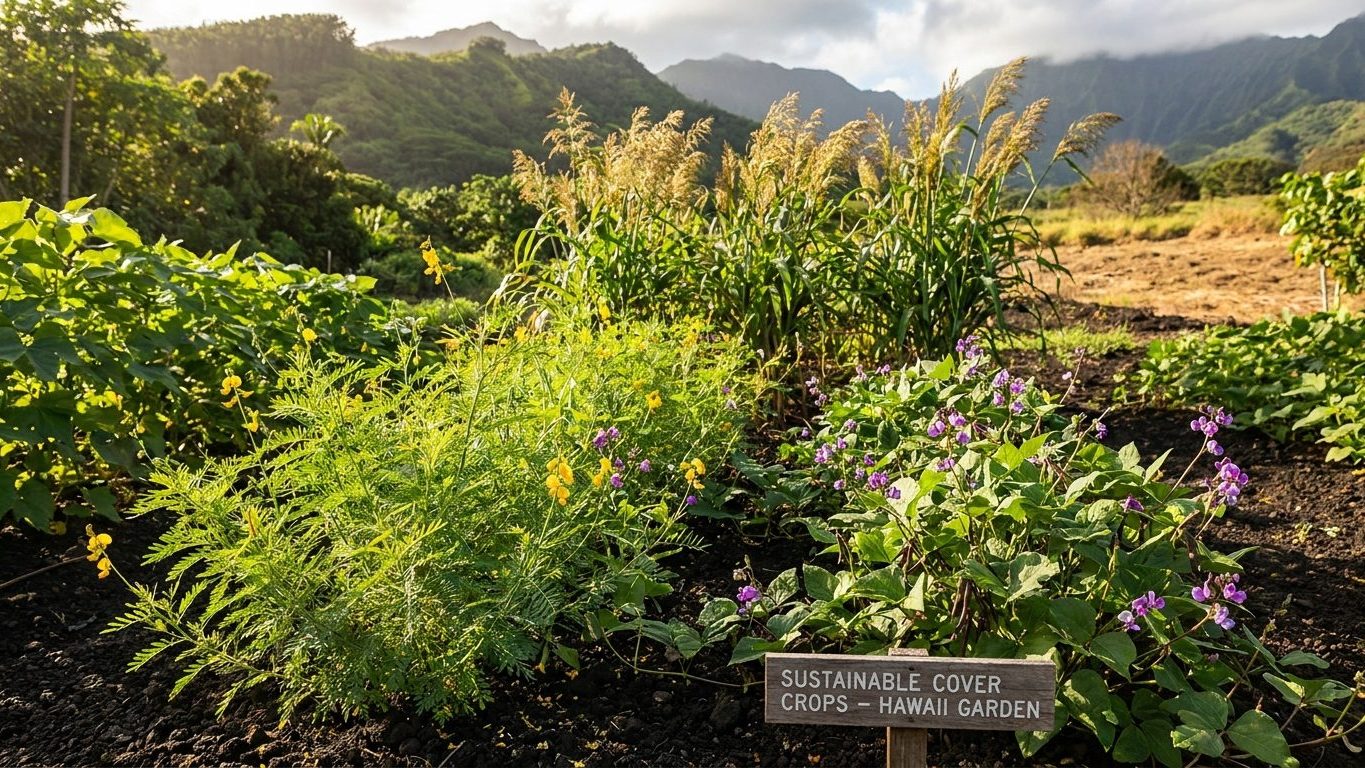

West Virginia’s most dependable cover crops are winter cereal rye and hairy vetch, because both shrug off a coldest-month mean minimum of 26.1°F and still have time to establish inside a frost-free season that stretches from roughly April to October. Crimson clover and tillage radish work too, but mostly in the state’s milder river valleys, not at higher elevation.
The short answer for West Virginia
Start with the calendar, because it decides everything else. The last spring frost lands somewhere between April 9 and April 23, and the first fall frost arrives between October 18 and November 1. Stack those two windows against each other and the frost-free stretch runs anywhere from about 178 days to as many as 206, depending on where in that range your particular spot falls. That’s a genuinely long season by cover crop standards, long enough to grow a full-season legume, terminate it, and still get a fall grass established before the ground shuts down for winter.
The number that actually narrows the field, though, is the coldest month’s mean daily minimum: 26.1°F. That’s not the record low, it’s the average low night during the coldest month, and it’s the figure that tells you whether a species survives here at all, not just whether it germinates. Winter cereal rye laughs at that number; it’s bred to keep growing through temperatures far below it. Hairy vetch handles it almost as well. Crimson clover starts to get nervous once you’re colder than that valley figure, which matters because the reference station for that 26.1°F sits in Charleston, a river valley, and plenty of West Virginia isn’t a river valley.
Sorted by type, the practical picture looks like this across the state’s hardiness range.
| Cover crop type | Winter hardiness | Fits colder end (5a) | Fits milder end (7a) |
|---|---|---|---|
| Cereal rye / winter wheat | Very high | Yes | Yes |
| Hairy vetch | High | Yes | Yes |
| Crimson clover | Moderate | Risky | Yes |
| Tillage radish / forage turnip | Low (grown to winterkill) | Yes, as a killed mulch | Yes, as a killed mulch |
| Annual ryegrass | Moderate to low | Risky | Usually |
Radish and turnip aren’t meant to overwinter anyway; they’re seeded to build biomass fast, then let a hard freeze kill them off so they decompose into loose, worm-friendly soil by spring. That makes them a good fit almost anywhere in the state, provided they go in early enough to size up before that October 18 to November 1 frost window closes the growing season.
What will not work here
The mistake most gardeners transplanting a Deep South cover crop plan into West Virginia make is assuming there’s room for two full summer cycles before frost. There isn’t. A shorter frost-free window of 178 days at the tight end of the range doesn’t leave enough runway for a subtropical species like sunn hemp or a long-season buckwheat-then-cowpea sequence to finish, get terminated, and still have a fall cover established before the first freeze.
Sunn hemp and other genuinely warm-climate legumes are a separate problem on top of the calendar. They can’t tolerate any real frost, and the coldest-month minimum of 26.1°F means there’s no pocket of the state mild enough to carry them through winter as a living cover. They’re fine as a short summer filler between two other crops, but planting them expecting them to overwinter is a wasted seed packet.
Crimson clover fails for a different reason, and it’s the reason that trips people up most. It’s marketed as a standard winter legume, and in the milder valleys it behaves like one. But it’s only moderately winter-hardy, and the 26.1°F figure comes from a valley station. Anywhere colder than that, which in West Virginia means most of the higher ground away from the Kanawha and Ohio valleys, crimson clover risks winterkilling in a hard January, leaving bare soil instead of the living mulch a gardener planned on.
Timing failures matter as much as species failures
Forage radish and other biomass-building brassicas fail for a timing reason rather than a hardiness one. They need real growth before a freeze knocks them down, and if they go into the ground too close to the first fall frost date, they simply don’t have the weeks needed to build the root mass that makes them useful. Sown late, they die at the same size they were seeded at, which defeats the whole point of using them.
What changes across West Virginia
West Virginia is not one growing region wearing a single label. The USDA Plant Hardiness Zone Map places the state anywhere from 5a to 7a, and that’s the widest kind of spread a single state can have, built entirely on the average annual extreme minimum temperature. A gap of two full zones inside one state’s borders means there is no single sowing date or species list that’s honest for all of it.
The reference station behind the frost dates and the 26.1°F figure on this page sits in Charleston, which is a river valley, generally toward the milder end of that spread. The high Alleghenies in counties like Randolph, Pocahontas, and Tucker run considerably colder, closer to that 5a floor, and freeze earlier in the fall than the October 18 to November 1 window implies for the valley. A gardener working ground at elevation should treat the fall frost date on this page as a soft outer limit, not a promise, and lean toward the crops that don’t need much of a margin: cereal rye and hairy vetch over crimson clover or annual ryegrass.
The reverse holds in the Eastern Panhandle’s lower valleys and the Ohio and Kanawha river corridors, where winters run milder and the growing season stretches longer than the state-level dates suggest. Gardeners there have more room to experiment with the less hardy legumes and can often push a fall seeding later than the general window without losing the stand to an early freeze.
None of that tells any individual reader which zone their own yard sits in, since a valley floor and a ridge two miles away can differ by a full zone. The only reliable way to settle that is to check the USDA Plant Hardiness Zone Map for the specific county and, ideally, the specific elevation.
Where to check this for your own county
This page describes West Virginia at the state level, which means it’s built to be roughly right everywhere and exactly right nowhere in particular. A county-level recommendation always beats a state one, because it accounts for local elevation, local soil, and frost dates measured closer to the actual garden instead of a single valley station.
The place to get that county-level read is extension.wvu.edu, the West Virginia University Extension Service. County extension offices maintain planting calendars calibrated to their own local conditions, not the statewide range used here, and many run or track variety trials on cover crops that show which species have actually performed well in that specific county’s soils and winters, rather than which ones perform well on paper.
Worth asking about specifically: the local frost-date estimates for the office’s own county, since those can differ by a couple of weeks from the Charleston-based dates cited on this page, and any local trial results comparing cereal rye, hairy vetch, and crimson clover performance under that county’s actual winter lows. Extension agents also tend to know which fields in the area sit in a frost pocket, information no statewide map can capture.
A phone call or a walk-in visit to the county office usually gets a faster, more specific answer than searching the website alone, particularly during planting season when agents are fielding exactly this kind of question from other growers nearby.
Checking this against your own garden
Every date on this page is a regional average built from decades of station data, and a reader’s own two eyes will always beat it for a specific plot of ground. Three things are worth watching instead of the calendar.
Soil warmth by feel comes first. Grab a handful from a few inches down; if it crumbles loosely and doesn’t feel cold or sticky, the ground has warmed enough for spring-sown legumes to germinate reliably, regardless of what the frost-date range on this page says for the state as a whole.
Germination speed on the seedlings themselves is the second signal. A cover crop that pushes first true leaves within 10 to 14 days of sowing is telling you the local soil temperature is adequate right now, at that specific spot, which matters more than any regional average when the garden sits somewhere between the valley and the ridge.
Local tree budbreak, particularly on species like forsythia or lilac that leaf out early, works as a low-tech backup clock. At higher elevations where the state’s fall frost date runs earlier than the Charleston-based range suggests, watching when the surrounding trees actually respond to cold gives a more honest read on the local season than any station-based average can.