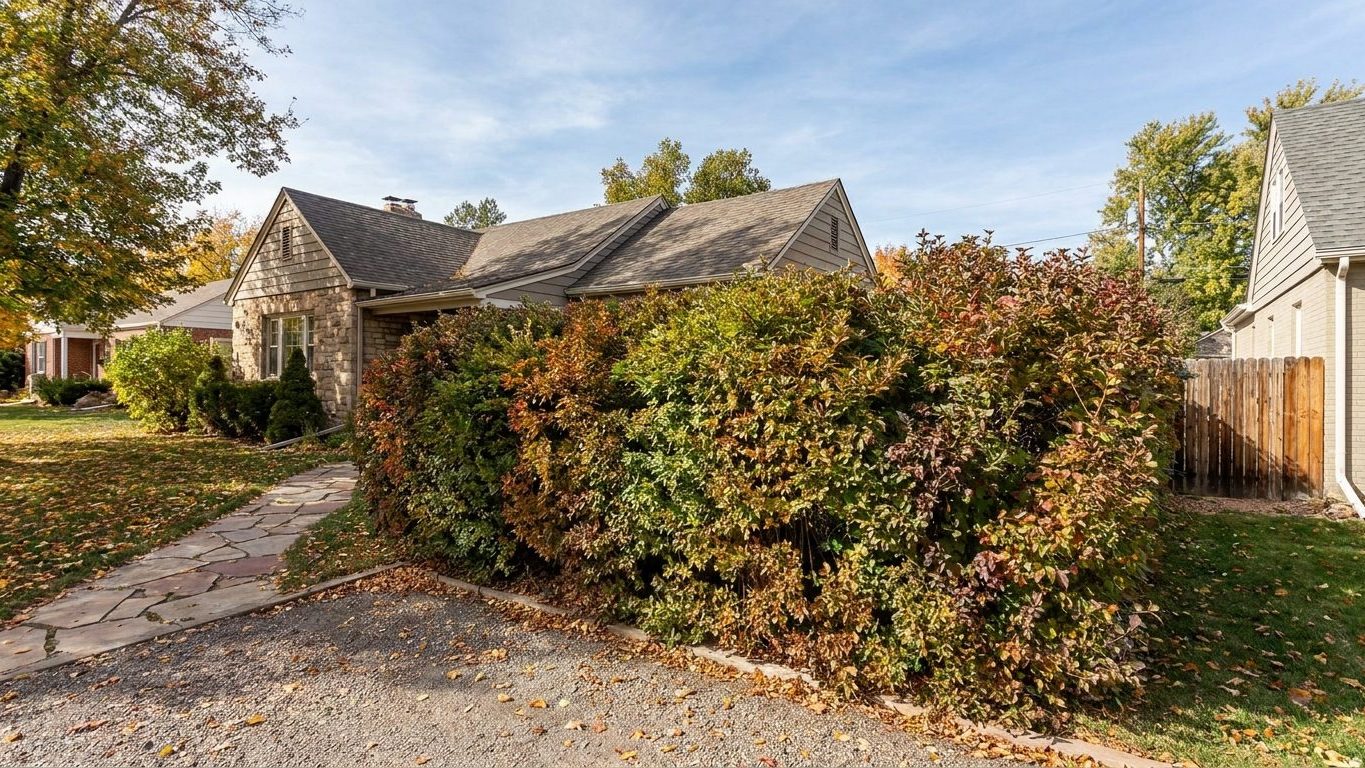

Maine has no statewide hedge height limit. If you search for one, you won’t find it, because it doesn’t exist. Every town in Maine sets its own rule, if it sets one at all, and that rule lives in a local zoning code, not in state statute. The number that matters to you is whatever your city or town has written down, and finding it takes about ten minutes.
There is no Maine hedge height law
This surprises people because so many pages online state a single figure and attach “Maine” to it, as if the whole state agreed on one height for hedges. It didn’t, because it never had to. Maine, like every other state in the country, treats hedge height as a local land-use question, not a state one. The legislature in Augusta has never passed a statute capping how tall a hedge can grow on private property. What exists instead is a patchwork of municipal ordinances, each one written, amended, and enforced by a different town government.
This is not unique to Maine. No state has a statewide hedge height law. Regulation of fences and hedges falls under home rule authority, the principle that lets cities and towns write their own zoning codes as long as they don’t conflict with state or federal law. A hedge ordinance in Portland, if one exists, has no bearing on a property in Bangor. A small coastal town might not have one at all, leaving hedge height essentially unregulated there unless a dispute lands in court.
The practical effect is that any article claiming “Maine law says hedges can’t exceed X feet” is either wrong or quietly borrowing a figure from one town’s code and stretching it over the entire state. A number without a named town attached to it, and without a link to that town’s actual code, isn’t a fact. It’s a guess dressed up as one.
None of this means you’re on your own. It means the answer is more local and more specific than a single statewide figure could ever be, and that specificity is actually useful. A real municipal ordinance will tell you not just a height, but where it applies (front yard versus back yard, for instance), how it’s measured, and what counts as a hedge versus a fence versus a “living screen.”
So the starting point isn’t “what does Maine say,” it’s “what does my town say,” and if your town has never addressed hedges at all, that’s useful information too. It tells you that a boundary dispute over an overgrown hedge in your area is more likely to be settled through neighbor-to-neighbor negotiation, or through general nuisance and encroachment principles, rather than through a specific height cap.
How to find the rule that actually applies to you
Municipal codes for most American cities and towns are published online, usually hosted by one of three services: Municode (library.municode.com), American Legal Publishing (codelibrary.amlegal.com), or eCode360. A quick search for your town’s name plus “municipal code” will usually land you on one of these platforms within the first couple of results. Once you’re there, don’t search the whole code for the word “hedge.” Go straight to the zoning chapter or the section on accessory structures, since that’s almost always where fence and hedge rules live, tucked in alongside rules about sheds, decks, and driveways.
Within that zoning chapter, look for a subsection labeled “fences” first. Many towns regulate fence height explicitly but say nothing about living hedges at all. A hedge is not legally the same thing as a fence in most codes. Fences are built structures; hedges are living plants. Some towns write their ordinances broadly enough to cover both under one definition of “screening” or “barrier.” Others regulate fences in detail and never mention hedges, which can mean hedges are unrestricted, or it can mean the town just hasn’t gotten around to writing a rule for them yet. Don’t assume the fence number applies to your hedge until you’ve confirmed the code actually says so.
What to do if the code is unclear or silent
If you’ve read through the zoning chapter and can’t find anything addressing hedge height, the next step is a phone call, not a guess. Call your town’s code enforcement office, or the planning or zoning department if the town has one separate from code enforcement. In a lot of small Maine towns, the person who answers the phone is the same person who wrote or interprets the ordinance. Ask directly: is there a maximum height for hedges or living screens on residential property, and if so, where in the code is it written?
Keep a written or emailed record of what they tell you, even if it’s just a follow-up email summarizing the call. If you ever end up in a disagreement with a neighbor over a hedge, that record gives you something concrete to reference rather than a secondhand memory of a phone conversation.
The branches that cross the line
Even in towns with no hedge height ordinance at all, there’s one rule that shows up almost everywhere: the sight triangle. At intersections, and often at driveway entrances onto a street, nothing (planted or built) is allowed to block a driver’s line of sight. This isn’t really a hedge law in the traditional sense; it’s a traffic safety rule, and it tends to be enforced more strictly and set at a much lower height than any general fence or hedge limit in the same code. A town that allows six-foot hedges in a backyard might still require anything within a defined triangle near a corner or driveway to stay under a couple of feet, because the priority there is a clear view for cars pulling out, not privacy or property division.
If your hedge sits anywhere near a street corner, a driveway apron, or an intersection, this is the rule most likely to apply to you regardless of what the general hedge ordinance says, or whether one exists. It’s worth checking specifically, since it’s easy to comply with a general height limit and still violate a sight triangle requirement most homeowners have never heard of.
When a hedge grows across the property line
The other near-universal principle isn’t really a hedge law either. It’s a longstanding rule, developed through court decisions rather than a specific statute, governing what a neighbor can do when someone else’s tree or hedge branches grow onto their side of the property line. In most states, a neighbor has the right to cut back branches, roots, or growth that crosses onto their property, up to the boundary line and no further, generally at their own expense. What they cannot do is reach onto the other person’s property to cut, and they cannot cut in a way that kills the plant or does serious damage to it, since that can expose them to liability.
This principle comes from case law, meaning it’s built up over years of rulings rather than a single cleanly written statute, and the exact details (how much can be cut, what counts as “damage,” whether notice is required) vary from state to state. Treat it as a general rule of thumb rather than a guaranteed right in every situation. If a hedge dispute reaches the point where cutting is being considered, that’s the moment to loop in a local attorney rather than rely on general principles found online, since the specifics can turn a reasonable trim into an expensive mistake.
What to check before you plant
The best time to sort out hedge height rules is before you put anything in the ground, not after a hedge is six years old and the town sends a letter. Start by pulling up your property’s plot plan or survey, if you have one, so you know exactly where your boundary line runs. A surprising number of hedge disputes trace back to a hedge planted a foot or two over the actual property line, which turns a simple height question into a boundary dispute instead.
Next, check the zoning code the same way described above, specifically for any sight triangle requirements if you’re anywhere near a corner lot, a shared driveway, or a street-facing edge of your yard. Even if your general hedge height plan is well within any citywide limit, planting the wrong species in the wrong spot near a driveway can still get you a notice from code enforcement.
- Confirm your exact property line before choosing where to plant, not after.
- Ask your town whether a permit is needed for a hedge over a certain height, since some do require one even when they don’t require one for shorter plantings.
- Check for buried utility lines or overhead wires where a mature hedge might interfere later.
- If you’re in an HOA or a deed-restricted neighborhood, check that agreement separately. It can be stricter than the town code, and it applies regardless of what the municipality allows.
- Pick a species based on its mature height, not its size at planting, since a fast grower can outpace a height limit within a few seasons.
That last point trips up more homeowners than the legal research does. A hedge that’s compliant on the day it’s planted can grow past a limit within a handful of years if the species wasn’t chosen with a mature height ceiling in mind, and by then it’s a much bigger job to correct.
Common questions
Does Maine have a statewide fence height law?
No. Fence height, like hedge height, is set by individual municipalities in Maine, not by state statute. Any figure attributed to “Maine law” for fences should be checked against a specific town’s actual zoning code before you rely on it.
Can my neighbor make me cut my hedge?
Only if your hedge violates a specific local ordinance, such as a height limit or a sight triangle requirement, or if it’s growing onto their property. Absent a documented violation or branches crossing the boundary line, a neighbor generally can’t force a trim just because they’d prefer a shorter hedge.
What’s the difference between a hedge and a fence in most zoning codes?
A fence is typically defined as a built structure, while a hedge is a living plant screen. Some codes group both under a shared definition like “screening” or “barrier,” but many regulate them separately, or address fences in detail while saying nothing about hedges at all. Always check which term your code uses before assuming a fence rule applies to your hedge.
Who do I contact if my town’s code doesn’t mention hedges?
Call your town’s code enforcement office or planning/zoning department directly. They can tell you whether an unwritten policy exists, whether the sight triangle rule applies to your property, and how enforcement typically works in practice when the written code is silent.