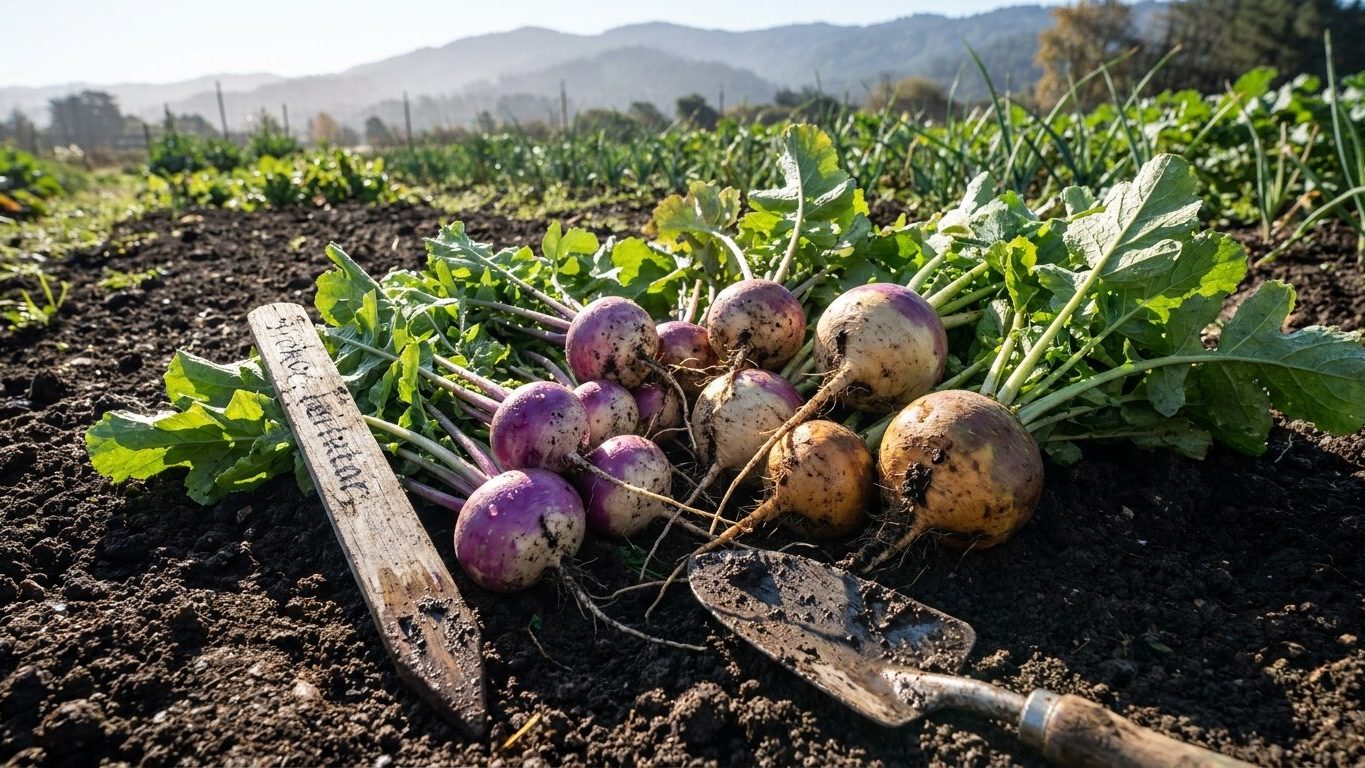

Turnips do best across most of California as a fast, cool-weather crop grown fall through spring, since heat is the real limit here, not frost. Rutabaga is the harder call: it wants a long, steady cool stretch that only parts of the state reliably deliver, so it belongs mainly in Northern California and higher-elevation gardens rather than the frost-free coast and south.
The short answer for California
Start with what the state’s climate actually offers a root crop. Coastal and Southern California don’t freeze in an average year, full stop, according to 30 years of daily station records showing zero days at or below 32°F and a 365-day frost-free season at the reference station. That sounds like a gardener’s dream, but it flips the whole planning question. Instead of asking “when’s the last frost,” you’re asking “when does it get too hot,” because Turnips and Rutabaga are cool-season crops that turn woody, bitter, or bolt straight to flower once daytime heat sets in.
For turnips, that means the fast varieties win almost everywhere in the state. Types that mature in 30 to 45 days (Tokyo types, Hakurei, Purple Top White Globe) let you slip a full root harvest into the cool window between summer heat and the next hot stretch. In frost-free coastal and Southern California, that means planting from late September through February, running two or three successions before spring warmth pushes them to bolt.
Rutabaga plays by different rules. It needs 90 to 100 days of fairly steady cool weather to bulk up its root, not just avoid frost. That’s a tough ask in a frost-free zone where “cool” might only last ten or twelve weeks before temperatures climb. Rutabaga does much better in Northern California’s Central Valley shoulder seasons and in Sierra foothill or mountain gardens, where the cool season is longer and more clearly defined, even though those same areas do get real winter freezes that coastal and southern growers never see.
So the decision by type in California isn’t about a single calendar date. It’s about matching the crop to the kind of cool season your part of the state actually has: short and mild near the coast and south, longer and colder inland and at elevation. Turnips forgive a narrow window because they’re quick. Rutabaga does not, which is why it’s a niche crop here rather than a default one.
What will not work here

The clearest failure mode in this state is planting rutabaga on a Southern California or coastal timeline and expecting a Midwest-style root. Because the frost-free season runs the full year at reference stations like Los Angeles, gardeners sometimes assume anytime is plantable. But rutabaga doesn’t fail from cold in these areas, it fails from running out of cool weather before the 90 to 100 days are up. A rutabaga sown in March in a mild coastal yard is racing a heat spike it usually loses.
Weekly watering is another quiet failure, and it has nothing to do with frost dates. California’s dry season stretches long in the Central Valley and inland valleys, and turnip and rutabaga roots split, turn pithy, or bolt early under moisture stress even when air temperatures aren’t extreme. Roots need steady, even soil moisture, not a deep soak once a week followed by dry soil in between. In hot inland gardens, that usually means checking soil more often than a weekly schedule, especially once roots start swelling.
Where mild winters cause a different problem
The state’s mild winters cut both ways. A mean daily minimum of 49.1°F in the coldest month at the Los Angeles reference station is comfortable for gardeners but also comfortable for pests and fungal issues that a hard freeze elsewhere would knock back. Flea beetles and root maggot pressure can persist nearly year-round in frost-free zones, so tight spacing that might be fine in a colder climate invites more disease pressure here. Crowded rows trap humidity from coastal fog or irrigation, and that’s exactly the setup clubroot and leaf spot favor.
Slow-maturing storage turnip varieties bred for short, brutal winters also underperform here, not because they can’t survive, but because they take too long relative to the state’s actual cool window and end up finishing in heat they were never bred to handle. Matching maturity days to your local cool-season length matters more in California than in states where a hard frost simply ends the season for everyone at once.
What changes across California
California is not one climate, and the USDA Plant Hardiness Zone Map makes that obvious: the state spans zones 5a to 11a, built on average annual extreme minimum winter temperature. That’s one of the widest ranges of any state in the country, running from high Sierra gardens that see genuine hard freezes to frost-free coastal and desert-adjacent areas where winter minimums barely dip.
There is no single planting window that covers that spread, and this page can’t hand you one number. A gardener in the milder south and along the coast is mainly managing heat and drought, choosing fast turnip varieties and timing successions around when summer heat arrives, not when frost does. A gardener in Northern California’s interior valleys, the foothills, or higher-elevation Sierra towns is working with a real frost season and needs to build a planting calendar around actual local frost dates, the way growers do in colder states, while also getting the longer, steadier cool stretch that makes rutabaga worth trying at all.
Elevation shifts things fast in this state, sometimes over a short drive. A garden a few thousand feet up in the Sierra can have a cool season that looks nothing like a valley floor twenty miles away. That’s exactly why hardiness zone alone, or a statewide frost date, can’t answer the question for an individual yard. The zone map shows the shape of the variation. It doesn’t tell you which zone you’re standing in.
The practical shift for readers: if you’re in the milder south or immediate coast, plan around heat and drought stress and lean on fast varieties. If you’re in the north, the Central Valley, or at altitude, plan around your local frost-free window like a more traditional cool-season grower would, and take advantage of that longer cool stretch to try rutabaga if you’ve never had luck with it near the coast.
Where to check this for your own county
This page describes California at the state level, which by definition can’t account for a specific county’s microclimate, soil, or local pest pressure. The next step is the University of California’s statewide extension network, at ucanr.edu, which connects to county-level Cooperative Extension offices and Master Gardener programs across the state.
Once there, look for two things specifically. First, a local planting calendar for your county or region, since UC’s county offices tailor cool-season vegetable timing to local conditions rather than a single statewide date. Second, look for any variety trial results or recommendations for Turnips and Rutabaga that were actually run in your area. County advisors often test root crop varieties under local heat, fog, and soil conditions, and their trial notes will tell you which turnip types held up to local pest pressure or which rutabaga varieties actually finished before heat arrived, information no statewide page can generate.
A county recommendation beats a state one every time, because it accounts for your specific elevation, marine influence or lack of it, and local frost behavior in a way a 700-mile-long state simply cannot. Treat this article as the starting framework, the reasoning about why turnips are easier than rutabaga here and why heat matters more than frost in much of the state, and treat your county extension office as the source for the actual dates and named varieties to plant this season.
Checking this against your own garden
No calendar, state or county, replaces what your own soil and plants are telling you, and root crops give clear signals if you know what to watch.
Start with soil warmth by feel before you sow. Turnip and rutabaga seed germinates best in soil that feels cool but not cold to the hand, not the baked, dusty warmth of a Central Valley summer bed. If the soil still feels noticeably warm an inch or two down in early fall, it’s worth waiting a week or two rather than sowing into lingering summer heat that will just push plants toward bolting later.
Second, watch for the first flush of flowers on any plant, especially if you’re growing turnips into what should be their cool window. An early bolt to flower is the plant telling you it’s already experiencing more heat stress than its variety can handle, and it’s a faster, more honest signal than any date on a calendar, particularly relevant in the state’s warmer inland and southern gardens.
Third, track how quickly seedlings reach their first true leaves after the seed leaves open. A quick, vigorous move to true leaves in cool conditions suggests your particular spot, sheltered, sunny, well-drained, is running warmer or more favorable than the regional average, and you may be able to push your planting window a bit earlier or later than the general state guidance suggests. A sluggish start says the opposite, and it’s worth holding to the more conservative side of the timing this page describes.