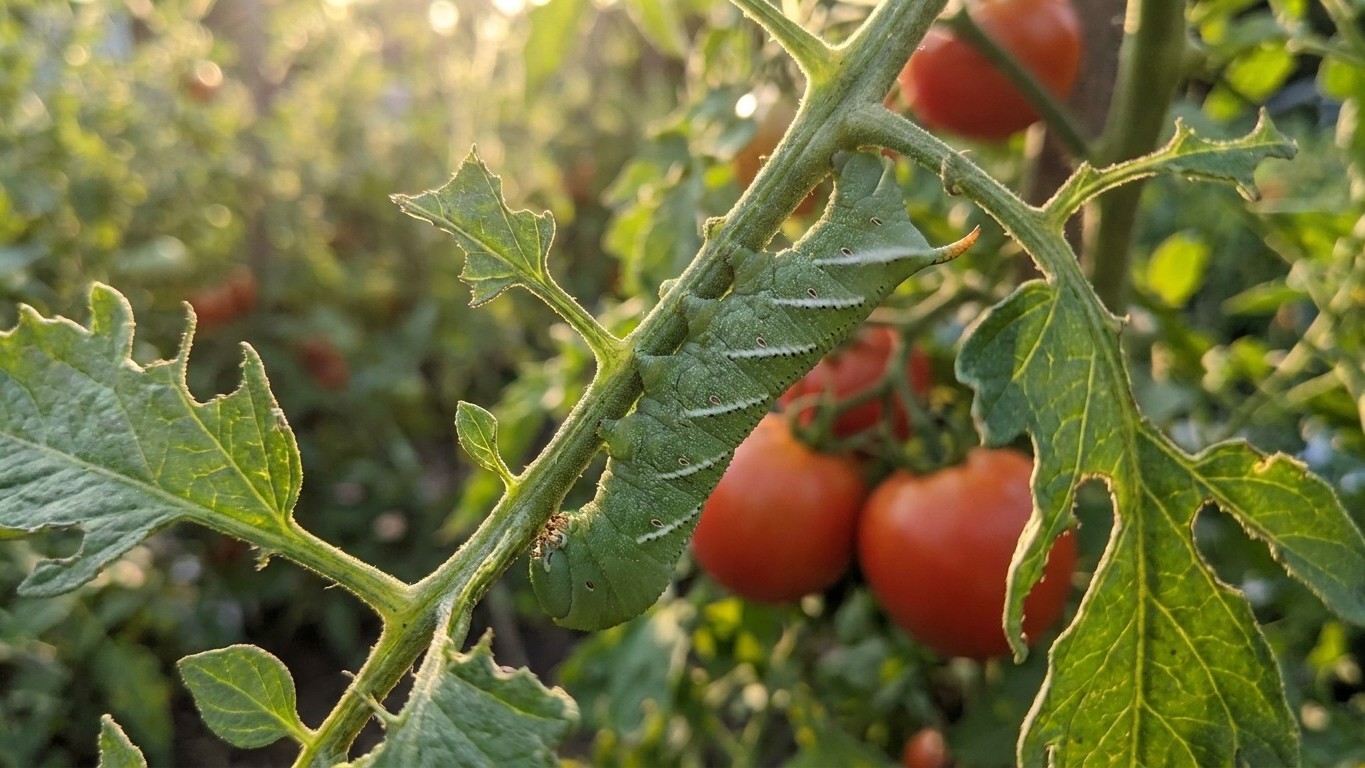

Tomato hornworms show up in Virginia gardens from mid-June through early September, with the heaviest damage typically hitting between July and August when the state’s two generations per season overlap. The green caterpillars, which can grow to nearly 4 inches long, strip tomato foliage overnight and are stopped most reliably by hand removal, parasitic wasps, and targeted applications of Bacillus thuringiensis (Bt).
When Hornworms Arrive in Virginia
Virginia’s climate splits into distinct zones that shift hornworm timing by two to three weeks. In the Tidewater and Hampton Roads area, where summers arrive early and linger, moths start laying eggs by late May. Gardeners in Richmond and central Virginia usually see the first caterpillars in mid-June. Head west into the Shenandoah Valley or up into the higher elevations near Roanoke, and the timeline slides to late June or early July because cooler spring soil delays the adult moth’s emergence.
The adult moth, a heavy-bodied sphinx moth sometimes called a hawk moth, flies at dusk and looks almost like a small hummingbird hovering at petunias or moonflowers. That’s the stage most people miss entirely. By the time the caterpillar is visible, it’s already been feeding for one to two weeks and has done real damage.
Virginia’s growing season is long enough for two full generations. The first wave peaks in July, pupates in the soil, and emerges as moths again in August, producing a second flush of caterpillars that can run into September in the warmer coastal counties. That second generation catches a lot of home gardeners off guard because they assume the threat ended after the July cleanup.
Tomato Hornworm or Tobacco Hornworm
Virginia hosts both species, and they get confused constantly because they feed on the same plants and look similar at a glance. The distinction matters less for control (the same methods work on both) but it helps to know what’s actually in the garden.
The tomato hornworm has eight V-shaped white stripes running diagonally down each side and a black or dark blue horn at the rear. The tobacco hornworm, which is more common in Virginia given the state’s agricultural history with tobacco, has straight diagonal white lines edged in black, plus a red or orange horn. Both feed on tomato, pepper, eggplant, and potato plants, all in the nightshade family.
Neither caterpillar bites or stings despite that intimidating horn. It’s purely defensive mimicry, not a functional weapon. The bigger concern is the sheer volume of leaf tissue one caterpillar can consume. A single full-grown hornworm can defoliate an entire tomato branch in 24 hours.
Spotting Them Before the Damage Is Done
Hornworms are colored almost exactly like the plants they eat, which is why most gardeners find the frass (dark green or black droppings) before they find the caterpillar itself. Check the ground beneath plants and the undersides of leaves near any chewed or missing foliage. A blacklight flashlight at night makes them glow faintly and is a trick some Virginia Cooperative Extension agents recommend for backyard scouting.
What Actually Stops Tomato Hornworms
Control works best as layers, not a single fix. Relying on just one method leaves gaps, especially with a pest that produces two generations in a single Virginia summer.
Hand-Picking Still Works
It sounds low-tech, and it is, but manually removing hornworms remains the most immediate way to stop feeding damage on a small home garden. Drop them into soapy water or relocate them far from the vegetable patch. Checking plants every two to three days during peak season (July into August) catches most of them before they reach the size that does real harm.
Parasitic Wasps Do the Heavy Lifting Naturally
If a hornworm is covered in small white, rice-shaped cocoons, leave it alone. Those are the pupae of the braconid wasp (Cotesia congregata), a parasitoid that lays eggs inside the caterpillar. The wasp larvae eventually kill the host, but not before the wasps themselves emerge and go hunt more hornworms. Virginia’s native braconid wasp populations are one of the most effective natural checks on hornworm numbers in the state, and killing a parasitized caterpillar actually removes a built-in pest-control agent from the garden.
Planting small-flowered plants like dill, fennel, and yarrow nearby gives adult wasps a nectar source and tends to keep their populations active around the vegetable garden through the season.
Bt Sprays for Larger Infestations
Bacillus thuringiensis, sold under various organic garden brands, is a naturally occurring soil bacterium that specifically targets caterpillars without harming bees, birds, or beneficial insects. It has to be eaten to work, so coverage on both sides of the leaves matters, and it breaks down in sunlight within a week, meaning reapplication after heavy rain or every 7 to 10 days during an active outbreak. The U.S. Environmental Protection Agency lists Bt as a low-toxicity option approved for use around food crops, which is part of why it’s the go-to recommendation from extension offices across Virginia.
Tilling in Fall Disrupts the Next Generation
Hornworms pupate in the soil, burrowing down 3 to 4 inches to overwinter as pupae before emerging as moths the following spring. Tilling the garden bed in late fall after harvest exposes those pupae to freezing temperatures and to birds, which is one of the more overlooked long-term strategies. Skipping this step is part of why gardens with heavy hornworm pressure one summer tend to see it again the next.
Chickens, Birds, and Other Backyard Allies
Backyard chickens will happily eat hornworms, and some Virginia homeowners with small flocks let birds free-range through the tomato bed in the evening specifically for this reason. Wild birds help too, though hornworms’ camouflage makes them harder for birds to spot compared to more exposed pests.
Companion planting with basil or marigolds gets recommended often, but the evidence for it actually repelling hornworms is thin. What does help is simply avoiding monoculture blocks of tomatoes, since moths are drawn visually to large concentrations of nightshade foliage.
Timing Treatment Around Virginia’s Two Generations
The most effective window for intervention lines up with early caterpillar stages, before they reach the 2-inch mark. Scouting weekly starting in early June in Tidewater and southeastern Virginia, and starting in mid-to-late June farther west and at higher elevations, catches the first generation early. A second scouting push in early August catches the follow-up wave before it can do damage heading into the last weeks of harvest.
Gardeners who till in fall, encourage braconid wasps through the summer, and hand-pick during the two peak windows generally avoid needing repeated Bt applications at all. That layered approach tends to be lower effort over a full season than reacting to an infestation after the damage is already visible.