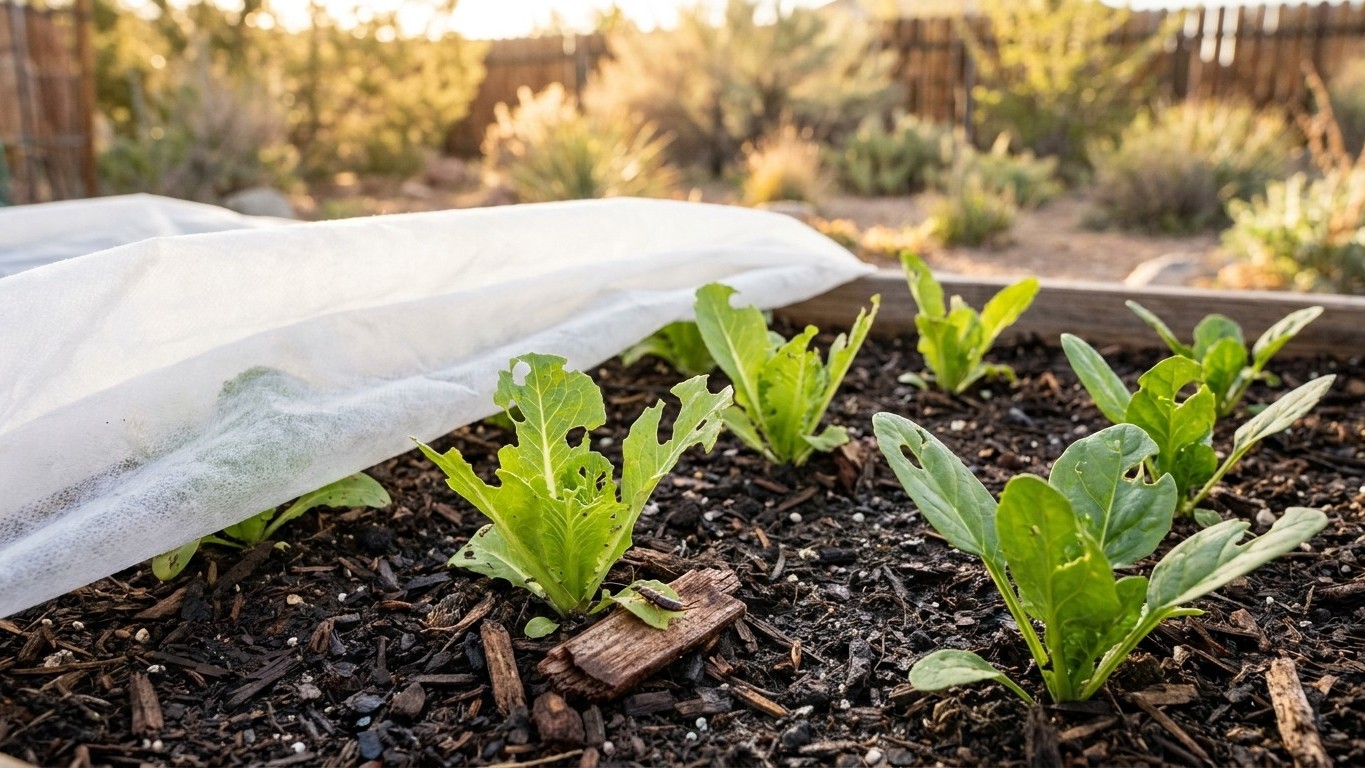

Earwigs show up in Nevada gardens as soil temperatures climb in spring, not on a fixed calendar date, and they target soft seedlings, corn silks, and ripening fruit long before anyone spots the insect itself. Row covers, timed planting, and clearing garden debris are the tools that actually slow them down.
Reading the calendar from your last frost

Every Nevada gardener plans around one date: the last spring frost. At the Las Vegas airport weather station, NOAA’s 1991-2020 Climate Normals put that window between January 7 and February 1, a figure driven almost entirely by the urban heat island around the valley. That number is not a planting guide for the rest of the state. Reno, Carson City, and anywhere with real elevation see frost linger months longer into spring and arrive months earlier in fall, so a Las Vegas frost date tells a Reno gardener almost nothing useful.
Earwigs don’t read a calendar anyway. They respond to soil warmth, staying tucked under mulch and debris until the ground holds enough heat to send them foraging at night. An early spring pulls their activity forward; a cold snap after transplanting pushes it back. Damage on new transplants typically shows up within two to three weeks of the seedlings going in the ground, once nighttime temperatures stay consistently mild enough for the insects to forage. That’s the window when a physical barrier matters most, and when it can come off again once seedlings toughen up.
A date you calculate by counting backward from a range is still a range, never a single day. Treat any frost figure as a normal for planning purposes, not a promise, and check with your county extension office for the actual local pattern before setting a cover schedule.
What it attacks, and what the damage looks like
Most gardeners notice the wreckage before they ever see the culprit. A row of seedlings that looked fine at dusk shows ragged, torn leaves by morning, with chewed margins that look almost lace-like rather than cleanly cut. Corn plants sometimes show silks nipped short right at the tip, which can interfere with pollination and leave ears with spotty, incomplete kernel fill. Soft, ripening fruit close to the ground, peaches, apricots, strawberries, often show shallow gouges or pitted surfaces where the skin has been rasped away overnight.
Seedlings take the worst of it. A young transplant can be reduced to a stub overnight, since the tender stem and first leaves offer little resistance to a hungry insect working in the dark. Established plants tolerate the feeding better; the damage looks cosmetic rather than fatal once stems have hardened off.
Both nymphs and adults cause this feeding damage, since earwigs go through incomplete metamorphosis rather than a distinct larval stage hidden inside plant tissue. That matters for control: there’s no internal stage to intercept with an early spray timed to a hatch date. Any nymph or adult found foraging at night or hiding in a curled leaf during the day is doing, or about to do, the same kind of chewing damage. The insects themselves are also predators of aphids and other soft-bodied pests, so their presence in a garden isn’t automatically bad news, it’s a question of how many are foraging on your seedlings versus your aphids.
How Nevada sits in this pest’s range

This pest is documented in 2 territories on this site, a narrow footprint that puts Nevada closer to an edge of the range covered here rather than sitting in the middle of it. A count that small doesn’t support ranking Nevada’s earwig pressure against anywhere else, and it doesn’t establish a trend over time either. What it does tell a gardener is that local, site-specific guidance matters more here than it would in a state sitting mid-range across many territories, where timing alone would separate one place from the next.
The local source for this pest is the University of Nevada, Reno Extension. That’s the reference point worth using for anything specific to growing conditions in this state, rather than general national pest calendars built around wetter, milder climates where earwig populations often build faster and denser. Nevada’s dry air and sharp day-to-night temperature swings, especially at elevation, shape how fast populations expand and how long the damage window stays open, and a county extension office can translate that into something closer to a local forecast than any statewide average can.
What actually works against it
Four layers of control matter here, ordered from cheapest to most involved.
- Time planting to avoid peak foraging. Since earwigs need warm, moist soil and cover to remain active, delaying transplant of the most vulnerable seedlings until soil temperatures have stabilized reduces the odds of overnight losses in that first fragile two-to-three week window, and it costs nothing.
- Use row covers. A physical barrier over young transplants blocks nighttime access entirely, since earwigs travel and feed under cover of darkness and rarely fly to reach a target, though the mechanism only holds while the cover stays sealed at the edges and it has to come off once plants have hardened off enough to tolerate light feeding without serious harm.
- Hand-pick at the right time of day. Earwigs hide in dark, moist crevices, under mulch, in curled leaves, beneath boards or stones, during daylight hours, so checking those hiding spots in early morning and removing what’s found there directly reduces the population before nightfall’s feeding run, though this stops being effective once a population has already built up and spread across a wide bed.
- Rotate crops and clear garden debris. Since earwigs overwinter and shelter in leaf litter, old mulch, and plant debris, a clean fall cleanup removes shelter before the next season starts, and rotating the most vulnerable crops, seedlings and soft fruit, away from beds with heavy debris history reduces the odds of a resident population finding an easy target again.
None of these measures target an internal larval stage, because earwigs don’t have one; every control point here depends on intercepting the insect while it’s exposed, either foraging at night or sheltering by day.
Common questions
Do earwigs actually kill plants in Nevada gardens, or just damage leaves?
Established plants usually survive with cosmetic leaf damage. Young transplants are the real risk, since a stem chewed through at the seedling stage can kill the plant outright, while the same feeding on a mature plant barely registers.
Are earwigs worse in wetter parts of a Nevada yard?
Feeding activity tracks moisture and shelter, so beds with heavy mulch, dense ground cover, or consistent irrigation tend to hold more earwigs than dry, exposed soil. Clearing debris and easing up on standing moisture near vulnerable seedlings reduces the shelter they depend on.
Should I worry if I see earwigs but no plant damage?
Not necessarily. Earwigs also prey on aphids and other soft-bodied insects, so finding a few in the garden without accompanying leaf damage may just mean they’re doing pest control of their own rather than targeting your crops.