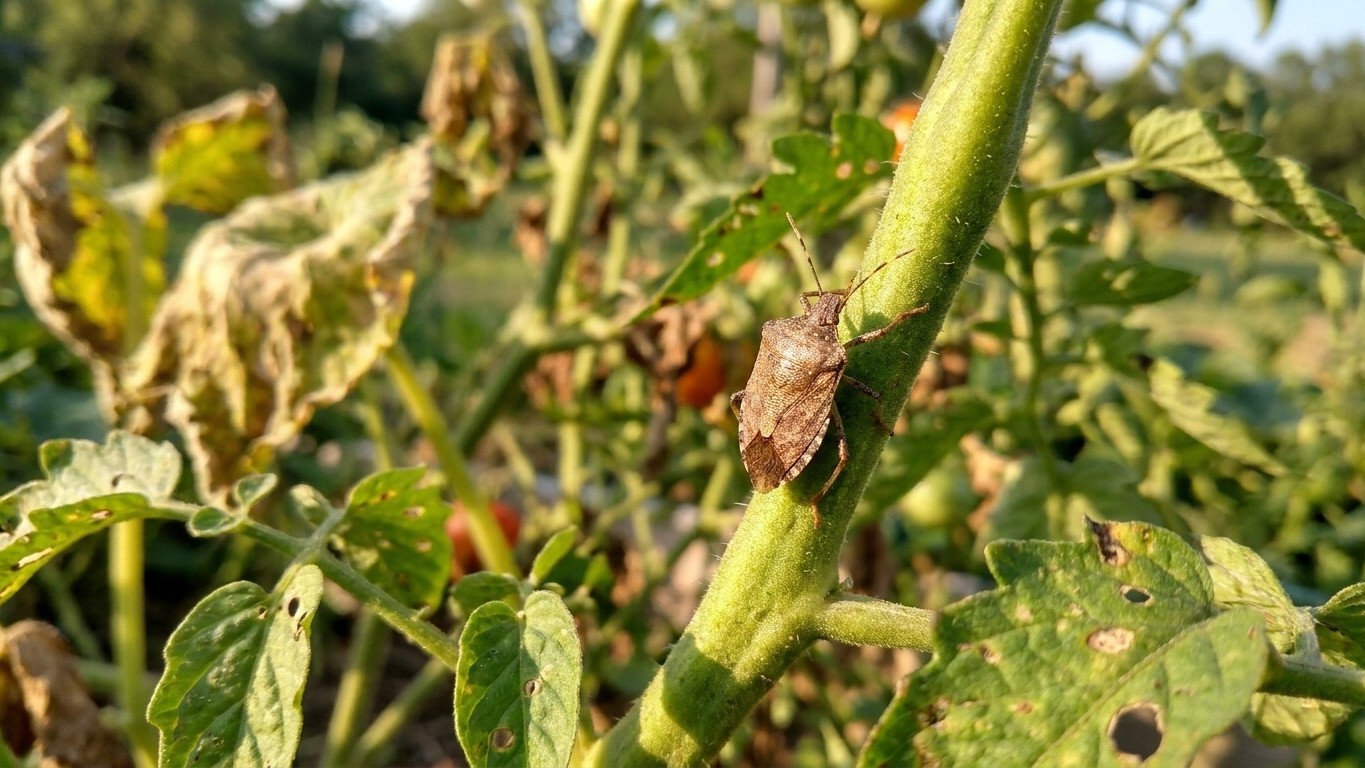

Stink bugs show up across Arkansas gardens from late spring through fall, tracking the same warm-season stretch that brings on most of the state’s other piercing, sucking pests. The University of Arkansas Division of Agriculture Cooperative Extension doesn’t publish a stink-bug-specific calendar, but its general summer pest pattern gives a reliable window to work from.
When Stink bugs turns up in Arkansas

Stink bugs become active as soil and air temperatures climb into the range that also triggers Japanese beetles, squash vine borers, and squash bugs across the state. That means the practical answer to “when” is: expect stink bug pressure to build through late spring and hold steady into fall, with the heaviest activity landing squarely in summer.
No official state-specific window for stink bugs
The Cooperative Extension’s summer pest guidance names Japanese beetle, squash vine borer, and squash bugs by species and gives each a seasonal note. Stink bugs aren’t called out separately in that resource, so there’s no published start date or generation count specific to them for Arkansas. That’s worth saying plainly rather than guessing at a date that doesn’t exist in the record.
Following the general summer pest pattern
What the extension source does confirm is the broader shape of the season: Summer, June through August, is peak for the garden pests it does track in detail, with squash bugs present the entire summer and squash vine borer adults emerging in two waves, June and again in August. Stink bugs, which favor the same warm, humid stretch, line up with that general pattern closely enough to use it as a working guide until a species-specific window is published.
Reading the calendar from your last frost
Arkansas gardeners plan around one date more than any other: the last spring frost. For much of the state, that falls between March 12 and March 28, based on NOAA’s 1991-2020 climate normals for the 32F freeze threshold. Tender transplants, though, need a lighter frost cutoff. NWS Little Rock gives April 3 as the safer 36F date, with the fall counterpart landing October 31.
Stink bugs don’t check a calendar. They respond to soil warmth and plant growth stage, so an early, mild spring pushes activity forward while a cool, wet one delays it. That’s why the frost date works better as a planning anchor than as a guarantee.
- Start with your local frost date: March 12-28 for a hard freeze, or April 3 for tender plants under the 36F standard.
- Count forward toward June, the point where the general summer pest pattern picks up statewide. That stretch, not a fixed day, is when covers typically need to come off and when scouting for early damage should start.
What it attacks, and what the damage looks like
Most gardeners notice stink bug damage before they ever spot the insect. Fruit develops sunken, discolored dimples or a corky, cloudy patch just under the skin, tomatoes especially show this “catfacing” distortion near the blossom end. Leaves may show small pale or yellow speckling where feeding punctures interrupted the plant’s normal tissue. Both nymphs and adults feed the same way, with needle-like mouthparts that pierce the surface and draw out plant juices, which is why damage can keep appearing across several weeks rather than all at once.
That feeding style means both life stages cause visible harm, so treatment timing matters less for stink bugs than it does for pests that only damage a plant in one hidden stage, like a borer larva tunneling inside a stem.
- Tomatoes
- Peppers
- Beans
- Okra
- Sweet corn
- Squash and other cucurbits
How Arkansas sits in this pest’s range

This site currently documents stink bugs in 2 territories. That count is small enough to say Arkansas is one of the early entries in this pest’s coverage here, rather than proof of a limited geographic range, stink bugs are a broadly distributed pest group nationally. With only two territories on record, it’s not accurate to claim a rank or a severity comparison between them, and none of the source material names a neighboring state that Arkansas’s guidance was drawn from, so no such comparison gets made here.
What can be said is that where a pest turns up in multiple territories, the real variable tends to be timing, when the season starts and peaks, rather than whether the pest is present at all. Arkansas’s summer-centered window fits that framing: the insect is active where warm, humid summers give it the conditions it needs, and the calendar shifts region to region more than the presence does.
What actually works against it
- Time planting around the frost window. Getting transplants in during the normal frost dates, rather than rushing them out early, means plants are past their most vulnerable seedling stage before summer pest pressure builds.
- Use row covers early. A lightweight cover keeps adults from laying eggs on young plants. It works only while the cover stays sealed at the edges, and it has to come off once flowering starts so pollinators can reach the blooms, which is also roughly when general summer pest activity ramps up statewide.
- Hand-pick adults and egg clusters. Stink bug eggs are laid in tight clusters on the underside of leaves and are easy to spot and remove by hand before they hatch. This works only while eggs and young nymphs are exposed on leaf surfaces, once damage appears on fruit, the feeding has already happened.
- Rotate crops each season. Moving susceptible plants to a different bed disrupts the pest’s ability to find host plants right where it overwintered, since many stink bugs shelter nearby over winter and emerge close to where they fed last.
- Clear garden debris in fall. Removing old plant material, weeds, and mulch piles takes away the sheltered spots stink bugs use to overwinter, reducing the population that emerges the following spring.
None of these steps work once damage has already appeared on developing fruit, at that point the feeding is done and the fruit’s cosmetic or structural harm won’t reverse. That’s why the order matters: prevention and early removal carry real weight, while responding after fruit symptoms show up mostly limits how much worse things get.
Common questions
Do stink bugs stay active all summer in Arkansas?
Yes. Following the general summer pest pattern from the Cooperative Extension, activity holds from June through August, the same stretch that drives Japanese beetle and squash bug pressure statewide.
Can row covers stay on all season?
No. Covers need to come off once plants start flowering so pollinators can reach the blooms, which typically overlaps with the point summer pest activity is picking up.
Does frost date really matter for a summer pest like this?
Indirectly, yes. The frost date determines when transplants go in the ground, and that timing shapes how mature plants are by the time peak summer pest pressure arrives in June.