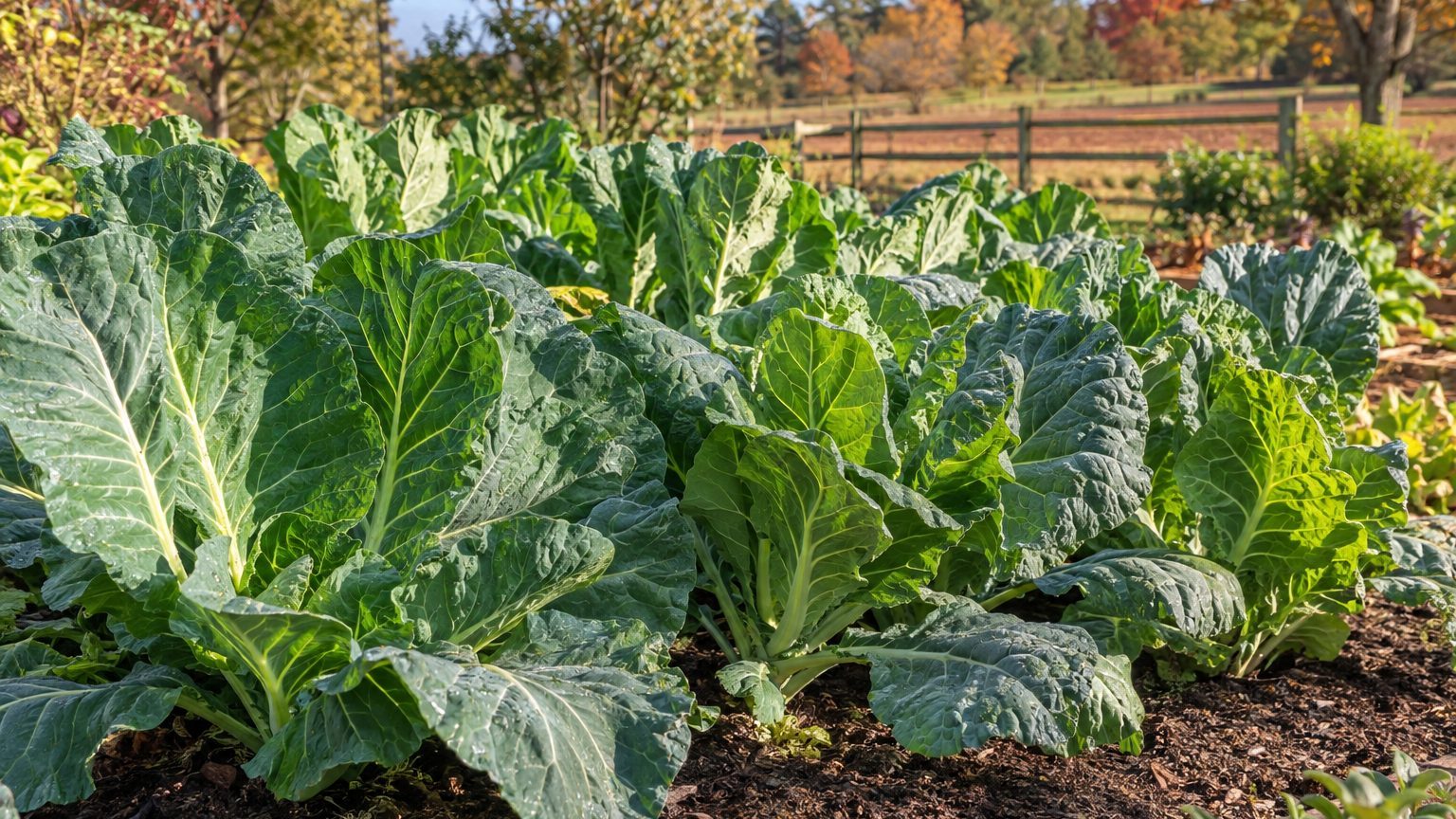

Delaware’s frost dates put its growing season on the long side for collards, and its zone 7a-8a range means winter cold is rarely the enemy it is farther north. The short version: pick a fast, disease-resistant type like Vates or Flash for spring, and a cold-hardy Georgia Southern type if you want a fall crop that sweetens after frost.
The short answer for Delaware
Start with the numbers that actually shape a variety choice here. The First State’s frost-free window runs from a last spring frost between April 3 and April 14, out to a first fall frost between October 26 and November 7, based on the 1991-2020 climate normals at the Wilmington reference station. Stretch those dates to their widest, and you get a growing season of 195 to 218 days between the earliest safe spring planting and the earliest fall frost risk. That is more than enough time for any collard variety on the market, whether it needs 55 days or 85.
So the decision in Delaware isn’t really about whether a variety will mature in time. It’s about which type handles the two stress points that do matter here: the humid heat of a Mid-Atlantic July and August, and the mild but real winter cold that follows. A coldest-month average minimum of 25.6°F means most collards will survive outside with no protection well into winter, but it also means a fast-bolting variety planted in spring can run to seed before you get much of a harvest once June heat sets in.
That’s why the practical split is by season, not by a single “best” variety.
| Type | Typical days to maturity | Bolt resistance | Cold tolerance | Best use in Delaware |
|---|---|---|---|---|
| Vates | 55-75 | Good | Excellent | Fall crop, overwintering, small gardens |
| Georgia Southern / Flash | 60-75 | Very good | Good | Spring and succession planting |
| Champion | 60-70 | Good | Good | Disease-pressure years, humid summers |
| Morris Heading | 75-85 | Fair | Good | Fall-only, longer maturity window |
If you only grow one bed, Vates covers the most ground: compact, slow to bolt, and tough enough to sit through a Delaware winter under a light row cover. For a full guide to timing and soil prep, see Growing Collards in Delaware.
What will not work here

The biggest mistake isn’t picking the “wrong” variety. It’s counting back from the fall frost date incorrectly. If you’re growing a Morris Heading type that needs 85 days to reach full size, and you’re aiming for that October 26 frost date (the earlier end of the fall frost range), your sowing deadline is August 2. Miss that window and the plants are still small and tender when the first hard cold arrives, with none of the flavor benefit that a proper frost gives mature leaves.
Tight spacing is the second failure point, and it’s specific to Delaware’s summer humidity. The state’s growing season runs through some genuinely muggy stretches, and collards packed closer than about 18 inches apart trap moisture between leaves overnight. That’s the setup for black rot and downy mildew, both of which spread fast in wet, still air. Varieties bred with some disease resistance, like Champion, buy you a little insurance, but no variety is immune if airflow is bad.
Weekly watering schedules also fail here more often than gardeners expect, particularly in the sandier soils common through Sussex County in the southern part of the state. Sandy ground drains fast, and a single weekly soak doesn’t reach root depth before it’s gone. Collards bolt or stall under drought stress just like they do under excess heat, so a hot dry stretch in July paired with a rigid watering calendar is a recipe for bitter, tough leaves rather than a failed plant outright.
Finally, don’t expect a heat-tolerant Southern type to substitute for a cold-hardy one late in the season. Georgia Southern handles July fine but doesn’t hold up to hard frost as gracefully as Vates does, so swapping it into a December harvest plan usually ends in mushy, frost-damaged leaves rather than the sweetened ones a Vates planting would give you.
What changes across Delaware
Delaware is small, but it isn’t one climate. The state’s USDA hardiness zone range runs from 7a up near Wilmington to 8a along the southern coast and lower bay counties, a spread of one full USDA zone across a state you can drive end to end in under three hours. That’s the difference between a winter where the average coldest-month low sits closer to the high teens and one where it stays closer to the high 20s.
What that means practically: a Vates planting left uncovered through January in northern New Castle County is taking on more risk than the same planting near the coast in Sussex County, where milder winter air off the bay tends to keep hard freezes shorter and less frequent. Gardeners in the cooler, more inland north should lean harder on row cover or cold frames if they want to keep harvesting collards past the holidays, while southern growers often can get away with bare-ground overwintering in a normal year.
Elevation plays a smaller role in Delaware than it does in mountain states, since the entire state sits low and flat, but local frost pockets still exist, especially in low-lying areas near creeks and wetlands where cold air settles. Those spots will see frost days before and after the official dates for their region.
None of this means picking a different variety altogether. It means adjusting how much winter protection you plan for, and how late into the season you expect to keep harvesting. Check the USDA Plant Hardiness Zone Map for your specific address rather than assuming a zone based on the nearest city name; the boundary between 7a and 8a runs through the middle of the state, not along a county line.
Where to check this for your own county
Everything above is a state-level picture, built from one reference weather station and a statewide hardiness zone map. Your county’s actual planting calendar and the varieties that have done well in local trials will differ from that picture in ways this page can’t capture. That’s exactly the gap the University of Delaware Cooperative Extension is built to fill.
Start at the University of Delaware Cooperative Extension and look specifically for two things. First, the county-level vegetable planting calendar, which will give you sowing windows adjusted for local soil temperatures and frost patterns rather than the airport-station averages used here. Second, any variety trial results or recommendation lists for leafy greens, since extension agents in Kent, New Castle, and Sussex counties often track which collard varieties actually held up against local disease pressure and pest cycles in a given year.
A county recommendation beats a state one every time, because it accounts for soil type, local disease history, and microclimate patterns that a single state page can only gesture toward. This page gives you the reasoning and the tradeoffs; your extension office gives you the local data point that confirms or adjusts it.
For a companion piece on exact sowing windows built from these same frost dates, see When to Plant Collards in Delaware. Between that page, this one, and your county extension office, you’ll have the state framework, the seasonal timing, and the local confirmation all in one place.
Checking this against your own garden
Every date and figure above is a probability, not a guarantee, and your own garden will tell you more than any calendar once the season starts. Three things to watch for, in order of when you’ll see them.
First, soil warmth by feel. Before sowing, push a finger a few inches into the bed in the morning. If it feels cool and slightly damp but not cold to the touch, germination should be quick; soil that still feels chilly this late in spring means your particular spot is running behind the regional average, possibly from shade, poor drainage, or a low-lying frost pocket.
Second, watch for first true leaves, the second set that appears after the small rounded seed leaves. That’s your confirmation the planting is on track, usually two to three weeks after sowing in Delaware’s spring soil temperatures. If it’s taking noticeably longer, the bed is colder or wetter than the general timeline assumes, and you should adjust your fall sowing date backward to compensate.
Third, taste a leaf after the first real frost of the fall. Collards famously sweeten once cold hits, converting starches to sugars as a natural antifreeze response. If your leaves taste flat and bitter well after your region’s typical frost date has passed, that’s a sign your particular yard is running warmer than the station data suggests, maybe from a south-facing wall or urban heat effect, and you can push your fall harvest later next year with confidence.