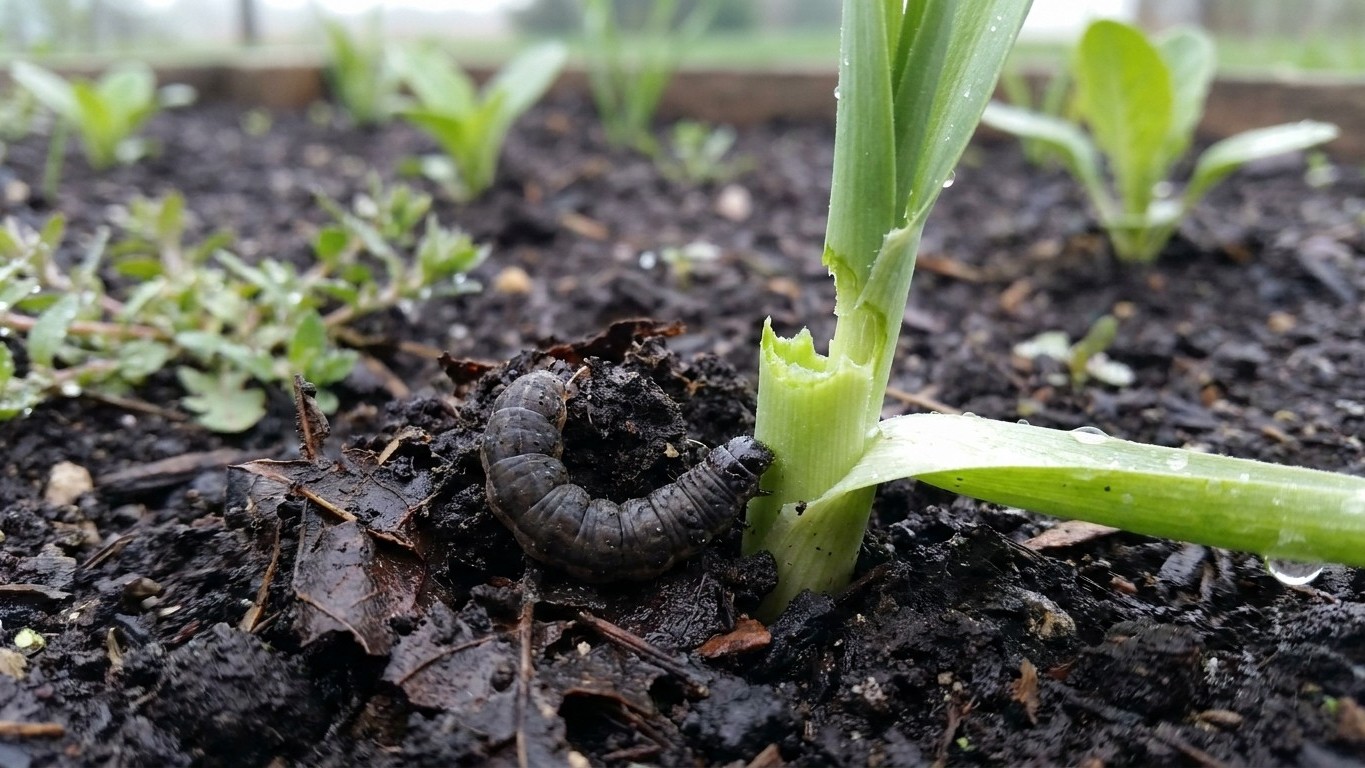

Cutworms show up in Michigan lawns and gardens starting in late April through May, when soil temperatures climb past 50°F and overwintering larvae resume feeding after a winter spent curled underground. The damage peaks through June, tapers in the heat of midsummer, then a second smaller wave often appears in September as a later generation matures before frost. Cutting them off means acting in that early spring window, before larvae reach the size where they can chew through a stem in one night.
The Cutworm Timeline Across Michigan
Michigan’s climate splits roughly into two bands for pest timing: the warmer southern Lower Peninsula (around Grand Rapids, Lansing, Detroit) and the cooler north, including the Upper Peninsula. That five-to-ten-degree difference in average spring soil temperature shifts cutworm activity by two to three weeks depending on where you garden.
In southern counties, black cutworm moths often arrive on spring storm fronts moving up from the Gulf states as early as mid-April. These aren’t local overwinter survivors. They’re migrants, riding low-level jet winds hundreds of miles north, then laying eggs in low-lying fields and gardens with early weed growth or bare soil. Eggs hatch within a week in warm conditions, and larvae start as tiny surface feeders before graduating to the stem-cutting stage that gives the pest its name.
Dingy cutworms and variegated cutworms, by contrast, overwinter locally as partly grown larvae tucked a few inches into Michigan soil. These are the ones you’ll find active the moment the ground thaws, sometimes before you’ve even planted anything. They resume feeding in early spring, pupate by late May or June, and adults emerge as moths through summer.
Farther north, in the Upper Peninsula and along the Lake Superior shoreline, soil warms slower and the season compresses. Cutworm activity there typically doesn’t ramp up until mid-May, and the window for a damaging first generation is shorter. Gardeners in Marquette or the Keweenaw generally deal with one clear generation rather than the two overlapping waves common downstate.
Why Early May Is the Critical Stretch
Newly transplanted vegetable starts, especially tomatoes, peppers, and cabbage family plants, are most vulnerable right after they go into the ground. A cutworm doesn’t eat the whole plant. It severs the stem right at soil level, usually overnight, and by morning you’re looking at a seedling lying flat with the root still anchored. That single bite can undo weeks of seed-starting work in one evening. Michigan gardeners who transplant in early-to-mid May, which is standard practice after the average last frost date in most of the Lower Peninsula, are planting right into peak larval activity.
Signs You’re Dealing With Cutworms
The classic symptom is a seedling severed cleanly at the soil line, as if snipped with scissors. Older, tougher plants might show ragged leaf feeding instead, since larger cutworms can climb stems on humid nights to feed on foliage before dropping back into the soil by daylight. That habit of hiding underground during the day is what makes cutworms tricky. You rarely see the culprit in action.
Checking the soil right around a damaged stem usually reveals a grayish or brownish larva curled into a tight C-shape, about an inch to an inch and a half long depending on species and age. Disturb the top inch of soil near a damaged plant and it’s common to find one within a few inches of the wreckage, since cutworms don’t travel far once they’ve settled near a food source.
Species matters less for identification purposes than behavior does. Black cutworm larvae tend to be smooth and dark, dingy cutworms have a mottled brown-gray pattern, and variegated cutworms show pale yellow spots along their backs. All three cause the same style of damage, so treatment decisions rarely hinge on pinning down the exact species.
What Actually Stops Cutworms in Michigan Gardens
Physical barriers remain the most reliable defense for home gardeners, mostly because they work immediately and don’t depend on timing a spray correctly. A simple collar made from a cardboard toilet paper tube, a cut section of a plastic cup, or even aluminum foil wrapped around the stem and pushed an inch into the soil blocks cutworms from reaching the plant at ground level. This method costs nearly nothing and protects transplants during the exact window (the first two to three weeks after planting) when they’re most at risk.
Tillage timing plays a bigger role than most gardeners realize. Turning over soil in early spring, before planting, exposes overwintering larvae to birds, cold snaps, and desiccation. Fields and garden beds that get tilled two to three weeks before transplanting tend to show noticeably less cutworm pressure than beds planted directly into undisturbed sod or a weedy cover.
Weed management the previous fall matters just as much. Cutworm moths preferentially lay eggs in fields with grassy weed cover or crop residue, since the emerging larvae feed on that vegetation before crops even go in. Michigan State University Extension has long recommended keeping fields and garden edges free of grass and weeds through late summer and fall specifically to reduce egg-laying sites for black cutworm moths migrating in the following spring.
Biological and Chemical Options
For larger vegetable plots or anyone dealing with repeated damage, insecticidal bait formulated with Bacillus thuringiensis (Bt) applied in the evening targets young larvae as they surface to feed, since Bt needs to be ingested to work and cutworms feed mostly after dark. Beneficial nematodes, applied to moist soil, can also reduce larval populations by infecting cutworms underground, though results depend heavily on soil moisture and temperature at the time of application.
Chemical insecticides labeled for cutworm control exist, but timing is everything. Applied too early, before larvae hatch, they break down before doing any good. Applied too late, once larvae have grown past the vulnerable early-instar stage, they’re far less effective since bigger cutworms tolerate more exposure and hide deeper in the soil during the day. Reading the product label for cutworm-specific application timing, rather than treating on a generic spring schedule, makes the difference between a wasted application and a solved problem.
Regional Notes Worth Knowing
Southern Michigan’s row-crop areas, particularly corn and soybean fields in the Thumb region and along the Indiana border, see the most consistent black cutworm pressure because that’s where spring storm systems tend to deposit migrating moths first. Home gardeners in those counties who notice unusual early damage in April, earlier than the typical local generation would suggest, are likely dealing with this migratory population rather than an overwintered one.
Sandy soils, common in parts of west Michigan near the Lake Michigan shoreline, tend to warm faster in spring and can see slightly earlier larval activity than the heavier clay soils found inland. That head start of a week or so is enough to matter if you’re timing a tillage pass or planting date around cutworm risk.
Container gardens and raised beds filled with fresh, purchased soil generally start with a much lower cutworm population than in-ground beds, simply because commercial potting mixes rarely carry overwintering larvae. Damage in containers usually traces back to moths laying eggs directly on the plants after the fact, which makes a floating row cover a reasonable prevention step for anyone growing transplants in pots on a porch or patio.
One detail that surprises a lot of new gardeners: a single cutworm can sever several seedlings in one night if plants are spaced closely together, since it doesn’t need to eat the whole plant to move on to the next one. That’s why a bed that looked fine at sunset can have five or six toppled seedlings by morning, even though only one or two larvae are responsible.