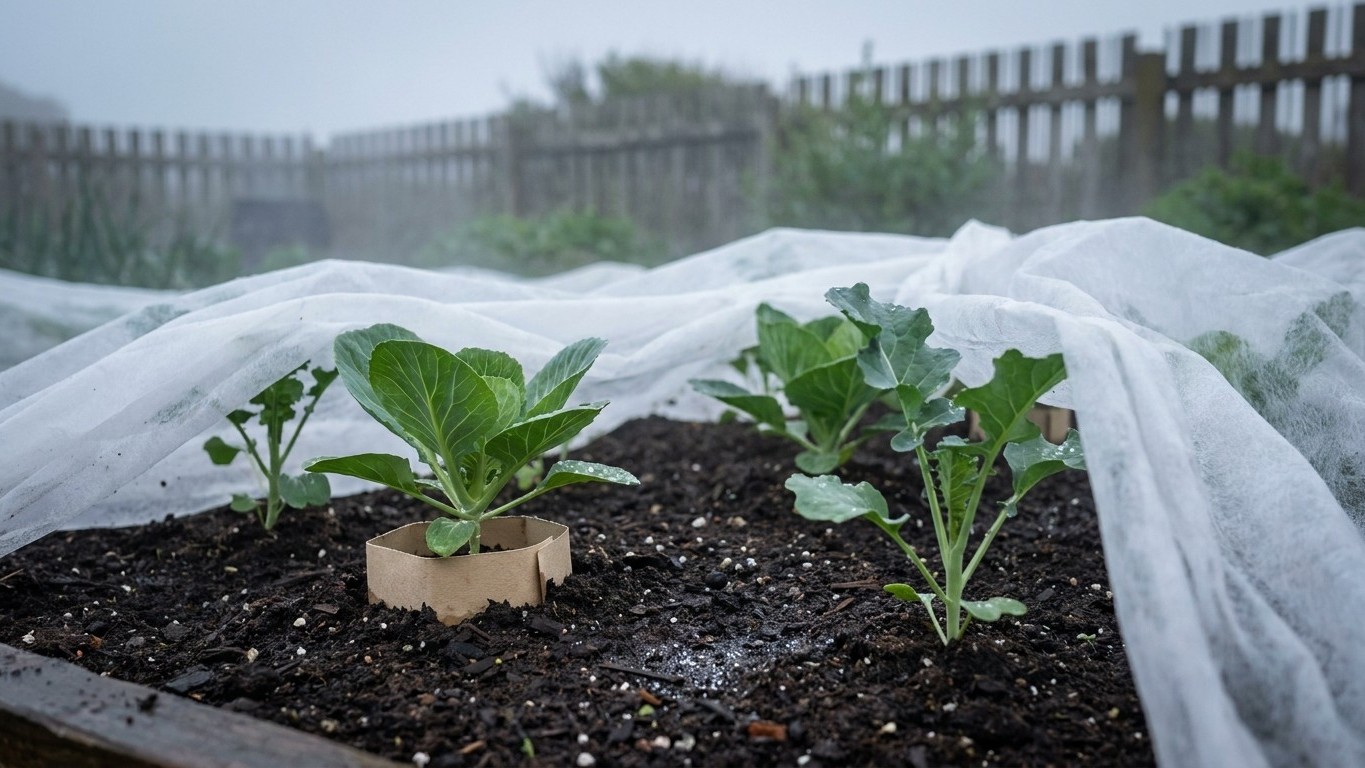

Cabbage maggot larvae show up in Newfoundland and Labrador gardens starting in late May or early June, right after the soil finally warms past the low 50s Fahrenheit, and again in a second wave through August. Floating row covers put down at planting, tight crop rotation, and stem collars stop the fly from ever laying eggs near your seedlings, which is the only real way to beat this pest since there’s no rescue spray that fixes root damage once it’s done.
A Cool, Damp Climate That Suits the Fly Just Fine

Delia radicum, the fly behind cabbage maggot damage, isn’t picky about weather the way some garden pests are. It actually prefers things cool and moist, which makes the Avalon Peninsula and most of coastal Newfoundland close to ideal habitat. Fog rolling in off the water keeps soil surfaces damp for days at a stretch, and that moisture is exactly what the fly’s eggs and pupae need to survive near the base of a plant stem.
Compare that to a hot, dry prairie summer where maggot populations often crash mid-season because the soil dries out and kills off eggs before they hatch. Labrador’s shorter, cooler growing season slows the insect’s development some, but it doesn’t eliminate the threat. Gardens along the Avalon and the Bonavista Peninsula, where cabbage, broccoli, and especially rutabaga (called turnip almost everywhere locally) are garden staples, see this pest nearly every year.
The Timeline: When Cabbage Maggot Flies in Newfoundland and Labrador
The fly overwinters as a small brown pupa buried a few inches deep in soil that grew brassicas the previous year. It doesn’t travel far to find a new host. Adults emerge once soil temperature at root depth holds steady above roughly 50°F for several consecutive days, a threshold that arrives noticeably later here than in inland Canada, often not until the last week of May or into early June depending on how the spring shakes out.
That first flight is the one that does the most damage to young transplants and direct-seeded brassicas, since tiny seedling stems offer almost no resistance to a hatching larva. A second, usually smaller flight follows in late July or August, timed to lay eggs near maturing cabbage heads and the swelling roots of turnip and rutabaga headed for the root cellar. A third generation is possible in a long, mild fall, but Newfoundland’s shortened season usually keeps growers dealing with two distinct waves rather than three.
Gardeners who track this closely use yellow sticky cards set at soil level near brassica beds starting in mid-May. A sudden jump in trapped adult flies is the signal to act, not wait.
Spotting the Damage Before It’s Too Late
By the time above-ground symptoms show up, the larvae have already been feeding for a while. Young cabbage or broccoli seedlings wilt during the warmest part of the day even when soil moisture looks fine, then fail to recover overnight. Lower leaves often take on a dull, bluish-grey cast before turning yellow and dropping. Pull a struggling seedling and you’ll usually find the answer right away: brown, water-soaked tunnels riddling the main root, sometimes with small white maggots still inside, each about a quarter inch long and legless.
For rutabaga and turnip, the damage matters even more because these roots are grown specifically for winter storage in Newfoundland’s traditional root cellars. Tunneling doesn’t just stunt growth in the field. It opens the door for soft rot and other storage diseases to move in once the roots are stacked in a cool cellar for months. A root that looks fine at harvest can turn to mush by January if maggot tunnels went unnoticed.
What Actually Stops Cabbage Maggot
There’s no single fix here, and anyone selling a one-step spray solution is oversimplifying. Control comes down to keeping the adult fly away from the base of the stem in the first place, since that’s the only spot she’ll lay eggs, and to breaking the cycle so pupae don’t build up in the same soil year after year.
Cultural Controls That Work Without Chemicals
Crop rotation is the foundation. Move cabbage-family plantings to a different bed each year, ideally not returning brassicas to the same soil for three to four seasons. Since the fly overwinters right in the ground where last year’s crop grew, this alone cuts emergence near new plantings substantially.
Floating row covers, laid down the moment seeds go in or transplants go out and buried tight along every edge, physically block the adult fly from reaching the soil around the stem. This is the single most effective tool available to home gardeners, and it costs far less than repeated pesticide treatments. The catch: covers need to come off before flowering if you’re growing anything that needs pollinators, so timing matters for crops like broccoli.
Simple stem collars made from tarpaper, cardboard, or foam squares fitted snugly around the base of each transplant also work well on a small scale, blocking the fly’s access to the soil surface right where she wants to lay. Old-timers across rural Newfoundland have long dusted wood ash around the stem base too, a folk practice that seems to make the soil surface less appealing to egg-laying females, though it’s not a substitute for covers or rotation on its own.
Cleaning up crop debris after harvest matters more than most gardeners realize. Leftover roots and stumps left in the ground over winter give any surviving larvae a place to finish development and pupate close to where next year’s crop will go in.
When Biological or Physical Barriers Make Sense
Beneficial nematodes, specifically Steinernema feltiae, applied as a soil drench around the base of transplants, target the larvae directly in the soil and have shown solid results in cool, moist conditions, which happens to describe most Newfoundland gardens perfectly. These need to go into damp soil to survive and work, so timing an application right after a rain, or watering it in well, makes a real difference.
Avoid piling on fresh manure or heavy compost right at planting time in beds with a maggot history. The decomposing organic matter releases odors that actually attract egg-laying females looking for a soft, moist place to lay near a host plant. Well-finished compost worked in weeks ahead of planting doesn’t carry the same risk.
One thing that catches a lot of Newfoundland gardeners off guard: a turnip or rutabaga that looked clean at harvest can still be carrying a hairline tunnel that only opens up into visible rot after a couple of months in storage. Sorting root crops carefully before they go into the cellar, and checking back on stored roots every few weeks through the winter, catches problems early enough to pull a bad root before it spreads rot to its neighbors.
Related guides
- Cabbage maggot in Quebec: When It Shows Up and What Stops It
- Cabbage maggot in New York: When It Shows Up and What Stops It
- Cabbage maggot in Nova Scotia: When It Shows Up and What Stops It
- Striped cucumber beetle in Newfoundland and Labrador
- Squash vine borer in Newfoundland and Labrador
- Cabbage maggot in Washington: When It Shows Up and What Stops It