
Newfoundland and Labrador gardeners deal with cool-season pests that hit transplants in spring, chewing beetles like the Striped cucumber beetle Newfoundland and Labrador gardeners report as temperatures climb, squash-family invaders like the Squash vine borer Newfoundland and Labrador growers should watch for once vines start running, defoliators like the Colorado potato beetle Newfoundland and Labrador growers find stripping potato foliage in early summer, and fruit and shade-tree pests, including the Spotted wing drosophila Newfoundland and Labrador growers should be alert to, that show up in mid to late summer. No provincial agency publishes a home-garden pest list, so the pests named below come from the University of Maine Cooperative Extension, the closest matching climate with published data. The biology crosses the border. The calendar doesn’t always.
What Newfoundland and Labrador gardens actually deal with

Cool, short summers and long damp springs favor insects that thrive in moist soil and tolerate slow warm-ups better than heat-loving pests do. That’s why root maggots and early-emerging moths, like the Winter moth Newfoundland and Labrador gardeners see flying on mild fall nights, dominate this list rather than the sun-loving pests common further south, alongside hairy caterpillar pests like the Browntail moth Newfoundland and Labrador gardeners should also watch for on oaks and fruit trees, as well as wood-boring threats like the Emerald ash borer in Newfoundland and Labrador that put shade and forest trees at risk. None of these should be assumed absent from the province just because provincial tracking data doesn’t exist yet: if you find damage matching a description below, treat it as a live possibility and confirm with your provincial agriculture office.
Winter moth
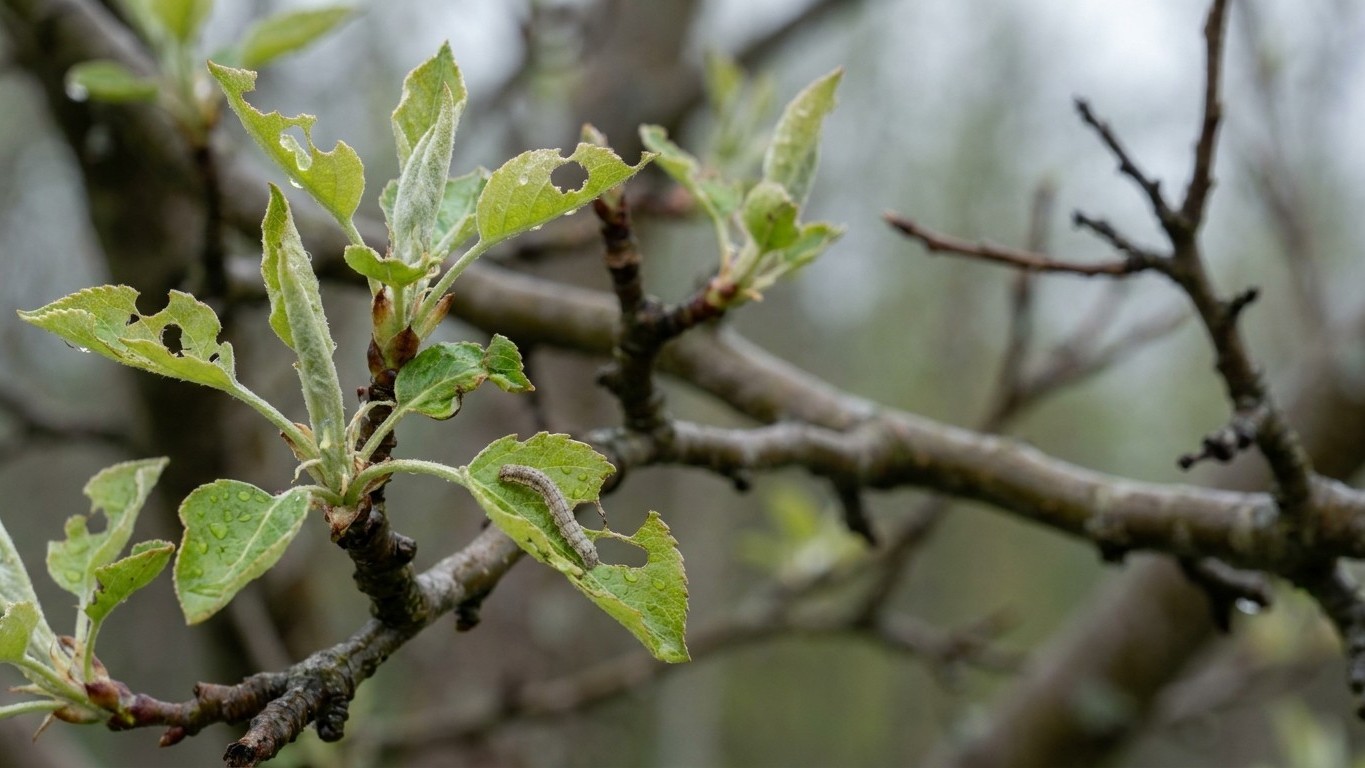
Adults are small, pale gray-brown moths that fly on mild nights in late fall and early winter, well before most gardeners are thinking about pests at all. The damage comes from the caterpillar stage the following spring: pale green inchworm-like larvae that emerge just as buds swell and feed inside developing leaf and flower clusters on fruit trees and ornamentals. Chewed, ragged foliage with larvae still webbed inside young leaves is the giveaway. Dormant oil sprays timed to egg hatch and sticky bands around trunks to trap wingless female moths climbing up in fall are the two tactics with real track records.
Cabbage maggot
The Cabbage maggot Newfoundland and Labrador gardeners contend with never shows itself above ground. Adults resemble small gray houseflies and lay eggs at the base of cabbage-family transplants in cool, wet spring soil. The larvae, small white maggots, tunnel into roots, and seedlings wilt and collapse even though the soil looks damp enough. Floating row cover installed at transplanting, before adults find the bed, is the most reliable fix.
Seedcorn maggot
The Seedcorn maggot Newfoundland and Labrador gardeners encounter is a close cousin of the cabbage maggot, this pest attacks germinating seeds and seedlings, especially in cold, wet, heavily manured soil early in the season. The adult fly looks unremarkable; the damage is what tells the story: seeds that never come up, or seedlings that emerge stunted and then die. Delaying planting until soil has warmed and dried slightly cuts losses noticeably.
Lily leaf beetle
Adults are a striking, unmistakable bright red, about a quarter-inch long, and they’re active as soon as lilies push up in spring. For a closer look at how this pest behaves locally, see this guide on the Lily leaf beetle Newfoundland and Labrador. The larvae are the real destroyers: they carry their own excrement on their backs as a slimy brown coating, a bizarre defense that also makes them easy to identify. Both stages chew large, ragged holes in lily foliage and buds. Handpicking adults in early spring, before egg-laying starts, does more good than almost any spray applied later.
Colorado potato beetle
Adults have bold yellow-and-black striped wing covers, hard to mistake for anything else in a potato bed. Both adults and the humpbacked, orange-red larvae strip foliage from potato, tomato, and eggplant, often defoliating whole plants if left unchecked. Crop rotation and handpicking, checking leaf undersides for the yellow egg clusters, remain the backbone of control here.
Striped cucumber beetle
Yellow with three bold black stripes running lengthwise, these beetles show up as soon as cucumber, squash, and melon seedlings emerge. Adults chew holes in leaves and can transmit bacterial wilt, which causes vines to collapse days or weeks after the beetle damage itself has healed over. Row cover during the seedling stage, removed once plants flower and need pollinators, is the standard approach.
Squash vine borer
The adult is a day-flying moth with a red-orange abdomen, easily mistaken for a wasp. It lays eggs at the base of squash and pumpkin stems, and the larva that hatches bores directly into the stem, where it feeds unseen. Sudden wilting of an otherwise healthy vine, with a small hole and sawdust-like frass near the base, is the classic sign. Wrapping the base of young stems in foil or fabric before egg-laying begins blocks entry.
Browntail moth
Larvae overwinter in silk webs at the tips of branches, then emerge in spring to feed on foliage of oak, apple, and other hardwoods, leaving skeletonized leaves behind. The hairs on the caterpillars cause a poison-ivy-like skin reaction in many people, so handling infested branches calls for gloves and long sleeves. Cutting and destroying the winter webs before larvae emerge in spring is the single most effective step a home gardener can take.
Emerald ash borer
The adult is a metallic green beetle roughly half an inch long, but the damage comes from the larval stage tunneling under the bark of ash trees. D-shaped exit holes in the bark, thinning canopy, and vertical bark splits are the signs to watch for. There’s no home spray that reliably saves an infested tree; reporting suspected infestations and never moving firewood are what actually slow its spread.
Spotted wing drosophila
Unlike common fruit flies that only attack overripe fruit, this small fly, with males showing a distinct dark spot on each wing, lays eggs in fruit that’s still ripening on the plant. Berries and soft fruit that look fine on the outside but are mushy or contain tiny larvae inside are the tell. Harvesting fruit promptly and refrigerating it right away limits larval development, and traps baited with vinegar or wine help monitor when populations spike.
Telling damage apart
Chewed leaf margins and irregular holes point toward chewing insects at work right now, the kind of damage left by Colorado potato beetle, cucumber beetle, and lily leaf beetle. That’s different from skeletonized leaves, where only the veins remain, a pattern typical of browntail moth or winter moth caterpillars feeding in groups.
Wilting is the trickiest symptom because three completely different causes produce it. A vine that collapses suddenly, with a small hole and frass near the base of the stem, points to squash vine borer tunneling inside. A vine that wilts gradually over days, with no visible entry hole, but with cucumber beetle feeding scars nearby, suggests bacterial wilt transmitted by the beetle rather than the beetle itself. And a seedling that wilts and dies with no insect visible anywhere above ground is worth digging up, because cabbage maggot or seedcorn maggot damage happens entirely below the soil line, at the roots.
Sudden wilting without any chewing marks and without root damage is often a watering problem, not a pest at all. Ash trees in decline deserve a bark check for D-shaped exit holes before assuming drought or disease, since emerald ash borer damage is easy to miss until the canopy is already thinning. Sticky residue on leaves, together with sooty-looking mold, usually signals a sap-feeding insect rather than any pest on this list, and is worth a separate look before treating for the wrong problem. Confirming which category you’re dealing with, insect, disease, or a watering fault, decides everything that follows: a fungicide does nothing for a root maggot, and a row cover does nothing for underwatering.
What actually works
Prevention first
Rotating cabbage-family and cucurbit crops to a different bed each year breaks the cycle for cabbage maggot, seedcorn maggot, and striped cucumber beetle, all of which overwinter in or near the soil where their host crop grew. Timing matters just as much as rotation: delaying transplants until soil has warmed reduces seedcorn maggot losses, and installing row cover before pests find the bed, then removing it once plants flower and need pollination, works for cucumber beetle and squash vine borer alike. Encouraging ground beetles, birds, and parasitic wasps by leaving some undisturbed mulch and skipping broad-spectrum sprays does more long-term good than most gardeners give it credit for, since these predators handle a share of the pest load without any effort on the gardener’s part.
Targeted intervention
Handpicking remains genuinely effective for Colorado potato beetle, lily leaf beetle adults, and squash vine borer eggs, especially when done early and often rather than left until populations build. Cutting and destroying browntail moth winter webs before larvae emerge, and installing sticky trunk bands for winter moth, are physical interventions that outperform spraying in most home gardens. Where a spray is warranted, targeted products applied at the right larval stage beat broad-spectrum insecticides that also wipe out the predators doing free work in the same bed.
Marigolds planted as a general pest deterrent don’t have reliable evidence behind them for any pest on this list, despite the popularity of the idea. Garlic or hot pepper sprays are similarly unproven against beetles and borers, and homemade soap sprays do little against anything with a hard shell or a stem-boring habit, since they never reach the insect. Bug zappers attract and kill far more harmless night-flying insects than actual garden pests, and have no measurable effect on daytime feeders like cucumber beetles or potato beetles.
What control costs
Handpicking costs nothing but time, and it’s repeat work: checking plants every few days through the season for potato beetle eggs, lily beetle adults, and squash vine borer eggs. For a small home garden it’s the cheapest option in cash terms, though the time adds up over a full season.
Row cover and physical barriers ask for an upfront purchase, but the material is reusable for several seasons if handled carefully and stored dry over winter. Once installed at the right time, a barrier needs almost no further attention until it comes off for flowering or harvest, which makes it the lowest-effort option after the initial setup and the cheapest overall across multiple seasons for a home garden.
Biological controls, whether that’s encouraging existing predators or introducing something targeted like beneficial nematodes for soil-dwelling larvae, sit in the middle: a moderate upfront cost with less frequent reapplication than sprays, but they work slower and need patience.
Sprays, even targeted ones timed to a specific larval stage, tend to need the most frequent repeat applications over a season, since rain washes off residue and new generations of pests keep hatching. For a home garden dealing with any of the pests above, barriers and handpicking together, backed by rotation and timing, cost the least and need the least ongoing spending compared with a spray program.
Local help
For pest identification specific to Newfoundland and Labrador conditions, the province’s Department of Fisheries, Forestry and Agriculture handles specimen identification and can confirm whether what’s damaging your garden matches a known outbreak in your area. Bringing in a photo or a sample of the damaged plant, along with the insect if you can safely collect it, gets the fastest answer.
Pest-by-Pest Guides for Newfoundland and Labrador Gardens
Once you know what season you’re in, it helps to read up on the specific insect giving you trouble. If cabbage crops are struggling, check cabbage maggot for when the larvae arrive and when the second wave hits in August. Potato growers should look at the Colorado potato beetle page to see why the province has largely avoided a self-sustaining population. Lily fans will want the rundown on the lily leaf beetle and when it wakes up in spring. Anyone starting seeds early should read about the seedcorn maggot and its damage window right after thaw. Berry growers need the spotted wing drosophila page for how populations build later here than elsewhere in Atlantic Canada. Squash and pumpkin growers should check both the squash vine borer, which almost never establishes, and the striped cucumber beetle, which shows up occasionally. Tree owners should track the watch-list threats covered on the browntail moth, emerald ash borer, and winter moth pages.
Common questions
Are these pests confirmed to be in Newfoundland and Labrador?
The list comes from a Maine extension service tracking a similar climate, not from a provincial survey. That doesn’t mean these pests are absent here; it means no local agency has published matching data yet. Contact the provincial agriculture office to confirm a specific sighting.
What’s the single most useful thing a new gardener can do first?
Learn to tell chewing damage, wilting, and below-ground root loss apart before reaching for any product. That distinction decides whether rotation, a barrier, or a completely different fix is the right move.
Do these pests attack ornamentals as well as food crops?
Several do. Winter moth and browntail moth larvae feed on fruit trees and hardwoods rather than vegetables, and lily leaf beetle targets ornamental lilies specifically, so a flower bed isn’t automatically safe just because it’s not a vegetable garden.
Is spraying ever the right first move?
Rarely. Prevention through rotation, timing, and barriers heads off most of these pests before they establish, and handpicking handles what gets through. Sprays make more sense as a targeted follow-up once a specific pest and stage are confirmed, not as the opening response.