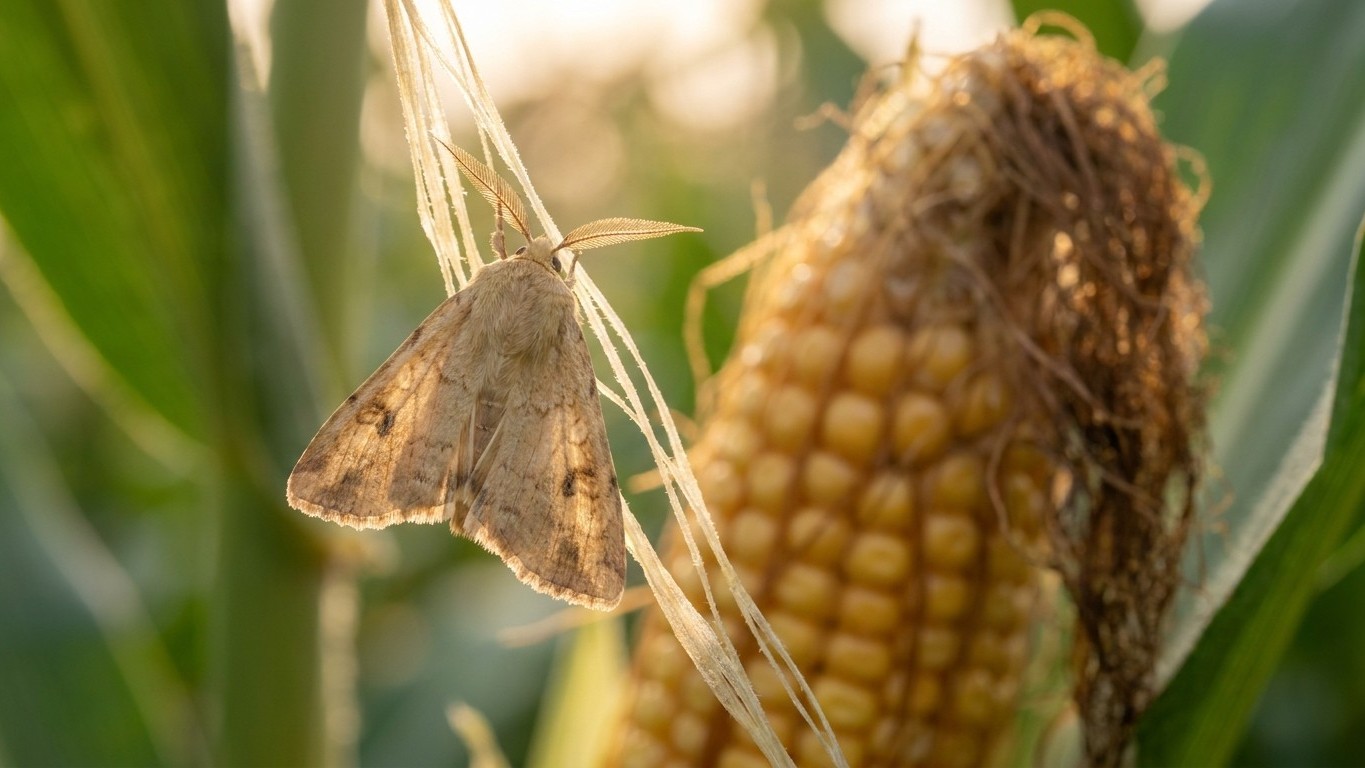

Corn earworm moths ride storm fronts up from the Gulf Coast and the Deep South, and in West Virginia they typically show up in numbers by mid-July, with the heaviest pressure landing on ears and tomato fruit from early August through the first frost. Nothing about the state’s winters lets this pest set up permanent shop here, which is actually the most useful thing to know before you plant a single kernel.
Unlike a lot of garden pests that overwinter in your soil and wait for spring, corn earworm (Helicoverpa zea) mostly can’t survive a West Virginia winter as a pupa. The insect needs mild, moist soil to make it through the cold months, and outside of a few sheltered pockets in the Eastern Panhandle’s lower valleys, most of the state gets too cold for that. So each season starts over. Moths migrate north from Texas, Louisiana, and the Carolinas, sometimes traveling hundreds of miles overnight on southerly winds, and they land wherever there’s a corn crop starting to silk.
Why West Virginia’s Terrain Changes the Timing

This is a state where elevation does most of the talking. Berkeley and Jefferson counties in the Eastern Panhandle sit in warmer river valleys with a longer frost-free season, often 180 days or more, and that gives moth populations more time to build and produce a second or even partial third generation before cold shuts things down. Compare that to Pocahontas or Randolph counties up in the Alleghenies, where growing seasons can run 30 to 40 days shorter and the higher elevation keeps summer nights cooler. Moths still arrive there, but populations tend to stay lower and the damage window is tighter.
Growers in the Ohio Valley and the mid-elevation counties around Charleston and Huntington usually land somewhere in the middle. Warm, humid summers there push earworm activity earlier than the mountains but not quite as early as the Panhandle. If you’re tracking regional pest alerts, treat West Virginia less as one climate and more as three or four overlapping ones, each with its own arrival date.
Weather patterns matter as much as geography in any given year. A wet, warm spring across the Southeast can mean bigger moth flights reach West Virginia sooner. A cool, dry stretch down south can delay things by two or three weeks. That’s why extension entomologists rely on pheromone trap counts rather than a fixed calendar date to call the start of the season.
Spotting the Damage Before It’s Too Late
The signature sign is a chewed, sometimes moldy tip on an otherwise healthy-looking ear of corn. The larva enters through the silk channel, feeds its way down into the kernels at the tip, and leaves behind a mess of frass (insect droppings) mixed with damaged kernels. Peel back the husk on an affected ear and you’ll usually find one caterpillar, ranging from pale yellow-green to nearly black depending on its age, still working the tip.
That feeding damage does more than cost you a few kernels. The wound it creates is an open door for fungal pathogens like Aspergillus and Fusarium, which can produce mycotoxins in stored grain. For home gardeners this is mostly a quality issue. For anyone growing field corn for feed or storage, it’s a real economic concern, since contaminated grain can get docked or rejected at the elevator.
Corn isn’t the only host. The same insect goes by “tomato fruitworm” when it’s boring into tomatoes, and it will also attack peppers, beans, and okra. If you’re finding a similar caterpillar tunneling into a tomato near the stem end, you’re likely dealing with the same species, not a separate pest.
What Actually Stops Corn Earworm
Because the insect migrates in fresh every year, crop rotation and tilling under old stalks (tactics that work well against soil-overwintering pests) do very little here. Control has to focus on the window between egg-laying and the larva burrowing past the silk, because once it’s inside the ear tip, sprays can’t reach it anymore.
For Sweet Corn Growers
Timing sprays to fresh silk is the single most effective tactic available. Moths lay eggs directly on silks, and the newly hatched larvae have to travel down that silk channel before they tunnel in, which gives growers a short but real opportunity to intervene. Extension programs across the region generally recommend treating every 3 to 5 days once silks emerge and trap catches or moth activity are high, tapering off once silks turn brown and dry, since that’s a sign the vulnerable window has mostly closed.
Bt sweet corn varieties, bred to express a protein toxic to caterpillars but harmless to humans and most beneficial insects, have become one of the more reliable options for home gardeners and small-scale growers who want to skip a spray schedule altogether. They’re not bulletproof in years with very high moth pressure, but they consistently cut down damage compared to conventional varieties.
Where spraying is the plan, materials like spinosad and certain pyrethroids remain standard choices, applied directly to fresh silks with enough coverage to reach newly hatched larvae before they disappear into the ear. A few drops of mineral oil applied to the silk tip after pollination is complete is an old home-garden trick that can smother eggs and young larvae, though it works best on a small planting where you can treat each ear by hand.
For Home Gardens and Tomatoes
Tomato growers dealing with fruitworm damage have fewer silk-based tricks available, since the moth lays eggs on leaves and developing fruit rather than a single entry point. Regular scouting for small, freshly laid eggs (pale and ribbed, usually on the upper leaves near flower clusters) lets you catch an infestation before larvae bore in. Bt-based sprays labeled for caterpillar control on vegetables work here too, applied to foliage and young fruit on a weekly schedule during peak moth activity.
Natural enemies do a fair amount of unpaid work in the background. Minute pirate bugs and lacewings feed on corn earworm eggs, and parasitic Trichogramma wasps lay their own eggs inside earworm eggs, killing them before they hatch. Avoiding broad-spectrum insecticide sprays when populations are low helps keep these predators around instead of wiping them out along with the pest.
Monitoring Tools That Take the Guesswork Out
Pheromone traps baited with a synthetic version of the female moth’s scent are the standard way growers track when flights actually arrive, rather than guessing based on a calendar date that shifts every year. A sudden jump in moth catches, usually reported by county extension offices during the growing season, is the signal to tighten spray intervals or start checking Bt corn plots more closely for breakthrough damage.
Home gardeners without access to a trap network can still watch for practical cues. Silking corn near the peak of a warm, humid stretch in July or August is at higher risk than corn that silks early in a cooler June. Planting an early variety timed to silk before the main moth flight arrives is a low-effort way to dodge a good chunk of the pressure entirely, especially useful in the Eastern Panhandle where the season is long enough to make early planting a real option.
One detail that surprises a lot of first-time growers: a single female corn earworm moth can lay several hundred eggs over her lifetime, scattering them across dozens of ears in a planting over just a few nights. That’s why a trap count that looks modest one week can translate into visible ear-tip damage two weeks later, once those eggs have hatched and the larvae have had time to tunnel in.