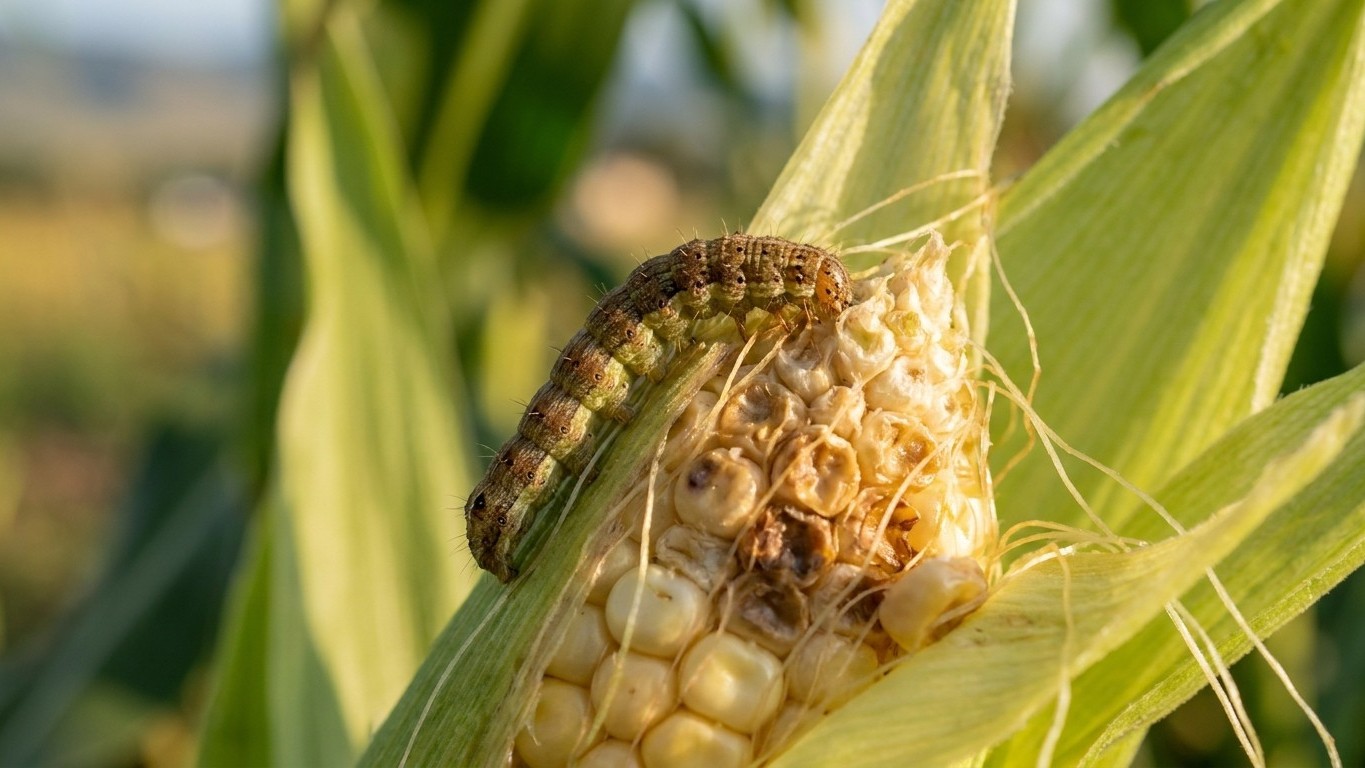

Corn earworm doesn’t overwinter in Colorado’s frozen ground, so its arrival depends entirely on when moths ride storm winds up from Texas and Oklahoma. That typically happens between late June and early August, with the heaviest pressure hitting sweet corn right as it starts silking. Stopping it means matching your defense to that timing window, using resistant hybrids, and knowing the difference between a few chewed kernels and a real infestation.
Why Colorado’s Corn Earworm Problem Is a Migration Problem

Most crop pests that trouble Colorado gardeners survive winter locally, tucked into soil or plant debris. Corn earworm (Helicoverpa zea) doesn’t play that game. Its pupae can’t reliably survive the deep freezes that hit most of the state, so the moths that show up each summer usually flew in from much warmer territory. Storm systems and jet stream patterns carry them hundreds of miles north, and Colorado sits at the tail end of that journey.
That’s why timing varies so much by region. On the Eastern Plains, lower elevation and earlier warm-up mean moths can arrive by late June, sometimes overlapping with early sweet corn plantings. Along the Front Range corridor, from Pueblo up through Fort Collins, the window usually runs mid-July through August. Head into the mountain valleys or the Western Slope, and cooler nighttime temperatures push arrival later and often reduce overall pressure, since the moths favor warmer conditions for laying eggs and larval development.
Three months. That’s roughly the span during which Colorado growers need to stay alert, and it shrinks or shifts depending on where you’re standing in the state.
What the Moths Actually Do
Adult moths are tan to yellowish-brown, about three-quarters of an inch long, and most active at dusk. A single female can lay several hundred eggs, often depositing them individually on fresh corn silk or on the undersides of leaves near developing ears. Eggs hatch in two to four days depending on temperature, and the larvae head straight for the tip of the ear, tunneling down through the silk channel toward the kernels.
This is where the damage becomes obvious. Chewed silk, frass (insect droppings) at the ear tip, and hollowed-out kernels near the top of the cob are the calling cards. Unlike some caterpillar pests that skeletonize leaves, corn earworm larvae stay hidden inside the husk for most of their feeding period, which makes early detection tricky unless you’re checking silks directly.
Spotting the Damage Before It Spreads
Pull back the husk on a few ears once silks start browning, and look at the tip. A single larva, usually striped in shades of green, brown, or pink depending on its diet and age, can ruin the top inch or two of kernels. That might sound minor, but the real problem is secondary rot. Damaged kernels invite fungal infection, and in humid stretches that follow Colorado’s summer thunderstorms, mold can spread through the ear faster than the caterpillar itself ever could.
Home gardeners growing sweet corn often notice the problem only at harvest, when they shuck an ear expecting clean rows and find chewed tips instead. Commercial growers scout more systematically, checking silk condition and larval presence across multiple plants per block, since a few damaged ears in a backyard patch is an inconvenience, but the same damage rate across acres translates into real crop loss.
Corn earworm doesn’t limit itself to corn, either. On tomatoes it’s called tomato fruitworm, and it bores into ripening fruit near the stem end. It’ll also feed on beans, peppers, and sorghum when corn isn’t available or convenient. If you’re seeing similar boring damage on tomatoes growing near a corn patch, there’s a decent chance it’s the same insect working two crops at once.
What Actually Stops Corn Earworm in Colorado
No single tactic eliminates corn earworm completely once moths have arrived in numbers, but combining a few approaches cuts losses substantially, whether you’re managing a few rows or several acres.
Resistant Varieties and Planting Timing
Sweet corn hybrids bred with tight husks and long, well-sealed silk channels make it physically harder for newly hatched larvae to reach the kernels. Some hybrids also carry Bt traits (built-in proteins from Bacillus thuringiensis) that kill larvae feeding inside the ear, and these have shown strong reductions in ear damage compared to conventional varieties in university field trials across the Corn Belt and Great Plains.
Planting timing matters almost as much as variety choice. Because moth pressure builds through summer and typically peaks in late July and August, corn planted early enough to silk before that peak often escapes the worst damage. Gardeners on the Eastern Plains sometimes get a head start this way; those at higher elevations have a narrower planting window to work with, since a late spring frost can delay everything and push silking right into peak moth activity anyway.
Biological and Chemical Controls
Natural enemies do a lot of unpaid work here. Trichogramma wasps parasitize corn earworm eggs, and lacewings and various predatory beetles pick off young larvae before they tunnel into the ear. Encouraging these predators, mainly by avoiding broad-spectrum insecticide use early in the season, keeps that free labor force intact.
When chemical control becomes necessary, timing beats intensity. Applications work best when targeted at the silk stage, before larvae burrow past the reach of a spray. Pheromone traps, which lure male moths with synthetic versions of female mating scent, let growers track when local moth activity spikes and time treatments instead of guessing. Colorado State University Extension entomologists have long recommended trap monitoring as the backbone of timing decisions for this pest, since spraying too early wastes product and spraying too late misses the larvae entirely.
Home gardeners without access to commercial-grade traps have a low-tech option: a few drops of mineral oil applied to the silk tip after pollination has occurred. The oil smothers small larvae without harming the developing ear, and it’s cheap enough to apply to every ear in a backyard patch. It won’t stop a heavy infestation, but for a dozen stalks it often does the job.
Regional Differences Worth Knowing
Colorado’s range of elevations and microclimates means corn earworm pressure isn’t uniform. The San Luis Valley, sitting at over 7,500 feet with cool nights even in July, sees noticeably lighter pressure than the lower, warmer Arkansas River Valley near Rocky Ford, an area known for its produce and correspondingly familiar with this pest. Front Range suburbs, with their mix of irrigated lawns and backyard gardens, tend to fall somewhere in between, with damage showing up most years but rarely at the level seen in the state’s traditional corn-growing counties.
Drought years complicate the picture. Stressed corn silks less vigorously and sometimes attracts fewer egg-laying females, but stressed plants also handle existing damage worse, since they’ve got less reserve capacity to compensate for lost kernels. A wet, humid August, on the other hand, tends to accelerate the rot that follows larval feeding, turning a minor infestation into a bigger loss at harvest.
When to Stop Worrying and When to Act
A single damaged ear here and there in a home garden usually isn’t worth chemical intervention. Trimming the damaged tip off before eating solves the practical problem, and the rest of the ear is perfectly fine. Commercial growers face a different calculation, since even a five to ten percent damage rate across a field can affect grading and marketability for fresh-market sweet corn, where buyers expect clean, unblemished ears.
The clearest signal that action is warranted is a jump in trap counts or a noticeable increase in fresh silk damage during scouting. Waiting until harvest to assess the problem means the damage, and any secondary mold, has already happened. Checking ears during the silking window, even just a quick peek at a handful of plants every few days, gives enough lead time to decide whether mineral oil, a targeted spray, or simply riding it out makes the most sense for that particular season.
Related guides
- Corn earworm in Oklahoma: When It Shows Up and What Stops It
- Corn earworm in New Mexico: When It Shows Up and What Stops It
- Corn earworm in Georgia: When It Shows Up and What Stops It
- Corn earworm in Manitoba: When It Shows Up and What Stops It
- Corn earworm in Utah: When It Shows Up and What Stops It
- Corn earworm in Saskatchewan: When It Shows Up and What Stops It