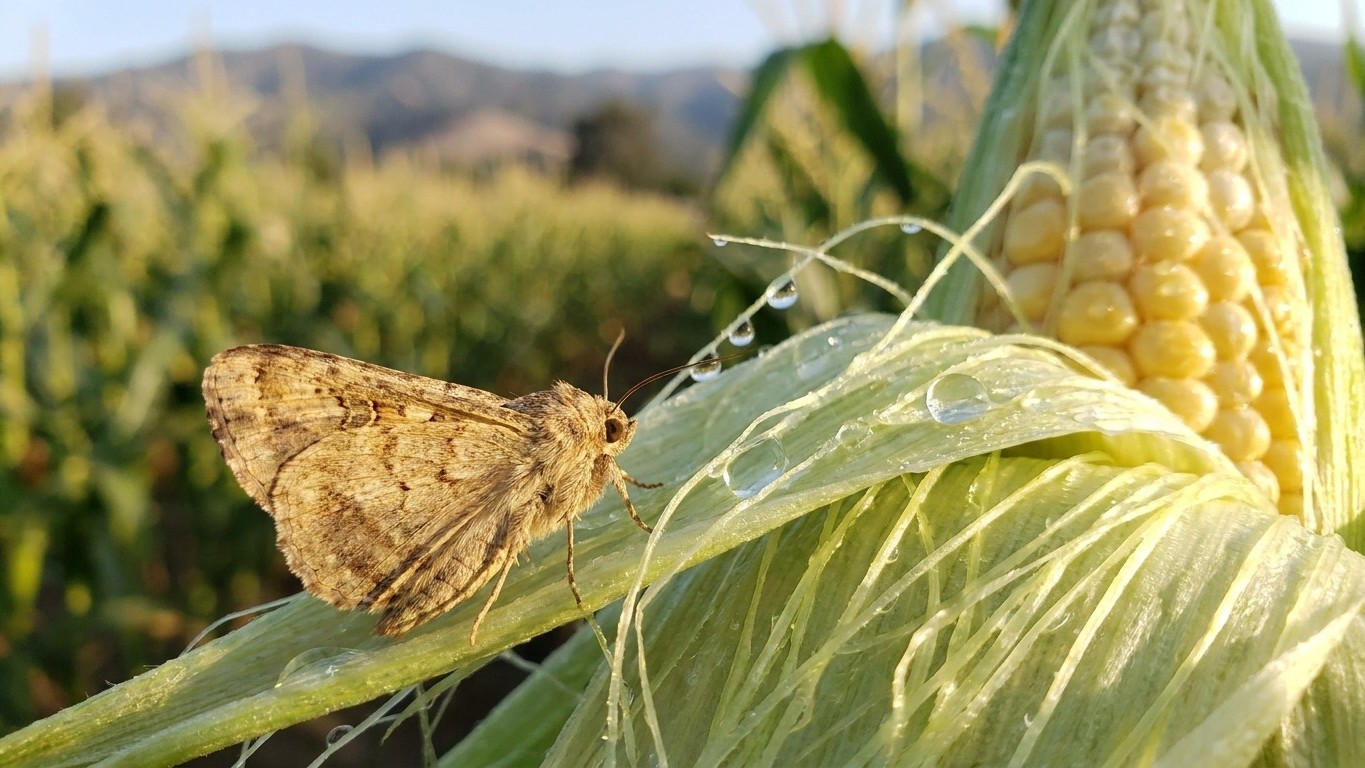

Corn earworm moths start showing up in California gardens and fields as early as March in the low desert, but for most of the state, the real pressure builds from June through September, with populations peaking in the Central Valley during the hottest weeks of summer. Stopping it comes down to timing: mineral oil drops on corn silk, Bacillus thuringiensis (Bt) sprays applied right after egg hatch, and resistant sweet corn varieties with tight husks that make it harder for larvae to reach the kernels.
This insect, known scientifically as Helicoverpa zea, goes by several names depending on which crop it’s chewing on. On tomatoes, it’s the tomato fruitworm. On cotton, the cotton bollworm. Same moth, same caterpillar, different menu. California’s climate and its patchwork of growing regions, from the Imperial Valley desert to the fog-cooled coast, mean this pest doesn’t behave the same way statewide.
When Corn Earworm Season Starts in California

Corn earworm doesn’t survive cold winters well as a pupa in the soil, which limits where it can overwinter successfully. In the low desert regions around Imperial and Riverside counties, mild winters let some pupae survive underground, giving those areas an early jump on the season. Farther north, in the Sacramento and San Joaquin valleys, most of the population each year builds from moths that migrate in on warm air currents rather than emerging locally.
That migration pattern explains why timing shifts so much by region. Growers in the low desert often see moth flights ramping up by April. Central Valley sweet corn and tomato growers typically watch activity climb through late June and hit its sharpest peak in July and August, right when summer heat accelerates the insect’s life cycle. Coastal counties, kept cooler by marine influence, tend to see lighter and later pressure, sometimes not becoming a real concern until September.
California can produce anywhere from three to five generations of Corn earworm in a single year, depending on location and how long the warm season lasts. Each generation takes roughly four to six weeks from egg to adult moth under summer conditions, which is fast enough that a garden or field can go from clean to infested in under a month if nobody’s watching.
Why Sweet Corn and Tomatoes Get Hit Hardest
Female moths are drawn to fresh corn silk and ripening tomato fruit, laying single eggs directly on the plant tissue the larvae will eat once they hatch. That preference is why home gardeners growing sweet corn or heirloom tomatoes in the same backyard bed often see damage on both crops within days of each other. Commercial growers in the Central Valley, where sweet corn and processing tomatoes are grown side by side across huge acreages, deal with the same overlap on a much bigger scale.
Identifying Corn Earworm Damage Before It Spreads
The caterpillar itself changes color as it grows and even varies between individuals, ranging from pale green to brown, pink, or nearly black, with faint stripes running the length of its body. That variability throws off a lot of first-time gardeners who assume they’re dealing with two different pests. Look instead at where the damage shows up and how it’s shaped.
On corn, the larva tunnels down through the silk at the tip of the ear and feeds on kernels near the top, leaving behind chewed tissue and dark, crumbly frass. Peel back the husk on an affected ear and the damage is usually confined to the top two or three inches, which is actually good news for home cooks since the rest of the ear is often still edible once that section is cut away.
On tomatoes, the pattern looks different. Larvae bore into the fruit near the stem end or wherever the skin has a soft spot, hollowing out a cavity as they feed and often leaving the entry hole small enough to miss on a quick glance. Cut the tomato open and you’ll usually find a chewed-out pocket and, if you’re unlucky, the caterpillar still inside.
A few other California pests get confused with corn earworm. Fall armyworm feeds in a similar spot on corn but tends to skeletonize whorl leaves before ears even form. Tomato hornworms are far larger, bright green, and strip entire leaves rather than boring into fruit. If the damage is localized to silk tips or fruit interiors rather than foliage, corn earworm is the more likely suspect.
What Actually Stops Corn Earworm in California Gardens and Farms
No single method wipes this pest out completely, which is why both home gardeners and commercial operations lean on a combination of timing, physical barriers, and targeted treatments rather than one silver bullet.
Cultural and Physical Controls
Planting sweet corn early enough that silking happens before the peak moth flight in July and August can dodge a huge share of the damage in Central Valley gardens. Varieties bred with tighter husks also make it physically harder for newly hatched larvae to reach the kernels before drying out or getting picked off by predators.
A low-tech trick that’s held up well over decades of use involves applying a few drops of mineral oil, sometimes mixed with Bt, directly into the silk channel at the tip of each ear once silks start turning brown. The oil suffocates eggs and small larvae without needing a full spray. It’s labor-intensive if you’ve got dozens of ears, but for a backyard patch of a dozen stalks, it’s manageable and avoids broader pesticide use.
- Remove and discard damaged ear tips and infested tomatoes promptly to interrupt the larva’s development before it pupates.
- Till soil after harvest in fall gardens, since exposing overwintering pupae to cold and predators reduces the following season’s local population.
- Space plantings to avoid a single, synchronized silking period that gives moths one big target window.
Biological and Chemical Options
Bacillus thuringiensis, sold under various trade names as a garden-safe biological insecticide, works best when applied right as eggs hatch and before larvae tunnel deep into the ear or fruit, since it has to be ingested to work. Spinosad, another option derived from a naturally occurring soil bacterium, offers similar timing requirements and is commonly used in both home gardens and organic commercial operations.
Broad-spectrum pyrethroid sprays remain available for heavier infestations, but the University of California’s Statewide Integrated Pest Management Program flags growing resistance concerns in some corn earworm populations exposed to repeated pyrethroid use, particularly in cotton and processing tomato regions where spray pressure has been heaviest for years. That’s part of why UC IPM guidance leans toward rotating modes of action and reserving synthetic pyrethroids for situations where Bt or spinosad haven’t kept pace.
Natural enemies do some of the work without any spraying at all. Tiny parasitic wasps in the Trichogramma genus lay their own eggs inside corn earworm eggs, killing the pest before it ever hatches, and minute pirate bugs prey on newly hatched larvae. Gardens that avoid broad-spectrum insecticides tend to keep more of these beneficial insects around, which lowers the baseline pressure even before other controls kick in.
Monitoring: How Growers Track Corn Earworm Moths
Commercial operations across California rely on pheromone traps baited with a synthetic version of the female moth’s mating scent to catch males and gauge how active the local population is on any given week. County agricultural offices and UC Cooperative Extension programs run networks of these traps through the growing season, and the counts help growers decide when to start scouting fields closely instead of spraying on a fixed calendar.
Degree-day models add another layer, translating daily temperature data into an estimate of how far along the current generation is in its life cycle. When trap counts spike and degree-day accumulation suggests eggs are about to hatch, that’s the narrow window when a Bt spray or mineral oil application does the most good. Spraying too early wastes product on eggs that haven’t hatched yet; spraying too late means larvae are already inside the ear or fruit where nothing topical can reach them.
Home gardeners without access to a trap network can still borrow the logic. Checking corn silks every two to three days once they start turning brown, and treating within that window rather than waiting for visible damage, mirrors the same timing principle commercial growers use at a much larger scale. Details on regional trap networks and degree-day tools are maintained by the UC Statewide Integrated Pest Management Program, which tracks pest activity across California’s growing regions.
One detail that surprises a lot of new gardeners: cosmetic tip damage on sweet corn rarely ruins the whole ear. Cutting off the chewed top inch or two before cooking salvages the rest, which means a light infestation is often more of an annoyance than a total loss, especially compared to the fruit-boring damage on tomatoes that tends to spoil the whole thing from the inside out.