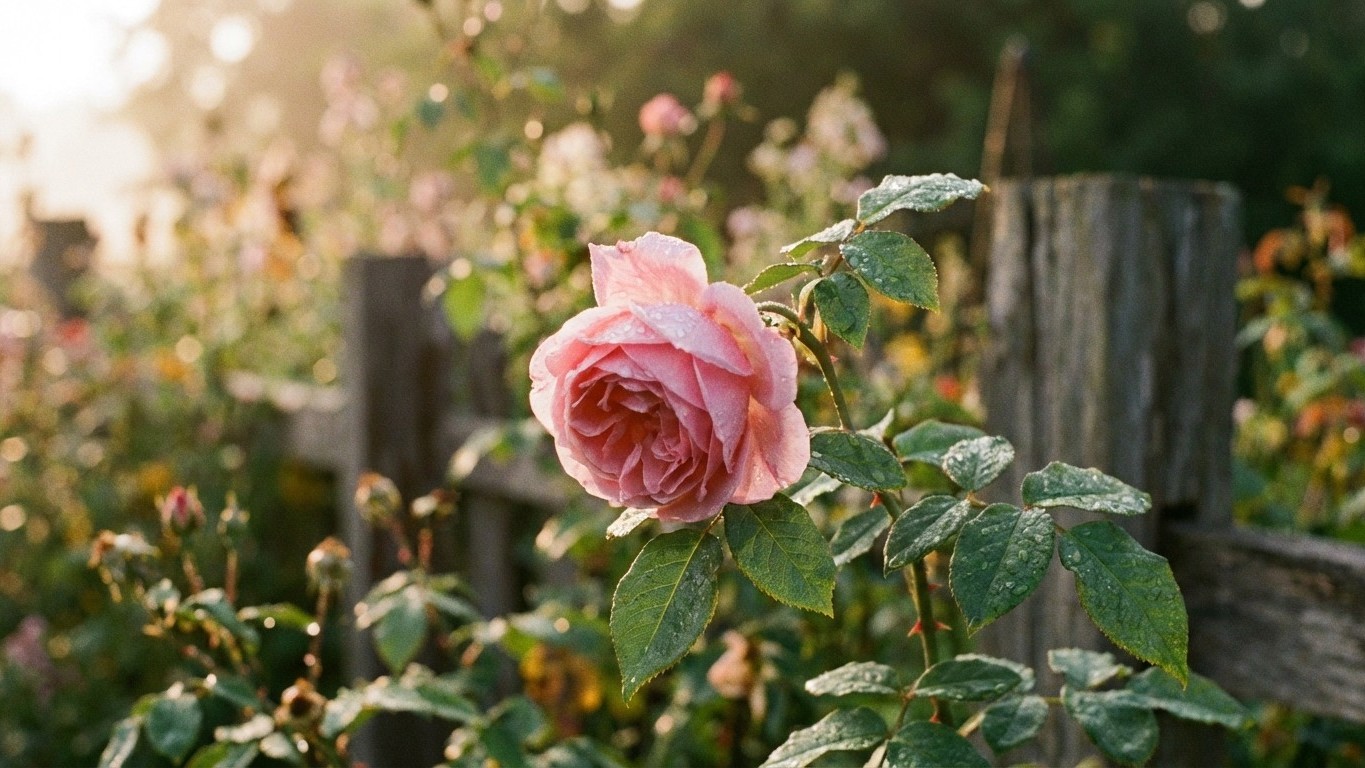

In low-desert Arizona, the roses that hold up are old garden types: China, tea, polyantha and Lady Banks roses that keep growing through mild winters and cope with brutal summers. In the high country, the opposite applies, and cold-hardy rugosa and Explorer-type shrubs win. Most of what fills big-box racks sits between those two, and it fits neither climate well. Here is how to sort them before you spend money on growing roses in Arizona.
Which roses survive a Arizona winter
Low desert: winter is the easy part
Phoenix is the reference city here, and its numbers surprise gardeners coming from the Midwest. According to NOAA’s 1991-2020 Climate Normals and daily records for the Phoenix station, the city reached 32°F in only 6 of 30 springs. NOAA lists the frost-free season as 365 days. When a rare cold snap does bring 32°F, it lands between late December and mid January, and it rarely lasts.
So cold hardiness barely matters for a rose planted in the Phoenix area. What decides survival is summer. Heat stalls flowering for months, stresses foliage and dries out roots faster than most hybridizers ever tested for. A rose that performs in Oregon or Ohio can sit through an Arizona July doing nothing but hanging on. That is why a frost-based planting calendar makes no sense for the low desert, and why this page doesn’t offer one.
The roses that cope share a background. China and tea roses came from warm-climate breeding, and so did Lady Banks. They keep leaves through mild winters, bounce back after the summer stall, and don’t demand the deep winter rest that northern hybrids expect.
High country: cold sets the rules
Flagstaff and the high country belong to a different climate entirely, and they freeze hard. The USDA Plant Hardiness Zone Map spans 4b to 10b across Arizona. That system rests on a single variable, the average annual extreme minimum temperature, so it tells you how cold a place gets and nothing about how hot. Because the range covers the whole state, no single zone describes Arizona. Look up your own ZIP code instead.
Above the desert floor, roses must come through real winters. Rugosa hybrids and the Canadian Explorer group were bred for that job. Even tough ones benefit from a plan for the worst weeks, which is covered in Protecting Roses Through a Arizona Winter.
Between those two extremes, elevation decides. A town a few thousand feet above Phoenix can get freezes that Phoenix rarely sees, yet stay far milder than Flagstaff. The safest reading: the low-desert rules apply near Phoenix, the high-country rules apply near Flagstaff, and everything else needs a local check.
Named roses that hold up here
Low-desert performers
Lady Banks (Rosa banksiae) is the classic. It is a huge, nearly thornless climber that puts on one enormous spring show in yellow or white and then rests. It is cold-sensitive, which makes it a low-desert plant and not a Flagstaff plant.
Old Blush is a China rose that has been in gardens for centuries. Its soft pink flowers repeat through the mild seasons. Mutabilis, another China rose, is sometimes called the butterfly rose because its single flowers open yellow and age to copper, pink and crimson on the same shrub.
Cécile Brünner, the sweetheart rose, has small, perfect pink buds and repeats well. Its climbing form gets very large, so it needs room and a sturdy support. Perle d’Or, a polyantha with apricot-cream flowers, belongs on the same short list of old varieties that adapt to warm gardens.
High-country choices
Hansa is a rugosa hybrid with fragrant, magenta-purple double flowers that repeat. Rugosas are built for cold, wind and lean soil, and their wrinkled leaves resist trouble that plagues fussier roses. Explorer-series roses, bred in Canada for hard winters, are a second family to look at when Flagstaff-style cold is your reality.
| Rose | Class | Best fit in Arizona | Bloom habit |
|---|---|---|---|
| Lady Banks | Species climber | Low desert and other mild areas | One heavy spring flush |
| Old Blush | China | Low desert | Repeats in mild weather |
| Mutabilis | China | Low desert | Repeats; flowers change color with age |
| Cécile Brünner | Polyantha (climbing form also sold) | Low desert | Repeats; small pink buds |
| Hansa | Rugosa hybrid | High country | Repeats; strong fragrance |
| Explorer-series roses | Cold-hardy shrubs and climbers | High country | Varies by variety |
Landscape shrub roses of the Knock Out type deserve a mention because nurseries sell them everywhere. They tolerate a wider range than most modern roses, but expect the same summer slowdown in the low desert.
Treat this list as a starting point. Rose names are also reused, and nurseries sometimes substitute look-alikes, so confirm the exact name on the tag.
Sold here, but not for this zone
Walk into a national chain in the Valley and you will find roses bred for climates that look nothing like Arizona’s. Nothing on the shelf tells you that. The tag lists a hardiness range, and the range may be perfectly accurate for cold. It just says nothing about a summer that shuts the plant down.
Fussy hybrid teas and grandifloras
Long-stemmed hybrid teas, the florist-style roses, are the most common mismatch. They were bred for cutting and show, in regions with cooler summers and reliable water. In the low desert, many of them produce their best flowers in spring and fall, then struggle. They also tend to need more attention than a casual gardener wants to give, including some of the problems covered in Rose Diseases in Arizona: What the Climate Here Actually Brings. Some gardeners grow them successfully and enjoy the effort. Just go in knowing that a hybrid tea is a project, not a landscape plant.
Cold-hardy roses in the low desert, and the reverse
A rose that earns praise in Minnesota can be a poor bet in Phoenix. Extreme cold hardiness is not a benefit where 32°F shows up in only 6 of 30 springs, and plants bred for cool summers may sulk through the heat. Rugosas and Explorer roses belong in the high country, not on the desert floor.
The mismatch runs both ways. Lady Banks and the China and tea roses that thrive in Phoenix can suffer or die back in a Flagstaff winter. Buying a Phoenix favorite for a mountain yard because a neighbor’s grandmother had one somewhere warm is a common and avoidable loss.
English-style shrub roses, with their full, old-fashioned blooms and rich fragrance, also draw people in at the garden center. Some cope better than others, but the group as a whole was developed for a cooler, damper island. If one catches your eye, treat it as an experiment. Try a single plant before you commit to a hedge of them.
What to check on the label before buying
The tag is thin, but it holds more information than most shoppers read. Before you carry a rose to the register, look for these items.
- Hardiness zone range. This is the USDA system, which rests on average annual extreme minimum temperature alone. Compare it with your ZIP code’s zone, and remember it says nothing about heat.
- Rose class. China, tea, polyantha, rugosa, hybrid tea, floribunda and shrub tell you more about behavior than the marketing name does.
- Bloom habit. “Repeat blooming” and “once blooming” are very different promises. Lady Banks is a once-a-year plant and should be bought that way.
- Grafted or own-root. Grafted plants sit on a rootstock chosen for vigor, while own-root plants grow from the variety itself. Ask the nursery which you are getting and why.
- Mature size. A climbing sport of a small rose may grow far larger than its bush form.
Then read what is not there. Language like “great for all climates” or “tolerates heat and cold” isn’t a measurement. If the tag or staff can’t say where the plant was tested, treat the claim as marketing. A local independent nursery, or a rose society chapter, will usually name what has done well nearby and what has failed.
Finally, check the plant itself. Look for firm, green canes, healthy leaves and roots that are not circling the pot. A named variety on a weak plant is still a weak plant.
Checking this against your own county
Everything above is a general sort. Frost figures on this page come from the Phoenix station, so they describe Phoenix and its surroundings, not the whole state. A county line in Arizona can separate very different growing conditions. Your local office of the University of Arizona Cooperative Extension, listed at extension.arizona.edu, can tell you which roses do well in your county and where your elevation puts you. Pair that advice with the USDA zone for your ZIP code and you have what you need to shop with confidence.
Common questions
Do roses need frost protection in Phoenix?
Rarely. NOAA records for the Phoenix station show 32°F in only 6 of 30 springs, and a rare cold snap can bring it between late December and mid January. Heat is the harder test in the low desert. In Flagstaff and the high country, freezes are hard and protection matters.
Is there one hardiness zone for Arizona?
No. The USDA Plant Hardiness Zone Map runs from 4b to 10b across the state, based on the average annual extreme minimum temperature. Use your own ZIP code, and remember the map says nothing about summer heat.
Can I grow hybrid tea roses in the low desert?
Some gardeners do, and get good spring and fall flowers. But they are more demanding than China, tea or polyantha roses, and summer is hard on them. If you want a low-maintenance plant, start with an old garden variety.
Which rose should I try first if I live near Flagstaff?
Start with cold-hardy types such as Hansa and other rugosas, or with Explorer-series roses. Check with your county Extension office first, since elevation varies a lot within the high country, and read up on winter protection before the first hard freeze.