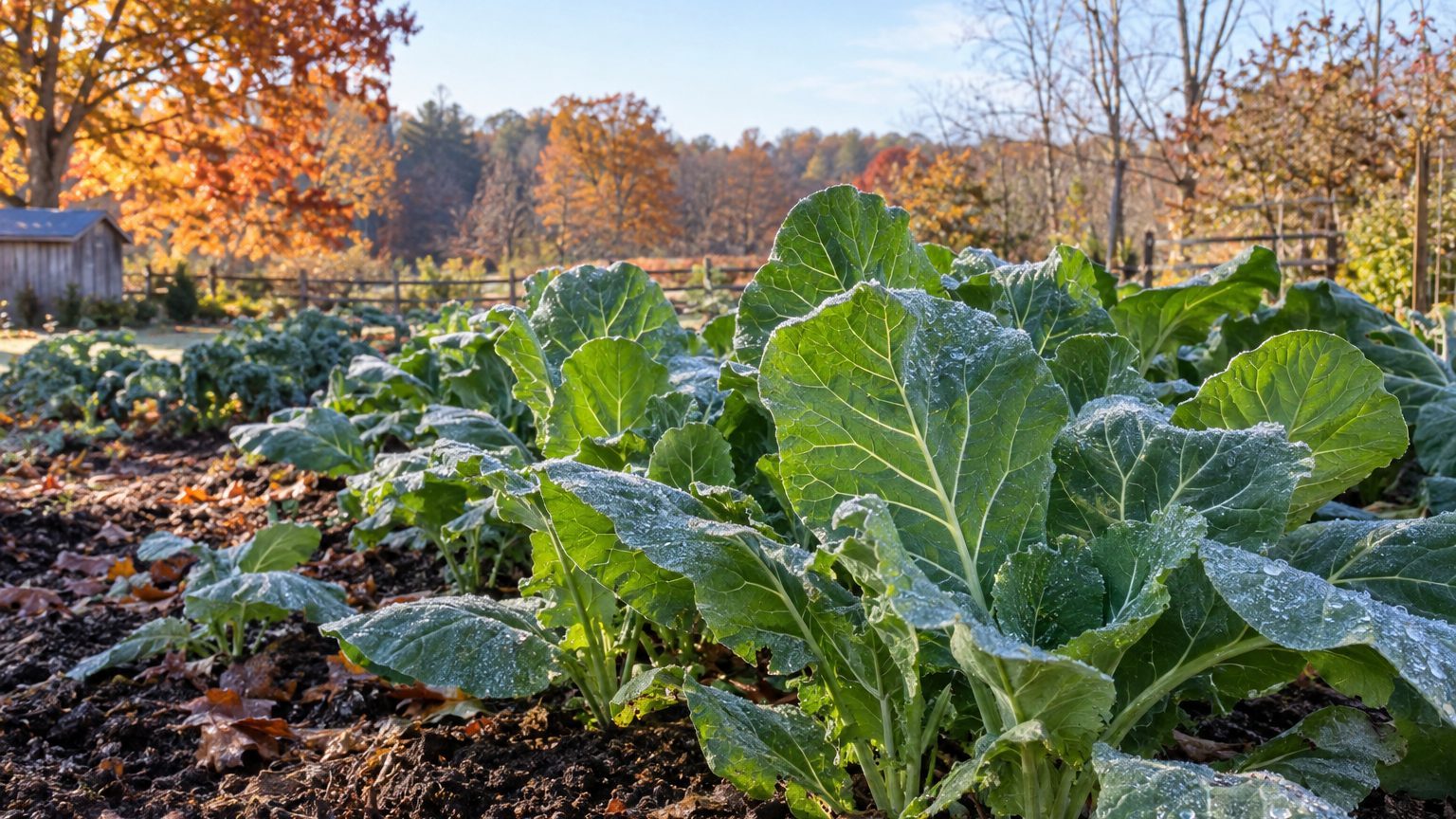

Sow collards in South Carolina twice: late winter for a spring crop, and late summer for the fall and winter crop that most Southern gardeners treat as the real harvest. The frost dates behind both windows come from the Charleston airport station, so they fit the coast better than the mountains. The sections below turn those dates into a working calendar. The full Growing Collards in South Carolina guide covers everything after the seed goes in.
The short answer for South Carolina
Sow collards in late winter around the spring freeze window, then again in late summer so the plants are well established before the fall freeze window of November 20 to December 5. Both windows describe freeze probability, not a promise. NOAA’s 1991-2020 Climate Normals for the Charleston station give the span in which the chance of a 32°F freeze sits between 30 and 70 percent.
How to read the frost dates
For the last spring freeze, that span runs February 28 to March 17. For the first fall freeze, it runs November 20 to December 5. Neither range says “the freeze will happen here.” A 30 to 70 percent band is the stretch where a freeze is still a real possibility, a bit like a weather forecast that gives you a coin flip and tells you to pack a jacket anyway.
One caution comes with the source. These numbers come from a single station, and peninsular Charleston runs milder than the airport where the readings are taken. Upstate South Carolina runs several weeks tighter at both ends. Treat the dates as a coastal-plain reference point, not a statewide rule.
Turning the dates into sowing days
Collards shrug off light frost, so the spring crop does not need to wait for the freeze window to close. Sow when the soil is workable, at the start of the window or a little before it. The fall crop works the other way around. Take November 20, subtract the days-to-maturity printed on your seed packet, then subtract a few extra weeks, because growth slows as days shorten.
Winter is not the obstacle here. The mean daily minimum of the coldest month at the Charleston reference station is 38.9°F, so an average January night stays above freezing. That is an average, not a record low, which means a hard freeze can still show up in a given year. It also means a fall planting on the coast often keeps producing well past the first freeze.
This page does not have a Clemson collard-specific sowing date to offer. The dates above come from freeze probabilities and the packet’s maturity count, and the county section below explains where to find the local version.
What will not work here
Waiting for the last freeze to pass before sowing spring collards is the classic mistake. The window closes March 17 at the far end, and a plant that starts after that is racing South Carolina’s humid summer with a head start missing. Seed sown after March 17 tends to give you a small plant that gets hammered by heat, chewed by caterpillars and aphids, and ends up bitter and tough. Collards are a cool-weather crop that happens to survive warm weather, not the other way around.
Late-summer sowing has its own trap. The fall window tempts people to plant when soil is still hot, and hot soil gives patchy germination and stressed seedlings. Shade the seedbed, keep it evenly moist, or start transplants in a cooler spot and set them out later. The variety matters too. A slow-maturing type that needs a long stretch to size up will run out of days if it goes in late, so the maturity count on the packet decides the last safe sowing date. The The Best Collards and Greens for South Carolina page sorts varieties by exactly that trait.
Humidity defeats tight spacing. Crowded collards hold moisture on the leaves after rain and dew, and that invites leaf spots and rot while giving pests a sheltered place to breed. Follow the spacing on the packet and lean to the wide end. Gardeners coming from drier states often plant closer, because it works there. It backfires in the Southeast.
Watering weekly is another habit that travels badly. Heavy summer downpours and dry spells alternate, and a seedling in a rainless week needs attention every day or two, not once a week. Mulch helps hold that swing steady.
The last failure is quieter: assuming the Charleston numbers describe your yard. If you garden in the Upstate, the freeze window arrives weeks earlier in fall and leaves weeks later in spring. Using coastal dates there can leave fall plants too small when the first freeze arrives, and spring seedlings out in weather that is still too cold for them.
What changes across South Carolina
South Carolina does not sit in one hardiness zone. The USDA Plant Hardiness Zone Map (2023 edition, built on 1991-2020 normals) places the state in zones 7a to 9a. That is a spread of two full zones, so no single planting date fits every garden. The system rests on one variable, the average annual extreme minimum temperature, which tells you about winter survival and not about the length of the growing season.
That distinction matters for collards. They are tough enough that most of the state can overwinter them, so zone matters less for survival than for timing. What moves with geography is when the freezes arrive. A gardener near the coast can sow later in late summer and still harvest into winter. A gardener in the northern Piedmont or the mountain foothills has a shorter runway and should count back from an earlier fall freeze date, with several weeks tighter at both ends than the airport numbers suggest.
In practice, that means a northern or higher-elevation reader shifts the fall sowing earlier, gives spring sowing a later start, and pays closer attention to the seed packet’s maturity count. A variety that finishes comfortably on the coast may need every available day upstate.
Which zone is yours? Look it up on the USDA Plant Hardiness Zone Map by ZIP code instead of guessing from the state’s range. Then treat the coastal dates on this page as the mildest end of the spread and adjust from there.
Where to check this for your own county
The best local source is Clemson Cooperative Extension, the state’s land-grant extension service, at https://www.clemson.edu/extension/. That is where county-level planting advice lives, written by people who watch what actually grows in your part of the state.
When you get there, look for two things. First, your county’s vegetable planting calendar, which will give sowing and transplant dates that reflect local frost patterns rather than a single station’s numbers. Second, the varieties that have been trialed in your county or a neighboring one, because a collard that performs well in the Lowcountry may be a different pick than one that thrives in the Upstate.
Be careful about which calendar you pick up. Clemson publishes its maintenance calendars one per species, and the ones verified for this page cover lawn grasses: bermudagrass, zoysiagrass, centipedegrass and St. Augustinegrass. None of them addresses collards, and a lawn calendar is no substitute for a vegetable one. This page does not have a Clemson collard sowing calendar to quote, so a phone call or visit to your county extension office is the right next step.
A county recommendation beats a state one, and this page is the state one. It gives you a reasoned starting point built on published freeze normals, and your county office can refine it with local knowledge of soil, elevation and the pests that show up in your area.
Checking this against your own garden
Your own yard outranks every date above. Three observations will tell you more about your microclimate than any table can, and none needs equipment.
Start with the soil, checked by feel. In late winter, a handful that crumbles instead of clumping wet and cold in your fist is ready for seed. A bed that stays soggy and cold long after the neighbor’s has dried tells you about drainage and sun exposure, and that bed will always run late.
Next, watch the first true leaves. The two rounded seed leaves come up first, and the first true leaves follow, with the shape of an actual collard. Note how many days that took from sowing. If it takes noticeably longer in one corner of your garden than another, the slower corner is cooler or shadier, and that is where to plant only in the warmest part of the window.
Finally, pay attention to frost itself. On the first cold morning, see where the white rime sits on the grass, the car roof, or the fence rail. Low spots and open ground frost first, while spots near the house or a south-facing wall often stay clear. Write down the date of the first frost in your yard each fall. After a few seasons, that log becomes your own frost calendar, and it will be more accurate for your garden than a station miles away.
Common questions
Can I sow collards in the middle of summer?
You can, but you are working against hot soil and heavy pest pressure. Seeds germinate poorly in hot ground, and seedlings need shade and steady moisture to survive. Most gardeners do better starting seeds in late summer, timed backward from the fall freeze window of November 20 to December 5, or starting transplants in a cooler spot first.
Do frosts damage collards?
Collards tolerate light frost and are commonly grown right through the freeze window. The Charleston reference station shows a mean daily minimum of 38.9°F in the coldest month, so an average winter night there stays above freezing. That figure is an average, not a record low, so the occasional hard freeze can still damage plants, especially young ones.
Should I start collards from seed or transplants?
Both work. Seed is cheaper and suits the start of the spring window, when soil is workable and cool. Transplants save weeks and help most for the fall crop, when hot soil makes direct sowing less reliable. Either way, the packet’s days-to-maturity count and your fall freeze date set the deadline.
Do the Charleston dates apply to Columbia or Greenville?
Not exactly. The dates come from the Charleston airport station, and this page does not have station data for those cities. Upstate South Carolina runs several weeks tighter at both ends, so expect earlier fall freezes and later spring ones there, and confirm the local dates with your county extension office.