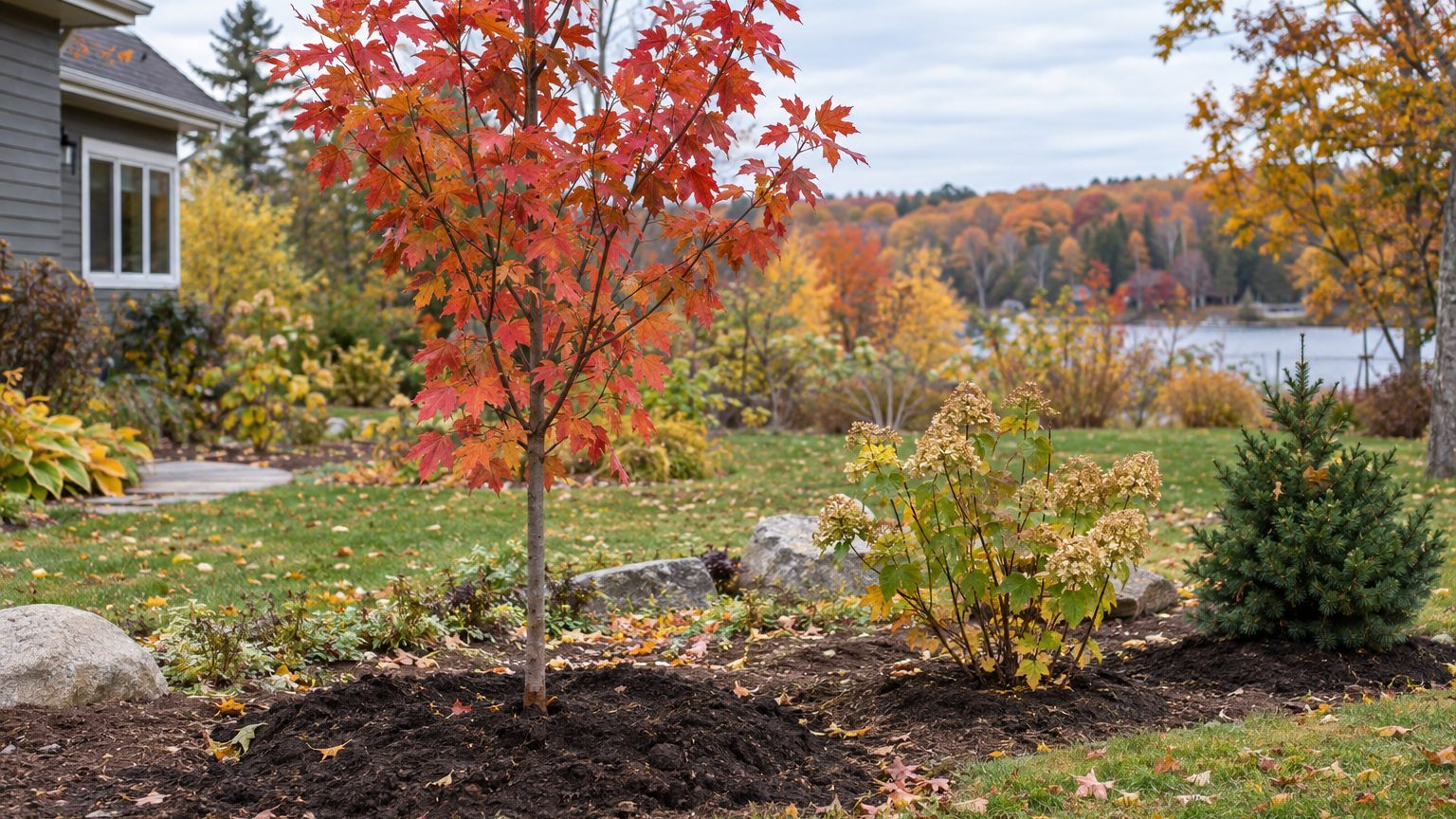

The safe target is to have trees and shrubs in the ground six weeks before the first fall frost. For Billings, where that frost typically arrives between October 1 and October 14, the window closes between August 20 and September 2. Roots keep growing as long as the soil stays workable, so a later planting can still succeed in a mild fall. The odds get worse with every week past that window, and they get worse faster in higher, colder ground.
The deadline in Montana
Soil sets the clock, not air. A tree’s roots keep pushing outward while the ground is workable and above freezing, and in Montana that holds true for a good while after the first hard frost blackens the tender leaves. The tops shut down first. The roots keep working underground.
Cornell Cooperative Extension states the standard rule like this: “Fall is an excellent time for transplanting, provided you get them to their new home at least 6 weeks before the ground freezes, allowing them time to establish roots before winter dormancy.” That is a ground-freeze rule. The date the soil actually locks up shifts with elevation, snow cover and the particular year, so it makes a poor calendar anchor. The first fall frost is a number you can look up, and it always comes earlier than the ground freeze.
Working backward from the first frost
NOAA’s 1991-2020 Climate Normals for Billings, using the 30 to 70 percent probability band for a 32°F freeze, put the first fall frost between October 1 and October 14 (NOAA NCEI data). Count six weeks back from that range and you land on the conservative deadline: finish planting between August 20 and September 2.
| Marker | Billings range | What it means |
|---|---|---|
| First fall frost (32°F) | October 1 to October 14 | Air temperature, from NOAA’s 30-70% band |
| Safe planting target | August 20 to September 2 | Six weeks before the first fall frost |
| True biological limit | No fixed date | Whenever the ground freezes, which falls later than the first frost |
Treat that middle row as the safe date, not the last possible one. A shrub planted in mid-September during a normal fall is not doomed. It just has less margin for a cold snap, a dry spell or a shallow planting hole. The closer you get to freeze-up, the less room for error.
Billings sits in one of the milder valleys, which matters when you apply these dates elsewhere. Farther north and at higher elevation, the first frost comes earlier, so the planting deadline moves earlier with it. Mountain valleys elsewhere in the state can see frost in any month, and a gardener there should pull local numbers from the First and Last Frost Dates in Montana rather than borrow Billings’ calendar.
The rule does apply here. NOAA’s normals show the mean daily minimum of the coldest month at Billings at 17.9°F, well below freezing, so the soil freezes hard each winter and the roots need their head start.
What to plant late, and what to wait on
Container-grown and balled-and-burlapped trees and shrubs that are fully hardy for your spot are the safest late bets. Their roots arrive intact and are already moist, so they can start growing outward the day they go in. Deciduous types are the easiest of all, because a tree that has dropped its leaves is not losing water through them, and all its energy can go into roots.
Hardiness is the first filter. The USDA Plant Hardiness Zone Map (2023 edition, built on 1991-2020 normals) runs from 3a to 6a across Montana, so the tag on a plant means something very different in one valley than in another. That map is built on a single variable, the average annual extreme minimum temperature. It is a different measure from the 17.9°F mean daily minimum of the coldest month at Billings, which is the everyday cold a plant faces through winter. A plant rated only marginally for your zone has no business going in late, because it is already gambling on cold tolerance and now also has weak roots. If a plant is borderline for your zone, hold it until spring.
Evergreens are the tricky group
Spruce, pine, arborvitae and broadleaf evergreens keep their foliage all winter, and foliage keeps losing water. When the ground is frozen, roots cannot replace what the needles or leaves give up, especially on dry, windy days. A newly planted evergreen with a small root system has the least to draw on. Established evergreens cope. New ones often don’t, which is why they belong at the front of the planting queue in August, not the back in October.
| Plant type | Late-season outlook | Reason |
|---|---|---|
| Hardy deciduous trees and shrubs, container-grown | Good | Roots intact, no leaves to support |
| Hardy balled-and-burlapped stock | Good with care | Root ball must stay moist and stable |
| Evergreens, needled or broadleaf | Risky after the target window | Foliage loses water all winter |
| Plants borderline for your zone | Wait for spring | Cold stress plus weak roots |
Bargain racks deserve a second look. Nurseries thin their stock as fall arrives, and some of the leftovers have been sitting in pots all summer. Slide a plant out and check the roots. A solid mat circling the bottom means it is potbound, and those roots need to be teased loose at planting or they will keep circling underground.
Planting technique matters more when the calendar is tight. The Planting and Caring for Trees, Shrubs and Perennials basics apply here: a hole wide and shallow enough that the root flare sits at ground level, and backfill that is the native soil, not a pocket of rich amendment the roots will refuse to leave.
Watering and mulch until the ground freezes
A late-planted tree drinks a lot and shows little. Water it deeply, slowly and regularly from planting until the ground freezes, and keep doing it through a dry fall. Autumn in Montana can turn dry while the air feels crisp, and a tree with a small new root system can run short without any wilted leaves to warn you. Push a finger or a trowel into the soil beside the root ball. If it is dry a few inches down, water.
Stop when the ground freezes solid. Then disconnect and drain hoses so they do not split. Skip fertilizer at planting time, because nitrogen pushes soft new growth that winter will simply kill.
The mulch ring, not the volcano
Mulch is the cheapest insurance you can buy for a new planting. NC State Extension’s Extension Gardener Handbook says: “A 2-inch to 3-inch layer of mulch suppresses most annual weed seeds and makes it easy to hand-pull any that do germinate.” On trees specifically, it adds: “Provide a 3-inch layer of mulch to reduce water loss and maintain uniform soil moisture and temperature around roots.” Two statements with two purposes, and both land in the same range. Spread a 2-inch to 3-inch layer of mulch in a wide ring, and stop there.
More is not better. Pile mulch against the trunk in a cone and it holds moisture against the bark, invites rot and gives mice and voles a warm, sheltered place to chew. Pull it back so the trunk flare stays visible, with a small gap of bare soil around the stem. The ring should be broad, flat and shallow, like a doughnut. The Mulching Without Killing the Plant details cover the mistakes that turn a ring into a volcano.
Mulch does its most useful winter job by keeping the soil temperature steady. Frozen ground that thaws and refreezes shoves shallow roots around. A layer that evens out those swings gives new roots a calmer place to work.
Why the first winter is about roots
Expect very little top growth the first year, and don’t judge success by it. A newly planted tree is rebuilding the root system lost when it left the nursery field or pot, and it spends its energy underground first. Roots that spread in fall and spring carry the plant through the next summer’s heat. Leaves and shoots come after that. A tree that looks unchanged in June may be putting its energy exactly where it should.
What goes wrong
The most common failure is simple lateness. Root growth needs time, and a plant that goes into cold soil close to freeze-up has almost none. Past the August 20 to September 2 target, plant only hardy container or balled stock and commit to steady watering and mulch. Anything borderline or evergreen is better held over to spring.
Winter burn strikes evergreens. Needles and leaves lose moisture to dry, cold wind while the ground is too frozen to resupply the roots, and the foliage turns brown, usually on the windward side. Montana’s winter winds and sudden warm spells, including chinook winds that can lift temperatures fast, make the water drain worse. Deep watering before freeze-up and a mulch ring are the main defenses, and a burlap windbreak on the exposed side helps small evergreens through their first winter.
Heaving is the quieter problem. When the surface soil freezes, thaws and freezes again, it can lift a shallow root ball out of the hole, exposing roots to cold air. Small, freshly planted trees are the most vulnerable, and so is anything planted too high. In spring, check for any that have lifted and press them back, soil and all, once the ground softens.
Drying out is the fourth. Fall planting fails just as easily from a dry autumn as from a cold one, and the plant that looks fine in October can turn up dead in April with no obvious cause. If the fall runs dry, keep watering right up to freeze-up.
Common questions
Can I still plant a tree in October in Montana?
It is a gamble, but not a lost cause. In Billings the first fall frost lands between October 1 and October 14, which is already past the August 20 to September 2 safe target. A hardy container-grown tree can still establish if the soil is workable, provided you water deeply until freeze-up and mulch. An evergreen or a borderline plant is better kept in its pot, or held for spring.
Does the six-week rule work in every part of Montana?
The method travels, but the dates don’t. The colder part of the state, farther north and at higher elevation, reaches its first fall frost earlier, so the deadline moves earlier too. Some mountain valleys can see frost in any month. Start from your local first frost and count back. In milder places the calendar looks different; the piece on How Late Can You Plant Trees and Shrubs in Fall in Oregon? shows how much the answer changes with climate. More Montana timing questions are covered in the Montana guides.
Is fall or spring better for planting trees and shrubs here?
Fall wins when you hit the window, because roots grow through the cooler months and the plant meets summer with a head start. Spring wins for evergreens, for borderline plants and for anything you could not get in the ground by the deadline. A late fall planting can go either way, while a well-timed spring planting has a full growing season ahead of it.
What if the ground freezes before I plant?
Leave the plant in its container, keep it watered and shelter it from wind in an unheated spot such as against the north side of a building. Mulch around the pot. Roots in a container get colder than roots in the ground, so a pot left fully exposed can freeze through. Plant as soon as the soil softens in spring.