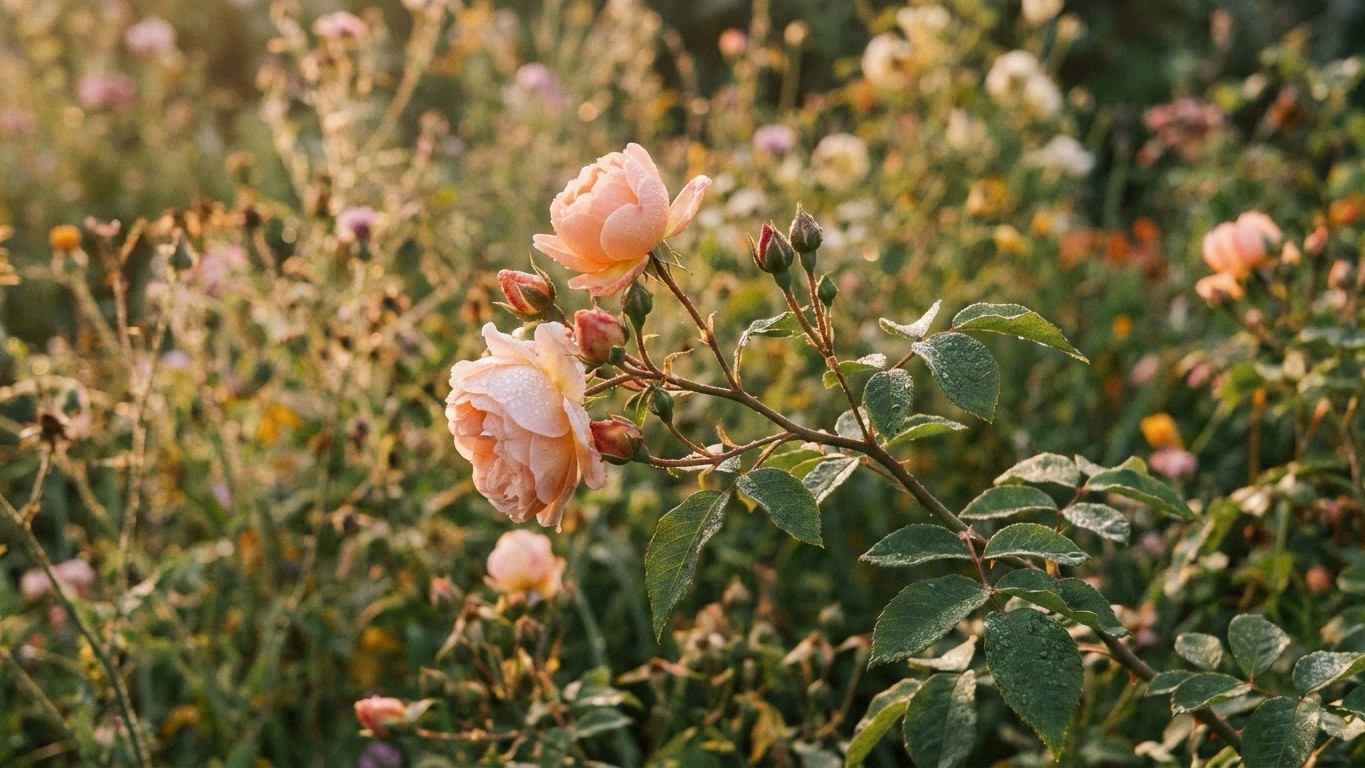

Roses are a good fit for Kansas if you choose tough varieties and plant at the right moment: container roses after the last spring freeze, bare-root plants as early as the soil can be worked, and fall plantings with enough time to root before winter. Heat, wind and cold snaps do more damage here than any single pest. The details below cover timing, site, varieties, care and the insects that K-State Research and Extension flags for home gardens.
When to plant Roses in Kansas

The reference dates
The best statewide-ish numbers come from the NOAA NCEI 1991-2020 Climate Normals for the Wichita airport station. There, the last spring freeze (32°F) falls between April 4 and April 18, the band where the odds of a freeze run from 30 to 70 percent. The first fall freeze lands between October 23 and November 2.
Those are airport figures for one city in south-central Kansas, not a promise for the whole state. Suburban and rural gardens usually see the last spring frost later and the first fall frost earlier, often by one to two weeks. Northern Kansas and higher ground in the west run later still. Your county extension office can tell you how far off Wichita you are.
For a garden near Wichita, that points to container roses going in from roughly the third week of April through early May. A light frost on new leaves usually just burns the tips, but a hard freeze on soft spring growth can set a young plant back a full season. Waiting a week past the late end of the band costs you very little.
Starting roses from seed
Most people buy plants, and that is the sensible route. Named garden roses are grafted or propagated from cuttings and do not come true from seed. Seed makes sense mainly for species roses and rugosas. Rose seed needs a cold, damp rest (stratification) before it germinates. A common rule of thumb is six to eight weeks in the refrigerator, in a bag of damp sand or vermiculite. These timings are general horticultural practice, not figures from the sources above.
Count back from your target planting date. For seedlings in the ground on May 1 in a suburban garden, hardening off starts around April 21 to 24 and takes 7 to 10 days. Seedlings need roughly eight to ten weeks of indoor growth under lights, so sowing falls near the third week of February. Add the stratification, and the seeds go into the refrigerator in late December or early January. Germination is uneven, so sow more than you need.
Hardening off and transplanting
Whether the plant came from your seed tray or a garden center, the transition outdoors works the same. Set it in light shade for a few hours, then lengthen the exposure each day, finishing with full sun and a night out. Wind is the part Kansas gardeners underestimate, so shelter young plants from it at first.
Bare-root roses arrive dormant in late winter or early spring and do best planted as soon as the soil is workable, before leaves emerge. Soak the roots in a bucket of water for a few hours, no more than overnight, and plant the same day. Fall planting of container roses also works in Kansas. Aim for at least six weeks before the first fall freeze (early to mid September near Wichita) so the roots settle before the ground cools.
Soil and site preparation
Give roses six or more hours of direct sun, and favor morning light. Morning sun dries dew off the leaves, which cuts the fungal diseases that plague roses. A spot against a south or west wall looks tempting, but reflected heat in a Kansas July can scorch blooms and stress the plant. East-facing exposures are kinder. Avoid low pockets where cold air and water settle.
Drainage matters more than fertility. Roses sulk in soggy clay and perform well in loam. Fill a hole with water, let it drain, and fill it again. If the second fill is still standing after a day, raise the bed by 8 to 12 inches or choose another spot.
Start the work four to six weeks before planting, which means March for an April or May planting. A soil test through your county extension office tells you pH and nutrient levels. Roses generally prefer slightly acidic to neutral soil. Do not add lime or sulfur on a hunch.
Work in 2 to 3 inches of finished compost across the whole bed, not just the planting hole. Mixing rich amendments only into the hole creates a bathtub effect where roots circle and water collects. Dig the bed to roughly a spade’s depth, break up clods, and let it settle for a couple of weeks.
Spacing depends on the type. Compact shrub roses and floribundas want about 3 feet, hybrid teas 3 to 4 feet, large shrubs and climbers 5 to 6 feet or more. Crowding invites mildew and black spot, because air cannot move through the canopy. On grafted plants, the swollen knob where the canes meet the rootstock (the bud union) should sit just at or slightly below soil level in Kansas, where winters can be hard on exposed unions.
Varieties that suit Kansas
Four traits matter in Kansas: winter hardiness, heat tolerance, disease resistance, and wind tolerance. Repeat bloom is a fifth if you want color all summer. Hybrid teas, the classic long-stemmed florist roses, give the most dramatic flowers and demand the most work: more spraying, more winter protection, more feeding. Shrub roses, hardy landscape roses and a few old garden types ask for far less.
The names below are widely sold and carry the traits described. This is general horticultural knowledge, not an endorsement from any institution, and plant labels or your local nursery can confirm hardiness for your county.
| Variety | Type | Good for | Watch for |
|---|---|---|---|
| Knock Out series | Shrub | Repeat bloom, heat tolerance, low maintenance | Rose rosette disease can hit it hard |
| Carefree Beauty | Shrub (Griffith Buck breeding) | Hardiness, repeat bloom, large pink flowers | Size; give it room |
| The Fairy | Polyantha | Late-summer color, borders, mass planting | Small flowers, little scent |
| William Baffin | Climber (Explorer series) | Cold hardiness, fences and walls, disease resistance | Big canes need tying and pruning space |
| Therese Bugnet | Hybrid rugosa | Fragrance, hardiness, wind tolerance | Less repeat bloom than modern shrubs |
| Peace | Hybrid tea | Cut flowers, a classic form | More disease pressure, needs more care |
A caution on the most popular name in that table. Knock Out roses earned their reputation for shrugging off black spot and mildew, and they handle Kansas heat well. But they are not immune to rose rosette disease, a viral problem spread by a tiny mite that has been moving through the central states. Planting a single variety across a whole yard concentrates your risk. Mixing types is cheap insurance.
If you have never grown roses, start with two or three hardy shrub types and one climber. Add a hybrid tea only once you are comfortable with the routine. For a broader look at varieties and classes, see How to Grow Roses: The Complete Guide.
What to plant alongside
The best companions for roses do three honest jobs. They shade the root zone, draw pollinators and beneficial insects, and fill gaps so weeds do not. Catmint (Nepeta) is the standout: it is drought-tolerant, blooms for weeks, and bees swarm it. Lavender suits sunny, well-drained beds, though Kansas winters can be hard on some types. Low perennials such as hardy geraniums or sedums keep soil cooler around the base without crowding the canes.
Garlic and chives get cited constantly as rose protectors, said to repel aphids and reduce black spot. The evidence is thin, and there is no solid research showing it prevents either problem. Plant them if you like them, and do not skip other measures on their account. French marigolds can suppress certain soil nematodes under the right conditions, but that does not make them a general rose protectant.
What to avoid is more clear-cut. Aggressive spreaders like mint and running grasses will invade the bed and outcompete shallow roots. Large trees and shrubs take both water and nutrients, and roses planted within their root zone starve in summer. Keep sod away from the canes too, since turf competes hard for water and makes mowing a hazard to the bud union. Do not crowd anything close enough to block airflow.
Watering, feeding and support
Roses want deep, infrequent watering rather than a daily sprinkle. Aim for about an inch of water per week from rain and irrigation combined, more in the heat of July and August. Water at the base with a soaker hose or drip line. Overhead watering wets leaves, and wet leaves are where black spot starts. If you must use a sprinkler, run it early so foliage dries by mid-morning. Push a screwdriver into the ground: if it slides in 6 to 8 inches easily, the soil is moist enough.
Mulch does a lot of the work. A 2 to 3 inch layer of shredded bark or wood chips holds moisture, moderates soil temperature and suppresses weeds. Keep it a few inches back from the canes, because piled mulch against the base invites rot. Refresh it each spring after the soil warms.
For feeding, a balanced rose fertilizer or a slow-release granular works well. Apply the first round when new growth is a few inches long (typically April near Wichita), and again after the first flush of bloom. Stop feeding about six weeks before the first expected fall freeze, roughly early to mid September near Wichita. Late nitrogen pushes soft growth that freezing weather will kill.
Climbers need to be tied to a trellis or wall, and canes trained as close to horizontal as practical bloom more heavily than those left vertical. Use soft ties that will not cut into canes as they thicken. Tall hybrid teas in windy spots sometimes need a stake in their first year.
Prune repeat bloomers in late winter to early spring, as buds swell. Remove anything dead, damaged or crossing, and cut back to healthy white-centered wood. Once-blooming old roses are pruned right after flowering, since they bloom on last year’s growth. On grafted roses, watch for suckers: shoots that come from below the bud union, often with leaves that look different (usually seven leaflets, not five). Pull or cut them cleanly at the base, because left alone they take over the plant.
Common problems

Black spot shows up as round black blotches with fringed edges on leaves, followed by yellowing and leaf drop. It spreads by water splash and thrives in humid spells. Clean up fallen leaves, water at the base, and choose resistant varieties. A fungicide labeled for roses can protect new growth if applied before symptoms appear, and infected leaves should go in the trash rather than the compost.
Powdery mildew looks like a white, dusty coating on new leaves and buds, often when nights are cool and days are warm. Good airflow and sun reduce it, and a fungicide helps once the problem is established. Do not water overhead in the evening.
Rose rosette disease is the one to learn by sight. Symptoms include abnormally red, thick, tightly clustered new shoots (witches’-broom), excessive thorniness and distorted flowers. It has no cure. Remove the whole plant, including as many roots as you can, and bag it. Removing it early limits spread to neighboring roses.
Leaves that yellow while the veins stay green point to iron chlorosis, which happens when soil pH locks up iron. A soil test confirms it, and chelated iron gives a quick fix while you address the pH over time. Wilted canes and dieback after winter are usually cold damage. Wait until leaves emerge in spring, then prune back to green wood.
Aphids cluster on new growth in spring and can be knocked off with a firm spray of water. Twospotted spider mites are tiny and most active in hot, dry weather. Leaves look stippled and bronzed, with fine webbing on the undersides in bad cases. Regular hosing of the foliage and consistent watering help, since stressed plants suffer worst.
Pests that actually show up in Kansas
The K-State Research and Extension pest guides for home gardens (S158 and MF3480) are written largely with vegetables in mind, so several entries on the state’s list, such as squash bug, squash vine borer, Colorado potato beetle and harlequin bug, belong in the vegetable patch rather than the rose bed. Four on that list do real damage to roses. Pressure varies across the state, so your county extension office can identify anything unfamiliar.
Bagworm
You see small, spindle-shaped bags of silk and bits of leaf hanging from branches, and chewed foliage beneath them. Egg hatch runs from late April to early May, and the caterpillars feed through summer. The best control is to pick off bags by hand in winter or early spring before eggs hatch. Drop them in soapy water, since a bag left on the ground can still release larvae.
Grasshopper
You see ragged holes in leaves and sometimes stripped canes, often along a bed bordering weedy grass or a field. They are active from spring through late summer, and K-State places them among the later-season pests that overwinter as eggs. Lightweight row cover or fine netting over young plants is the most reliable defense.
Blister beetle
Adults appear on flowers and foliage in summer, often in clusters, as slender beetles that feed on petals and leaves. Wear gloves, because crushing them can raise blisters on skin. Knock them into a bucket of soapy water in the morning, when they are sluggish. They are also toxic to horses, which matters if you cut hay on rural property.
Spotted cucumber beetle
You see small yellow-green beetles with black spots chewing on petals and buds, leaving ragged, pitted blooms. K-State notes that adults of the related striped cucumber beetle overwinter and arrive early. Shake them into soapy water in the morning, and cut spent or damaged blooms promptly, since they gather there.
Harvest and end of season
Cut roses for the vase in the morning, when stems are full of water. Choose flowers at the loose bud stage, where the first petals have begun to unfurl. Make the cut at an angle just above a leaf with five leaflets, which encourages the next stem to grow outward. Plunge stems into water right away and recut them under water at home.
Roses keep opening after they are cut, and waiting for full bloom on the bush makes them fade faster. A refrigerator at about 36 to 40°F slows opening. Change the vase water every couple of days and remove leaves below the waterline. If you grow rugosas or other species with showy hips, leave late-season flowers on the plant so hips can form; they color up in fall and can be harvested after they soften slightly.
As fall approaches, stop deadheading around the time you stop feeding, which signals the plant to harden off for winter. Keep watering until the ground freezes if autumn is dry, because dehydrated plants suffer more winter injury.
After the first hard frost and once the ground has cooled, mound 8 to 12 inches of mulch or soil over the base of grafted roses to protect the bud union. Do not hard-prune in fall. Trim long canes only enough to keep them from whipping in the wind. Rake up fallen leaves, especially any with black spot, so spores do not overwinter under the plant.
Local help
Frost dates, soil and pest pressure shift from county to county, so your local K-State Research and Extension office is the best next stop. Staff there can run a soil test, identify an unfamiliar insect from a sample, and tell you the typical last frost date for your area. For other regions, compare with Growing Roses in Kentucky: Planting Dates, Varieties and Local Pests or, for a colder climate, Growing Roses in Quebec: Planting Dates, Varieties and Local Pests. More state-level guidance lives in our Kansas guides.
Common questions
What month should I plant roses in Kansas?
For container roses, mid-April through May works in most of the state, with northern and higher areas leaning toward the later end. Bare-root roses go in as early as the soil can be worked.
Can I plant roses in the fall in Kansas?
Yes, container roses planted in early fall can root well before winter. Plant at least six weeks before your first expected fall freeze, which rural and suburban sites often see sooner than the Wichita airport. Water consistently and mulch after the ground cools.
Which roses are easiest for beginners in Kansas?
Hardy shrub roses and a climber such as an Explorer type are the most forgiving. They tolerate heat and cold and resist the common leaf diseases better than hybrid teas. Mixing a few varieties is wise, since no single rose is immune to everything, including rose rosette disease.
Do I need to spray my roses?
Not always. Resistant varieties, good spacing, base watering and fall cleanup prevent a lot of trouble. Susceptible types, especially hybrid teas, often need a preventive fungicide program. Many chewing insects, including blister beetles and cucumber beetles, can be handled by hand-picking in the morning.
How do I know if an insect on my roses is a real problem?
Look at what the damage looks like and when it appears. Bagworm bags, ragged leaf edges or chewed petals point to the culprits above. If you are unsure, take a sample or a clear photo to your county extension office before you spray anything.