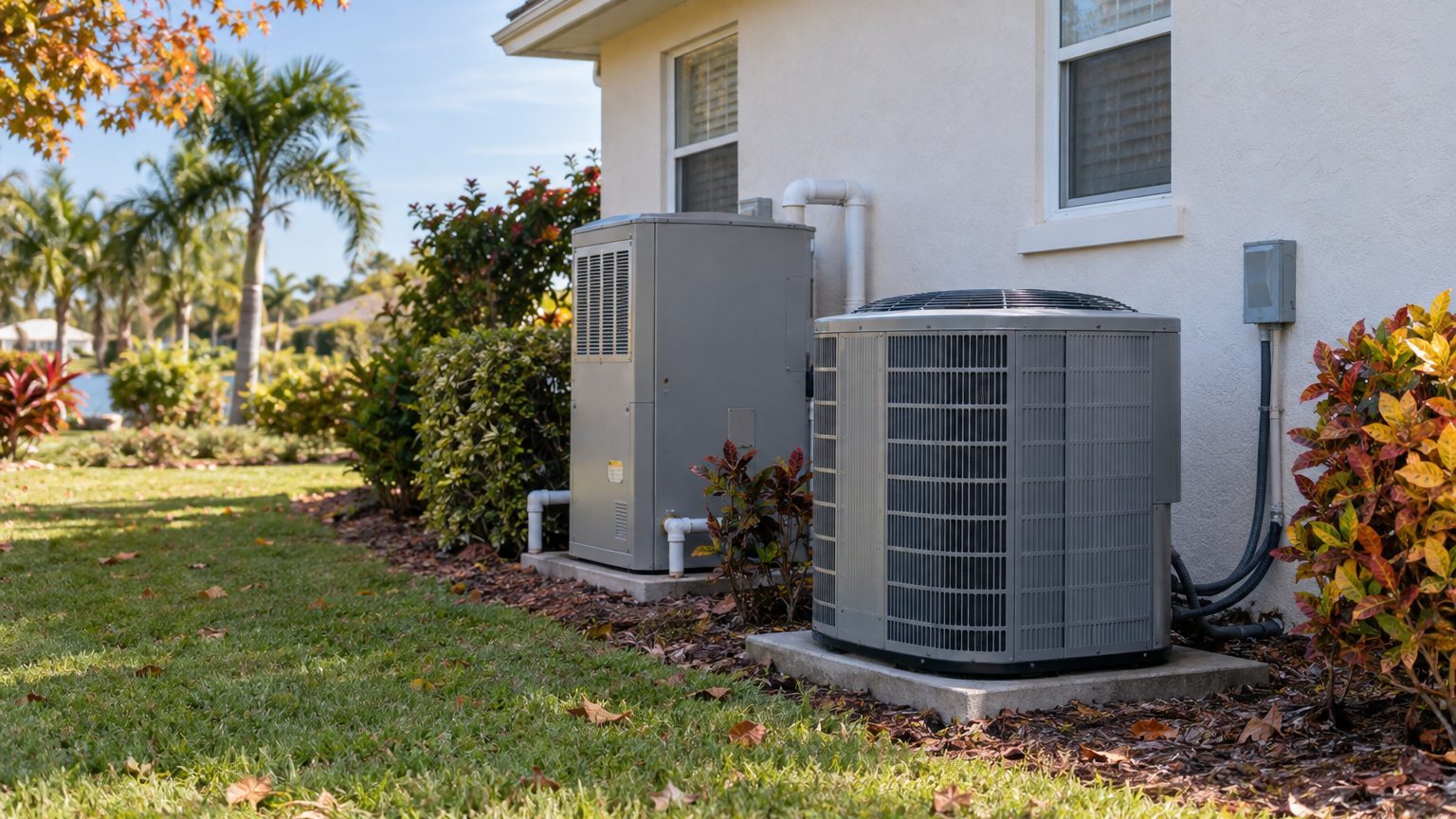

A gas furnace costs less to run in Iowa. At average residential prices, a million Btu of heat from a 97% AFUE gas furnace costs $10.55, against $17.53 from a heat pump at the ENERGY STAR minimum. Electric baseboard lands at $41.62. That is only the fuel side of the decision, and the rest depends on your house.
The short answer for Iowa
The U.S. Energy Information Administration (EIA) publishes average residential prices for electricity and natural gas. Combined with ENERGY STAR efficiency levels, they put the gas furnace ahead by $6.98 per million Btu delivered to the house. That is the verdict on running cost, and it holds until your own utility rates say otherwise.
Read the number for what it is. It compares fuels on the same unit of delivered heat. It is not a yearly bill, because a leaky 1950s ranch and a tight new build burn very different amounts of fuel. It is not the price of equipment either. Installing a furnace, a heat pump, or a heat pump plus backup carries its own cost, and none of that is in these figures.
The ranking has a second lesson in it. The heat pump sits much closer to gas than to electric resistance heat. Anyone heating with baseboards or an old electric furnace pays the $41.62 figure, and for that household a heat pump is a very different proposition than for someone who already has a gas line and a working furnace.
Gas and electricity prices also move, and rate plans differ from one Iowa utility to the next. If you have gas service and a furnace in decent shape, the running-cost math favors keeping gas; if you heat with electric resistance, it favors a heat pump by a wide margin. Before you sign a quote, ask your utility for its current residential rates and rerun the comparison with them.
What each option costs to run in Iowa
| System | Efficiency used | Cost per million Btu delivered |
|---|---|---|
| Electric resistance (baseboard) | 100% efficient | $41.62 |
| Heat pump | 8.1 HSPF2 (seasonal COP about 2.4) | $17.53 |
| Natural gas furnace | 97% AFUE | $10.55 |
These figures are computed from EIA residential prices, ENERGY STAR efficiencies and EIA energy conversions (3,412 Btu per kilowatt-hour of electricity, about 1,037 Btu per cubic foot of natural gas). The electricity input is 14.20 cents per kWh, the average residential price for the year-to-date period through July in the EIA’s Electric Power Monthly, Table 5.6.B. The gas price comes from the EIA’s residential average for the state, and your utility’s rate may differ, so treat it as a benchmark and not a quote.
Efficiency matters as much as the price on the meter. A kilowatt-hour of electricity is the more expensive fuel per unit of energy, and baseboard heat turns each one into exactly one kilowatt-hour of heat. A heat pump moves heat instead of making it, so each unit of electricity brings roughly 2.4 units of heat into the house over a season. A furnace at 97% AFUE wastes very little of its fuel. The cost gap comes from the price of the fuel and from what each machine gets out of it, in that order.
The heat pump figure uses the ENERGY STAR minimum for a ducted system, 8.1 HSPF2. The label asks for 8.5 from a non-ducted (ductless) system because it has no duct losses and starts with an advantage. For a closer look at that rating, see What HSPF2 Measures, and Why Ductless Asks for More. When you compare heat pump quotes, compare HSPF2 to HSPF2 (heating), not SEER2 (cooling), and treat these minimums as a floor, not a target.
How cold it gets, and what that does to a heat pump
Des Moines International Airport, the reference city here, logs about 6,178 heating degree days a year on the 65°F base. That figure adds up, day by day, how far the average temperature sat below 65°F, so it is a measure of how much heat a house needs. Twice the degree days means roughly twice the fuel for the same house. Parts of the state farther north will run colder than the Des Moines figure.
The coldest month there has a mean daily minimum of 13.8°F (the 1991-2020 normal). That is an average low, not a record, so some nights run well below it. Iowa winters are long and have a real cold core, which is the kind of season that tests a heat pump.
The $17.53 figure rests on a seasonal efficiency, an average over the whole heating season. In deep cold a heat pump’s efficiency drops, so the seasonal figure flatters the coldest weeks. Backup then carries the coldest nights, either electric resistance strips inside the unit or a furnace. Resistance strips run at the $41.62 rate, so a heat pump with strip backup will cost more in a cold January than the seasonal number suggests. The detail is covered in How Cold Is Too Cold for a Heat Pump.
There is no clean temperature at which a heat pump stops working, and none appears here. Models differ, and so do houses. In Iowa, plan on a heat pump that has a backup, either strips or the furnace you already own, and judge it on the whole season, not on one cold night.
What homes in Iowa already heat with
The EIA’s Residential Energy Consumption Survey (RECS 2020, state tables) shows what Iowa homes actually run. Furnaces heat 83% of homes, steam or hot-water boilers heat 7%, and central heat pumps heat 4%. By fuel, natural gas leads at 71%, electricity follows at 16%, and propane serves 13%. For fuel oil or kerosene, the survey suppressed the estimate as unreliable, so it publishes no figure. That does not mean no one burns it.
This is not a recommendation. It tells you what was installed, which says what fuel was cheap and available when these houses were built. Still, it shapes the choice. In a house with a gas line and a furnace, the comparison in this article applies directly, and the gas furnace has the running-cost lead.
In a house without a gas line, the comparison changes. The 16% on electricity and the 13% on propane are homes where the $10.55 figure may not apply at all. For electric homes, the question is a heat pump at $17.53 against resistance at $41.62. For propane, the survey gives no price, so use your supplier’s number.
The 7% on boilers is a different conversion again. A hot-water boiler heats through pipes and radiators, and there are no ducts to reuse. A ductless system skips the duct problem but changes how the house is heated room by room, which is the subject of Ductless or Central. These are state shares from a national survey, not a count for your county, and more detail on the state is in Heating a Home in Iowa. Start from what your house already has: gas line, ducts, or radiators decide which comparison you are really making.
When the other choice wins
The cheaper-to-run option is not always the right call, and a handful of Iowa situations show why.
- No gas service. If your street has no gas main, the gas furnace figure is irrelevant. The comparison is a heat pump against resistance or propane, and the heat pump wins easily against resistance.
- Air conditioning needs. Des Moines logs about 1,070 cooling degree days a year, so summers are real. A heat pump cools as well as heats, which can matter if your air conditioner is near the end of its life.
- A dual-fuel setup. A heat pump paired with a gas furnace lets the pump carry milder weather while the furnace takes the coldest nights. That setup is a natural fit for Iowa winters.
- An old system with years left. A working furnace costs nothing to replace today, and the running-cost gap is a poor reason to rip one out early.
The last point deserves attention. Running cost is only one input, and an early replacement adds the full price of new equipment. If your furnace is aging but not failing, Repairing a Furnace or Replacing It is a better starting point than any fuel comparison.
Choose the heat pump over the cheaper-to-run gas furnace when you lack gas service, when you also need to replace cooling, or when you want a dual-fuel setup; otherwise let the furnace’s condition and your own utility rates settle it. Ask installers for the quote with and without backup, and get both in writing.
Common questions
Is a heat pump cheaper than a gas furnace in Iowa?
Not on running cost at average prices. The EIA-based figures show $17.53 per million Btu for a heat pump at 8.1 HSPF2 and $10.55 for a 97% AFUE gas furnace. Equipment cost and your utility’s rates could change the overall picture.
Will a heat pump handle an Iowa winter?
It can, with backup. The coldest month averages a daily low of 13.8°F at Des Moines, and efficiency falls in deep cold. Resistance strips or a furnace carry the coldest nights.
Does the $17.53 figure equal my yearly heating bill?
No. It is the cost of one million Btu of delivered heat. Your bill depends on your house, its insulation, and how many heating degree days your location sees.
What if I heat with electric baseboards or propane?
For electric resistance, the figure is $41.62 per million Btu, so a heat pump at $17.53 is a large saving. For propane, FACTS carry no price, so ask your supplier for its current rate and compare it with the heat pump figure.