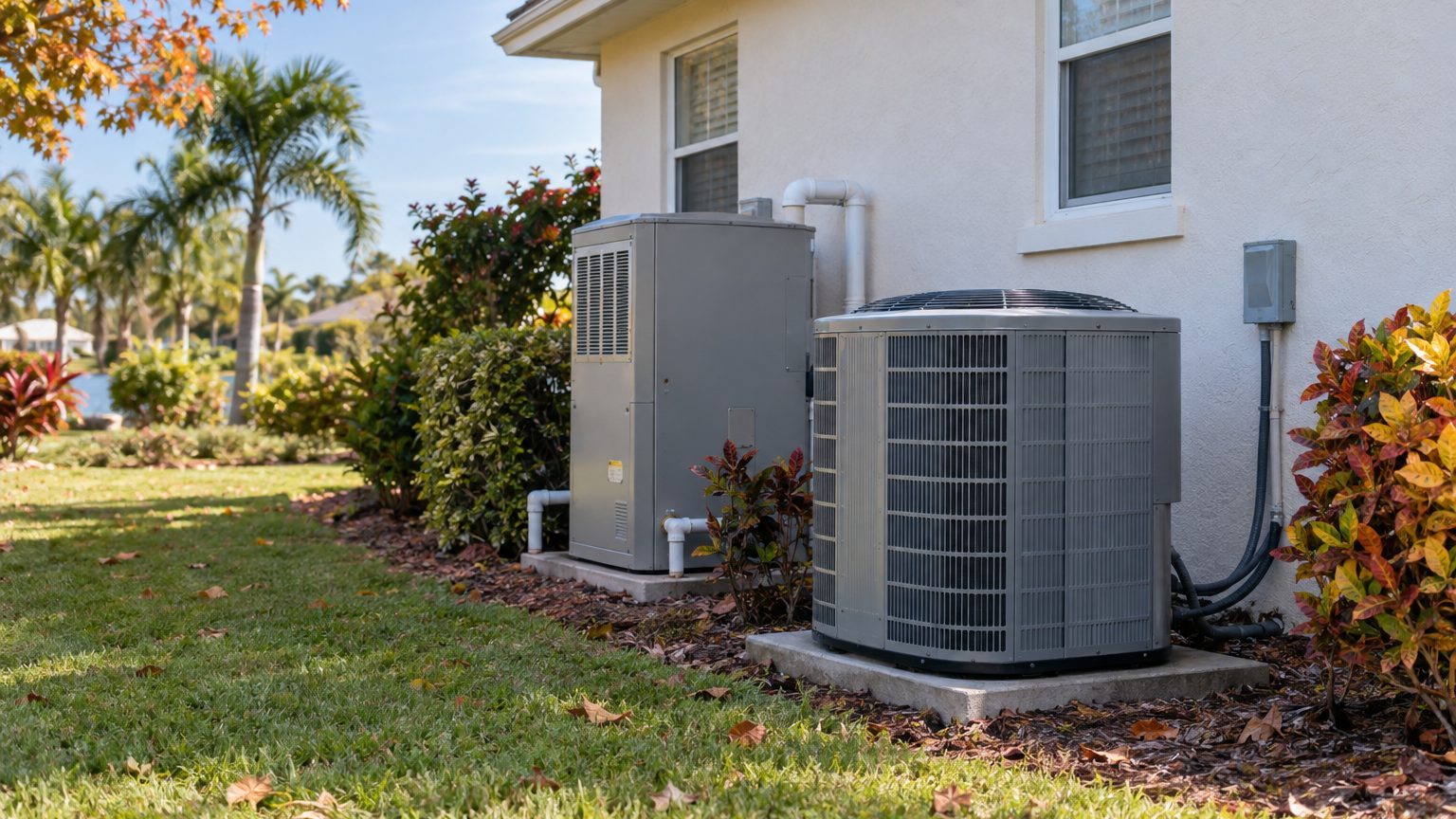

On running cost alone, a heat pump beats electric baseboard in Nova Scotia by a wide margin: C$25.28 per million Btu of heat delivered, against C$60.02 for resistance heat. Natural gas is the missing piece. No residential gas price is available for this comparison, so that figure has to come from your gas utility’s published rate.
The short answer for Nova Scotia
Start with what the numbers say. Using the average residential electricity price in Halifax, an electric baseboard system costs C$60.02 for each million Btu it puts into the house. A heat pump built to the ENERGY STAR minimum of 8.1 HSPF2 costs C$25.28 for the same heat. The gap is C$34.74 per million Btu, all in the heat pump’s favor. These figures are computed from Hydro-Québec’s Halifax price, ENERGY STAR efficiencies and U.S. Energy Information Administration (EIA) energy conversions.
Both numbers describe running cost on the same unit of heat. They are not a yearly bill, because a yearly bill depends on the size, insulation and air leakage of a particular house. They are not the price of buying and installing equipment either, which can reverse the math over a short horizon.
A gas furnace is the comparison most readers actually want, and the data here cannot settle it. Without a verified residential gas price, putting a number beside the heat pump would be a guess. Your gas utility publishes its rates, and its per-unit price, combined with the furnace’s rated efficiency, gives you a figure to set against C$25.28.
The question gets easier from there. If your street has no gas line, the heat pump is the cheaper system to run; if it does, get the gas rate and test it against C$25.28 per million Btu before choosing.
What each option costs to run in Nova Scotia
| System | Efficiency used | Cost per million Btu delivered |
|---|---|---|
| Electric resistance (baseboard) | 100% | C$60.02 |
| Heat pump | 8.1 HSPF2 (seasonal COP about 2.4) | C$25.28 |
All amounts are in Canadian dollars. The electricity price behind them is 20.48 cents per kWh, an average residential price before taxes at 1,000 kWh a month, measured in Halifax. It comes from Hydro-Québec’s comparison of North American city electricity prices, using rates in effect in April 2025. That is a city average, useful for comparing fuels, and it will not match your own bill line for line.
Natural gas has no row in the table, and that is deliberate. No residential gas price is in the data used here, so the furnace column stays empty rather than filled with a borrowed number.
Efficiency matters as much as the price of the fuel, and the table shows why. Baseboard turns each unit of electricity into one unit of heat, no more. A heat pump moves heat from outdoor air into the house, so it delivers roughly 2.4 units of heat for every unit of electricity over a season. It pays the same 20.48 cents per kWh and still lands well under half the baseboard cost. A fuel burner sits on the other side of that logic, since some heat always leaves through the flue, and a cheap fuel can still lose ground to a very efficient machine. For more on how the rating works, see What HSPF2 Measures, and Why Ductless Asks for More.
The 8.1 figure is the ENERGY STAR minimum for ducted and single-package systems, a floor to earn the label and not a typical result. Treat C$25.28 as the conservative heat pump number: a better-rated unit would cost less per million Btu to run.
How cold it gets, and what that does to a heat pump
Halifax Stanfield records about 4,263 heating degree days a year below 18 C, according to Environment and Climate Change Canada’s 1981-2010 climate normals. Degree days turn climate into cost: twice as many would mean roughly twice the fuel for the same house. That count uses a base of 18 C (64.4 F) and Celsius degrees, so it should not be set beside an American degree-day figure, which uses a different base and period.
The coldest month adds the sharper detail. The mean daily minimum in the coldest month is -10.4 °C at the same station. That is an average of the nightly lows, not a record, so some nights run colder. And it is one station, so communities elsewhere in the province will differ.
The heat pump figure matters here. The C$25.28 rests on a seasonal average efficiency, a blend of mild and cold days across the whole heating season. In deep cold a heat pump’s efficiency drops, and the savings narrow on exactly the nights when the house asks for the most heat. A backup, either electric resistance strips or a furnace, usually carries the coldest hours. Even with that backup, the seasonal average stays far from the C$60.02 of straight resistance, because most heating hours are not the coldest ones.
No single temperature marks the point where a heat pump quits. Performance slides with the weather, and it varies by model and by how the unit was sized. For a closer look, How Cold Is Too Cold for a Heat Pump goes into what happens as temperatures fall.
Plan the backup for the coldest nights, not the average winter, and ask any installer how the system behaves at -10.4 °C and below.
What homes in Nova Scotia already heat with
Statistics Canada’s 2023 survey of primary heating systems (table 38-10-0286) gives province-wide shares. Heat pumps lead the published figures at 25%, followed by electric baseboard heaters at 20%, forced-air furnaces at 17% and boilers with hot-water or steam radiators at 16%. Heating stoves appear in the table with no figure. The estimate was suppressed as unreliable, so the survey does not publish one. That is not the same as zero.
These shares show what was installed, which tells you which fuel looked cheap when homes were built or upgraded. They are not a recommendation. They are also not comparable to American shares, since the survey, year and categories differ.
They do change the picture in practice. A house with baseboard has the most to gain, since C$34.74 per million Btu is the gap on offer, and no ducts are needed for a ductless system. A house with a forced-air furnace already has ducts, so a ducted heat pump or a furnace-backed setup is a straightforward swap. The Ductless or Central question comes down mostly to what the house already has.
A boiler house is a different conversion altogether. With radiators and no ductwork, an air-source system either brings in ducts or goes ductless, and the radiators may stay as a second source. A house without a gas line removes the gas furnace from consideration entirely.
For wider context on local fuels and equipment, see Heating a Home in Nova Scotia. Start from the system you have now (ducts, radiators or baseboard), because that sets the conversion’s scope more than the fuel price does.
When the other choice wins
The heat pump is cheaper to run than electric resistance, but that does not make it the right call everywhere. A gas furnace can still come out ahead in a few situations, and gas is simply an unknown here until you check your utility’s rate.
An old system with years left is the first one. If the furnace still heats reliably, the savings from switching have to be weighed against the cost of installing new equipment, and that math can take a long time to pay back. Repairing a Furnace or Replacing It covers when each makes sense.
Dual fuel is the second. A heat pump handles most of the season and a furnace takes the coldest nights, which fits a climate with a coldest-month average low of -10.4 °C. It needs a gas line and two systems to maintain, but it protects the house from the stretch where the heat pump is working hardest and delivering least.
Cooling is the third, and it favors the heat pump. A furnace heats only. A heat pump also cools, and ENERGY STAR’s minimum for that is 15.2 SEER2, the cooling counterpart of HSPF2 (compare the same letter on both units). If a house relies on window units in summer, one machine doing both jobs changes the total cost. This data carries no Halifax cooling degree-day figure, so the size of that benefit depends on how much you cool.
The gas rate is the last. If your utility’s price makes a high-efficiency furnace cheaper per million Btu than C$25.28, gas wins on running cost. Get the gas rate in writing, convert it to cost per million Btu using the furnace’s rated efficiency, and decide against C$25.28.
Common questions
Is a heat pump really cheaper than baseboard in Nova Scotia?
Yes. At the average Halifax residential electricity price, baseboard costs C$60.02 per million Btu of heat delivered and a heat pump at 8.1 HSPF2 costs C$25.28, a difference of C$34.74.
Will C$25.28 per million Btu show up on my bill?
No. It compares fuels on the same unit of heat. Your actual bill depends on your house’s size, insulation, air leakage and how you set the thermostat, and taxes are not included.
Does a heat pump still work at -10.4 °C?
That is the mean daily minimum of the coldest month at Halifax. A heat pump keeps running, but its efficiency drops in deep cold, and a backup carries the coldest nights. The seasonal figure of 8.1 HSPF2 already averages over the whole winter.
What HSPF2 should I look for?
ENERGY STAR sets minimums of 8.5 for non-ducted split systems and 8.1 for ducted split and single-package systems. A ductless system has no duct losses to begin with, so it has to perform better to earn the same label. The details are on the ENERGY STAR air-source heat pump criteria page, and these are minimums to earn the label, not what any particular unit delivers.