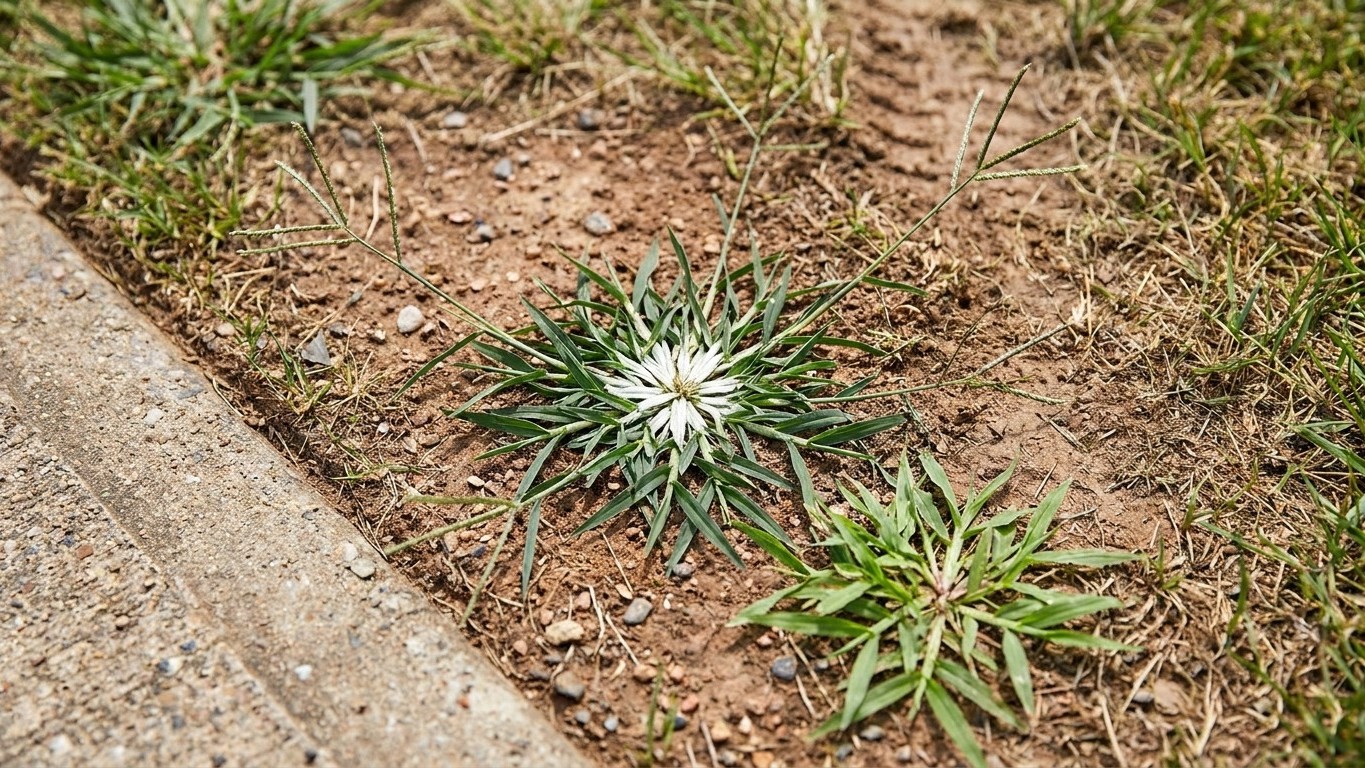

Sow grass seed in North Dakota from mid-August into early September. The deadline is set by your first fall freeze: the seed needs about 45 days of growing weather before it arrives. Spring is the backup, once the soil two inches down sits between 50 and 65 °F. What follows covers why those dates hold, how to calculate your own cutoff, how much seed to buy, and how to water it in.
The best time to sow grass seed in North Dakota
Grass seed doesn’t read calendars. It reads soil temperature, and cool-season species germinate when the soil is between 50 and 65 °F. Measure two inches down, mid-morning, with a cheap probe thermometer. Air temperature misleads here, because a warm afternoon in April can sit on top of soil that is still nearly frozen.
Why late summer wins
In mid-August to early September, the ground is still holding summer’s heat while nights begin to cool. That combination is what seed wants: warm soil, mild air, and a long runway of weeks before the ground locks up. Seedlings get a full season of root growth before their first winter. Spring lawns, by contrast, race the heat of July with roots that are barely an inch long.
For reference, the NOAA NCEI U.S. Climate Normals for 1991-2020 put the first fall freeze at an airport reference station between September 25 and October 5 (the 30 to 70 percent probability band for 32 °F). That is one station’s figure, not a statewide promise. Rural and suburban yards often freeze one to two weeks earlier, and higher ground earlier still.
Spring as the second choice
The same station shows a last spring freeze between May 4 and May 15. Seed can go down once the soil reaches that 50 to 65 °F range, which usually trails the last frost a bit. Spring sowing works, but it demands more babysitting. Young grass has to survive summer heat and fight a flush of weeds that germinate at the same time, so you will be watering and weeding more than a fall sower would.
The species matter too. The grasses that hold up in North Dakota are the cool-season ones: fine fescues, Kentucky bluegrass, perennial ryegrass, rough bluegrass and tall fescue. Warm-season grasses are the wrong tool. They grow only in sustained heat and go dormant when soil cools, and this state’s short season and hard winters leave them too little time to thrive. A lawn that browns in September and fails to come back in spring is not a lawn, it’s an expensive lesson.
The last date that still works
Seed sown too late does something cruel. It germinates, looks promising for two weeks, then dies over winter because the seedlings never built enough root to survive. The rule that prevents this is simple: count back about 45 days of growing weather from your first fall freeze.
Run that math on the reference station’s range and you get this:
| First fall freeze (reference station) | Last sowing date, 45 days earlier |
|---|---|
| September 25 | About August 11 |
| October 5 | About August 21 |
So at the reference station the cutoff lands between roughly August 11 and August 21. That is earlier than most people expect. A gardener who plans to seed “in September, when it cools off” is often already behind.
Now adjust for your own ground. Because suburban and rural yards commonly see the first freeze one to two weeks sooner than an airport does, your cutoff may slide back by the same amount. Hilltops and open country with no windbreak run colder still. The best move is to look up the typical first fall freeze for your own county, then subtract 45 days yourself. If you have lived on the property a while, your own memory of when the tomato plants first blackened is a decent cross-check.
Miss the date and you have a clear choice. Don’t sow anyway and hope. Wait for spring, when soil warms into that 50 to 65 °F band, and treat it as a fresh start. Gardeners in other states do the same arithmetic with different inputs, which is why the answer shifts so much from place to place. You can see how it lands in When to Plant Grass Seed in Washington and When to Plant Grass Seed in Colorado.
Seed rate and soil preparation
Seed rates are quoted in pounds per 1,000 square feet of new lawn. Where university extension sources disagree, the ranges below cover them.
| Grass | New lawn, per 1,000 sq ft |
|---|---|
| Tall fescue | 6 to 8 lb |
| Fine fescues | 4 to 6 lb |
| Rough bluegrass | 2 to 3 lb |
| Kentucky bluegrass | 1 to 3 lb |
| Perennial ryegrass | 4 to 10 lb |
Overseeding an existing lawn takes half these amounts. More seed is not insurance. Crowded seedlings compete for light and water, and the weaker ones thin out, leaving you with the same lawn you would have had at the right rate and less money in your pocket. The wide spread between species reflects seed size: bluegrass seed is tiny, so a pound goes a very long way.
Depth is where most new lawns go wrong. Cover seed no more than 0.25 inch, then press it so every seed touches soil. Seed buried deeper often never emerges, and that is the most common reason a new lawn comes up patchy. Raking lightly after broadcasting, then rolling or walking the area, is usually all it takes.
As for the ground itself, North Dakota’s representative state soil is the Williams series, a Mollisol: deep, dark prairie soil of the sort that built the Corn Belt. USDA records its surface layer at about pH 7.2 (near neutral), a loam to silt texture (38 percent sand, 22 percent clay, 40 percent silt), about 4.0 percent organic matter, and good drainage. Soil like that tends to be forgiving, holding moisture without staying soggy.
That describes the series, not your yard. A state has hundreds of soil series, and river bottoms, hill country, and any lot a builder has scraped or filled can behave nothing like it. Treat those numbers as a hint, not your pH. A soil test is the only way to know yours, and the NDSU Extension network can point you to testing options. For the full sequence of grading, seeding and rolling, see Starting a New Lawn From Seed.
Watering a new lawn until it holds
A seed that starts to swell and then dries out is dead. That is the whole logic of watering a new lawn: the top inch of soil must stay consistently damp from sowing until the seedlings are up and rooting. Deep soakings are not the goal yet, because the roots are only a fraction of an inch long.
In practice that means short, light watering sessions, often more than once a day in warm, windy weather, rather than one long soak. Check by pushing a finger into the surface. If it is dry and crumbly, you waited too long. If water pools or the seed floats and washes into low spots, you have gone too hard or too long. A fine spray setting protects the seed bed.
Germination isn’t uniform. Perennial ryegrass tends to emerge quickly, while Kentucky bluegrass is slower, which matters if you seed a blend. Keep watering through the slow species, not just until the first green shows up. Bare-looking patches in the first weeks often just haven’t finished sprouting.
Once the seedlings fill in, taper off. Water less often but longer each time, which pushes roots to chase moisture downward. This is also how a fall-sown lawn gets ready for winter. A lawn watered shallowly until the freeze arrives goes into dormancy with shallow roots and little reserve.
Keep foot traffic off the new grass as much as you can, and hold off on weed killers until the lawn is established. Many products can injure young seedlings, so read the label for how long to wait after seeding. Your first mowing is a milestone, not a chore. Do it when the grass is dry, with a sharp blade, so you cut the tops and don’t yank the seedlings out of loose soil.
Common questions
Can I seed a lawn in spring instead of fall?
Yes, once soil two inches down reaches 50 to 65 °F. At the reference station the last spring freeze falls between May 4 and May 15, and your own date may be later. Expect more weeds and more watering than with a fall sowing, since the seedlings must get through summer heat.
How much seed do I need to overseed a thin lawn?
Half the new-lawn rate. For tall fescue, that means 3 to 4 lb per 1,000 square feet instead of 6 to 8 lb. Mow short first, rake out debris, and make sure the seed reaches soil, not just the thatch.
What happens if I sow after the cutoff date?
The seed may sprout, but seedlings without about 45 days of growing weather before the first fall freeze rarely survive winter. If you have passed your date, wait until spring.
How do I find the frost dates for my own county?
The figures here come from one airport station, and a rural yard can freeze one to two weeks earlier. Your local NDSU Extension office is the right place to ask for county-level guidance. A backyard thermometer logged over a couple of falls will also tell you what your own spot really does.
The Moon calendar is a separate, older custom: see when to plant grass seed by the moon, written as tradition rather than fact.