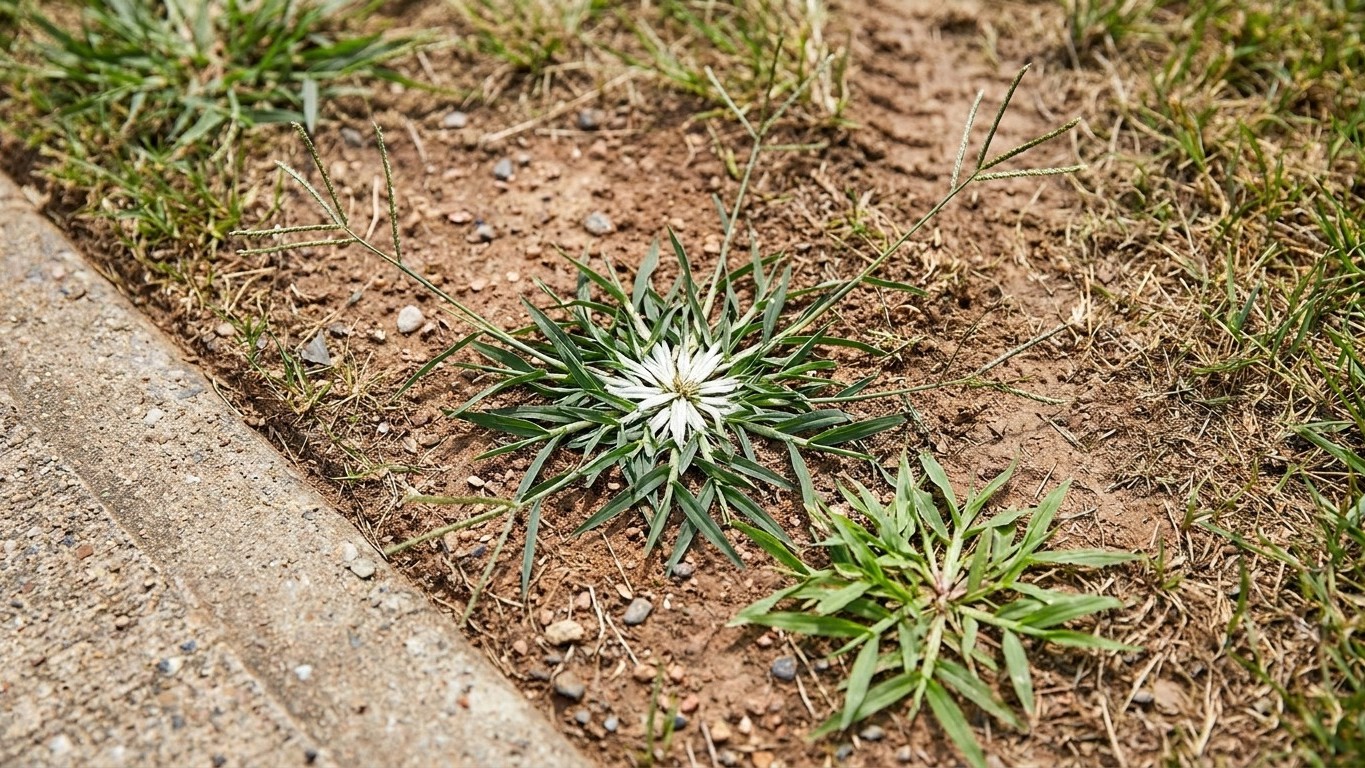

Most Ohio lawns do not need dethatching. Cut a wedge of turf with a spade and measure the brown, spongy layer between the green blades and the soil. Under 0.5 inch, leave it alone. Above 0.75 inch, dethatch, ideally in early fall before the first frost, which in zone 6a lands between October 5 and October 15. Spring is the fallback, once the May 5 to May 15 last-frost window has passed.
Do you need to dethatch at all?
Thatch is a layer of dead and living stems, roots, and runners that builds up faster than microbes can break it down. Grass clippings get blamed for it, but they are mostly water and break down quickly. The real culprits are heavy nitrogen feeding, constant shallow watering, and compacted soil that starves the microbes of air.
The wedge test settles the question. Cut a plug a few inches deep, pull it out, and look at the side. Guidance from Clemson Cooperative Extension and Penn State Extension treats under 0.5 inch as healthy, and that thin layer is actually useful, since it cushions the crown and slows evaporation. Between 0.5 and 0.75 inch is a gray zone where you watch and adjust your habits. Above 0.75 inch, water and fertilizer start running off or sitting in the mat instead of reaching the roots, and it is time to act.
Most lawns never reach that point. Dethatching is hard on turf, and ripping up a lawn that tests at 0.3 inch costs you grass and gains you nothing. Skip it, and put the effort into a soil test instead.
Which Ohio grasses build thatch
Ohio lawns run on cool-season species, and you probably have a mix of these:
- Kentucky bluegrass
- Tall fescue
- Perennial ryegrass
- Fine fescues
- Rough bluegrass
Kentucky bluegrass is the usual thatch builder because it spreads by underground stems that pile up over the years. Tall fescue grows in clumps and rarely gets thick enough to need this. A fescue-heavy lawn that tests at 0.4 inch is a lawn to leave alone, whatever the neighbor says.
For a general walkthrough that applies beyond one state, see Dethatching a Lawn.
The season to do it in Ohio
Cool-season grasses grow hardest in fall and again in spring, and dethatching goes best when the lawn can heal quickly. Early fall wins on both counts. Soil is still warm, weed pressure is easing, and any seed you scatter into the torn-up turf has weeks to establish before winter.
The Ohio State University Extension gardening calendar puts the first fall frost in zone 6a between October 5 and October 15. Today is October 2, so that window is opening now. A thatch problem you have measured this week can still be handled, but the clock matters, and seed that goes down in the last days before frost has less time to knit in. If you are past the point where seedlings can mature, hold the job until spring.
Spring works if you wait for the grass to actually be growing. The same calendar lists the last spring frost for zone 6a between May 5 and May 15. Dethatching in late winter, when turf is half dormant, just scars it. The tradeoff in spring is weeds: bare soil exposed by a power rake is an invitation, and new grass seedlings face competition from crabgrass and others. That is why fall is the better choice.
Avoid midsummer entirely. Heat and dry spells stress cool-season turf, and a lawn that is already struggling does not recover well from being torn up.
Why warm-season grasses are not the answer here
You will see bermudagrass and zoysia recommended in other parts of the country, but they do not hold in Ohio. They go dormant and brown at the first sustained cold, and Ohio winters are long and hard enough to thin or kill them. Stick to the cool-season list above.
A caution on Ohio’s geography
The frost dates here are for zone 6a, and Ohio is not one climate. This page does not carry figures for the Lake Erie shore or the Ohio River counties, so a lawn in either place may run earlier or later than these dates. Your local Ohio State University Extension county office is the place to confirm the timing for your address. Compare with neighbors to the east and south, such as When to Dethatch a Lawn in Pennsylvania, or with When to Dethatch a Lawn in Florida to see how different the calendar gets with warm-season turf.
Rake, power rake, or core aeration
The right tool depends on how much thatch you measured and how big the lawn is. Here is how the three options compare.
| Method | Best for | What it does |
|---|---|---|
| Dethatching rake | Small lawns, thatch just past 0.75 inch | Pulls dead material out by hand |
| Power rake (vertical mower) | Larger lawns with a clearly thick mat | Spinning blades slice and lift thatch |
| Core aeration | Compacted soil, borderline thatch | Pulls plugs, opens the soil to air and water |
Hand rake
A thatch rake has curved tines that hook the mat and drag it out. It is slow and tiring, but on a small yard it is gentle and cheap, and you can stop when the lawn tells you it has had enough. Expect a surprising pile of debris. Rake it up and compost it or bag it.
Power rake
Rental yards stock vertical mowers, and they do in an hour what takes a weekend by hand. Set the blades to just reach the thatch and nick the soil surface, not dig deep trenches. Make one pass in one direction, check the result, and only make a second pass across the first if the mat is still thick. Going too aggressive is the most common mistake, and a torn-up lawn has to be reseeded.
Core aeration
Aeration does not remove thatch directly. It pulls small plugs of soil that break down on the surface and mix with the mat, which speeds decomposition and relieves the compaction that was slowing it. When the wedge test lands in the gray zone, between 0.5 and 0.75 inch, aeration is often enough. It also pairs well with overseeding, because the holes give seed good soil contact.
What the lawn needs afterwards
A freshly dethatched lawn looks rough, with thin spots and bare patches, and that is normal. The job is not finished until you overseed. Without new seed, the gaps fill with weeds.
Use the seeding rates below, but halve them. The rates here are for a brand-new lawn, in pounds per 1,000 square feet, and overseeding an existing lawn takes half. More seed is not insurance, because crowded seedlings compete and thin themselves out.
| Grass | New lawn (lb per 1,000 sq ft) | Overseeding (half rate) |
|---|---|---|
| Tall Fescue | 6 to 8 lb | 3 to 4 lb |
| Fine Fescues | 4 to 6 lb | 2 to 3 lb |
| Rough Bluegrass | 2 to 3 lb | 1 to 1.5 lb |
| Kentucky Bluegrass | 1 to 3 lb | 0.5 to 1.5 lb |
| Perennial Ryegrass | 4 to 10 lb | 2 to 5 lb |
Water lightly and often enough that the seedbed never dries out until the seedlings are up, then shift to deeper, less frequent watering. Hold off on heavy nitrogen, since overfeeding is one of the things that built the thatch to begin with. A soil test through your county Extension office will tell you what the lawn actually lacks. Keep foot traffic off the new seed until it has been mowed a few times.
Common questions
Can I dethatch in October in Ohio?
Early October is the tail of the best window, and in zone 6a the first frost is expected between October 5 and October 15. Seed needs time to establish before cold arrives, so if you are well past mid-October, waiting for spring is the safer plan.
How do I know the thatch is thick enough to bother?
Cut a wedge with a spade and measure the brown spongy layer. Under 0.5 inch is healthy and above 0.75 inch calls for action. Anything between the two means adjust watering and feeding, and consider aeration.
Will dethatching hurt my lawn?
It stresses the grass, which is why you should do it only when the measurement says so. Done at the right time, with cool-season turf that is actively growing, and followed by overseeding, the lawn bounces back. Done in summer heat or on a lawn that did not need it, you create bare soil for nothing.
Is aeration enough on its own?
Sometimes. If your thatch is in the gray zone, between 0.5 and 0.75 inch, aeration can be enough, and it also treats compaction. Above 0.75 inch, you will usually want to remove the mat itself with a rake or power rake and then aerate if the soil is tight.