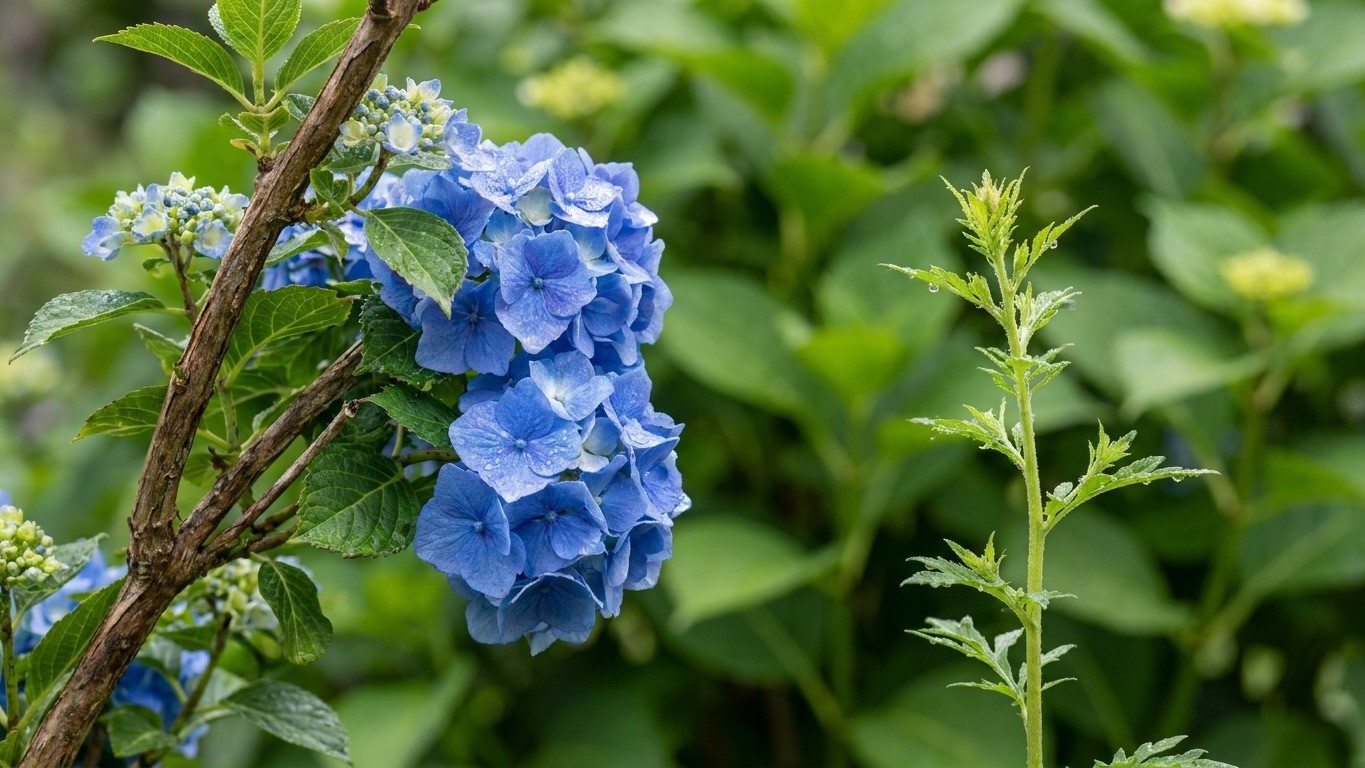

In Louisiana, plant container-grown Hydrangeas from late fall through winter, so the roots settle in before summer heat arrives. Heat, not frost, is the limit here. Give them morning sun and afternoon shade, water deeply through the long summer, and match the type to your end of the state. Bigleaf and oakleaf suit many yards, and panicle types take more sun. The sections below cover timing, colour, winter, and pests.
When to plant Hydrangeas in Louisiana

Reading the frost dates
The reference city for the frost numbers is New Orleans. They come from the NOAA NCEI 1991-2020 Climate Normals, using the 30-70% band of 32F freeze probability. The last spring frost falls between January 18 and February 8. The first fall frost falls between December 17 and January 8. Notice that the fall window straddles the New Year.
A 32F freeze occurs in only 86.8 percent of years at that station. Roughly one year in seven has no freeze at all. That is one city, though, and not the whole state. Northern Louisiana and higher ground freeze more reliably and run later in spring.
The count-back arithmetic
For a shrub, frost is the smaller worry. The worry is how many weeks the roots get before the first stretch of serious heat. A rule of thumb (mine, not a published standard) is to give a new hydrangea about 16 weeks in the ground before June 1. Count back 112 days from June 1 and you land on February 9. That is almost exactly the end of New Orleans’ last-frost window, so mid-February is the latest sensible planting date in the south of the state.
Fall is better. Plant in late October and you get about seven weeks before the earliest edge of the first-frost window on December 17. The soil stays warm enough for roots to grow all winter, and the plant meets its first summer with a real root system. In north Louisiana, the last freeze comes later, so watch the forecast on late-winter plantings and keep frost cloth handy.
Seed, hardening off, and transplanting
Starting hydrangeas from seed is a poor bet. Seedlings vary from the parent plant, and they take years to bloom. Buy a nursery plant, or root summer cuttings if you want to propagate at home. The indoor-to-outdoor routine still applies to plants that have lived in a greenhouse or under shade cloth. Set them outside in morning sun for an hour or two, then lengthen the exposure over about a week. Transplant on a cool, overcast day, set the crown level with the soil, and water slowly until the root ball is soaked.
Soil and site preparation
Choose a spot that gets sun until late morning and shade through the hottest part of the afternoon. Under the high canopy of pines works well. Panicle types tolerate more sun, but in a Louisiana July even they sulk on a west-facing wall.
Soil texture across the state runs from heavy clay to sandy loam, so check yours rather than assuming. Dig a hole about 12 inches deep, fill it with water, and come back the next morning. If water is still standing, build a raised bed 8 to 12 inches high. Hydrangeas want steady moisture, but their roots rot in soil that stays saturated.
Order a soil test through your parish extension office a few months ahead. It tells you the pH, which governs flower colour on bigleaf types, and it keeps you from guessing at amendments. Sulfur or lime takes weeks to months to shift pH, so a test in August or September serves a November planting. Skip the amendment if the numbers don’t call for it.
In the weeks before planting, strip the sod from a circle at least three feet across and work 2 to 3 inches of compost into the top 8 to 10 inches of soil. Mark out spacing before you dig. Bigleaf and oakleaf types need roughly 4 to 6 feet between plants, and panicles need more, around 6 to 8 feet. Crowded hydrangeas in humid air invite leaf disease. Dig the hole twice as wide as the root ball and no deeper, and in clay set the crown slightly high.
Varieties that suit Louisiana
Three traits matter most in a long, humid, hot season: heat tolerance, resistance to leaf spot and powdery mildew, and whether the plant blooms on old wood or new. Old-wood bloomers set buds the previous summer, so a late freeze or a hard prune can erase a year of flowers. Rebloomers flower on old and new wood, which is useful in north Louisiana, where late cold snaps are likelier.
| Type | Blooms on | Sun and heat | Good for |
|---|---|---|---|
| Bigleaf (Hydrangea macrophylla), such as Endless Summer or Let’s Dance series | Old and new wood in rebloomers | Afternoon shade needed | Classic mophead colour, adjustable with soil pH |
| Oakleaf (H. quercifolia), such as Alice or Snow Queen | Old wood | Handles heat and dry spells better than most | Woodland edges, fall leaf colour |
| Panicle (H. paniculata), such as Limelight | New wood | Takes more sun | Reliable bloom, little pruning worry |
| Smooth (H. arborescens), such as Annabelle | New wood | Tends to struggle in long Gulf Coast summers | Better suited to the cooler north of the state |
Colour is chemistry
Bigleaf flowers shift with soil. Acidic soil, roughly below pH 5.5, frees up aluminum and pushes blooms toward blue. Higher pH leans pink. White varieties ignore the whole business. If you buy a blue plant and your bed is neutral, expect it to drift pink within a season or two unless you manage the soil.
These types are widely sold, and the traits are what you are shopping for. A reblooming bigleaf for a shaded bed, an oakleaf for the dry edge of the yard, and a panicle for the sunniest spot cover most Louisiana sites.
What to plant alongside
Good neighbors for hydrangeas share their light and moisture needs. Azaleas and camellias like the same filtered shade and acidic soil, and their evergreen leaves keep a bed from looking bare in January. Ferns do well underneath, and Japanese painted fern and holly fern are common picks. Liriope and mondo grass work as ground cover, shading the soil and suppressing weeds without fighting the shrub’s roots.
Pollinators come to hydrangeas, though not equally. Lacecap and oakleaf types show small fertile flowers that bees can use, while full mopheads are mostly showy sterile florets. If pollinator draw matters, plant oakleaf or panicle and add native flowering perennials nearby.
Keep hydrangeas away from thirsty competitors. Surface-rooted trees such as maples drain the soil of moisture, and turf grass running right up to the stem pulls water and nutrients from the shallow roots. Plants that want lean, dry, alkaline ground, such as lavender and rosemary, are a bad match for a bed you keep damp.
The claim you will see most often is that marigolds or other strong-smelling plants confuse pests and protect hydrangeas. There is no solid evidence for it, and I would not plan a bed around it. Spacing, airflow, and watering at the soil line do more for plant health than any companion.
Watering, feeding and support
Hydrangeas are named for water, and Louisiana summers will test that. Water deeply, soaking the root zone slowly a couple of times a week during heat, rather than sprinkling daily. Deep watering pushes roots down. Shallow watering keeps them at the surface, where they bake. Water in the morning at the base, since wet leaves overnight in humid air feed leaf spot.
Afternoon wilting in July is normal, and the leaves usually recover by evening. Check the soil before you reach for the hose. If it is damp an inch or two down, the plant is shedding heat, not dying of thirst.
Mulch 2 to 3 inches deep with pine straw or shredded bark, kept a couple of inches off the stems. It slows evaporation, moderates soil temperature, and cuts weeds. In sandy soil it matters even more.
Feed lightly. A slow-release fertilizer when growth starts in spring, and perhaps a second light dose in early summer, is enough. Heavy nitrogen gives you lush leaves and few blooms. Stop feeding by late summer, so tender growth doesn’t push out ahead of winter.
Pruning depends on the type. Old-wood bloomers, like most bigleaf and oakleaf types, need little more than removing dead stems and trimming after flowering, ideally by July. Cut them in fall or winter and you remove next year’s buds. Panicles bloom on new wood, so they take a late-winter prune. Their big flower heads can flop after summer rain, so stake them or ring them with a simple cage before the blooms get heavy.
Common problems

A hydrangea that wilts at midday but perks up by evening is coping with heat. One that stays limp in the morning has a real problem, either too little water or roots sitting in saturated soil. Dig down a few inches to find out which.
Plenty of foliage and no blooms usually points to one of three things. The shrub was pruned at the wrong time, a late freeze killed buds on old wood, or too much shade or nitrogen is at work. Last year’s pruning date tells you most of what you need.
Brown, crispy leaf edges point to sun scorch or dry soil, particularly on bigleaf types planted in a west-facing spot. Move the plant or add shade cloth in the afternoon, and mulch. Browning flower heads late in the season are usually just age and heat, and no cause for alarm.
Small round brown or purplish spots on leaves are typically a fungal leaf spot. It thrives in humid weather and spreads when leaves stay wet. Clear fallen leaves, improve airflow, water at the base, and remove badly spotted foliage. A white, powdery coating signals powdery mildew, which also likes humid conditions with poor circulation. The same cultural fixes apply, and a resistant variety helps.
Yellow leaves with green veins mean iron deficiency, common when the soil pH is too high. This is a case where the soil test pays for itself. Pink flowers where you wanted blue have the same root cause.
Pests that actually show up in Louisiana
LSU AgCenter publications name pickleworm, leaf-footed bug, cowpea curculio, vegetable weevil, pepper weevil, tomato pinworm, squash vine borer, squash bug, fall armyworm, and crape myrtle bark scale. The list is for home gardens in general, so most of it is vegetable pests. LSU also notes that Louisiana’s long growing seasons let insects reproduce year-round, so there is no clean “pest season” to wait out.
Honesty matters here. The source I have does not say which of those pests damage hydrangeas, so I won’t invent that. Several are tied to a crop by name (pickleworm, squash vine borer, squash bug, pepper weevil, tomato pinworm) and belong to the vegetable garden. Three are worth watching in a yard that mixes shrubs and vegetables.
- Leaf-footed bug. LSU notes high numbers on tomatoes and peppers in late summer and early fall. If you see large brownish bugs with flattened hind legs on or near your shrubs then, knock them into soapy water in the morning, when they are sluggish.
- Fall armyworm. Look for chewed leaves and small caterpillars in the later part of the season. Hand-pick them while they are small.
- Crape myrtle bark scale. LSU lists it as an ornamental pest, and it takes its name from crape myrtle. Look for a white to gray crust on bark and black sooty mold below it. If you grow crape myrtles near your hydrangeas, check them, and have the insect identified before spraying.
Pressure varies within the state, and this list is not exhaustive. If something is chewing your hydrangeas and none of these fit, take a sample to your parish extension office for identification before buying a spray.
Cut flowers, drying and end of season
Hydrangeas are grown for their flowers, and they make good cut flowers. For fresh bouquets, cut in the cool of morning when blooms are fully open and sturdy, and plunge the stems straight into water. Mopheads wilt fast, so a quick dip of the cut ends in hot water can help.
For drying, wait until late summer, when the florets turn papery and shift to antique tones. Cut with 12 inches or so of stem, strip the leaves, and hang the bunches upside down in a dry, shaded spot with air movement. In humid Louisiana that can mean an air-conditioned room, since damp air invites mold. Dried heads keep for months in a dry place out of direct sun.
As the first fall frost approaches, keep the odds in mind. At the New Orleans station, the first-frost window runs from December 17 to January 8, and about one year in seven has no freeze at all. North Louisiana freezes more reliably. If a freeze is forecast after buds have set on a bigleaf, drape the plant with frost cloth and mulch the base. Leave the old flower heads on over winter, since they help shield the buds below. Hold off on pruning old-wood types until after they bloom next year. Then clear fallen leaves from the bed, so leaf spot spores don’t overwinter.
Local help
The LSU AgCenter runs extension offices in every parish. Contact yours for local planting dates, soil testing, and insect identification. For wider context, browse the Louisiana guides and the How to Grow Hydrangeas: The Complete Guide.
Common questions
What is the best month to plant hydrangeas in Louisiana?
Late fall is ideal, with late winter as the fallback. The roots then get a cool season to establish before summer heat. In south Louisiana, mid-February is about the last sensible date.
Do hydrangeas survive Louisiana summers?
Yes, with afternoon shade, deep watering, and mulch. Oakleaf and panicle types tend to cope best with heat. Midday wilting that recovers by evening is normal.
How do I change the colour of my hydrangea blooms?
It works on bigleaf types. Acidic soil gives blue flowers and higher pH gives pink. Test first, and change pH slowly, since amendments take weeks or months to work. White varieties do not change.
Will a freeze kill my hydrangeas?
Rarely the plant, but it can kill flower buds on old-wood bloomers. Cover plants with frost cloth ahead of a late freeze. Rebloomers and new-wood types, like panicles, recover more easily. For similar climates, compare Growing Hydrangeas in Texas: Types, Colour and Winter and Growing Hydrangeas in Arkansas: Types, Colour and Winter. Colder-winter gardeners can read Growing Hydrangeas in Saskatchewan: Types, Colour and Winter.
Why won’t my hydrangea bloom?
The usual causes are pruning at the wrong time, freeze-damaged buds, too much shade, or too much nitrogen. Check when you last pruned, and avoid cutting old-wood types in fall or winter.