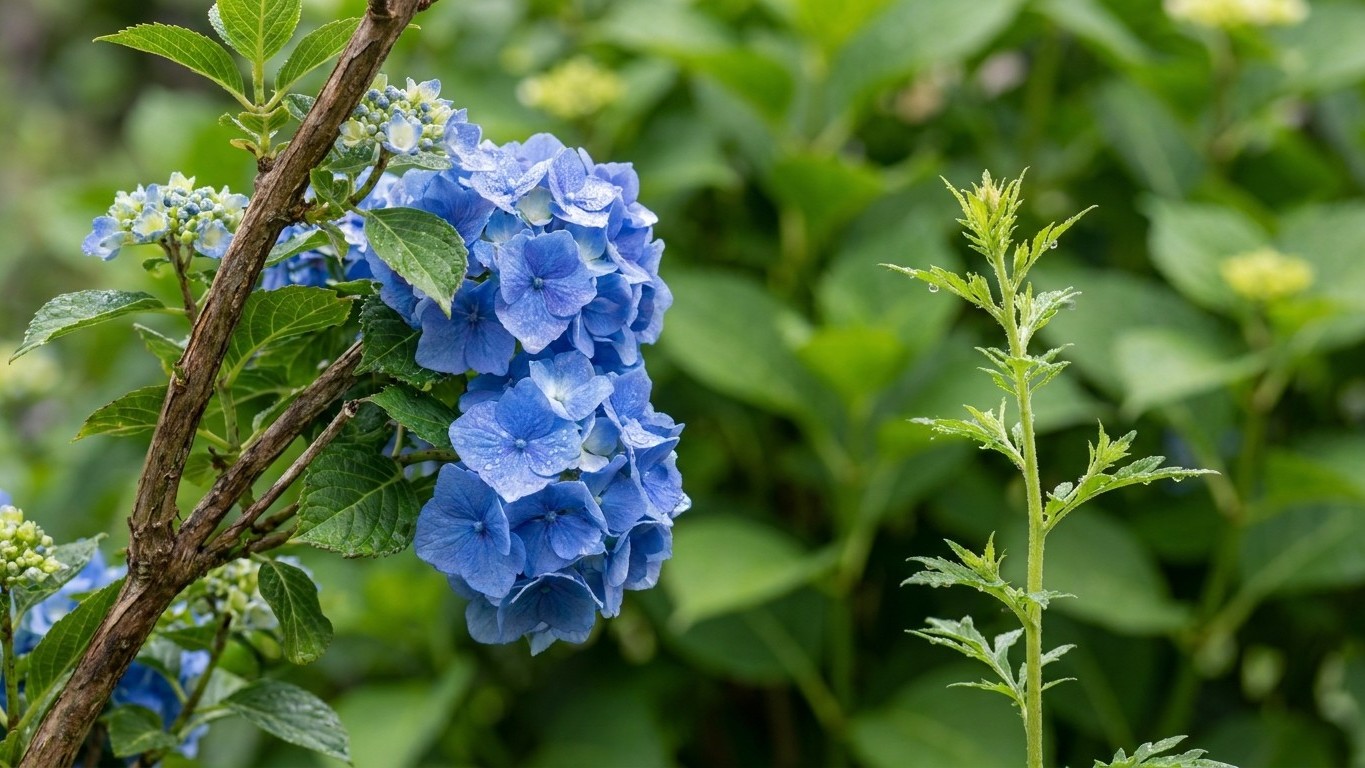

Prune by how your hydrangea sets flower buds, not by the calendar alone. Bigleaf, mountain and oakleaf types bloom on last year’s stems, so they get a light trim right after the flowers fade in summer. Panicle and smooth types bloom on new growth and take their haircut in late winter, as the frost window around Vancouver starts to close. Mix the two up and you can erase a whole season of blooms with one tidy afternoon.
What this comes down to in British Columbia

At Vancouver International Airport, the reference station for this page, the average last spring frost falls on March 18 and the average first fall frost on November 10, according to Environment and Climate Change Canada’s climate normals. That makes late winter to early spring the pruning window for new-wood hydrangeas, and summer, straight after flowering, the window for old-wood ones.
Those two dates are averages, not guarantees. In one year out of two, the last frost lands later than March 18 and the first fall frost lands later than November 10, so treat each as the midpoint of a window. They also describe one airport station, and they come from older averages, so a recent cold snap or a mild spell can sit well outside them. For hardiness, Natural Resources Canada places Vancouver in Canadian zone 9a. That is a Canadian system built on several climate variables, and it does not convert to a USDA zone.
The general guide to growing hydrangeas in British Columbia covers planting and care. This page covers only the pruning shears, and the whole question comes down to where the next flowers are hiding.
| Type | Blooms on | When to prune | How much |
|---|---|---|---|
| Bigleaf and mountain (mophead, lacecap) | Old wood, mostly | Right after flowering in summer | Light: spent blooms, dead stems, a few of the oldest canes |
| Oakleaf | Old wood | Right after flowering | Minimal: shape only |
| Reblooming bigleaf (Endless Summer is the best-known line) | Old and new wood | After the first flush, or lightly in early spring | Light; more forgiving than classic bigleaf |
| Panicle (Limelight, for example) | New wood | Late winter to early spring | Moderate to firm, down to a framework |
| Smooth (Annabelle, for example) | New wood | Late winter to early spring | Firm, even to a low stump |
The reason is simple botany. Old-wood types form next year’s flower buds in late summer and early fall, then carry them through the wet winter at the tips and upper nodes of the stems. A haircut in November, January or April removes those buds, and no amount of fertilizer brings them back.
Working it out for your own garden
A date copied from a neighbor’s fence line works until you move, or until a cold spring shows up. A method holds up better, and it takes three steps.
Find out which kind you have
Check the plant tag first. If it is gone, read last year’s behavior: a shrub that froze to the ground over winter and still bloomed that summer flowers on new wood. One that bloomed only on stems that survived the winter flowers on old wood. Not sure which of the bigleaf or smooth families you bought? The article on which hydrangeas survive a British Columbia winter helps you sort the types.
Do the arithmetic from the frost window
For a new-wood shrub such as a smooth hydrangea, the goal is to prune after the deepest cold has passed but before new shoots race ahead. With a mean last frost of March 18 and a window that stretches later in roughly half of years, the sensible target is the weeks around that date, leaning toward the later side after a mild February. The buds telling you they are swelling matters more than the day on the calendar.
For an old-wood shrub, count backward from the first fall frost instead. Start with November 10 as the midpoint. As a cautious rule of thumb (my own, not an extension rule), subtract ten to twelve weeks. That lands between mid-August and the first days of September, and it is the latest you want to be cutting a classic bigleaf, not a target. The practical answer is earlier: prune soon after the last flowers fade, so the plant has the rest of the growing season to set fresh buds.
Test the wood before you cut
In late winter, scratch a bit of bark with a thumbnail. Green underneath means alive. Brown and brittle means dead, and it can come out. On old-wood types, wait until leaves open in spring before judging winter damage, because stems that look dead in March often leaf out from the upper buds by May.
What changes across the state
British Columbia is not one climate, and a pruning date that fits Vancouver misleads in many other places. The coast and the southwest corner are the mildest, with long, wet, frost-light winters. Move inland, up in elevation, or north, and spring arrives later, fall arrives sooner, and winters are colder. The figures above come from one station only, and I have no published number to offer for other districts.
The practical effect is that the whole calendar shifts. In upland and northern areas, the new-wood window runs later into spring, and waiting until buds visibly swell is even more important than it is on the coast. Old-wood types in colder districts also take more winter damage, since the buds on exposed upper stems are the first thing a hard freeze kills. In those places, hold off on any pruning other than dead-stem removal until growth starts, and expect fewer flowers some years no matter what you do.
Microclimates matter inside a single city too. A south-facing wall, a spot under a big conifer, a low pocket where cold air settles: any of them can move your plant’s schedule by a couple of weeks. Watch your own shrub’s buds, since they respond to your yard, not to the airport.
The mistakes this state punishes

The most common one is the fall cleanup. A mild, damp October feels like a good time to tidy up, and the first fall frost may still be weeks off. But on a bigleaf, that cleanup cuts the buds that will open next summer. Leave the old flower heads on over winter. They protect the buds underneath, and you can snip them in spring.
The second is pruning a new-wood shrub too early. A warm spell in late winter, which the coast is known for, can tempt you to cut and fertilize, and new shoots follow quickly. Because the March 18 average means a later frost in half of years, tender new growth can get nipped. The plant usually recovers, but the result looks ragged. Wait for buds to swell and the forecast to settle.
Third, the hard “rejuvenation” cut on an old-wood shrub. Cutting a bigleaf to the ground can restore its shape, and it also costs you a year of flowers, sometimes more. If a plant is overgrown, take out up to a third of the oldest, woodiest stems at the base over a few seasons instead.
Fourth is blaming pruning for color. If the blooms come out pink when you wanted blue, the cause is soil, not shears. See why hydrangeas are pink in British Columbia, and how to turn them blue for that fix.
Checking this against your county
A frost figure from one airport is a starting point, not an instruction. British Columbia is organized into regional districts rather than counties, so start with your municipality or regional district, and ask a local nursery or garden club what the last frost looks like where you live. The Government of British Columbia’s agriculture and seafood pages are the provincial starting point. For the rest of the growing picture, return to the province’s hydrangea guide linked above.
Common questions
Can I prune hydrangeas in fall in British Columbia?
Remove dead stems if you must, but skip anything else on bigleaf, mountain and oakleaf types. Their buds for next summer are already set by then. Smooth and panicle types tolerate fall pruning but do better with a late winter cut.
My hydrangea didn’t bloom. Did I prune it wrong?
Possibly. A bigleaf cut back in fall, winter or spring often skips flowering. Winter dieback of buds is the other common cause, and a lack of sun is a third. Check which kind you have before changing your routine.
When should I cut back a panicle hydrangea?
In late winter to early spring, around the weeks surrounding the average last frost of March 18 at Vancouver International Airport, once buds begin swelling. In colder districts, wait until later.
Should I deadhead hydrangeas?
On old-wood types, remove spent blooms right after flowering, or leave them over winter as bud protection and trim in spring. On new-wood types, deadhead whenever you like, since the late winter prune takes care of the rest.