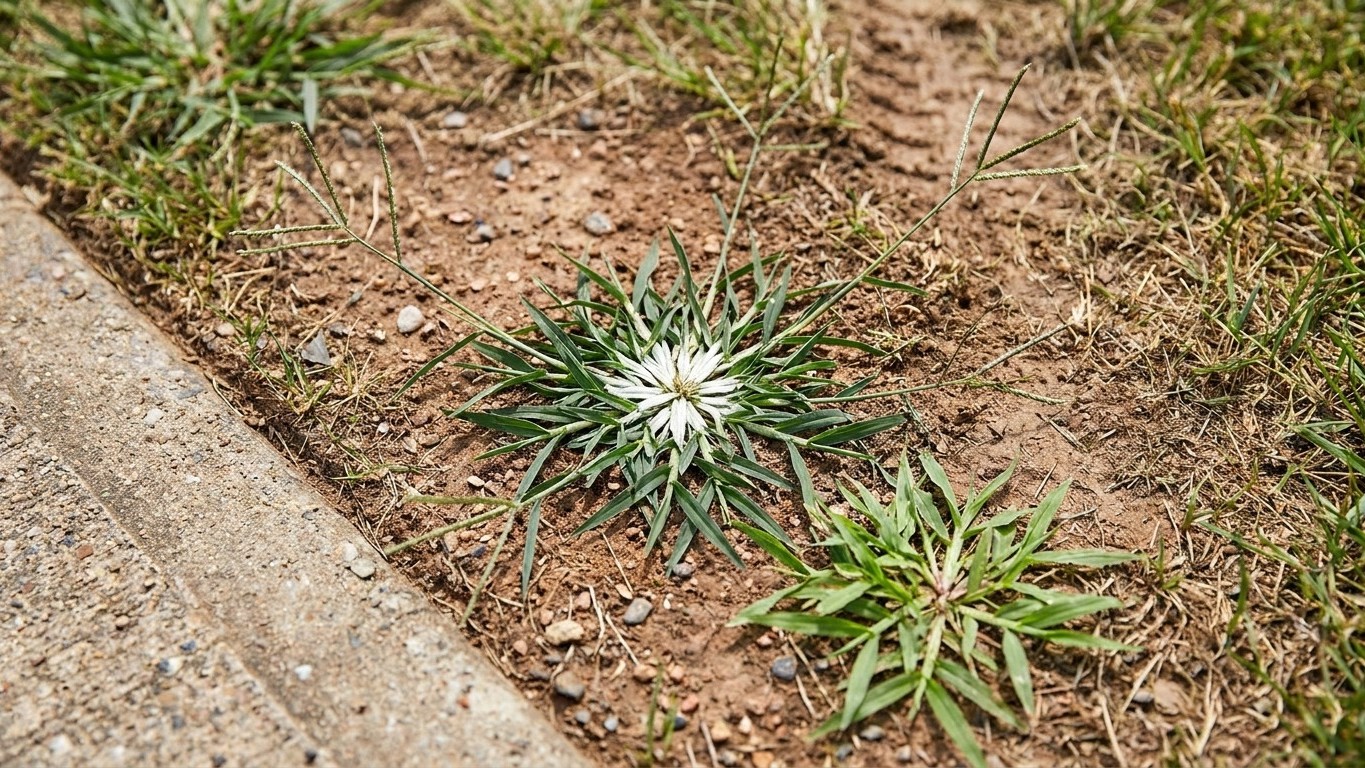

Early September is the best time to sow grass seed in West Virginia, with spring as the backup. NOAA’s 1991-2020 normals for Charleston put the first fall freeze between October 18 and November 1. Cool-season seed needs about 45 days of growing weather before that, so Charleston’s last good sowing date falls between September 3 and September 17. Higher ground freezes earlier, and its window closes sooner.
The best time to sow grass seed in West Virginia
Why late summer beats spring
Grass seed does not read calendars. It reads soil temperature. Cool-season seed germinates when the soil sits between 50 and 65 °F, measured two inches down in mid-morning. A cheap soil thermometer settles the question better than any date on a bag.
Late summer and early fall hit that range at a good moment. The ground still holds summer’s warmth, the air is cooling, and rain comes back. Seedlings get weeks of mild weather to put down roots before the first freeze. Weeds slow down at the same time, so the new grass faces less competition.
Spring offers the same soil temperatures, but the season works against you. The last spring freeze in the Charleston record falls between April 9 and April 23. Seed sown in April has to get roots down before summer heat and dry spells arrive, so it needs more watering and more patience.
Those dates come from one station. Charleston sits in a river valley, and the hills and ridges around it run colder. Treat the Charleston numbers as a reference point for the Kanawha Valley, not a statewide rule. If you live on a ridge or in the eastern mountains, plan on sowing earlier than the valley schedule suggests.
Which grasses to sow
The grasses that hold up here are the cool-season species:
- Tall fescue
- Fine fescues
- Kentucky bluegrass
- Perennial ryegrass
- Rough bluegrass
Warm-season grasses such as bermudagrass and zoysia are a poor fit for fall seeding in West Virginia. They need warm soil to establish and go dormant and brown with the first hard frosts. A fall-sown warm-season lawn would stall just as the weather turns. Cool-season grasses grow hardest in the weather West Virginia has plenty of.
For the full process from bare ground to mowing, see Starting a New Lawn From Seed.
The last date that still works
Work backward from the first fall freeze. Seed needs about 45 days of growing weather to germinate and build enough root and crown to survive winter. Seed sown after that point often germinates and then dies over winter.
Here is the arithmetic for Charleston, using the freeze probability band from the NOAA NCEI normals:
| First fall freeze (Charleston) | Last sowing date (45 days earlier) |
|---|---|
| October 18 | September 3 |
| November 1 | September 17 |
Aim for the early end of that window if you can. A seeding on September 3 has a cushion, while one on September 17 is betting on a late freeze.
For anywhere else in the state, find the first-freeze date for your county and count back 45 days. At higher elevation, expect the date to land earlier than Charleston’s. A local extension office can tell you the first-freeze date near you.
Today is October 3. In the Charleston area, the window has closed or is about to. In colder parts of the state it closed weeks ago. That leaves two options, and both are fine:
- Skip the fall seeding and prepare the ground now: get a soil test, fix the pH, and clear weeds so the bed is ready.
- Sow in spring once the soil warms into the 50 to 65 °F range, using the same rates and depth described below.
A well-prepared bed seeded in April beats a rushed bed seeded too late in October. The same cool-season timing logic applies in When to Plant Grass Seed in Kentucky and When to Plant Grass Seed in Missouri, with the dates shifted for each state’s climate.
Seed rate and soil preparation
What the ground tends to do
West Virginia’s official state soil is the Monongahela series, named by state law in 1997. It is an Ultisol, an old and heavily weathered soil that has been leached for a long time, which leaves it naturally acid and low in nutrients. The USDA’s representative figures for its surface layer show a pH of about 5.0, which is strongly acid. The texture is loam to silt, at 27 percent sand, 18 percent clay and 54 percent silt, with about 3.0 percent organic matter. It is moderately well drained.
That describes the state soil, not your yard. River bottoms, steep hillsides and any lot a builder has scraped or filled will differ a lot from it. What the profile does suggest is the region’s tendency: acid ground, silty texture that can crust after rain, and modest fertility. Grass seed does better in soil that is not too acid, so lime is often part of the plan.
Your own number comes from a soil test. West Virginia University Extension can point you to testing and explain the results. A test tells you your pH and how much lime or fertilizer the bed needs. Do it weeks before sowing, because lime takes time to work.
For the bed itself, loosen the top few inches, rake out stones and debris, and leave a fine, level surface. On a graded building lot, check that the topsoil was not stripped away. Seed does not do well on compacted subsoil.
How much seed, and how deep
These rates are pounds per 1,000 square feet for a new lawn:
| Grass | Seed per 1,000 sq ft |
|---|---|
| Tall fescue | 6 to 8 lb |
| Fine fescues | 4 to 6 lb |
| Rough bluegrass | 2 to 3 lb |
| Kentucky bluegrass | 1 to 3 lb |
| Perennial ryegrass | 4 to 10 lb |
Overseeding an existing lawn takes half these amounts. More seed is not insurance. Seedlings crowd one another and thin themselves out, so a heavy hand wastes money and can produce a weaker stand.
Cover the seed with no more than 0.25 inch of soil, and press it down for good seed-to-soil contact. Seed buried deeper than a quarter inch often never emerges, which is the most common reason a new lawn comes up patchy. A light raking and a pass with a roller, or even a walk across the bed in flat shoes, does the job.
Watering a new lawn until it holds
Seed needs steady moisture at the surface. The top layer of soil must stay damp from sowing through germination. If it dries out after the seed has started to sprout, the seedlings die quickly. In dry weather that can mean watering lightly once or twice a day. Keep each session short. You want damp soil, not puddles, because standing water washes seed downhill and rots it.
Silty ground tends to crust on top when it dries, and a crust can block tiny seedlings. Frequent light watering keeps the surface soft. On slopes, watch for runoff. A short burst of water that soaks in beats a long run that sends seed and soil to the bottom of the hill.
Once the seedlings are up and covering the ground, water less often but for longer, so the roots follow moisture down. Shallow, frequent watering trains shallow roots, and those fail first in a dry spell or after a freeze. The grass will look a little dull and gray-green, and footprints will stay pressed in the blades, when it needs a drink.
Hold off on the first mowing until the grass is tall enough to cut cleanly and the roots can resist being pulled. If you can tug a seedling out with a light pull, it is too early. Keep the mower blade sharp, and keep foot traffic off the lawn for the first season as much as you can.
Common questions
Can I plant grass seed in West Virginia in October?
In most of the state, it is too late for a reliable stand. Seed sown after the 45-day cutoff can germinate and then die over winter. In Charleston, the cutoff falls between September 3 and September 17. At higher elevations, it comes earlier. If you missed it, prepare the soil now and sow in spring.
Is spring or fall better for seeding a lawn in West Virginia?
Fall is better. Soil is warm, rain returns and weeds slow down. Spring seeding works once the soil reaches 50 to 65 °F, but the grass has to establish before summer heat arrives, and that takes more watering and more care.
Can I plant bermudagrass or zoysia in West Virginia?
Those warm-season grasses need hot weather to establish and go dormant in cold, so they are a poor match for fall seeding here. The cool-season species (tall fescue, fine fescues, Kentucky bluegrass, perennial ryegrass and rough bluegrass) are the grasses that hold up.
How much seed do I need to overseed a thin lawn?
Use half the new-lawn rate. For tall fescue, that means 3 to 4 lb per 1,000 square feet instead of 6 to 8 lb. Cover the seed with no more than 0.25 inch of soil, and press it in so it touches the ground.
If you follow the almanac, here is when to plant grass seed by the moon. It is a tradition, not a proven method.