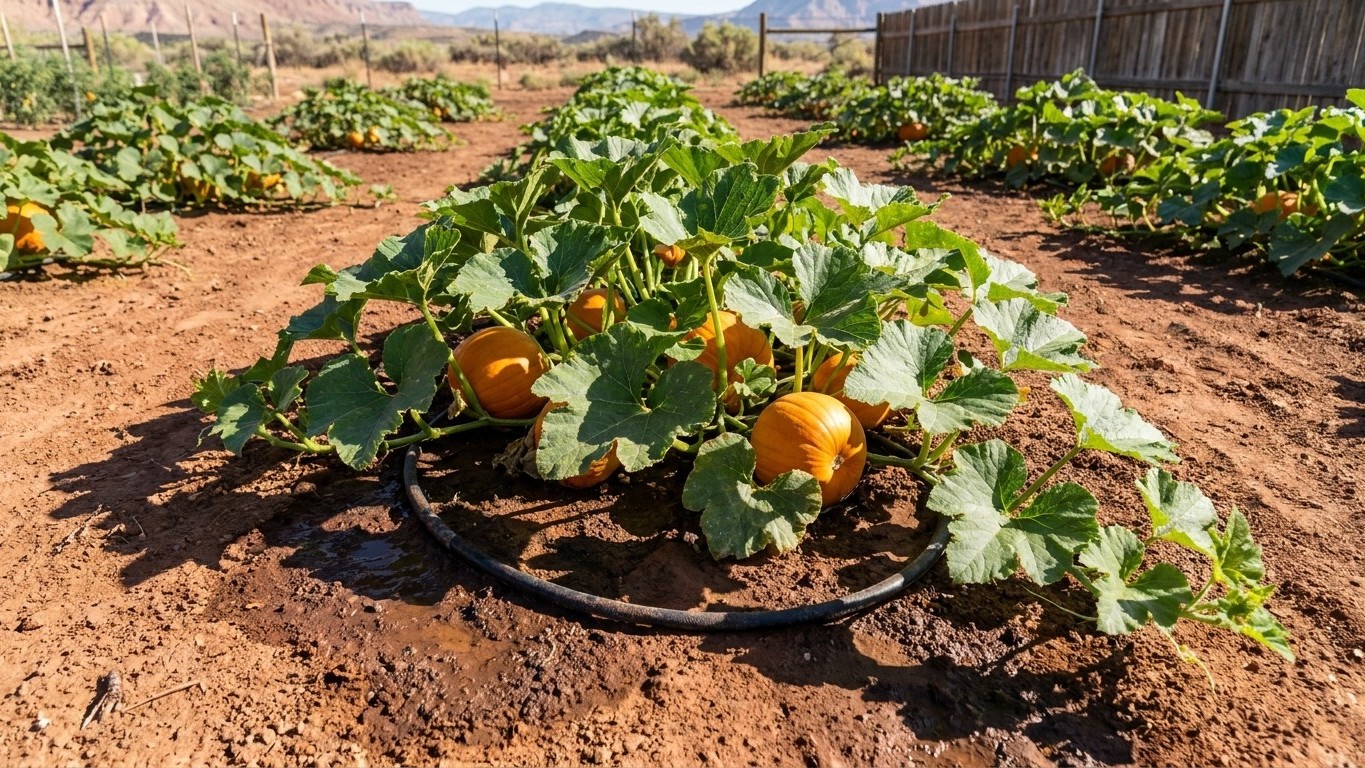

In South Dakota, the biggest thing that eats a pumpkin is the calendar. Frost ends the season for the vine and the fruit alike, and a pumpkin that is still green when it arrives is lost. Squash bugs and cucumber beetles are real pests, but they have their own state pages on this site, so this page sticks to the clock: which flowers can still make a ripe pumpkin, and when the clock runs out.
The short answer
Start with the frost. At the reference-city airport weather station, the first fall freeze (32°F) has a 30 to 70 percent probability of arriving between September 24 and October 4. That figure comes from NOAA NCEI Climate Normals. It describes one airport station, not the whole state, and not your garden.
Now work backward. Pumpkins take 45 to 55 days to mature after flowering, according to Utah State University Extension. The count starts when the flower opens. Seeding and transplanting have nothing to do with it. A flower that opens on the wrong side of the line produces a fruit that is still green when the cold shows up.
The arithmetic, in words
Take the early end of the frost window, September 24. Fifty-five days before that is July 31. Forty-five days before it is August 10. Now take the late end, October 4. Fifty-five days back lands on August 10, and forty-five days back lands on August 20. Lay the four dates side by side and the latest a flower can open and still give a ripe pumpkin is a window running from about July 31 to about August 20. It is not one day.
Where you land inside that window depends on two things you cannot control, how fast your fruit matures within the 45 to 55 day range and when your first frost actually comes. Gardeners who want to play it safe should use the conservative edge, the 55-day count against the early frost date. Flowers after that point are working on borrowed time.
Why your garden may run earlier
Airport stations sit in open, flat, often warmer ground. Suburban and rural gardens typically see the first fall frost one to two weeks earlier, and more at elevation. If your frost arrives a week or two before September 24, slide every date above back by the same amount. A deadline that was July 31 at the airport could easily be late July or earlier in your yard.
The fix is local data. Check your own county’s frost dates before you trust any single number, including the ones here. Your county extension office is a good place to start. For a broader look at the full season, see Growing Pumpkins in South Dakota, and for the fruit-by-fruit question of whether yours will finish in time, Will Pumpkins Ripen Before Frost in South Dakota?
When to sow here
Sowing dates feed the flower deadline, so the order of operations matters. The soil has to reach 65°F before pumpkins go in, and that is not the same as the last frost date. Spring air warms faster than soil, and the soil lags behind by weeks. Here is how the arithmetic runs.
- Find your last spring frost. At the reference-city airport station, the last 32°F freeze has a 30 to 70 percent probability of landing between April 29 and May 9. Rural and suburban gardens usually see it later, often by one to two weeks.
- Add the soil lag. Once that last frost is behind you, the soil still needs weeks to climb to 65°F. A soil thermometer settles the question better than any date. The exact number of weeks varies by year and by site, and it is not published here.
- Count the weeks in words. If your last frost falls around the end of the window, early May, and the soil takes several more weeks to warm, sowing lands in late May or later. That is already deep into the season, and it is why the flower deadline matters so much.
- Subtract what row covers buy. Row covers can buy about two weeks, because they warm the soil and shelter seedlings from late chills. A gardener who would otherwise wait until the soil warmed on its own can sow roughly two weeks sooner under cover.
- Check the result against the flower deadline. The number of days from seed to first flower is not published here, so you cannot predict flowering from the sowing date alone. Watch the vines instead. When your first flowers open, count 45 to 55 days forward and compare the result to your own county’s first frost.
The sequence is simple, but the gap between “frost is over” and “soil is ready” is where many South Dakota gardens lose their margin. A seed sown into 55°F soil because the calendar said May 10 loses ground to one sown later into warm soil. For a deeper look at timing, see When to Sow Pumpkins in South Dakota.
What goes wrong here
A short season does not produce dramatic failures. It produces quiet ones, and most of them only show up in September, when it is too late to fix them. Four are worth knowing.
- A late flower that never colors. Flowers that open after the deadline give fruit that stays green, because the 45 to 55 days run out before the pumpkin finishes. The remedy is to stop investing in them. Once you pass your own deadline, pinch off new flowers and small fruit so the vine’s energy goes to pumpkins that can still finish.
- A fruit caught by frost. A frost hit before harvest ruins a pumpkin’s keeping quality, and the damage is not always visible at first. Watch the forecast starting in mid-September, since the early end of the airport window is September 24 and your garden may run earlier. Harvest with the stem attached before frost, and cover fruit that has to stay out for a cold night.
- A vine that dies back before the skin hardens. When the vine collapses early, the fruit may be the right size but still have soft skin. The remedy is to protect the vines and cut fruit with the stem attached rather than leaving them in the field. The stem is a handle, and it matters for storage too.
- A good pumpkin stored in the wrong place. A whole pumpkin keeps for three to six months in a cool, dark spot between 45 and 50°F, according to University of Illinois Extension. Keep it away from ripening fruit and vegetables such as apples, potatoes and tomatoes. Ripening fruit gives off a gas that ages the pumpkin faster, which is why the porch next to the apple crate is the worst place for it. Utah State University Extension says only to store pumpkins where they will not freeze, so treat 45 to 50°F as the Illinois figure for whole fruit, not a universal rule. That range says nothing about a carved pumpkin.
Squash bugs and cucumber beetles can add to this list, and on a vine already stressed by a short season they hurt more. They are covered on their own pages here, so this page stays with the frost clock.
Common questions
What is the latest a pumpkin flower can open in South Dakota?
Working back 45 to 55 days from the reference-city frost window of September 24 to October 4, the answer runs from about July 31 to about August 20. Your own deadline may fall earlier, since rural and suburban gardens often see frost one to two weeks sooner than the airport station does.
Is 65°F soil the same as the last frost date?
No. The last frost date marks when freezing air stops. Soil warms later, and it lags behind the air by weeks. Sow when the soil reaches 65°F, not when the frost date passes.
Do pests matter as much as frost?
They can both hurt a crop, but they work differently. Frost ends the season on a fixed schedule, and the 45 to 55 day count after flowering tells you whether a fruit will beat it. Squash bugs and cucumber beetles are handled on their own state pages on this site.
How long does a whole pumpkin keep?
Three to six months in a cool, dark location between 45 and 50°F, away from ripening fruit such as apples, potatoes and tomatoes. That figure is for a whole pumpkin. Utah State University Extension adds only that pumpkins should be kept where they will not freeze, and that they should be harvested with the stem attached and before frost.