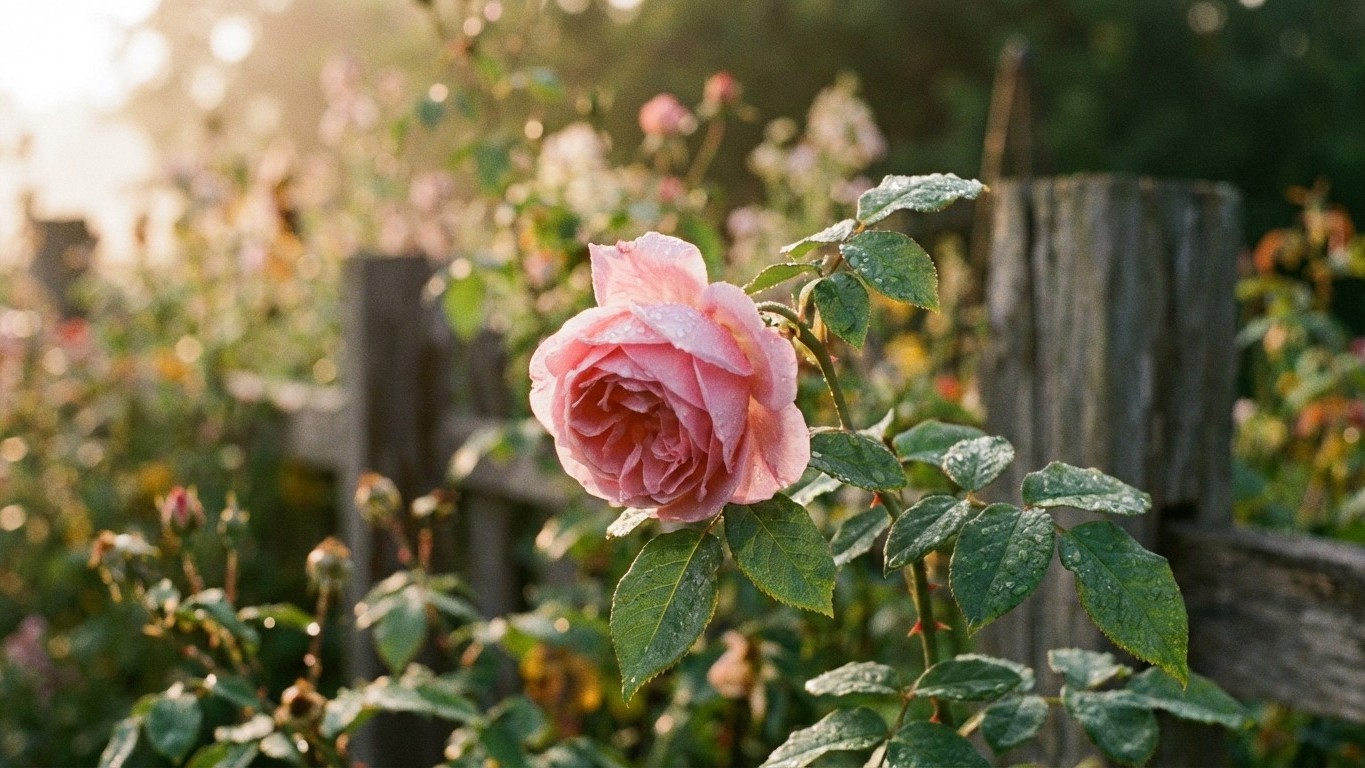

Rugosa roses and the Canadian Explorer and Parkland series come through a South Dakota winter without fuss, and shrub roses growing on their own roots are the safest buy. Hybrid teas, floribundas and most English roses freeze back or die unless you protect them every fall. The split comes down to cold hardiness ratings, and garden centers shelve both kinds side by side. For care after planting, see growing roses in South Dakota.
Which roses survive a South Dakota winter
South Dakota runs from 3b to 5b on the USDA Plant Hardiness Zone Map, which sorts the country by one variable: the average annual extreme minimum temperature. The north is colder than the south, and the Black Hills break the pattern because elevation and foothill effects change zones over short distances. A rose’s zone rating is the coldest zone where it should live through winter without protection. A rose rated for zone 3 clears every corner of the state, while one rated for zone 5 clears only the warm end, and even there only in a good year.
Rugosas are among the most dependable groups. Rosa rugosa and its hybrids have wrinkled leaves, heavily thorned canes and a rating of zone 3 or colder. They shrug off the cold, the wind and road salt spray alike. The Explorer series, bred in Canada by Agriculture and Agri-Food Canada for prairie winters, covers the same ground with more color choices and includes climbers. Many of them carry rugosa in their parentage. The Parkland series from the Morden research station in Manitoba was bred toward the same goal.
Hybrid teas, floribundas and grandifloras sit at the other end. They are generally rated for zone 5 and warmer, so anywhere in South Dakota they need winter protection, and the colder the zone, the more of it they need. Their canes usually die back to the crown or to the snow line, and the plant has to rebuild from what is left.
The zone number leaves out three things that decide whether canes live. Snow cover insulates the base of the plant, so a rose on an open, wind-scoured slope sees colder conditions than the same rose in the lee of a house. Wind dries out exposed canes. Midwinter thaws followed by hard freezes split bark and kill buds that a steady cold would have spared.
Timing in the shoulder seasons matters too. At the Sioux Falls airport weather station, NOAA NCEI’s 1991-2020 Climate Normals put the median last spring freeze (32 F) around May 1 and the median first fall freeze around October 4. Outlying and higher-elevation gardens often get a later last spring frost and an earlier first fall frost than the airport. A late freeze kills shoots on roses that have already leafed out. An early one catches canes that kept growing into fall and never hardened. Hardy rugosas and Explorers slow down on their own as days shorten, while heat-loving hybrids tend to keep pushing soft growth.
Named roses that hold up here
These roses are sold by name at garden centers and mail-order nurseries, and the ratings below are the commonly listed ones. Check the plant tag, because growers sometimes rate the same rose a zone apart.
| Rose | Type | Rated hardy to | Winter behavior |
|---|---|---|---|
| Hansa | Rugosa | Zone 3 | Survives without cover; double magenta-purple flowers with a strong clove scent |
| Therese Bugnet | Hybrid rugosa | Zone 3 | Survives without cover; pale pink double flowers in flushes through summer |
| Henry Hudson | Explorer, rugosa type | Zone 3 | Survives without cover; compact shrub with white flowers |
| William Baffin | Explorer climber | Zone 3 | Survives without cover, so canes can stay on the trellis all winter |
| Knock Out | Modern shrub | Zone 5 | Dies back to the snow line or the ground in colder zones and regrows from the base |
| New Dawn | Climber | Zone 5 | Borderline; needs a sheltered wall and cover in colder zones |
Hansa dates to 1905 and is still a widely planted rugosa in the northern states, partly because it flowers repeatedly and sets large red hips. Therese Bugnet came out of Alberta in the 1950s and was bred for exactly this kind of winter. Both are best bought on their own roots, which is how rugosas are usually sold anyway. Rugosas on their own roots tend to sucker, sending up new canes from the roots around the base, so give them room.
Knock Out earns its place on the list for a different reason. It is not truly hardy here, but it is vigorous enough to recover. In the colder zones the canes freeze to the snow line or the ground each winter, and the plant regrows from the base and blooms the same summer. Wait until the buds swell in spring so you can see what is alive, then cut out the dead canes down to green, live wood. A Knock Out sold on its own roots regrows as a Knock Out. A grafted one can regrow as its rootstock if the freeze reaches the union, a risk covered in the label section below.
New Dawn is the exception on this list. Its zone 5 rating puts it at the edge in South Dakota, and in the colder zones the canes can freeze back or die. It has a record of surviving against a warm south or west wall with the canes protected, and it is a fine choice in the southeast. In the north, pick William Baffin for a climber and treat New Dawn as an experiment.
Sold here, but not for this zone
National growers ship the same roses to every region, so the shelf in a South Dakota garden center looks much like one in Georgia. The tag may say zones 5 to 9 or 6 to 9, and the picture of a perfect bloom sells the plant regardless. These are the types that will not come through a winter here without work:
- Hybrid teas such as Peace and Mister Lincoln, which are almost always grafted and lose their canes in a normal winter.
- Floribundas and grandifloras, which share the hybrid tea parentage and the same weakness.
- Most English roses bred in the David Austin program, which are mainly rated zone 5 and warmer.
- Tree roses, a grafted rose on a tall trunk, where freezing the trunk kills the whole plant.
- Miniatures and potted roses sold in full bloom in spring, whose hardiness depends entirely on the variety and is often unlisted.
None of these is hopeless. Gardeners in the southeast, where winters are milder, keep hybrid teas going for years. The work is the same each fall: after the leaves drop and the ground begins to freeze, mound soil or shredded leaves over the base of the plant to bury the graft union and the lower 8 to 12 inches of cane. Without that, expect to replace the plant. Tree roses are harder still, since the trunk has to be wrapped, laid down and buried, or the whole plant moved into an unheated garage in a container.
A rose that lost its leaves to disease in summer goes into winter with less stored energy, so it is more likely to die back. Rose Diseases in South Dakota: What the Climate Here Actually Brings covers what to expect in this climate.
What to check on the label before buying
Start with the zone rating on the tag. For a South Dakota yard, buy plants rated at least one zone colder than yours, because the rating assumes average conditions and a bad winter will exceed them. A tag reading “zones 5 to 9” is a warning sign for most of the state; only the warmest southern areas come close, and only with protection or a rose that regrows from the base.
Next, check the grade on bare-root plants sold in bags or boxes. Grade 1 is the top grade, with the heaviest and most numerous canes, and it is worth paying for in a cold climate, since a plant with more stored reserves rebuilds faster after a hard winter. Grade 1½ and grade 2 are lighter plants, and they take longer to establish and recover from dieback.
An especially important check is whether the rose is own-root or grafted. A grafted rose has the flowering variety joined to the roots of a tougher rootstock, which shows as a swollen knob at the base where the canes emerge. If a hard winter kills the plant to the ground, the variety dies with it, and whatever grows back from below the graft is the rootstock. That regrowth is usually a different rose, often with seven leaflets per leaf and plain single flowers. An own-root rose is the same plant top to bottom, so when the canes freeze, new canes grow from the base and are still the variety you bought.
The colder the winter, the more likely the canes die to the base, which is why own-root matters more as the zone number drops. Buy own-root plants wherever the label says “own root,” “grown on its own roots” or “no graft.” If the tag is silent, look at the base of the plant for the graft knob, and ask the nursery if there is any doubt.
Checking this against your own county
Zone maps and frost dates describe averages across wide areas, and a county can span a full zone or more. River bottoms collect cold air, hilltops take the wind, and the higher Black Hills run colder than the plains around them. South Dakota State University Extension has county offices and horticulture staff who know which roses have survived locally and what the winter snow cover tends to look like. Ask them for your county’s zone and winter record before you buy anything rated zone 5 or warmer. The Sioux Falls frost dates above are a reference point for that conversation, not a forecast for your yard.
Common questions
Do rugosa roses need winter protection in South Dakota?
Established rugosas generally do not, since they are rated for zone 3 and colder. The first winter after planting is the exception. A young plant has few reserves, so a loose layer of shredded leaves or straw over the base after the ground freezes is cheap insurance.
Can a rose rated for zone 5 grow in a zone 4 yard?
It can survive in a sheltered spot with good snow cover and winter mulch, and Knock Out regrows from the base even when the canes die. Most zone 5 roses, though, will lose canes in a hard winter and bloom late in the season as a result. Own-root plants recover best.
How can I tell if a grafted rose has reverted to rootstock?
Look at the leaves and flowers on the new growth. Rootstock shoots usually have seven small leaflets per leaf, a different leaf shape and single flowers in a different color than the variety you planted. They also come up from below the graft knob. Cut them off at their base.
Is Knock Out hardy enough for northern South Dakota?
Knock Out is rated for zone 5, so in northern South Dakota it will not keep its canes through winter. It often survives as a root and regrows from the base, blooming the same summer, though in the coldest winters the whole plant can be lost. For a rose that stays woody above ground, choose Hansa, Therese Bugnet or an Explorer.