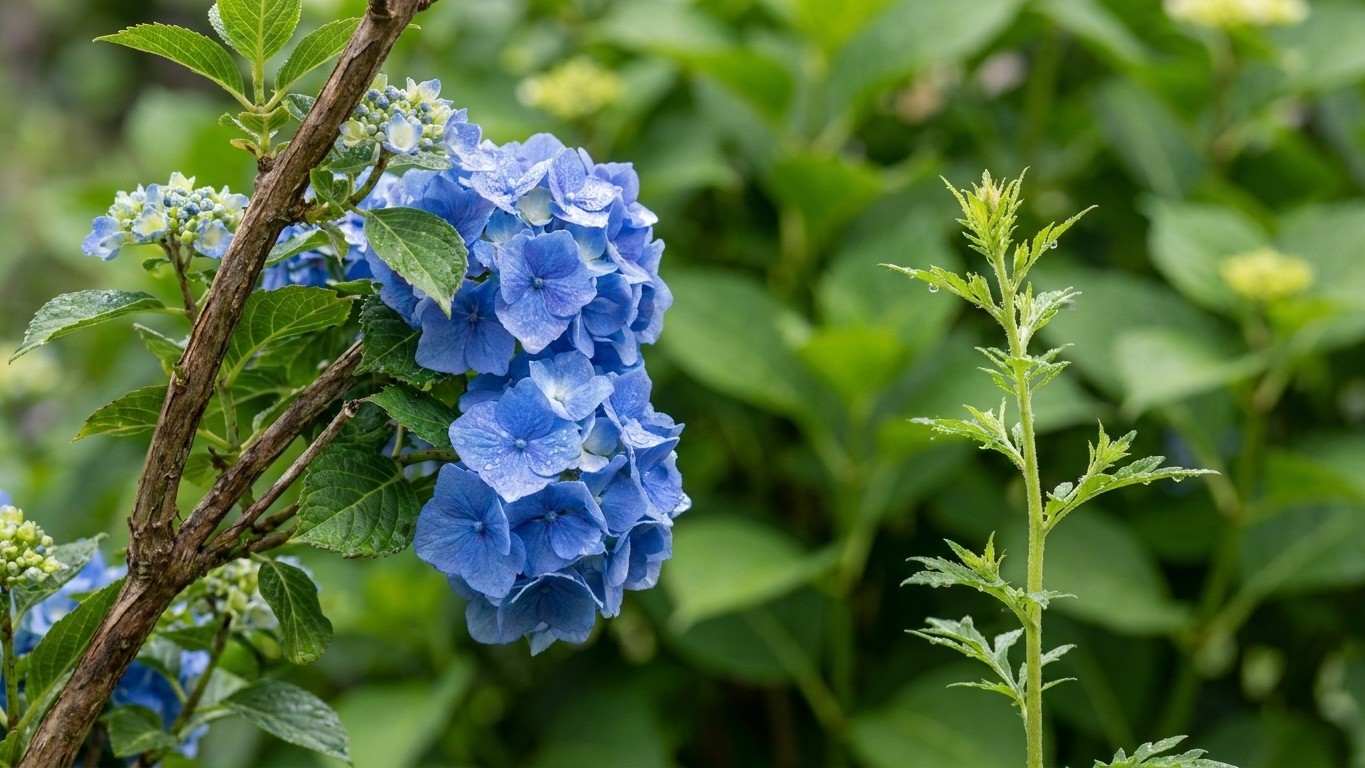

Plant hydrangeas in Massachusetts in spring after the last freeze or in early fall, and choose panicle or smooth types if you want dependable blooms every summer. Bigleaf types are lovely but need winter protection. Flower color follows soil chemistry, not the calendar. Dates below are anchored to Boston and shift as you move inland or uphill. For species-level basics, start with How to Grow Hydrangeas: The Complete Guide.
When to plant Hydrangeas in Massachusetts

The reference city here is Boston, measured at the Logan Airport weather station. NOAA NCEI 1991-2020 Climate Normals put the last spring 32F freeze at April 1 to April 8 and the first fall freeze at November 3 to November 14. Those are probability bands, not promises. A date inside the band means a freeze after it is still a real possibility.
Logan sits on the waterfront and is the mildest spot in the state. Inland suburbs and the Berkshires frost earlier in fall and later in spring, and northern or higher-elevation gardens run later still. NOAA’s table doesn’t give those places a date here, so for a hill town or a Worcester County yard, add time rather than copying Boston.
Spring planting and the count-back
Nursery shrubs are the normal starting point. A dormant or barely budded hydrangea can go in as soon as the soil is workable. A plant already leafing out in a greenhouse pot is different, because new growth blackens at a freeze, and bigleaf types are the most exposed.
Take April 8, the late end of the Boston band, as your earliest planting date for a leafed-out shrub. Hardening off takes 7 to 10 days of gradual outdoor exposure: a few hours in shade at first, then full days, then nights out. Counting back 10 days from April 8 puts the first porch day on March 29. If you’d rather use April 1, start on March 22. Have an old bedsheet ready for any night forecast near freezing.
Why seed is the slow road
Hydrangeas are sold as plants for good reason. Named cultivars don’t come true from seed, and seedlings of even the species take years to reach flowering size. Home propagation is better done with cuttings from a plant you already like.
Fall planting
Early fall is the other good window, because roots keep growing in warm soil after the leaves slow down. A rule of thumb is to have shrubs in the ground eight weeks before the first freeze. Counting back eight weeks from November 3 lands on September 8.
If it’s early October and a shrub is still sitting in its pot, you are late but not out of luck. At Logan’s band you have about four weeks before the first freeze. Plant now, water deeply, and mulch. Inland, the clock runs shorter.
Soil and site preparation
Light decides more than soil does. Bigleaf and oakleaf hydrangeas do best with morning sun and afternoon shade, since hot Massachusetts afternoons scorch their leaves. Panicle types tolerate much more sun and bloom best with at least six hours. Smooth hydrangeas fall between the two.
Drainage matters next. Hydrangeas want steady moisture but rot in standing water. Dig a hole, fill it with water, and check the next morning. If water is still sitting there, pick another spot or build the bed up. Sandy coastal soil has the opposite problem, draining fast and needing organic matter to hold water. Heavy clay holds too much.
Start in the weeks before planting. Send a soil sample to your extension service (see the last section). The result tells you whether to touch pH at all, and pH changes take months. Lime or sulfur applied on planting day does very little that season. Work compost into the bed two to four weeks ahead so it settles.
On planting day, loosen soil in an area two to three times the width of the root ball, but dig the hole only as deep as the ball. Set the crown level with the surrounding soil, tease circling roots loose, backfill, and water in slowly.
For spacing, read the mature width on the plant tag and give the shrub that much room center to center. Keep large types a few feet off a foundation so air moves through and mildew has less to work with. Crowding a young shrub is the most common planting mistake I see recommended against, and for good reason: by year four it’s a pruning problem.
Varieties that suit Massachusetts
The trait that matters most is whether a hydrangea flowers on old wood or new wood. Old-wood bloomers set buds the previous summer, so a hard winter or a late-April freeze can wipe out the whole year’s flowers. New-wood bloomers grow their flower buds each spring and shrug off that damage. Boston’s season gives you a long runway, but inland and western gardens should lean toward new-wood types. Other traits worth checking are sun tolerance, stem strength, and mildew resistance.
| Variety | Type | Blooms on | Good for |
|---|---|---|---|
| Limelight | Panicle | New wood | Sunny spots, reliable bloom, tall hedges |
| Little Lime | Panicle | New wood | Small yards, foundation beds |
| Annabelle | Smooth | New wood | Part shade, cold exposure (stems can flop) |
| Incrediball | Smooth | New wood | White mopheads on sturdier stems |
| Endless Summer | Bigleaf | Old and new wood | Blue or pink color, rebloom where winters are kind |
| Snow Queen | Oakleaf | Old wood | Woodland edges, fall foliage |
None of this is an institutional endorsement. These are widely sold cultivars whose traits are well documented. For the cold-hardiness logic in another northern state, see Growing Hydrangeas in Michigan: Types, Colour and Winter. For the opposite problem of heat and dry summers, there is Growing Hydrangeas in Texas: Types, Colour and Winter.
Blue, pink, or neither
Only bigleaf and a few others shift color with soil. Acidic soil lets the plant take up aluminum and tends toward blue. Near-neutral or alkaline soil tends toward pink. White varieties stay white, and panicle types blush pink or burgundy with fall cold regardless of soil. Test before you change anything, then make small adjustments over a season or two.
What to plant alongside
Hostas are the classic partner for good reason. They share the same shade and moisture needs, and their broad leaves cover bare soil below the shrub. The downside is that both plants live in conditions slugs love.
Ferns, astilbe, and heuchera work the same way. Daffodils and other spring bulbs fill the gap before hydrangeas leaf out, and their fading foliage gets hidden once the shrub fills in. Rhododendrons and azaleas share a preference for acidic soil, so they suit blue-leaning hydrangea beds.
Competition is the harder part. Shallow-rooted trees, maples especially, pull so much water that a hydrangea planted at the drip line will wilt every August. Lavender and other dry-soil plants want the opposite watering regime, and one of them will suffer. Keep high-nitrogen lawn fertilizer from washing into the bed too. It produces leaves at the expense of flowers.
Some pairings have little backing. Marigolds and garlic are often said to repel pests from shrubs, but I know of no solid evidence that either protects hydrangeas. Plant them if you like them, not because they’ll guard anything. Lily leaf beetle is on the state’s pest list, but it attacks lilies, not hydrangeas. A lily bed beside your shrubs just means a second plant to watch.
Watering, feeding and support
Water deeply and less often. A slow soak that reaches a foot down, roughly an inch a week when rain falls short, beats a daily sprinkle. Light watering keeps roots shallow, and shallow roots are the reason hydrangeas wilt first on hot days. Water at the base in the morning to keep leaves dry and mildew down.
Mulch 2 to 3 inches of shredded bark or leaf mold, pulled back from the stems. It holds moisture, buffers soil temperature, and shades the roots. It also matters in winter, when a mulch layer slows the freeze-thaw swings that heave young plants.
Feed lightly. One application of slow-release fertilizer as growth starts in spring is enough for most established shrubs. Skip fertilizer after mid-summer. Late feeding pushes soft growth that won’t harden before the first freeze. Heavy nitrogen gives leafy plants with few blooms.
Support is a question of variety. Annabelle-type heads bend to the ground after rain, and a ring of stakes and twine put up in late spring is easier than rescuing a flattened plant in July. Sturdier cultivars may need nothing.
Pruning follows the old-wood, new-wood split. Cut panicle and smooth types back in late winter or early spring, before growth starts. Prune bigleaf and oakleaf types right after they flower, and not later than early August, because they set next year’s buds on the stems you’d be cutting. When in doubt, remove only dead wood.
Common problems

No flowers is the top complaint. On bigleaf types, usual causes are winter-killed buds, a late freeze, or pruning in fall or spring. Too much shade and too much nitrogen come next. A shrub that grows well but never blooms may be a new-wood type pruned correctly but sitting in too much shade.
Wilting at midday that recovers by evening is heat, not disease. Wilting that persists in the morning means a watering problem, either too little or too much. Check the soil a few inches down before reaching for the hose.
Brown crispy leaf edges point to sun scorch or dry soil. Moving the shrub or deepening your watering fixes it. Yellow leaves with dark green veins suggest iron deficiency, common where soil pH has been pushed too high. Test before adding anything.
Fungal spotting and mildew show up as tan or purple leaf spots, or a whitish film. They are mostly cosmetic and worst in humid, crowded plantings. Thin crowded stems, water at the base, and clear fallen leaves in autumn. Fungicide is rarely needed.
Floppy stems after rain mean a heavy-headed variety, too much nitrogen, or too much shade. Staking or switching cultivars is the fix.
Pests that actually show up in Massachusetts
The pest list from UMass Extension’s home garden guidance runs to ten names, but it is aimed mostly at vegetable growers. Colorado potato beetle, Mexican bean beetle, striped cucumber beetle, cabbage root maggot fly, squash bug, and squash vine borer go after vegetables. Lily leaf beetle goes after lilies, and European corn borer is monitored on corn. That list is not exhaustive and pressure varies by county, so your county office is the place to confirm a pest. Two names on it can reach your hydrangeas.
Winter moth
You see small green inchworm-type caterpillars inside tight buds, then ragged holes in leaves as they open. Eggs hatch late March into early April, and the caterpillars feed until late May or early June. Adults are the pale moths flying at porch lights from mid to late November, usually before Thanksgiving, and they may continue into January. The control that works is Bacillus thuringiensis kurstaki (Btk), applied when the caterpillars are small and buds are just opening.
Spotted lanternfly
You see black nymphs with white spots on stems, later red and black, then gray-winged adults. Sticky honeydew on leaves and black sooty mold below are signs of a feeding group. Hydrangeas are rarely its first choice, but heavy numbers can strain a shrub. The control that works at home is scraping egg masses off bark and stakes in winter into a bag of rubbing alcohol.
Harvest and end of season
Cut hydrangeas for bouquets in the morning, when stems are full of water. Choose heads that are fully open, and plunge stems into water right away. Cut just above a pair of leaves to leave the shrub’s shape intact. For bigleaf types that bloom on old wood, cutting short stems for a vase can cost you next year’s buds, so keep cuts light.
For drying, wait until the petals feel papery and the color has shifted, usually late summer. Hang bunches upside down in a dry, dim place for two to three weeks. Stored out of direct sun, they hold color for months. Panicle types dry especially well after turning pink or bronze.
As the first freeze approaches, around November 3 to 14 at Logan and earlier inland, give shrubs a final deep watering before the ground locks up. Add mulch if it has thinned. Bigleaf varieties in exposed or colder sites benefit from a wire cage filled with leaves after the first hard freezes. Leave spent flower heads on over winter for some bud protection. Cut panicle and smooth types back in late winter.
Local help
UMass Extension can tell you county-level planting dates, test your soil, and identify a pest from a photo or sample. That’s worth doing before you change soil pH or spray anything. More state-specific articles are collected in our Massachusetts guides.
Common questions
Can I grow hydrangeas from seed in Massachusetts?
You can, but it’s slow. Named cultivars won’t come true from seed, and seedlings take years to flower. Buying a nursery plant or rooting cuttings from a plant you like is the practical route.
How do I get blue hydrangeas?
Only bigleaf and a few other types respond to soil. Test pH first. Acidic soil tends toward blue and neutral or alkaline soil toward pink, but shifts take months, and white varieties never change.
Do hydrangeas need winter protection here?
Bigleaf varieties in exposed or colder sites often do, because their flower buds sit on old wood. Panicle and smooth types bloom on new wood and generally don’t need protection. A leaf-filled cage and thick mulch help.
When should I prune?
Prune panicle and smooth types in late winter or early spring. Prune bigleaf and oakleaf types right after flowering, by early August at the latest. If you’re unsure which you have, remove only dead stems.
Is it too late to plant in October?
Not at Boston’s band, where the first freeze falls between November 3 and November 14. Inland and in the Berkshires the window is shorter. Water deeply, mulch, and expect slower establishment than a September planting.