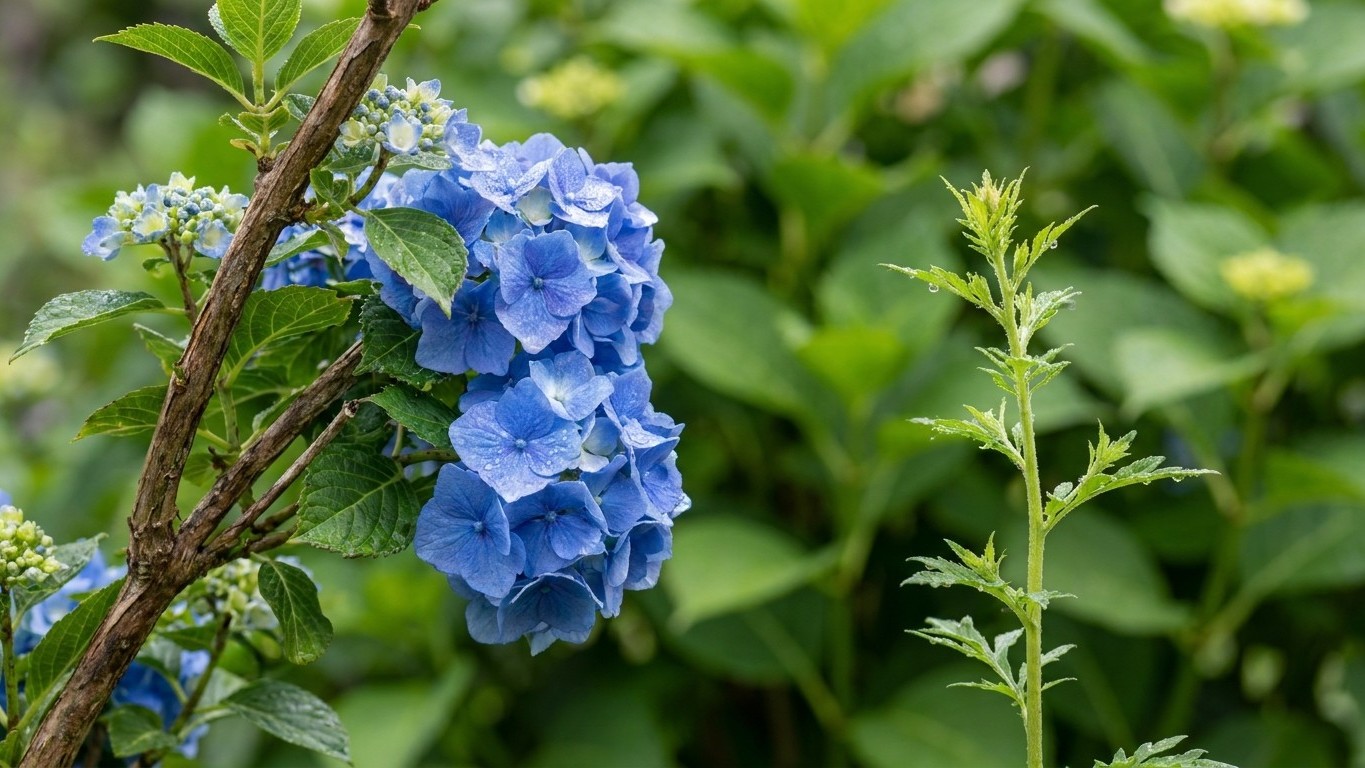

In Los Angeles, NOAA’s climate normals record no freeze in an average year, so a hydrangea there needs no winter protection from frost at all. California is not Los Angeles, though. Gardens in the Central Valley, inland Northern California and the Sierra foothills do freeze, and a hydrangea that flowers on last season’s stems can lose a whole year of blooms to one clear, still night. Protection here is a regional call.
What this comes down to in California

In Los Angeles, no freeze occurs in an average year, so there is no frost window to defend. NOAA lists the frost-free season there at 365 days, and its daily records show zero days at or below 32°F across 30 years (NOAA NCEI climate normals data).
That is a fact about one city. It describes the coastal and southern lowlands, and it says nothing about Sacramento, Redding, Truckee or a foothill town above 2,000 feet. The USDA Plant Hardiness Zone Map, which rates a place on a single variable (the average annual extreme minimum temperature), puts California anywhere from zone 5a to zone 11a. Few states stretch across that much range, and the gap between the ends is the whole story of winter care here.
For a hydrangea, the practical meaning of “winter” is dormancy. Deciduous types drop their leaves, stop growing and sit on stems that already carry next summer’s flower buds, at least for the bigleaf and oakleaf kinds. Frost damage to those buds is the main winter loss. Panicle and smooth hydrangeas bloom on new growth, so a hard freeze can kill stems back without costing them flowers. Which kind you grow decides how much a freeze matters. The Which Hydrangeas Survive a California Winter page sorts the types by cold tolerance, so this one stays on the care itself.
In frost-free California the winter problems look different. They come from heat that lingers into fall, dry offshore winds, a rainy season that may or may not show up, and local water restrictions that limit how much you can irrigate through a dry stretch. A coastal gardener “protects” hydrangeas by keeping roots evenly moist and shaded from reflected heat. A foothill gardener protects them from a 28-degree-type night. Different jobs, same word.
If you are still deciding whether hydrangeas belong in your yard at all, the state guide on growing hydrangeas in California covers siting, water and soil. Winter care starts once the plant is in the ground.
Working it out for your own garden
A statewide rule will fail you the first time you move or the first time a cold year breaks the pattern. A short method works better, and it has three steps.
Find out whether your garden freezes
Start with the nearest NOAA weather station, not the nearest big city. NOAA publishes its climate normals by station, and a few minutes of searching shows whether your area logs freezing nights, how many, and in which months. Los Angeles shows none. If your station shows a handful of freezing mornings, you have a protection season. If it shows none, you can stop here and put your effort into water and heat.
Then check your own yard against the station. A cheap min-max thermometer placed at plant height for a winter tells you more than any average. Low spots, where cold air pools, can run noticeably colder than a hillside 100 yards away, and a spot against a south-facing wall can run warmer. The station gives you the region, and the thermometer gives you your yard.
Match the plant to the exposure
Work a real decision through. Say your yard is in a valley town that logs freezing mornings in the coldest part of winter, and you grow a bigleaf hydrangea. Its flower buds sit on stems made last summer, so a late freeze after the plant wakes up can take the whole flush. That plant earns protection: a breathable frost cloth draped over a frame on nights with a forecast low at or below 32°F, removed the next morning once temperatures climb.
Now take a panicle hydrangea in the same yard. It blooms on stems it grows this season, so even if the tips get nipped, the plant regrows and flowers on schedule. Protection there is optional, and you can skip it. The same freeze costs one plant a year of flowers and costs the other almost nothing. That is the line to find in your own garden.
Watch the forecast, not the calendar
Because no single date applies across the state, the trigger for covering plants is a forecast, not a day on the calendar. Cold nights in California tend to come on clear, calm evenings after a dry front passes, when heat escapes upward fast. Cloudy or windy nights hold warmth. Check the overnight low for your own zip code on the days you see clear skies and light wind, and cover only then.
What changes across the state
Three things move the winter picture inside California: distance from the ocean, elevation, and latitude. They do not move it by the same amount everywhere, so what follows is directional.
The coast sits at the mild end. Ocean air smooths out the lows, which is why the Los Angeles record shows no freezes. Move inland and that buffer thins out. The Central Valley and the interior valleys of Northern California can have clear winter nights cold enough to freeze, even though daytime highs feel gentle. Climb into the foothills and the Sierra, and winter becomes a true cold season, with freezing nights that repeat, snow, and a long dormancy.
| Area | Typical winter risk | Protection approach |
|---|---|---|
| Coastal and southern lowlands | No frost in an average year; dry spells and wind | Steady watering, mulch, shade from reflected heat |
| Central Valley and interior valleys | Occasional clear-night freezes; early waking in warm spells | Frost cloth on forecast cold nights; delay pruning |
| Northern California inland and foothills | Repeated freezes; late-season cold snaps | Mulch the crown, cover buds, plant in sheltered spots |
| Sierra and high elevations | Long, hard dormancy; snow load | Choose cold-tolerant types, heavy mulch, wind shelter |
Latitude matters less than most gardeners expect. A coastal garden in the north is often milder than an inland garden hundreds of miles south, because the ocean does more work than the map’s north-south line. Elevation and cold-air drainage can swing conditions even within a single county, which is why the same street can host a thriving bigleaf hydrangea in one yard and a frost-burned one two blocks uphill or down.
The mistakes this state punishes

Most winter losses in California come from a handful of avoidable habits, and most of them trace back to the state’s swings between mild spells and cold nights.
Treating a warm spell as spring. A run of mild days in January or February can wake a dormant hydrangea in the valleys and foothills. Soft new growth then meets the next clear night unprotected. When a warm stretch arrives in the middle of winter, hold off on feeding and heavy watering, which push even more tender growth, and keep frost cloth within reach.
Pruning bigleaf and oakleaf types in fall or winter. Those flower on old wood, so cutting stems in the cold months removes next summer’s buds. Prune after flowering instead, and leave winter cleanup to dead wood you can plainly see. Panicle and smooth types take winter or early spring pruning without losing blooms.
Wrapping plants in plastic. Plastic holds condensation against the leaves and stems, and on a sunny morning it can heat up quickly. Use frost cloth or an old bedsheet, and pull it off during the day.
Mulching right against the stems. A layer of shredded bark or compost over the root zone buffers temperature swings and holds moisture. Piled against the crown, it stays wet and invites rot. Leave a small gap around the base.
Assuming rain will do the watering. Winter in much of California is the rainy season, but rain arrives in bursts, and dry offshore winds can leave soil parched for weeks. Dormant plants and potted plants still need water. Check the soil a few inches down, and water deeply when it is dry, within whatever limits your local water district sets.
Checking this against your county
A state-wide figure is a starting point, not an instruction. Your county can sit in a different climate band from Los Angeles, and your own yard may differ from the county average. The University of California’s extension network, University of California Agriculture and Natural Resources, runs county offices that know local freeze patterns, microclimates and water rules, and their advisors can tell you how your area compares. For the broader growing picture, go back to the state’s hydrangea guide, and for color questions, Why Hydrangeas Are Pink in California, and How to Turn Them Blue covers soil chemistry.
Common questions
Do I need to protect hydrangeas from frost in Southern California?
In Los Angeles, no. NOAA’s records show zero days at or below 32°F across 30 years, and the frost-free season is listed at 365 days. Inland and higher-elevation parts of Southern California can run colder than that, so check the nearest weather station for your own area.
Which hydrangeas lose flowers to a winter freeze?
Bigleaf and oakleaf types set their flower buds on stems grown the previous season, so freeze damage to those stems can mean no blooms. Panicle and smooth hydrangeas flower on new growth and usually recover and bloom on time, even if stems die back.
When should I take frost cloth off?
Remove it the morning after a cold night, once temperatures rise and the sun is out. Leaving cover on through a warm day traps heat and moisture. Put it back on in the evening if another clear, cold night is in the forecast.
Is mulch enough on its own in the Central Valley or foothills?
Mulch protects roots and the base of the plant, which helps plants survive a cold winter. It does little for buds and stems above it. If you grow a bigleaf type in a spot that freezes, add frost cloth on forecast cold nights, and keep the mulch pulled slightly back from the stems.