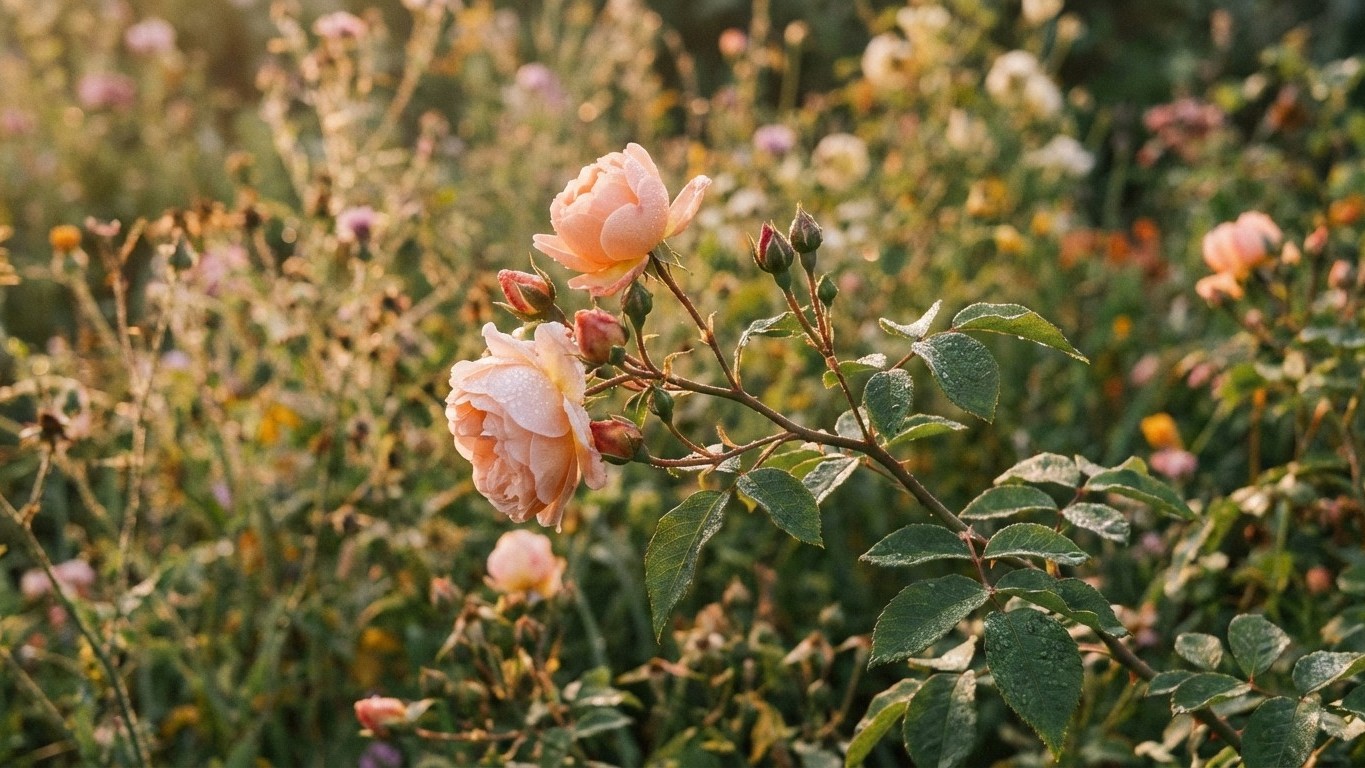

Mississippi gardeners can plant roses twice a year. Bare-root and container roses go in during late winter, and container roses can go in again during fall. The reference station at the Jackson airport shows a last spring freeze between March 6 and March 22 and a first fall freeze between November 7 and November 22. Heat and humidity matter more than cold here, so disease-resistant varieties, full sun and good airflow decide whether a rose thrives or becomes a black-spotted stick.
When to plant Roses in Mississippi

The frost numbers come from NOAA NCEI’s 1991-2020 Climate Normals for the Jackson airport. They use the 30-70% probability band for a 32°F freeze: last spring freeze March 6 to March 22, first fall freeze November 7 to November 22. That is one weather station, not the whole state. Suburban and rural gardens usually see the last spring frost one to two weeks later and the first fall frost one to two weeks earlier. Northern Mississippi and higher ground run later in spring and earlier in fall. Check your county before committing to a date.
Roses are not planted like tomatoes, so the calendar works differently. Most people buy dormant bare-root plants or potted roses from a nursery. Each has its own window.
Bare-root and container roses
Dormant bare-root roses do best when planted four to six weeks before the last frost window. Counting back from March 6 to March 22 gives late January through late February. The roots settle in while the canes are still asleep, and spring growth starts on an established root system. Potted roses are more flexible. Plant them from late winter through spring once the soil is workable, but get them in before the heat of June, when a new transplant needs daily watering.
Fall is a second chance, and today (early October) it is still open. Count back six to eight weeks from the November 7 to November 22 freeze range, and you land between about September 12 and October 11. That is my rule of thumb for giving roots time to anchor before dormancy, not an agency figure. A rose planted in October has a full winter of root growth and meets its first summer as a settled plant.
Starting from seed or cuttings
Growing from seed is slow and the offspring rarely match the parent, but hobbyists do it. The count-back for a suburban garden looks like this:
- Last frost reference date March 22, plus two weeks for a suburban garden: April 5.
- Ten days of hardening off (an hour or two of outdoor shade, lengthening daily): start March 26.
- Eight weeks of indoor growth under lights: sow around January 29.
- Eight weeks of cold, moist stratification in the refrigerator before that: start around December 4.
Seedlings and rooted cuttings should never go from windowsill to full sun in one day. Gardeners in Arkansas, South Carolina and Virginia will shift these dates by weeks, and the complete rose guide covers the general method.
Soil and site preparation
Choose a spot that gets at least six hours of direct sun, with morning sun if you can manage it. Early light dries the dew off the leaves, and wet foliage is where black spot starts. A bed jammed against a fence or a wall with no air movement will grow fungus. Leave a few feet between the plants and any solid surface.
Drainage matters more than soil type. Roses tolerate a range of textures, from sandy loam to clay, but they will not tolerate standing water. Dig a hole about 12 inches deep, fill it with water, and see what happens. If water is still sitting there the next day, build a raised bed 10 to 12 inches high or move the planting. Heavy clay is common in much of the state, and it holds water long after a spring storm.
Roses generally like a slightly acidic soil, in the range of 6.0 to 6.5. I have not found a state-wide pH figure to cite, and soils vary from county to county. A soil test through your county extension office costs little and tells you whether you need lime, sulfur or just compost. Take the test in fall or winter so you can amend before planting, not after.
Start the bed four to six weeks before planting day. Strip the sod, loosen the soil 12 to 18 inches deep, and work in two to three inches of compost across the whole bed. Do not fill only the planting hole with rich amendment. Roots then circle inside it like a flowerpot and refuse to move into the native soil.
Spacing depends on the rose. Hybrid teas want about three feet between plants, and larger shrub roses want four. Climbers need eight feet or more of wall or fence. Crowded roses stay damp and get sick, so err on the generous side. On planting day, soak bare-root plants in a bucket for a few hours, set the graft union at or just above soil level, and water deeply. Mulch right away.
Varieties that suit Mississippi
Mississippi summers are long, hot and humid. The traits that count are resistance to black spot and powdery mildew, tolerance of heat, and the ability to bloom repeatedly through a long season. Cold hardiness is the least of your worries in most of the state. Instead of days to maturity, think about bloom cycles: repeat-blooming roses push flowers in waves from spring to frost, and once-bloomers flower heavily in spring and then stop. The bush-versus-climber question is the rose version of determinate versus indeterminate. Shrubs stay compact, and climbers keep growing and need support.
Own-root roses (grown on their own roots, not grafted) are worth seeking out. If a hard winter kills the canes, the plant regrows true to type instead of reverting to rootstock.
| Variety or group | Type | Good for | Watch for |
|---|---|---|---|
| Knock Out series | Repeat-blooming shrub | Low-maintenance beds, strong disease resistance, long bloom season | Like most roses, can catch rose rosette disease |
| Drift roses | Compact groundcover | Edges, slopes, containers | Needs sun and drainage |
| Old Blush | China rose, repeat bloomer | Heat tolerance, old Southern gardens | Sprawls, wants room |
| Mutabilis | China rose, repeat bloomer | Large shrub, flower color changes as it ages | Size, can reach several feet tall and wide |
| New Dawn | Climber | Fences, arbors, vigorous growth | Needs training and annual pruning |
| Hybrid teas | Upright bush | Cut flowers, classic form | Prone to black spot, needs regular care |
I am not claiming any institution recommends these. They are widely sold and widely grown across the South, and the traits in the table hold up for hot, humid summers. If you want the showy form of a hybrid tea, plan on a spray schedule and a lot of leaf cleanup. If you want roses that bloom with minimal fuss, start with the shrubs and the China roses, and add a hybrid tea or two as a treat.
What to plant alongside
Good companions do a handful of things for roses: they shade the roots, cover bare soil, draw pollinators, or leave air moving. Low, mat-forming perennials such as catmint make a decent ground cover under roses and attract bees. Salvias and daylilies fill in with similar sun needs. Chives and other alliums look neat at the base and tuck in without crowding.
Some folklore deserves skepticism. Garlic and chives are often said to repel aphids and prevent black spot, and I have found no solid evidence for either claim. Plant them because you like them, not as pest control. French marigolds have better support for suppressing root-knot nematodes in the soil, but their effect on rose pests above ground is unproven. Lavender is a classic rose partner on paper, yet it hates Mississippi humidity and wet feet, so it often declines in this climate. Where roses are watered regularly and lavender needs lean, dry soil, the pairing sets up a conflict.
Keep out anything that crowds airflow. Dense perennials planted within a foot or so of the canes trap moisture, and moisture feeds fungus. Turf grass right up to the base competes for water and nutrients, so keep a mulched ring around each plant. Avoid planting roses beneath large trees, where roots take over the soil and shade cuts blooms. Finally, pull any wild multiflora rose growing nearby. It is a known host for the mites that spread rose rosette disease, and it sits like a reservoir next to your good plants.
Watering, feeding and support
Water deeply and less often. About an inch a week, delivered at the base in the morning, beats a daily sprinkle that wets the leaves. In July and August you may need to double that, especially on sandy ground and in containers. Deep watering pushes roots down, where soil stays cooler. Overhead watering in the evening leaves the leaves wet all night, which is an invitation to black spot.
Mulch two to three inches deep with pine bark, shredded hardwood or similar material, and pull it back an inch or two from the canes. It holds moisture, moderates soil temperature and blocks weeds. Renew it each spring.
Feed when growth starts in spring, after the last frost window for your area, then again after each major bloom flush. A balanced rose fertilizer or a slow-release product works, and compost on top adds organic matter. Stop feeding about six weeks before the first fall freeze, which from the reference-city range lands near late September to early October. Late feeding pushes soft new growth that cold can burn. Do not feed a newly planted rose until it has put out some leaves.
Climbers need a trellis, fence or wires. Tie canes loosely and horizontally if you can, because horizontal canes produce more flowering shoots than vertical ones. Shrub roses rarely need staking.
Pruning follows the rose type. Repeat bloomers get their main pruning in late winter, after the worst cold has passed. Remove dead, damaged and crossing canes and cut the rest back by about a third. Once-blooming old roses are pruned right after they flower, so you do not lose next year’s buds. Watch for suckers on grafted plants. Rootstock suckers often have seven leaflets where the named rose has five, and they come from below the graft. Cut them off at the point of origin, not at ground level.
Common problems

Black spot is the first one most Mississippi gardeners meet. Round black spots with fringed edges appear on the leaves, then the leaves yellow and fall. It thrives in warm, wet weather. Pick off and bin affected leaves (not in the compost), water at the base, and use a fungicide labeled for roses on susceptible varieties. Powdery mildew looks like white dust on new growth and shows up when days are warm and nights cool. Better spacing and sun help more than any spray.
Rose rosette disease is the one to learn to recognize. Signs include a witches’ broom of tight, distorted red growth, extra-thorny canes and deformed flowers. It is spread by tiny eriophyid mites, and there is no cure. If your rose has it, dig out the whole plant, roots included, and bag it. Do not wait. Your county extension office can confirm the diagnosis.
Yellow leaves with green veins can mean a nutrient problem, and the cause is often pH or waterlogged roots, not a shortage in the soil. A soil test sorts this out. Twisted or puckered new leaves after a spray day may be herbicide drift from a lawn treatment nearby, which is common in suburban yards. Keep lawn weed products away from rose beds.
Poor blooming is the rose version of poor fruit set. Too much shade is the usual cause, followed by overfeeding with nitrogen (lots of leaves, few flowers) and heavy pruning at the wrong time. Blind shoots, with no flower bud at the tip, often follow a cold snap or low light. Cut them back to a healthy leaf with five leaflets and the plant will try again.
Small insects like aphids cluster on soft new growth and can be washed off with a hose. Spider mites show up in hot, dry spells as stippled, dusty-looking leaves, and a strong spray of water on the underside of leaves slows them. I am not saying either is the dominant local pest. For that, see the next section.
Pests that actually show up in Mississippi
The state list comes from Mississippi State University Extension’s Publication 2347, Insect Pests of the Home Vegetable Garden. It is a vegetable-garden publication, not a rose guide, so I am picking out the entries that can reach a rose bed. It also is not exhaustive, and pressure varies by region, so send unknowns to your county office. Several pests on it, such as squash vine borers, pickleworms, cowpea curculios, yellowmargined leaf beetles, vegetable weevils and harlequin bugs, are tied to particular vegetable crops. Rose gardeners can mostly set those aside.
Pests do come in two seasons in Mississippi, according to the publication. Warm-season pests peak late in the season, and cool-season ones (yellowmargined leaf beetles, vegetable weevils) are active from fall through late spring.
Fire ants. What you see is a dome of loose soil, often at the edge of a bed, and what you feel is the sting when you prune or weed. They rarely kill a rose outright, but a colony under the root zone stresses a young plant. Treat the mound with a bait or product labeled for fire ants, following the label, and check your bed edges after rain.
Mole crickets. The publication flags them for the southern half of the state, especially in sandy soils. The first sign is raised, tunneled ridges in the soil and new plantings that wilt even though you have watered them, because the tunneling severs small roots. A bait applied per label is the control that works. Watch newly planted roses most closely.
Armyworms. The publication lists four, fall, beet, yellowstriped and Southern armyworms. These caterpillars chew leaves and can strip a plant fast. The first sign is ragged foliage and dark droppings. I am not stating a Mississippi peak window for them because the facts do not give one, so check with your county office. Handpick when numbers are small, or spray a Bt (Bacillus thuringiensis) product on young caterpillars.
Leaf-footed bugs. The publication records high numbers on tomatoes and peppers in late summer and early fall. These large brownish sap feeders, with leaflike flaps on their back legs, can wander into other plantings. Knock them into a bucket of soapy water in the cool of the morning, when they are slow.
Harvest and end of season
Roses are cut flowers, not a harvest that ripens off the vine. Cut stems in the morning, when they are full of water, with sharp pruners just above a leaf with five leaflets. Choose buds that are just starting to unfurl and sepals that have loosened. A bud cut too tight may never open, and a fully open bloom drops petals in a day or two. Plunge stems straight into a bucket of water and recut them under water at home.
For storage, a cool spot (a refrigerator works) extends vase life by several days. Strip leaves below the waterline and change the water every day or two. If you want hips for decoration or wildlife, which some varieties produce, leave the last flush of spent flowers on in fall, because setting hips signals the plant to slow down.
Plan the end of the season around the November 7 to November 22 freeze range at the reference station, and move it earlier by a week or two if you are in the suburbs, the country or at higher elevation. Stop fertilizing about six weeks before that date. Stop deadheading heavily in October. Rake and discard fallen leaves, which carry black spot over the winter, and put down fresh mulch after the ground cools. Hold off on hard pruning until late winter.
Local help
Mississippi State University Extension has county offices that can confirm local frost dates, test your soil and identify a pest or disease from a sample or photo. For more on the state, browse the Mississippi guides.
Common questions
What is the best month to plant roses in Mississippi?
Late January through February suits dormant bare-root roses, and counting back from the March 6 to March 22 range at the Jackson reference station supports that. Container roses can go in from late winter through spring or in fall. Northern and higher-elevation gardens should plant later.
Can I plant roses in fall in Mississippi?
Yes. Aim to get containers in six to eight weeks before the November 7 to November 22 freeze range, which means roughly mid-September to mid-October. That timing is my rule of thumb for letting roots establish before dormancy.
Which roses are easiest to grow here?
Disease-resistant shrub roses such as the Knock Out series, compact groundcover types like Drift roses, and heat-tolerant China roses such as Old Blush are common starting points. Hybrid teas can succeed but usually need regular fungicide and leaf cleanup.
Do roses need a lot of water in a Mississippi summer?
About an inch a week at the base is the baseline. In July and August, especially in sandy soil or containers, you may need to double that. Water in the morning and avoid soaking the leaves.
What should I do if my rose gets rose rosette disease?
Remove the whole plant, roots included, and bag it, because the disease has no cure. Take a sample to your county extension office to confirm the diagnosis first if you are unsure. Check for wild multiflora rose nearby, which can host the mites that spread it.