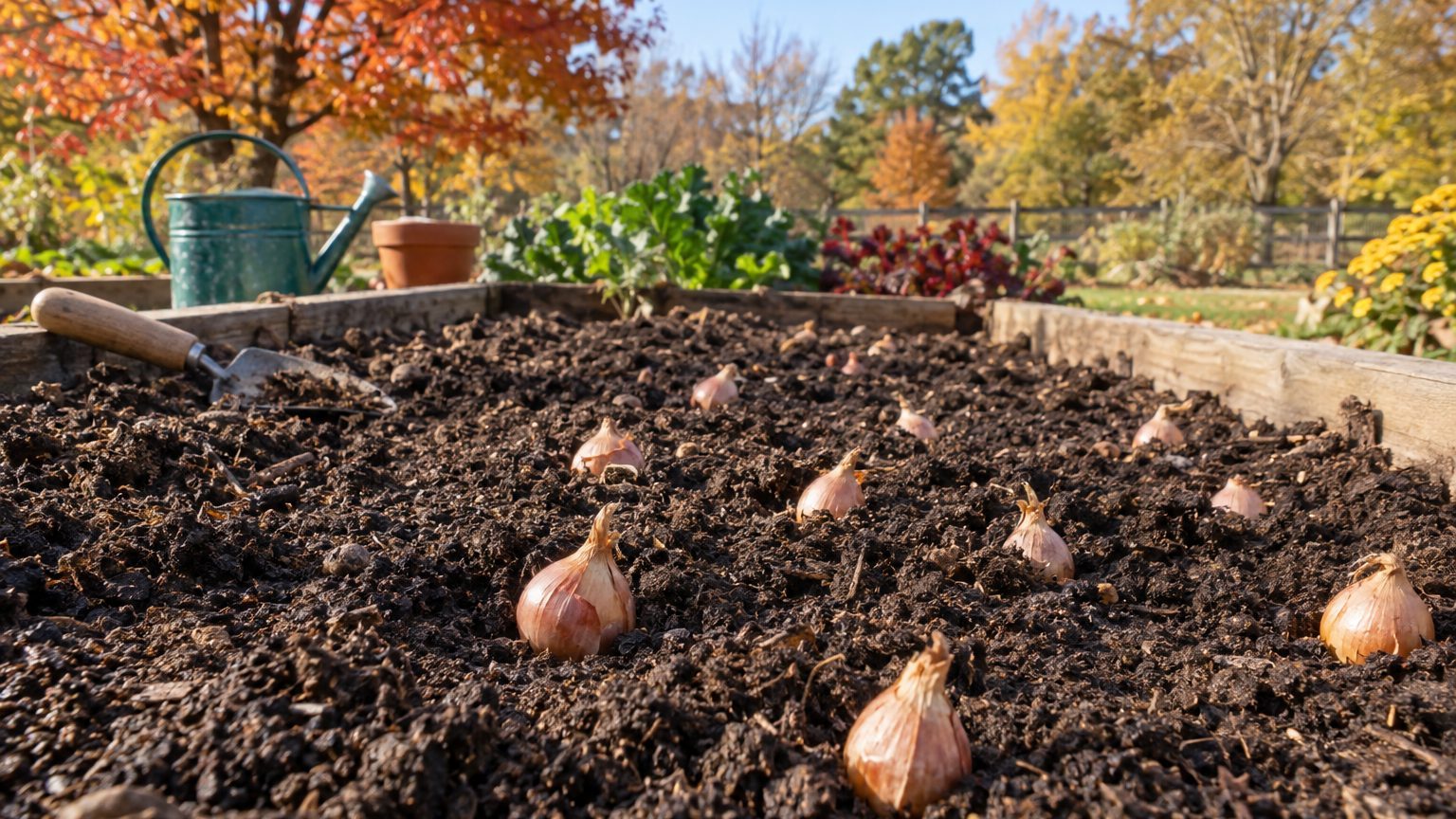

In New Hampshire, shallots go in the ground at one of two moments: in fall, just before the soil freezes, or in spring, as soon as the soil can be worked. Fall planting usually produces the bigger bulbs, and spring planting is the fallback for anyone who missed October. The frost dates below anchor both windows, with a catch about where they come from.
The short answer for New Hampshire
Plant fall shallots in the weeks around the first fall frost, then mulch once the ground starts to firm up. Plant spring shallots the moment the soil is workable, which for most gardeners means April, without waiting for the last frost to pass. Shallots shrug off light freezes. A 28°F night in April will not hurt a sprout that is just breaking the surface.
The dates come from the NOAA U.S. Climate Normals for 1991-2020, and they are probabilities of a 32°F freeze, not calendar guarantees. For one airport reference station, the 30 to 70 percent probability band looks like this:
| Event | Reference-station window | What it measures |
|---|---|---|
| Last spring frost | April 16 to April 27 | Dates when the odds of another 32°F freeze sit between 30 and 70 percent |
| First fall frost | October 13 to October 26 | Dates when the odds of the first 32°F freeze sit between 30 and 70 percent |
Read those as the reference-city numbers, not a statewide promise. Airport stations tend to be milder than the surrounding countryside. Suburban and rural gardens usually see the last spring frost one to two weeks later and the first fall frost one to two weeks earlier, and elevation stretches the gap further. A gardener in a hill town should shift every date on this page toward the cold end.
How the dates translate to planting
For fall, the target is roots without tops. Shallots set in the ground too early in warm weather throw up green leaves that winter then burns off, which spends the energy the bulb needed. Planting around the first fall frost window gives roots a few weeks to anchor before the ground locks up. If your garden frosts early, move earlier with it.
For spring, the clock runs backward from summer. Shallots form bulbs as days lengthen and warm up, so every week of delay in April is a week less of leaf growth before bulbing begins. More leaf means a bigger bulb. That is why the spring answer is “as early as the soil allows” rather than “after the last frost.”
The coldest month at the Manchester reference station averages a daily minimum of 17.1°F. That figure describes the average night in the coldest month, not the record low, but it explains why fall-planted shallots here need mulch and why the weeks after planting matter. For variety choices that handle that kind of winter, see The Best Shallots to Grow in New Hampshire.
What will not work here
Planting in May or later fails first. The frost-free stretch at the reference station runs only from late April to mid or late October, and a shallot set out after the soil has already warmed has little time to grow leaves before bulbing starts. Expect small, single-clove-sized bulbs. Slow, long-season types suffer most, so a variety that wants an extended cool spring will disappoint here.
Early fall planting fails in a quieter way. A warm stretch in late September or early October wakes the cloves up, and the green top that appears has to survive a winter where the average night in the coldest month sits at 17.1°F. Some of it dies back. The bulb survives, but you have paid for growth you did not need. Waiting until the frost window arrives avoids most of it.
Unmulched fall beds are the third mistake, and a common one. New Hampshire winters are not just cold, they swing. A thaw followed by a hard refreeze can heave shallow cloves up out of the ground, and exposed roots do not recover. A few inches of straw or shredded leaves, applied after the soil has cooled and started to firm, keeps the temperature steadier and holds the cloves in place. Pull it back in spring once shoots push through.
Wet ground is the fourth problem, and it matters most in spring. Snowmelt can leave beds saturated into April, and a clove set into cold, soggy soil is more likely to rot than sprout. If a handful of soil forms a slick ball rather than crumbling, wait. A week’s delay costs less than replanting. Raised beds or a sloped site drain earlier and let you start sooner.
Last, close spacing and slow drying at harvest tend to hurt in damper summers. This page has no rainfall or humidity figure for the state, so I won’t put a number on it, but crowded shallots with little air movement hold moisture around the necks and invite rot. Give them room, and cure the harvest somewhere dry and shaded with good airflow. The Growing Shallots in New Hampshire guide covers spacing and curing in detail.
What changes across New Hampshire
The USDA Plant Hardiness Zone Map (2023 edition, built on 1991-2020 normals) places New Hampshire in zones 3b to 6a. That is six half-zone steps: 3b, 4a, 4b, 5a, 5b and 6a. A statewide planting date would be false precision, because the northern and mountain towns and the southern valleys do not share a winter. There is no single answer, only a spread.
Zones also measure only one thing: the average annual extreme minimum temperature. They say how cold the worst night gets, not how long your season lasts. Two gardens in the same zone can have frost dates two weeks apart. Use the zone to judge winter survival and the frost dates to judge timing.
If your garden sits in the north or at elevation, shift in three ways. Plant fall shallots earlier, since your first hard freeze comes sooner and the roots need their weeks. Mulch more heavily, and leave it on longer in spring. And plan on spring planting later in April than the reference-city dates imply, because the soil thaws and drains later. Gardeners in the southern tier can lean the other direction: a little later in fall, a little earlier in spring.
Do not take this page’s word for which zone is yours. Look up your own location on the USDA Plant Hardiness Zone Map and read the zone for your street or town, then compare it with the reference-city dates here. A garden a few miles from the airport station and a few hundred feet higher can be a full zone colder.
Where to check this for your own county
This page is the state version, and a county recommendation beats it. A state page averages a place that includes coastal-influenced southeast towns and the White Mountains, so it works as a starting point, not a final answer. The place to go next is University of New Hampshire Extension, the state’s land-grant extension service.
Two things are worth looking for there. First, a local planting calendar for your county, ideally one written for garlic, onions, or shallots. Extension calendars are published per crop, not per state, so check that the one you find is for the right plant and not, say, a lawn calendar that happens to share the word “fall.” Second, any varieties that have been trialled or recommended in your county, since a variety that thrives in the Seacoast area may not suit a cold northern valley.
This page does not have a UNH shallot-specific calendar to cite, and it will not pretend to. If the extension site has no shallot page, a garlic or onion calendar is the closest substitute, because the timing logic is similar: fall planting before the ground freezes, spring planting as soon as it thaws. Extension offices also answer questions directly, and a county educator or Master Gardener volunteer can tell you things no statewide table can, such as which local microclimates frost early.
Checking this against your own garden
Your own observations outrank every date above. Three of them are worth making, and none needs equipment.
- Soil by feel. In spring, grab a handful from the bed. If it crumbles when you squeeze and open your hand, it is ready; if it smears or drips, it is too wet. A bed that reaches that point a week before your neighbor’s tells you it drains well and warms early.
- First green shoots. Note the day fall-planted shallots push their first true leaves through the mulch. Write it down. Next year, that date becomes your own calendar, and a late one tells you to plant earlier in fall.
- Frost on the grass. On the first cold mornings, walk the yard at dawn. White grass in the low corner while the slope stays green marks a frost pocket. Plant shallots on the higher, earlier-thawing ground and keep the pocket for later crops.
One season of notes will tell you more about your microclimate than any chart, and the dates on this page become a starting guess you can correct.
Common questions
Should I plant shallots in fall or spring in New Hampshire?
Fall is usually better, because the roots get a head start and the bulbs tend to be larger. Spring works if you missed the window, provided you plant as soon as the soil can be worked. Heavy mulch and decent drainage matter more than the season you pick.
Do I have to wait until after the last frost to plant in spring?
No. Shallots tolerate frost, so the trigger is workable soil, not the last frost date. At the reference station that date falls between April 16 and April 27 in the 30 to 70 percent band, but inland gardens often frost a week or two later, and you can plant before it.
Is it too late to plant shallots in May?
You can still do it, but expect smaller bulbs. Shallots need leaf growth before lengthening, warming days trigger bulbing, and a May planting shortens that window. Pick a quicker variety and give the bed steady care.
When do I harvest?
Harvest when the tops yellow and fall over, typically in midsummer. Lift the bulbs on a dry day and cure them somewhere shaded with good airflow. Exact timing depends on when you planted and how your site warms, so your own notes from the first season will beat any date printed here.