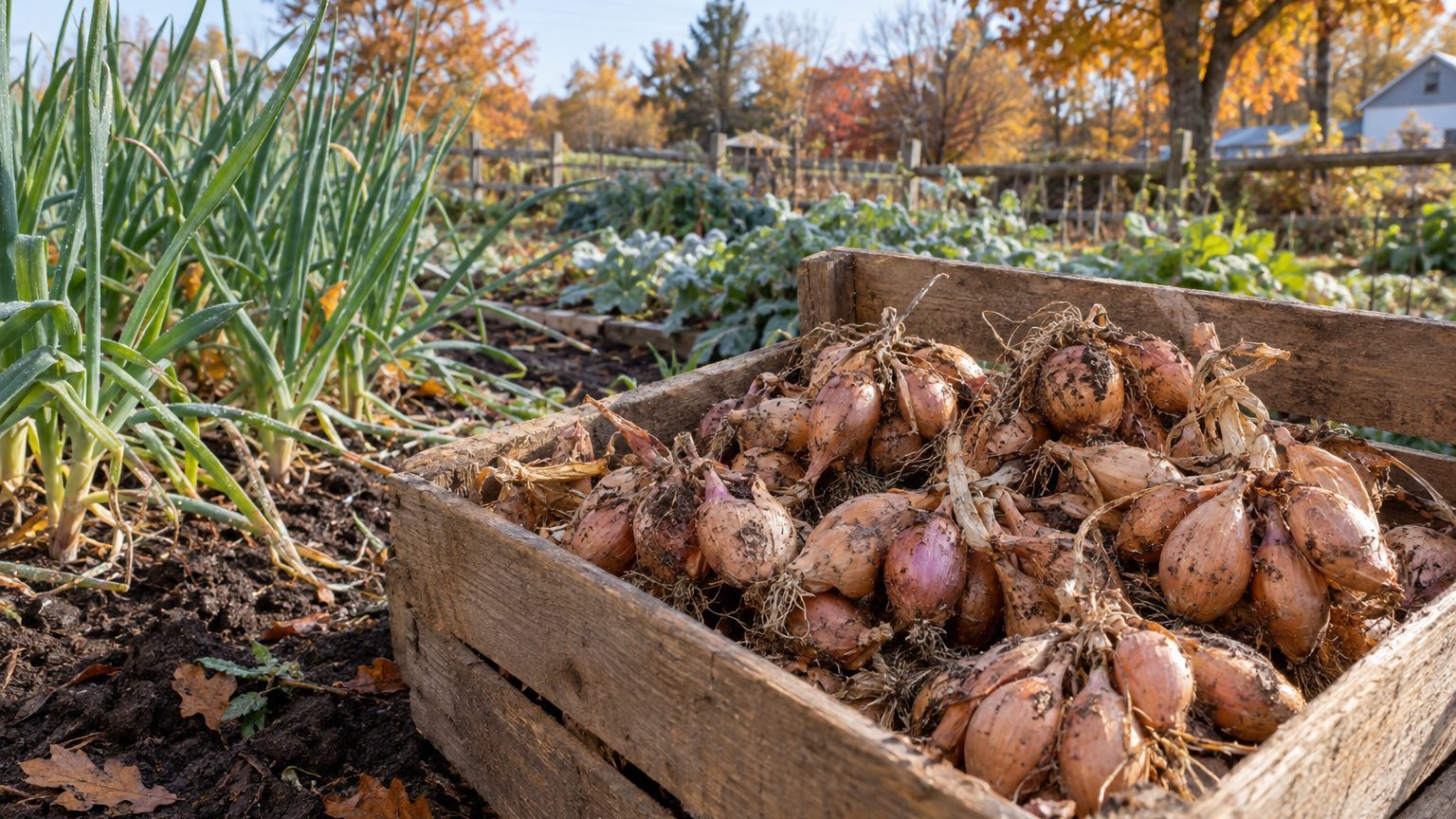

For most New Jersey gardeners, the best shallot is a multiplier type grown from bulbs and planted in fall. A seed-grown type is the better fallback if fall slips past you. Winters here rarely threaten shallots. Summer humidity at harvest is the real test, so pick by type and curing ease, not by catalog romance.
The short answer for New Jersey
Start with the numbers. At the reference station for this page (the Newark airport weather station, in NOAA’s 1991-2020 Climate Normals), the last spring freeze at 32°F falls in a band from March 29 to April 6, and the first fall freeze in a band from November 4 to November 16. Those are the dates when a freeze has a 30 to 70 percent probability, not promises. The coldest month averages a daily minimum of 25.5°F. That is cold enough to stop top growth for a while, but shallots are built for it.
Those figures describe one airport in the urban northeast. Suburban and rural gardens usually see the last spring frost one to two weeks later and the first fall frost one to two weeks earlier, and more so at elevation. Treat the dates as a reference point and check your own county (more on that below).
The decision comes down to three types, and the season length handles most of the sorting:
| Type | How it is planted | Fit for New Jersey |
|---|---|---|
| Multiplier shallots (small bulbs, each one splits into a cluster) | Bulbs set in fall, or very early spring | Best overall. Fall planting gets roots down before winter and bulbs mature ahead of the worst summer heat. |
| Seed-grown shallots | Started indoors in late winter, or direct-seeded early | Good backup. Needs a spring start and steady moisture, but avoids bulb-borne disease. |
| Gray or French-type shallots | Bulbs, same as multipliers | Worth a trial row. Prized by cooks, but they like a cool, dry finish that New Jersey does not always provide. |
Seven months or so between the last spring freeze and the first fall freeze at the reference station is plenty for any of these. Even a slow shallot finishes. For the timing itself, When to Plant Shallots in New Jersey works through the windows, and Growing Shallots in New Jersey covers the full season from bed prep to storage.
One honest gap: this page has no New Jersey variety trial data in its verified facts, so it does not name specific cultivars as proven winners. The county trials discussed further down are where named varieties belong.
What will not work here
The cold is not the problem. A 25.5°F mean minimum in the coldest month is well within what a fall-planted shallot handles under a layer of mulch, so skip the worry about winterkill and the fancy row covers.
What fails is a late start. A shallot sets its bulb as days lengthen and the weather warms, and a plant that goes in at the end of April has only a few weeks of leaf growth before summer heat tells it to quit. Small leaves make small bulbs. A gardener who plants multipliers in May, the way you might plant tomatoes, usually pulls a crop of marbles. The frost window gives you the room to plant early, so use it.
Humidity is the second killer. New Jersey summers are muggy, and shallots mature in the weeks when the air is wettest. Close spacing, which works fine in a dry western climate, traps moisture between leaves and invites fungal problems such as downy mildew and neck rot. Give each bulb real room, roughly the width of your hand between plants, and keep rows open to airflow.
Curing is where many crops are lost after they have already succeeded. Harvested shallots need a few dry, shaded, ventilated weeks before storage. A wet stretch in July can leave bulbs soggy on a covered porch, and a shallot stored with a damp neck rots from the top down. Plan a spot with a fan or an open-sided shed, not a closed garage.
Drainage matters too. Heavy clay in parts of the state holds water through freeze-thaw cycles, and a bulb that sits in cold wet soil rots. Raised beds or a ridge of soil help. Sandy ground, on the other hand, drains fast but runs out of nutrients, so shallots there need compost and consistent watering through spring.
Last, long-storage expectations. A shallot that keeps for a year in a cool, dry climate may last only a few months in a humid New Jersey basement. Buy for the kitchen you have.
What changes across New Jersey
The USDA Plant Hardiness Zone Map (2023 edition, built on 1991-2020 data) places New Jersey in zones 6a through 7b. That is four half-zone steps inside one small state, so no single zone answer exists. The system rests on one number, the average annual extreme minimum temperature, and says nothing about humidity, rainfall or summer heat.
The colder end sits toward the northwest highlands, while the warmer end sits in the south and along the coast. A gardener in the cold end should plant fall bulbs earlier, since the ground freezes sooner and roots need time to anchor. A heavier mulch layer, say three to four inches of straw or shredded leaves, protects against heaving. Spring thaws also arrive later up there, so a spring-started seed crop should wait for workable soil and not follow the airport’s frost dates.
In the south and near the coast, the opposite adjustment applies. Warmer soil in October means you can plant a bit later without losing root growth, and milder winters cut the need for heavy mulch. But summer arrives hotter and wetter, so the harvest and curing window matters more. Sandy coastal-plain soil also warrants a more generous watering plan in dry spells.
I cannot tell you which zone your garden is in, and neither can a state-level page. Look up your address on the USDA Plant Hardiness Zone Map and read the half-zone for your own location. Then remember that microclimates, from a south-facing wall to a frost pocket at the bottom of a slope, can shift conditions beyond what the map shows.
Where to check this for your own county
The right next stop is Rutgers New Jersey Agricultural Experiment Station, the state’s land-grant extension service. Rutgers Cooperative Extension has an office in each county, staffed with agents and Master Gardener volunteers who know the local soil and weather.
Look for two things. First, a local planting calendar for onions and shallots, or alliums more broadly, that reflects your county’s frost dates and not an airport’s. Second, any variety trials run in your county or a nearby one. A shallot that performed well in a trial plot with your soil type and humidity beats any list drawn from general advice.
Call or email your county office if the website does not list what you need. Ask which shallot or onion varieties have been grown locally, what planting dates agents recommend, and which diseases have been common in recent wet summers. Their answers carry more weight than this page does.
A county recommendation beats a state one, and this page is the state one. It draws on a single reference station and a hardiness range covering four half-zones. That is useful for choosing a type and understanding the risks, and too coarse for deciding a planting date in Sussex County versus Cape May County.
Checking this against your own garden
Your own observations outrank every date above. Three are worth watching.
- Soil warmth by feel. In early spring, push your hand into the bed. Soil that feels cold and sticky is too wet to work, and a bed that warms early tells you that spot is a safe place for spring-started seedlings.
- The first flush of male flowers. Early blooms on certain spring trees and shrubs, such as maples or hazel, show when the local season is turning. If they open early in your yard, your garden runs ahead of the county average.
- The first true leaves. When seedlings or sets send up their first real green blades after the initial spike, you are seeing how fast your own bed warms. Slow leaves point to a cooler or shadier microclimate.
Keep a notebook for a single year. Note when the bed thaws, when the first leaves appear and when the tops start to yellow. Next season you will have your own calendar, which is better than any average.
Common questions
Should I plant shallots in fall or spring in New Jersey?
Fall is usually the better choice for multiplier shallots, because roots establish before winter and bulbs mature before peak summer heat. Spring planting works if you get bulbs or transplants in very early. The planting calendar covers the timing.
Are shallots grown from seed or from bulbs better here?
Bulbs are the easier route and give a faster crop. Seed-grown shallots cost less and avoid some bulb-carried disease, but they need an early indoor start and consistent moisture. Many gardeners try both in small amounts.
Will New Jersey winters kill fall-planted shallots?
Unlikely. The coldest month’s mean daily minimum is 25.5°F at the reference station, and the state falls between zones 6a and 7b. The more common winter problem is heaving or rot in wet soil, which mulch and drainage address.
Can I name the single best shallot variety for my county?
Not from this page, which has no verified New Jersey variety trial data. Ask your county’s Rutgers Cooperative Extension office which varieties have been trialed nearby, since local results often differ from state generalizations by a week or more in frost timing alone.