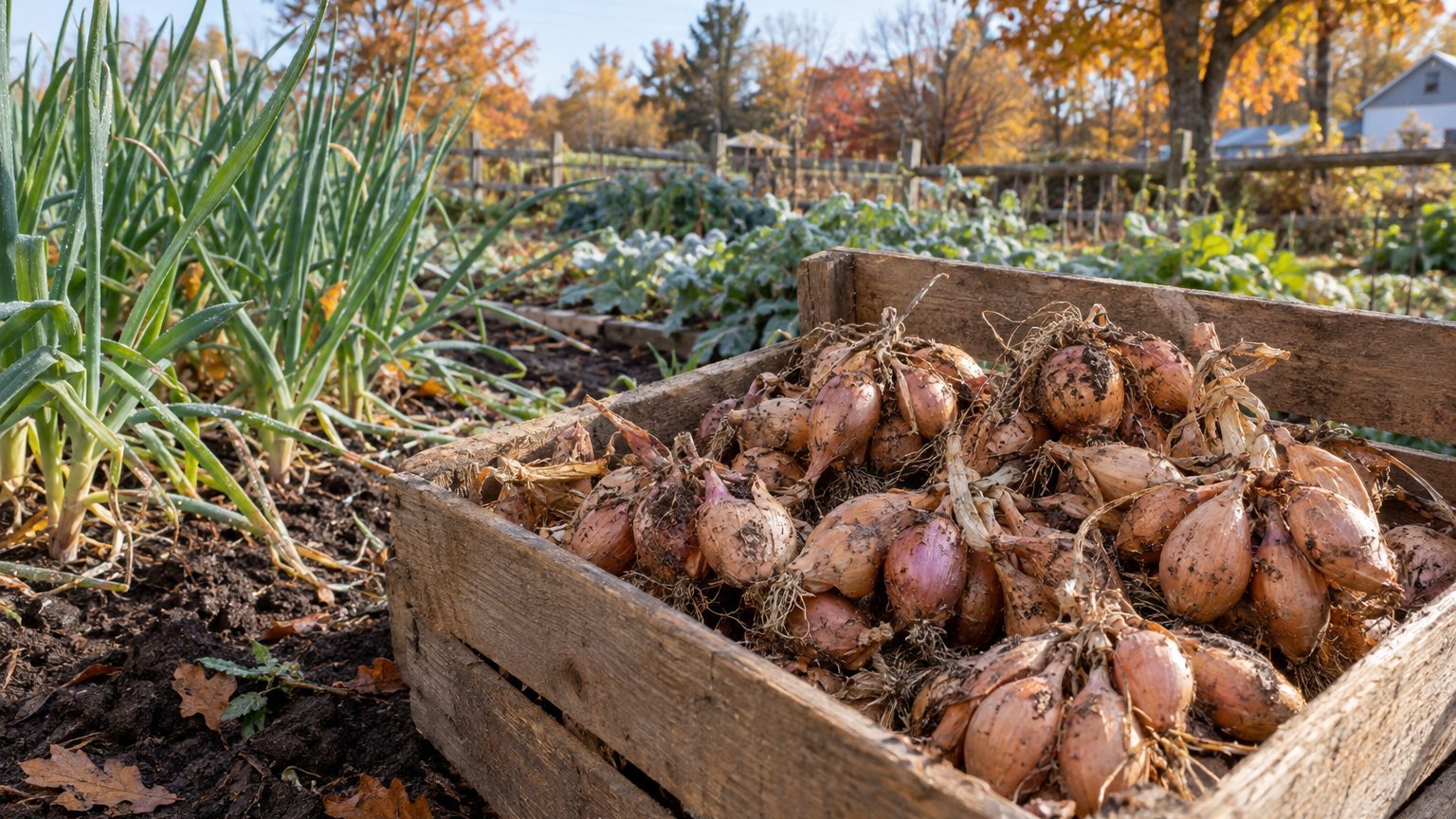

Set-grown shallots, the small bulbs sold in fall and early spring, are the safer choice in New Mexico than seed. In the lower valleys they usually go in the ground in fall; in the cold north and at altitude, spring is the better bet. Planting type matters more here than variety name, and this page has no New Mexico trial data to rank named cultivars.
The short answer for New Mexico
Choose by type, not by catalog name. Fall-planted set-grown multiplier shallots suit the mild-winter, long-season parts of the state. Spring-planted sets suit colder or higher ground. Seed-grown shallots come last, because they need the most babysitting in a dry climate.
The numbers behind that come from the Albuquerque airport weather station, NOAA’s 1991-2020 U.S. Climate Normals. The last spring frost falls between March 31 and April 12. That window is the 30 to 70 percent probability band of a 32°F freeze, meaning that by those dates the odds of another freeze have dropped to somewhere between even and unlikely. It is not a guarantee. The first fall frost comes between October 29 and November 9, measured the same way. Between the two sits well over six months of frost-free growing time at the reference city.
Winter is the other number. The mean daily minimum of the coldest month at that station is 26.4°F. That is a hard night but not a killing one for a hardy bulb, which is why fall planting works at the reference city. If you want the full growing routine, Growing Shallots in New Mexico covers it.
One caution about those dates. They describe an airport. Suburban and rural gardens typically see the last spring frost one to two weeks later and the first fall frost one to two weeks earlier, and the gap grows with elevation. Treat the figures as the reference-city answer, not a statewide promise.
How the three types compare
| Type | When it goes in | Best fit in New Mexico | Main risk |
|---|---|---|---|
| Fall-planted sets | Autumn, as the heat breaks | Lower, milder valleys | Hard cold in colder spots; early top growth |
| Spring-planted sets | Late winter to early spring, once soil is workable | North and higher elevations | Summer heat arriving before bulbs size up |
| Seed-grown | Started indoors, transplanted out | Gardeners who want to start from seed | Delicate seedlings in dry heat and wind |
For dated advice, When to Plant Shallots in New Mexico works from the frost figures above.
What will not work here
The weekly deep soak. A hot, dry New Mexico summer defeats anyone who waters shallots once a week the way a garden book from a wetter state suggests. Shallots are shallow-rooted, and in fast-draining desert soil a single weekly soaking runs past the root zone and leaves the bulbs stressed between waterings. Light, regular moisture during growth, then a clear drying-down at the end, fits them far better.
Late planting fails too. The frost-free window opens as early as March 31 at the reference city, and summer heat follows fast. Sets pushed into the ground in late spring have little cool weather to build leaves, and leaves are what the bulb is made from. Small tops give small bulbs, and the heat then ends the season for them.
Fall planting has its own trap. Put sets in during warm early autumn soil and they race up top growth that the winter then punishes. The better move is waiting for the heat to break, closer to the October 29 to November 9 fall frost window at the reference city. The goal is roots before cold, not a tall green clump.
Season length is the third problem, and it hits hardest above the valley floors. A garden that loses one to two weeks at each end of the season, or more at elevation, has noticeably less time than the airport figures suggest. The slowest-maturing shallots, the ones that need every day of a long season, are the first to disappoint there. Choose earlier-maturing planting stock in the colder places and plan to harvest before fall frost, not after.
Cold itself is the last failure, though only in some places. A 26.4°F mean minimum in the coldest month is manageable. The state’s hardiness map reaches far colder pockets than the reference city, and fall-planted bulbs there can be heaved out of the soil by repeated freezing and thawing if left bare. A mulch layer is the standard defense, and spring planting sidesteps the problem entirely.
Seed-grown shallots deserve one more mention. Tiny seedlings in dry wind and intense sun need constant attention that sets simply do not. They can work, but they are the type most likely to fail for a gardener who is not watching daily.
What changes across New Mexico
New Mexico is not one garden. The USDA Plant Hardiness Zone Map (2023 edition, built on 1991-2020 normals) places the state in zones 4b to 9a. That spans six numbered zones, from mountain country to low desert, so there is no single answer to “when” or “what” for the whole state.
The zone system measures one thing: the average annual extreme minimum temperature. It says whether a plant survives winter. It does not measure summer heat, season length, or how dry the air is, and for shallots those matter as much. Two gardens in the same zone can have quite different growing seasons.
Still, the zone spread points the direction. A gardener in the northern mountains or at altitude should shift toward spring planting, mulch anything that does go in during fall, and favor earlier-maturing stock so the crop finishes before fall frost arrives early. A gardener in the warmer southern or low-desert end of the range can lean on fall planting, harvest earlier in summer, and worry more about heat and watering than about winter survival.
The reference-city figures sit in between. Albuquerque is one point on a very long gradient, which is exactly why dated recommendations here are cautious. Do not guess your own zone from a neighbor’s or a nursery tag. The USDA Plant Hardiness Zone Map lets you enter a ZIP code and read it directly.
Where to check this for your own county
Your state extension service is the next stop. In New Mexico that is the New Mexico State University Cooperative Extension Service, which runs county offices staffed by people who know local soil, local frost pockets, and what has actually grown nearby.
When you get there, look for two things. First, a local planting calendar for onions, garlic, or shallots for your county, since those crops share timing logic and an onion-family calendar is often the closest match you will find. Second, any variety trials or recommended lists for your county. A variety that did well in a trial in your county is stronger evidence than any general advice from a page like this one.
A county recommendation beats a state one, and this page is the state one. It rests on one airport station and one hardiness map, so it can only lean in a direction. This page has not drawn on a New Mexico shallot variety trial or an NMSU shallot calendar, so it cannot rank named cultivars, and it will not pretend to.
If the county office has no shallot-specific guidance, ask about garlic or onions instead. They are close relatives with similar cold tolerance and a similar sensitivity to day length and heat. Ask also about local soil: much of the state’s soil drains fast and runs alkaline, and an agent will know which corners of your county are the exceptions.
Checking this against your own garden
Your own observation outranks every date above. Three things are worth watching, and none needs equipment.
Soil warmth by feel. In late winter or early fall, push your hand into the bed. Soil that feels cold and sticky is not ready for spring sets. Soil that feels warm and dry in autumn is still too hot for fall planting. Compare a sunny, south-facing spot against a shaded one and you will learn how much your yard varies from corner to corner.
First green shoots. Note when garlic, volunteer onions, or early perennials in your yard or a neighbor’s put up growth. That tells you when your own spring really begins, which is often later than the airport figures say.
Tops bending over. When shallot leaves yellow and fall over in early summer, the bulb is finished sizing. If that happens early, your site runs hot and fast; if late, you have a cooler microclimate and can use longer-season types. Write the date down, and next year you will have a calendar made for your yard.
Common questions
Can I grow shallots from seed in New Mexico?
You can, but it is the most demanding route. Seedlings need steady attention in dry wind and strong sun. Sets are the more forgiving choice for most home gardeners.
Should I plant shallots in fall or spring?
It depends on where you garden. Fall suits the milder lower valleys, where the coldest-month mean minimum at the Albuquerque reference station is 26.4°F. Spring suits the colder north and higher elevations. The state spans USDA zones 4b to 9a, so check your county.
Which named shallot variety is best for New Mexico?
This page has no New Mexico trial data, so it will not name a winner. Choose by type, then ask your county extension office which varieties have been tried locally.
Will shallots survive a New Mexico winter?
At the reference city, generally yes, since shallots are hardy bulbs. In colder, higher places, mulch fall plantings or wait until spring. The frost dates on this page are airport figures, and your own garden may see its last spring frost one to two weeks later and its first fall frost one to two weeks earlier, more at elevation.