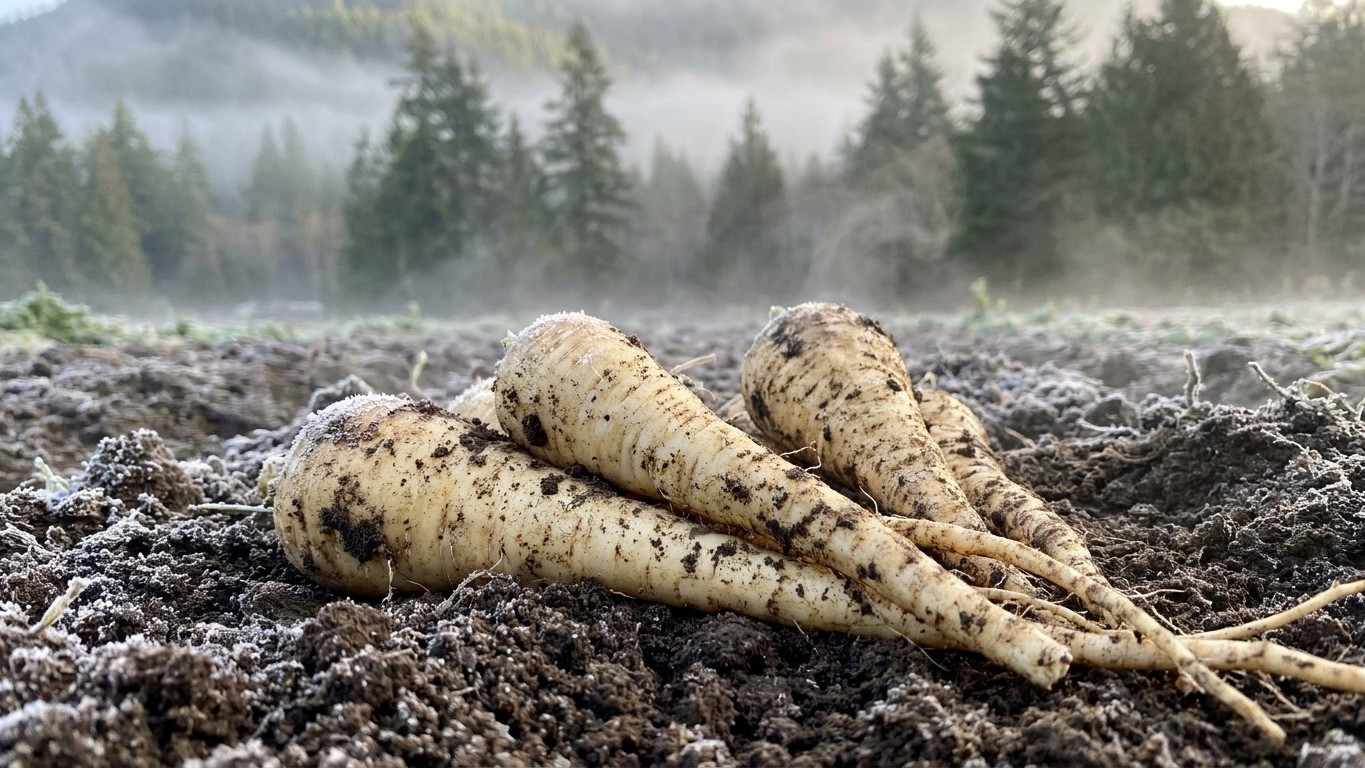

In the low desert, lift parsnips once the roots reach usable size, 100 to 120 days after seeding. Don’t wait for frost to sweeten them, because it rarely comes. In the high country around Flagstaff, leave them in the ground through several frosty weeks first. Once out of the soil, a parsnip keeps four to six months only at 32 to 34°F and 98% humidity, and only away from apples and other ripening fruit, which turn it bitter. Most kitchens fall short of those numbers, so plan on less.
The short answer
The question that decides everything is whether your yard delivers several frosty weeks. In the Phoenix area it doesn’t. The mean daily minimum of the coldest month is 45.3°F, according to NOAA NCEI Climate Normals for the Phoenix reference station. That is a cool night, not a freezing one. Phoenix reached 32°F in only 6 of 30 springs, and NOAA lists the frost-free season as 365 days. A rare cold snap can bring 32°F between late December and mid January, but that is a night, not the several weeks the crop needs.
So a parsnip grown in the low desert will grow, and it will not sweeten. It will be a fine, mild, slightly nutty root, but not the sugary one that cold-climate cooks describe. Utah State University Extension explains that parsnips taste best after several weeks of cool, frosty weather, which converts stored starch to sugar. The trigger is frost exposure, not a hardiness zone. A comfortable zone number says nothing about how many frosty weeks your garden gets. If you want the full mechanism, see Will Parsnips Sweeten in Arizona?
Where lifting is a real decision
Flagstaff and the high country are a different climate entirely, and they do freeze hard. There the choice is genuine: dig early for a milder root, or leave the crop in the ground through frosty weeks and dig later for sweetness. In the low desert the choice mostly collapses. Lift when the roots are the size you want, because waiting adds nothing.
Keeping them once they are out
Here is the part most gardening pages skip. A parsnip is not chilling sensitive, so cold is not the danger in storage. Ethylene is. USDA Agricultural Handbook 66 reports that exposure to even low levels of ethylene in cold storage causes bitterness, likely through a buildup of a compound called xanthotoxin. Parsnips make almost none themselves, but apples and any ripening fruit give it off. A parsnip stored in the same drawer as a bowl of fruit can turn bitter even at the right temperature.
The same handbook gives the long-keeper figure: 4 to 6 months at 32 to 34°F with 98% relative humidity (USDA Agricultural Handbook 66). That figure assumes both numbers are held steady, which almost no house manages. Read it as a ceiling. Top the roots after harvest, but do not trim into the crown.
Does the season fit?
Parsnips are sown in place, and the clock runs from the seed, not from a seedling. The arithmetic below uses the Utah State University Extension timing: 100 to 120 days from seeding, sown 2 to 3 weeks before the last frost.
- Start with germination. Seed takes 14 to 21 days to come up, so bare soil for two to three weeks is normal. Don’t dig it up and re-sow, because the 100 to 120 days are already counting.
- Do the sowing math. Sow 21 days before the last frost and add 100 days, and the roots are ready about 79 days after that frost. Sow 14 days before and add 120 days, and they are ready about 106 days after it. That puts maturity roughly 11 to 15 weeks past the last spring frost.
- Test it against the low desert. There is no last frost to anchor that math. NOAA lists 365 frost-free days, and most years bring no freeze at all. The season is long enough with room to spare, so length is not the problem. But a frost-based planting calendar would be fiction here, and I won’t print one. The limiting factor in the low desert is summer heat, not a closing window, so the useful question is when your sowing and growing days stay cool, not which frost date to count from.
- Test it against the high country. Here the arithmetic does bind. Maturity lands in summer, but sweetening needs several frosty weeks after that, and the crop has to fit between the last spring frost and a hard fall. The first fall frost dates for those stations are not published here, so use your own yard’s records.
- Decide when to lift. In the low desert, lift when roots reach the size you want, after at least 100 days from seeding. In the high country, lift after the roots have sat through several frosty weeks, not before.
The summary: the low desert fits comfortably on length and fails on frost. The high country fits tightly, and a late-sown crop can run out of season before it sweetens.
What goes wrong here
Parsnips are forgiving about neglect and unforgiving about soil, and Arizona yards give them several ways to fail. Soil varies from one yard to the next, so treat anything you read about the state’s soils as a starting point, not a diagnosis. Dig a test hole and see what you actually have. For the insects and animals that go after the crop, see What Eats Parsnip in Arizona, and When.
- Forked roots from heavy or stony ground. A root that meets clay, rock or a hard mineral layer (what Arizona gardeners call caliche) splits around it. Utah State University Extension calls for deep sandy soil, and says heavy soil must be double dug. Loosen the bed deep before sowing, pull out stones, and grow in a raised bed if the native ground won’t give.
- Forked roots from overwatering. This is a separate cause, and digging deeper will not fix it. Soggy, constantly wet soil can also produce forks and a misshapen root. Water deeply but let the surface dry between irrigations, especially under drip lines that run on a fixed schedule.
- A season that runs out. In the high country, a late sowing leaves the roots too small when hard cold arrives. Count 100 to 120 days from seeding and work backward, remembering the 14 to 21 days spent germinating.
- A winter too mild to sweeten. With a coldest-month minimum of 45.3°F, the low desert does not supply the frosty weeks. The root is not ruined; it is just not sweet. Expect a mild parsnip, season it accordingly, and lift when it reaches size rather than leaving it in the ground to wait for a frost that won’t come.
- Roots that turn bitter in storage. Ethylene from apples or ripening fruit does it, even at the right temperature. Keep parsnips in their own container, away from fruit. Top them without cutting into the crown.
- Seed that seems not to have come up. Two to three weeks of bare soil is normal. Mark the row, keep the soil evenly moist, and wait before re-sowing.
For the broader picture, from soil prep to variety-free sowing advice, start at Growing Parsnips in Arizona.
Common questions
Will parsnips sweeten in Phoenix?
Not reliably. The coldest month’s mean minimum is 45.3°F, and Phoenix reached 32°F in only 6 of 30 springs. Sweetening comes from several weeks of cool, frosty weather, and the low desert rarely supplies them. You will get a good root, but not a sugary one.
How long do parsnips keep after harvest?
USDA Agricultural Handbook 66 gives 4 to 6 months at 32 to 34°F with 98% relative humidity. That assumes both numbers hold steady. A home fridge or a cool pantry will likely give you less, so use the roots sooner rather than later.
Can I store parsnips with apples?
No. Parsnips are not hurt by cold, but even low ethylene exposure turns them bitter, and apples and other ripening fruit give it off. Give parsnips their own container and keep them away from the fruit bowl.
Should I trim the crown before storing them?
Top the roots after harvest, but do not trim into the crown. Cutting into it opens the root and shortens how long it keeps.