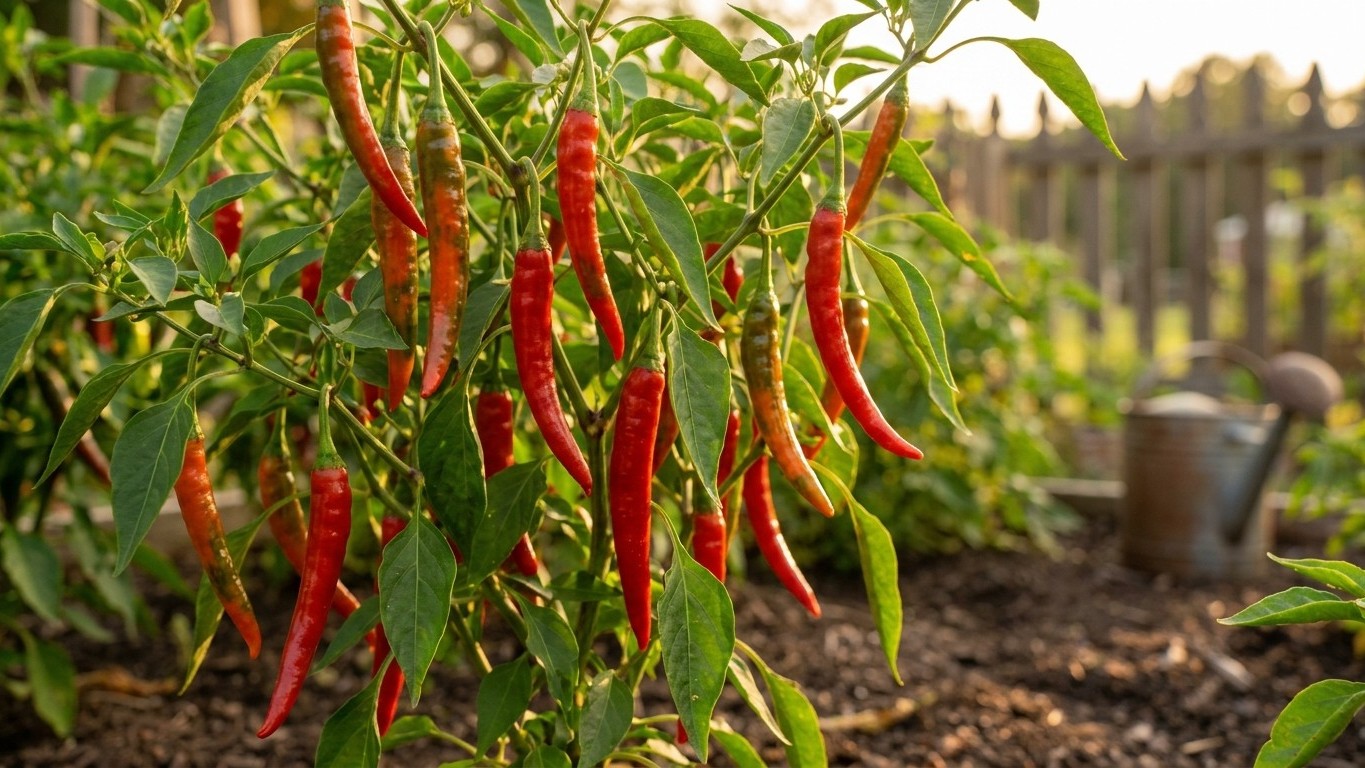

Pick peppers when the fruit has reached full size and feels firm, which Clemson Extension puts at about 70 to 85 days after transplanting. Then keep them out of the refrigerator. A home fridge runs colder than the 45 to 50 °F peppers want, and below about 45 °F the skin pits and the flesh goes soft. That is chilling injury, and it is the mistake nearly everyone makes. The harvest date itself is set months earlier, by when the seed went in and what the weather did to the blossoms.
The short answer
The hot end of fruit set
At the Wilmington reference station, NOAA NCEI Climate Normals show an average of 17.6 days a year reaching 90 F or more. That is a little over two and a half weeks, and it is an average, so some summers hand you more and some fewer. It measures heat load, not how warm the summer feels overall.
The number matters because Utah State University Extension says pepper fruit set fails at both ends of the thermometer: days above 90 F, and nights below 55 F. A blossom that opens during a hot spell tends to drop instead of turning into a pepper. With under three weeks of such days in a typical year, the heat problem here comes in short spells rather than a season-long siege. The plant skips a round of fruit, then sets again once the spell passes. The figure comes from one station, though, so your own yard may run hotter or cooler.
The cool end, which you have to watch yourself
Nights under 55 F are the other half of the rule, and this site does not carry summer night minima. Nobody here can tell you how often your garden dips that low, and guessing from latitude or from how cold the winters are would be just that, a guess. A cheap min/max thermometer set at plant height gives you the real answer. Check it each morning from late spring into early summer, and again when the nights lengthen in September. Cool nights in either window can stall flowering. If you want the full set of causes, Why Peppers Fail to Set Fruit in Delaware covers them.
Picking, and why the fridge is the wrong place
Clemson counts the 70 to 85 days from transplanting, and the ripening clock inside each fruit starts at flowering, not at sowing. A plant that drops its first blossoms in a hot spell pushes your harvest back by that much. Pick once the fruit is full size and firm. Peppers can be taken green at that point, or left to color, which takes longer.
For storage, Clemson gives 45 to 50 °F with 80 to 90 percent relative humidity, good for two to three weeks. Read that as a ceiling under ideal conditions, not a promise. A kitchen refrigerator is colder than that range, so the crisper drawer does damage a cool pantry, basement or shaded porch would not. Pitted, sunken spots and a limp texture are the giveaway. Humidity matters too: a loosely closed bag or a perforated container helps keep the skin from shriveling in dry indoor air.
When to start seed here
Peppers are slow, and Utah State says transplants need 8 to 10 weeks indoors. That means you plan backward from the day the plants go outside. Here is the arithmetic, in a form you can redo for your county.
- Find your last spring frost. NOAA NCEI Climate Normals put it between April 3 and April 14 at the reference station (the 30 to 70 percent probability band for a 32 F freeze). That is the Wilmington figure, not a statewide guarantee. Suburban and rural gardens usually see the last frost one to two weeks later, and more at elevation, so check the date for your own county.
- Wait for the soil, not the calendar. Utah State says to transplant after frost, once the soil reaches 60 F. Soil lags behind the air, so this date usually lands later than the frost date. A soil thermometer pushed in a few inches gives you a straight reading. Use whichever date is later.
- Subtract 8 to 10 weeks. Count back from your transplant day. As an illustration only, suppose the soil reads 60 F on May 10. Ten weeks earlier is March 1, and eight weeks earlier is March 15. Sow indoors somewhere in that two-week window.
- Add 70 to 85 days for the first pick. Clemson’s range runs from transplanting. From that same May 10 transplant date, 70 days lands on July 19 and 85 days on August 3. Those are the dates to expect your first firm, full-size fruit, assuming fruit set goes smoothly.
Two cautions on that math. Starting earlier than 10 weeks does not buy a head start. Plants that outgrow their pots indoors sit and wait, and a root-bound transplant does not recover its lost time. And if you buy transplants instead, step three disappears, but steps one and two still apply. A store-bought plant set into 50 F soil sulks just like a homegrown one.
The first fall frost is the other boundary on your harvest, and this site does not carry a figure for it. Look up your county’s date and count backward from it to see how many weeks of picking you have. The full season plan sits in Growing Peppers in Delaware.
What goes wrong here
Delaware’s summers are not extreme by pepper standards, but four problems turn up often enough to plan for. Each one has a fix you can set up before it happens.
- Blossom drop in a hot spell. Days above 90 F, which average 17.6 a year at the reference station, make blossoms fall instead of setting fruit. Pull a light shade cloth over the bed when the forecast shows a run of 90s, and water deeply in the morning. Resist the urge to dump on fertilizer. Extra nitrogen grows leaves, not peppers, and the plant will set fruit again once the heat breaks.
- Blossom drop on cool nights. Nights under 55 F do the same damage from the other direction, and this site does not carry summer night minima, so your own thermometer is the only judge. Drape row cover over the plants at dusk when a cool night is forecast, and take it off in the morning. Early transplants into cold soil are the usual cause, which is another reason to wait for 60 F.
- Sunscald. Fruit that gets direct summer sun develops a pale, papery, sunken patch on the side facing the sky. It shows up when leaf cover thins out, whether from pruning, disease or insects (What Eats Pepper in Delaware, and When covers the chewers). Keep the canopy intact, use shade cloth in the hottest weeks, and pick scalded fruit early, since the damaged spot invites rot.
- Blossom-end rot. A dark, leathery, sunken patch on the bottom of the pepper is usually a watering problem rather than a shortage of calcium in the soil. Swings between dry and soaked ground keep calcium from reaching the fruit. Mulch the bed, water on a steady schedule, and run a soil test before adding any calcium product.
Common questions
Should I pick peppers green or wait for color?
Either works once the fruit is full size and firm. Green peppers are mature but not fully ripe, and leaving them to color takes longer while the plant keeps carrying the load. If your first fall frost is approaching, pick what is full size rather than gambling on color.
Can I put peppers in the fridge if I have no other cool spot?
You can, but it will cost you texture. Below about 45 °F peppers develop pitting and soften, and a home refrigerator runs colder than the 45 to 50 °F range Clemson recommends. If the fridge is your only choice, use those peppers quickly and plan on cooking them, where a softer texture matters less.
How long do picked peppers keep?
Clemson says two to three weeks at 45 to 50 °F and 80 to 90 percent relative humidity. That is the best case under optimal conditions, not a guarantee, and a warm kitchen counter will cut it short. Check them every few days and use the oldest first.
How do I know the first pick is near?
Count 70 to 85 days from your transplant date (Clemson’s range) and start checking firmness and size at the early end. If a hot spell or cool nights knocked off your first blossoms, expect the pick to slide later, because the fruit’s own clock begins at flowering. And remember that the April 3 to April 14 frost window is the reference-city figure; rural and suburban gardens often run one to two weeks behind it, so your dates shift with it.