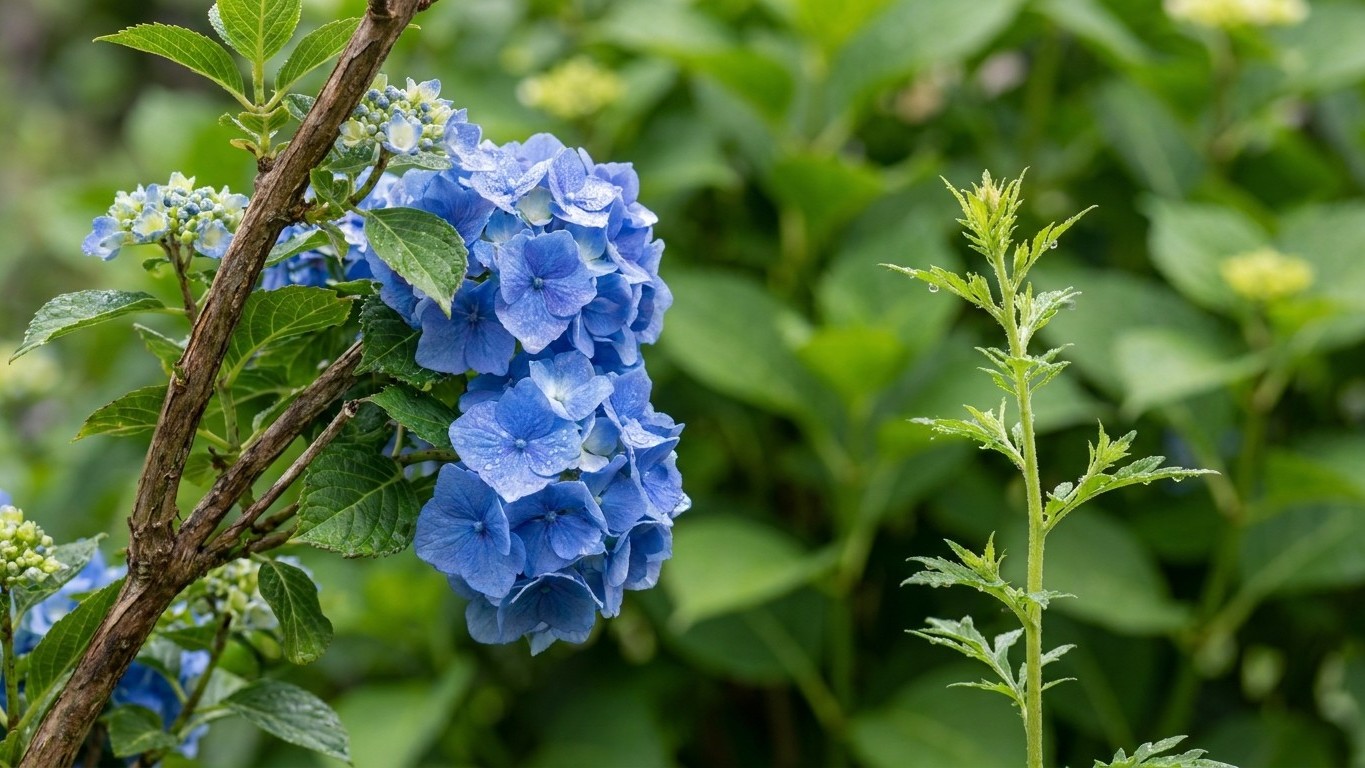

In north Florida, the answer depends on the type. Panicle and smooth hydrangeas get cut in late winter, around the stretch when the last freeze at Jacksonville typically arrives, February 16 to March 7. Bigleaf and oakleaf hydrangeas get pruned right after they flower, and never in fall or winter, because next year’s buds are already on the stems by then. Central and south Florida run on bloom time and summer heat instead of a freeze calendar. The sections below explain why and how to set dates for your own yard.
What this comes down to in Florida

In Jacksonville, the reference city for every frost number on this page, the last 32°F freeze typically falls between February 16 and March 7, so late-winter pruning of new-wood hydrangeas belongs at the front edge of that window or just after it. Anything that blooms on old wood gets its cut in summer, within a few weeks of the last flowers fading. Those two clocks, one tied to the end of winter and one tied to the end of bloom, are the whole system.
The window comes from NOAA NCEI Climate Normals for the Jacksonville airport station, which is an inland site, and it describes the 30 to 70 percent probability band for a 32°F freeze. It is a range, not a deadline. At that same station, three of thirty recent falls saw no freeze at all, which tells you how loosely north Florida winters follow the calendar. You can read the underlying data in the NOAA NCEI normals for the Jacksonville station.
Late winter for new-wood bloomers
Panicle hydrangeas (Hydrangea paniculata) and smooth hydrangeas (Hydrangea arborescens) form flowers on growth produced in the current season. Cutting them back in late winter costs you nothing in bloom, and it shapes the plant before the new shoots take off. The point of waiting for the frost window is practical: a hard cut in January encourages soft growth that a late freeze can burn.
Right after bloom for old-wood bloomers
Bigleaf hydrangeas (Hydrangea macrophylla) and oakleaf hydrangeas (Hydrangea quercifolia) set flower buds on the previous season’s stems. Prune them in fall, winter or early spring and you are cutting off the show. The safe cut comes right after flowering, and it should be light: spent blooms, dead stems, a little shaping. Some bigleaf types also flower on new growth, which makes them more forgiving, but the old-wood rule is the safe default when you are unsure what you own. Which types hold up in Florida winters is its own question, covered in Which Hydrangeas Survive a Florida Winter.
| Type | Blooms on | When to prune in north Florida |
|---|---|---|
| Panicle (H. paniculata) | New wood | Late winter, from the opening of the February 16 to March 7 window onward |
| Smooth (H. arborescens) | New wood | Late winter, same timing as panicle |
| Bigleaf (H. macrophylla) | Mostly old wood | Right after bloom, lightly; dead wood once leaves emerge |
| Oakleaf (H. quercifolia) | Old wood | Right after bloom; usually needs very little |
Working it out for your own garden
A calendar date printed on a page breaks the first time you move or hit a strange winter. The method travels better, and it takes three steps.
Step one: find out what your plant blooms on
Look at the tag if you still have it. If not, watch what happens. A hydrangea whose flower heads form on stems that overwintered is an old-wood bloomer, and one that sends up fresh shoots from the base and flowers at their tips is a new-wood bloomer. When you cannot tell, treat it as old wood and prune only after flowering. The worst outcome of that choice is a slightly shaggier plant.
Step two: anchor the cut to a window, not a day
For a new-wood plant in north Florida, start from the Jacksonville window of February 16 to March 7 and add the buffer you want. If you would rather cut two weeks ahead of the window, that lands in a range of about February 2 to February 21. If you prefer to wait until the window has just closed, you are looking at the first days of March onward. Either choice is a range, and the plant itself settles it: cut when the buds are still tight, before they swell and open.
For an old-wood plant, count from bloom instead of frost. Flowers fade, you wait a couple of weeks for the stems to finish, then you cut. The first fall frost window at Jacksonville, November 26 to December 13, is the line you work backward from. Any hard pruning made in October or November, even weeks ahead of that window, removes buds that are already formed.
Step three: let the stems tell you what is dead
After a cold winter, bigleaf stems often look lifeless in March and then leaf out in April or later. Before cutting anything, scratch a small patch of bark with a thumbnail. Green underneath means the stem is alive. Brown and dry means you can remove it. Waiting for new leaves before cutting is almost always the cheaper mistake, since you can remove dead wood at any point but you cannot glue live buds back on.
What changes across the state
Jacksonville sits in the northeastern corner of the state, at an inland airport station, so its freeze window describes north Florida and nothing farther south. Florida has almost no elevation to speak of, which means latitude and proximity to the coast do most of the work. Gardeners in the Panhandle and the far north, away from the ocean’s moderating effect, tend to see colder winters than the coastal strip, while the beaches and barrier islands run milder.
Move down the peninsula and the calendar stops applying. Central and south Florida are effectively frost-free, so there is no freeze window to count from, and the growing year inverts: winter is the easy season and summer is the hard one. Never take the February 16 to March 7 window and apply it to Orlando or Miami. For hydrangeas there, pruning timing follows the plant’s bloom cycle and the heat. Cut lightly after flowering and avoid heavy cuts in the worst of summer, when a stressed plant has little energy to regrow. Late-winter pruning of new-wood types may still make sense, but the cue becomes bud swell rather than a frost date.
The USDA Plant Hardiness Zone Map spans 8b through 11b across the state. That system is built on one variable, the average annual extreme minimum temperature, so it says how cold the coldest night gets and nothing about summer heat, rainfall or how long the growing season runs. Use it as a rough sorting tool, and use your local frost experience to set actual dates.
The mistakes this state punishes

Fall cleanup tops the list. A bigleaf hydrangea cut to the ground in November looks tidy and then produces leaves but few or no flowers the next summer. The fix is simple: leave the stems standing through winter and take out only what is clearly dead once spring growth shows.
A warm January spell is the second trap. North Florida regularly gives gardeners a run of 70°F days in the middle of winter, and it is tempting to grab the shears. But the frost window does not open until February 16, and a late freeze can still catch the soft shoots that follow an early cut. Wait for the window, or at least prune only part of the plant if you cannot wait, and keep frost cloth handy.
Cutting living stems because they look dead is the third. Bigleaf hydrangeas leaf out late in many north Florida yards, and an impatient pruner often removes wood that was about to wake up. Do the scratch test first.
Another is heavy summer pruning in the heat. Old-wood types do need a post-bloom cut, but a hard shearing in July sun in central or south Florida stresses a plant already struggling, so keep the cut light and water afterward.
Last, do not expect pruning to change flower color. Pink versus blue is a matter of soil chemistry, which Why Hydrangeas Are Pink in Florida, and How to Turn Them Blue explains in full. Pruning only changes how many flowers you get and when.
Checking this against your county
A state-wide figure is a starting point, not an instruction. The window above belongs to one airport weather station in Jacksonville, and your yard, whether on the coast, inland, or in a low pocket where cold air settles, can run weeks ahead of or behind it. Your county office of University of Florida/IFAS Extension can tell you what the local frost pattern looks like and which hydrangeas do best nearby. For the broader picture of planting, soil and care, start with the state guide to growing hydrangeas in Florida.
Common questions
Can I prune hydrangeas in the fall in Florida?
Only if the plant blooms on new wood, and even then late winter is a better time. Bigleaf and oakleaf hydrangeas carry next year’s flower buds through fall and winter, so cutting them then removes the flowers. Light removal of obviously dead or broken stems is fine at any time.
When should I prune a hydrangea in Orlando or Miami?
Do not use the Jacksonville frost window there. Central and south Florida are effectively frost-free, so the timing follows the plant instead: prune old-wood types lightly after they finish blooming, and cut new-wood types when buds begin to swell. Avoid heavy cuts during the hottest part of summer.
Why did my hydrangea stop blooming after I pruned it?
The most likely cause is cutting an old-wood bloomer at the wrong time. If the pruning happened in fall, winter or early spring, the flower buds were probably removed along with the stems. The plant will usually bloom again the following year if you let it grow undisturbed after bloom.
How do I know if a stem is dead before I cut it?
Scratch a little bark off with your thumbnail. Green tissue underneath means the stem is alive and should stay. Wait until warm weather has arrived and other stems have leafed out, because a bigleaf that looks dead in March may only be late.