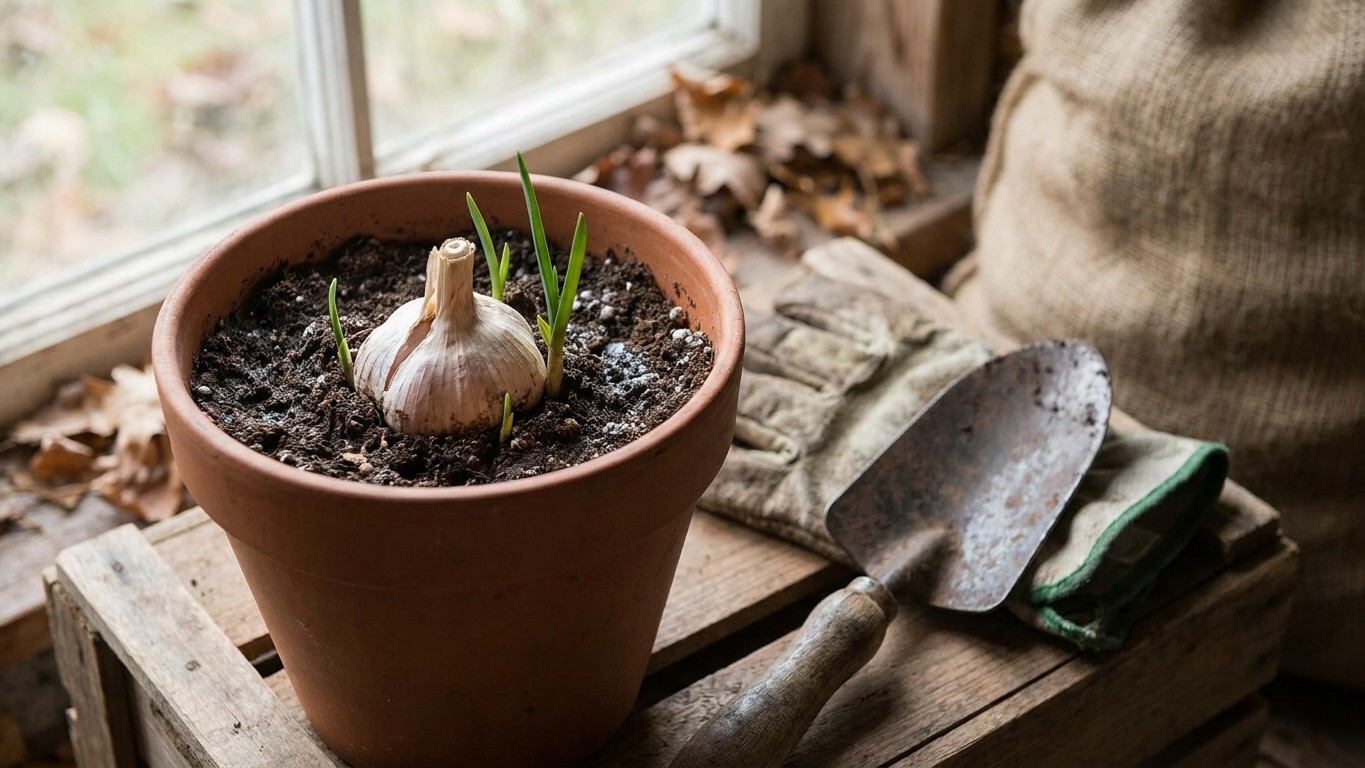

Florida garlic gets eaten in two waves, and neither is set by a frost date. Fall brings the chewers (armyworms, cutworms, mole crickets) while the seedlings are small and tender. Spring brings thrips and mites as the weather warms toward harvest. In north Florida the first freeze lands between November 26 and December 13. Farther south no freeze arrives to reset anything, and the whole calendar flips.
The short answer for Florida
In Jacksonville, the first fall freeze (32°F) arrives between November 26 and December 13, going by the 30 to 70 percent probability band in the NOAA NCEI 1991-2020 Climate Normals. That window anchors the pest calendar for north Florida: the fall chewers are active before it, and the spring pests wait on the other side of winter.
Roughly, the year runs like this for garlic planted in autumn and lifted the following summer:
- Fall, from planting to the first freeze: armyworms, cutworms and mole crickets chew or tunnel through seedlings. Nematodes feed on roots while the soil is still warm.
- Winter: activity slows. Garlic does most of its root and leaf building while little is feeding on it.
- Spring: thrips rasp the leaves and mites distort new growth as days warm up.
- Early summer, around lifting: bulb mites and rot organisms move in on bulbs left in the ground or stored damp.
A midpoint, not a safe date
A frost date is the middle of a spread. In one year out of two, the first freeze falls later than the dates above, which means the warm-season insects get extra weeks on your seedlings. The Jacksonville station sits at an inland airport, and three of the thirty falls in the record saw no freeze at all. In those years the fall pests never got the cold interruption that gardeners count on.
Central and south Florida run the other way
Do not apply the Jacksonville window to Orlando or Miami. Central and south Florida are effectively frost-free, so the main garlic season runs through winter and summer is the hard part. Pests there never get a hard stop, and the real break comes from the heat and rain of summer, which garlic cannot sit through. Our guide to growing garlic in Florida covers that inverted season in more detail.
Working it out for your own garden
A state is not one climate, so the arithmetic matters more than any single date. Start with the Jacksonville window as a worked example: November 26 to December 13. Elevation, a large lake and the coast can each move a site by up to two weeks either way, and you can shift the window by hand to see what that does.
Shift the window
A site two weeks ahead of Jacksonville, such as higher inland ground in the Panhandle, would run November 12 to November 29. A site two weeks behind, such as a spot on the Atlantic coast or near the warmth of Lake Okeechobee, would run December 10 to December 27. These are illustrations of the shift, not published figures. For your own number, pull the freeze probabilities for the weather station nearest you from the NCEI normals, then decide whether your yard behaves like the station or like a warmer or colder pocket.
Lay the pest watch over it
Once you have your window, the scouting schedule follows from it. Check seedlings at dusk, when armyworms and cutworms feed, from the week cloves sprout until nights turn reliably cold. In a year when frost comes late, or never, extend that watch through winter instead of assuming the cold has done the work. Because the window is a midpoint, plan for the later half of it: half of all years will run past your date.
Spring scouting starts when growth resumes. Look for silvery streaks near the neck of the leaves (thrips), twisted or curled new growth (eriophyid mites) and patches of yellow, stunted plants. Pull one of those and examine the roots. Swollen, knotted roots point to root-knot nematodes, which thrive in Florida’s sandy soils. Bulbs that look fine on top but crumble at the base after lifting usually had trouble underground long before you noticed.
Your planting date works backward from the same frost window, which our piece on when to plant garlic in Florida walks through. Planting earlier extends exposure to the fall chewers, and planting later shortens root growth before winter. Neither is free.
What changes across Florida
The pest calendar tracks the cold, and the cold is uneven. North Florida, from the Panhandle across to the Jacksonville area, gets real freezes and a real winter lull. Moving south, the lull shrinks and then disappears.
| Area | Freeze reality | Pest pattern |
|---|---|---|
| Inland Panhandle and northern tier | Earliest freezes, often ahead of Jacksonville | Short fall chewing season, clear winter pause, strong spring thrips push |
| Jacksonville and the inland northeast | November 26 to December 13 midpoint window; some years none | Fall pests linger in late-frost years; spring mites and thrips follow |
| Atlantic and Gulf coasts | Water moderates cold; frost arrives later, sometimes not at all | Longer fall season, thinner winter break |
| Central Florida (Orlando area) | Effectively frost-free | Winter is the growing season; pests stay active alongside it |
| South Florida (Miami area) | Effectively frost-free | No reset from cold; summer heat and rain are the main limit |
Coastal sites lag because the Atlantic and the Gulf hold heat well into the cool season, which pushes the first freeze later and keeps insects feeding longer. Inland ground, away from water, cools faster on clear nights and tends to see frost first. Lake Okeechobee does a smaller version of the same thing for the land around it.
Gardeners just north of the state line face a colder winter and a different calendar. The Georgia pages, like when to plant garlic in Georgia, show how fast the timing changes over a few hundred miles. Variety choice shifts with it. Garlic varieties that suit Florida winters differ from the varieties that suit Georgia winters, and a plant that struggles in a mild winter is already stressed when pests find it.
The mistakes this climate punishes
The common Florida errors share a root: treating a mild, humid, nearly frost-free climate like a northern one.
Planting too early into warm soil
Gardeners eager to beat the cold plant while the soil is still warm. That is exactly when armyworms, cutworms and mole crickets are hunting and nematodes are feeding. Seedlings that emerge into that pressure can be thinned out before they establish. Waiting until your frost window is a few weeks away, not past it, trades a little root time for far fewer chewers.
Planting a hardneck
In a mild winter, a hardneck garlic never gets the cold it needs to form a good bulb. The plant lingers weakly through spring, a perfect target for thrips and mites. Softnecks and the types recommended for Florida winters are the safer choice.
Replanting in the same bed
Nematode populations build in sandy soil and persist, so planting garlic or onions in the same spot year after year lets them multiply. Rotate to a different bed, and avoid saving cloves from plants that looked stunted.
Planting grocery garlic and ignoring seed stock
Store garlic is often not adapted to Florida and may carry mites or nematodes. Buy seed garlic from a reputable source, and break the heads open to look for soft, discolored or shriveled cloves before planting.
Wet feet and slow lifting
Overhead watering and heavy, soggy mulch keep the base of the plant damp, which feeds rot and gives mites a foothold. The bigger error is leaving bulbs in the ground as summer rains settle in. Lift when the lower leaves have browned, cure the bulbs somewhere airy and dry, and do not stack them damp. Storage is where bulb mites do their worst work.
Checking this against your county
Florida’s counties differ more than most gardeners expect, and the NCEI figures here describe one station. For local pest alerts, soil testing and county-specific planting advice, contact your county office through the University of Florida IFAS Extension directory. Agents can also identify a damaged plant if you bring a sample, and can tell you what is moving through your area this season.
Common questions
What is the most common insect pest of garlic in Florida?
Thrips are the usual spring problem, rasping leaves and thinning the canopy as the weather warms. In fall, armyworms and cutworms do the most damage to seedlings. Root-knot nematodes are the main soil threat in sandy ground.
Does a freeze kill garlic pests in Florida?
A freeze slows or knocks back many insects, which is why north Florida has a winter lull. The Jacksonville window of November 26 to December 13 is only a midpoint, and in some years no freeze comes at all. In central and south Florida, which are effectively frost-free, nothing resets, so pests stay active through the garlic season.
Should I plant garlic in central or south Florida on the north Florida schedule?
No. The calendar inverts there: the main season runs through winter and summer is the hard part. Use local extension guidance for those counties instead of the Jacksonville dates.
How can I tell if nematodes are the problem?
Look for plants that stay yellow and stunted despite good water and feeding. When you pull one, swollen or knotted roots confirm root-knot nematodes. Rotate the bed and bring a sample to your county extension office to confirm what you have.