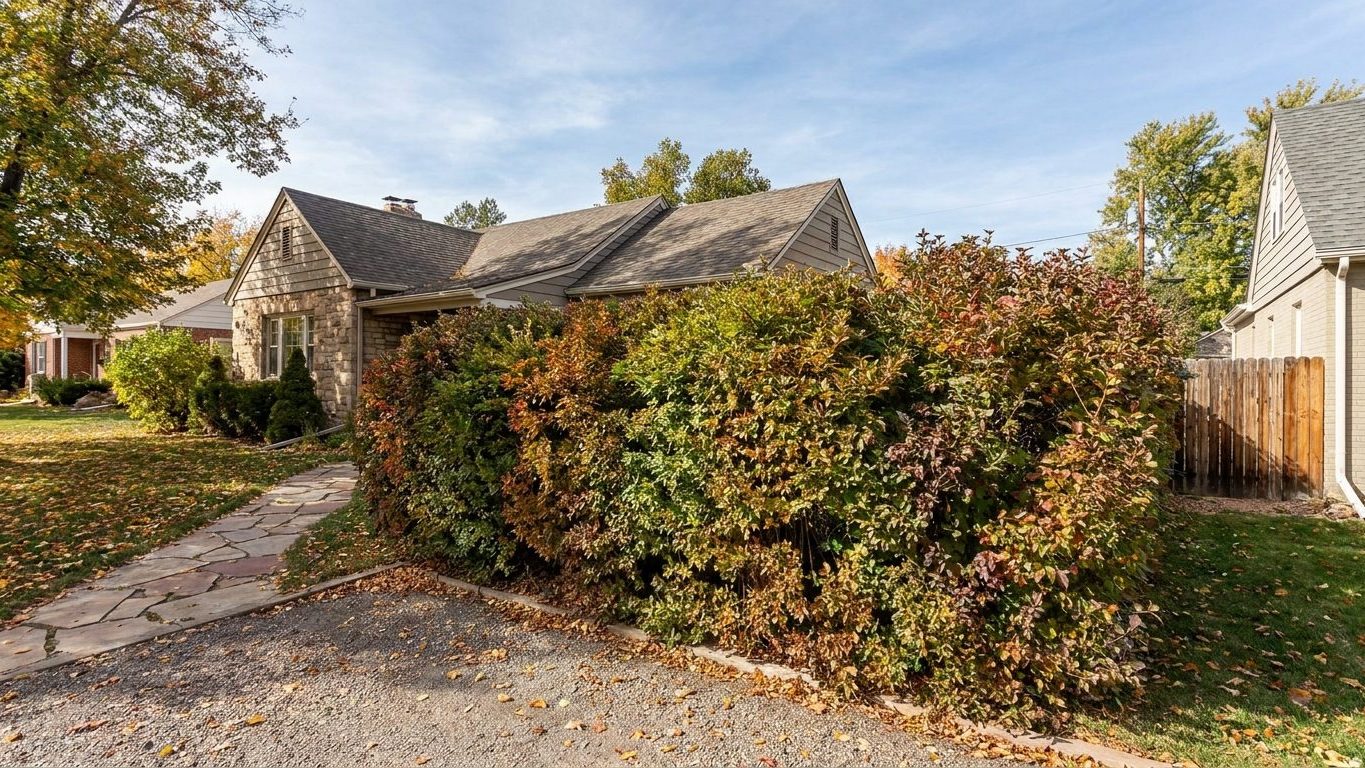

Hawaii has no statewide hedge height limit. There is no 6-foot cap and no 8-foot cap, and no number set in Honolulu that applies in Hilo. If your hedge height is regulated at all, the rule sits in your county’s ordinance, and the one limit that tends to apply everywhere is the clear-view rule at corners and driveways. Any page that gives you a single figure for “Hawaii” is guessing. Here is how to find the number that applies to your lot.
There is no Hawaii hedge height law
Nobody in the state legislature wrote a hedge statute, and that holds for every state in the country, not just this one. Height limits for fences, walls and plantings come from local zoning, which means the answer changes when you cross a jurisdiction line. In Hawaii, local government runs through the counties (Honolulu, Hawaii, Maui and Kauai), so what other states call a “municipal code” is mostly a county code here. That is the document you need.
This page does not quote a county’s limit, because none has been verified here. Naming one figure would be the exact mistake the commercial roundups make, since a number that is true on one island’s zoning map says nothing about the next. The same pattern shows up in the rest of this series, including How High Can a Hedge Be in Texas? What the Law Actually Says and How High Can a Hedge Be in Oklahoma? What the Law Actually Says. For the broader picture, start at Hedges.
A hedge is often not a fence in the code
Many ordinances define a fence as a structure, built of wood, metal, masonry or similar material, and give it a height limit. A living hedge may be handled in a separate section, lumped under “landscaping” or “vegetation,” or not mentioned at all. If the code is silent, the fence limit does not automatically carry over, though you should not assume that without reading the definitions. Check which word your code uses before you decide what applies to you.
The one rule that nearly always applies
The sight triangle is the near-universal exception. At a street corner or where a driveway meets a road, nothing may block a driver’s view of oncoming traffic or pedestrians. The permitted height inside that zone is usually far lower than the general fence height, and it can apply even where the code has no other rule about plants. A hedge that is perfectly legal along your back fence can be a violation 15 feet from the corner.
How to find the rule that actually applies to you
Most American local codes are published online by one of three companies, and your county almost certainly uses one of them. Search for your county’s name plus “code of ordinances” and you will land on one of these.
| Publisher | Web address |
|---|---|
| Municode | library.municode.com |
| American Legal Publishing | codelibrary.amlegal.com |
| eCode360 | ecode360.com |
Where to look inside the code
The rule lives in the zoning chapter. Look for headings such as “fences,” “walls,” “accessory structures,” “landscaping” or “general development standards.” Then use the site’s search box with several words, not just one: fence, wall, hedge, shrub, vegetation, visibility, sight distance. If “hedge” returns nothing but “fence” returns a section, read that section’s definitions. They will tell you whether plants count.
Two details matter once you find the section. The height limit often differs between the front yard and the side or rear yard, and corner lots usually get their own treatment. Write down the section number and the date of the code version you are reading. Codes are amended, and a page you printed three years ago may be out of date.
Call the department
An online code can be dense, and a phone call settles ambiguity. Contact your county’s planning or zoning department (the name varies by county, and some counties fold it into a permitting office). Have your parcel’s Tax Map Key ready, since that is how Hawaii identifies lots, and ask four things:
- What zoning district is my lot in?
- Does the code regulate living hedges, or only fences and walls?
- Is there a height limit for the front, side and rear yards?
- Where is the sight-triangle rule, and does my lot fall inside one?
Ask for the code section number in the answer, and follow up by email if the reply matters. A verbal “you’re fine” from a counter clerk is weak protection if a neighbor later files a complaint.
One more layer sits outside the government. If you live in a planned community or a condo association, private covenants can set height limits stricter than any county code, and they are enforced by the association, not the county. Pull your declaration and bylaws along with the ordinance.
The branches that cross the line
Height is only half of most hedge disputes. The other half is growth that crosses the boundary, and here the law comes from court decisions, not from a clean statute. As a general principle across much of the country, a neighbor may cut back branches and roots that reach onto their side, up to the property line and no further, at their own expense. They may not go beyond that, and they may not kill the plant. That is a general principle, not a statement of Hawaii law, and it varies from state to state. For your situation, a local attorney is the right source.
The practical consequences are easy to see. Trimming to the line is a very different act from trimming a hedge down to a stump to “fix” an overhang. A neighbor who cuts aggressively, or who steps onto your land to do it without permission, can be on the wrong side of a damages claim even if they started with a legitimate complaint. Hedges are also easy to ruin: cutting away one side of a dense shrub can leave it lopsided, bare or dead.
A hedge planted exactly on the boundary raises its own question. In some places, a plant on the line can be treated as belonging to both owners, which affects who may remove it. Whether that holds in your case is a legal question, not a gardening one.
Before anyone picks up a saw, the order that tends to work is simple:
- Photograph the growth and the property line, with the date.
- Talk to the neighbor, then follow up in writing.
- Offer to split the cost of a trim, or to do it yourself, if the plant is yours.
- Consider community mediation if talking stalls. Many areas offer it, and your county can point you to it.
- Bring in a lawyer if the plant is damaged, the property line is disputed, or someone is threatening removal.
Nothing here is legal advice. A boundary question needs a survey, and a dispute needs someone licensed in Hawaii.
What to check before you plant
The cheapest time to get a hedge right is before the first plant goes in. Work through this short list, in this order:
- The county code. Find the zoning section, check the definitions, and confirm whether hedges are regulated separately from fences.
- The sight triangle. If your lot is on a corner or your driveway meets a street, mark that zone and keep the planting lower or farther back.
- Private covenants. Read your HOA or condo documents for height or species rules.
- Utilities. Look up before you plant, and call 811 before you dig. Overhead lines and buried service lines both limit where tall plants belong.
- Setback from the line. Leave room so mature growth stays on your side, which also makes the trimming dispute above far less likely.
Plan around the mature size listed on the plant tag, not the nursery pot. Plants grow quickly in Hawaii’s warm climate, so a hedge that starts well under any limit can pass it faster than you expect. The University of Hawaii’s cooperative extension offices can help you match a species to your site, and the county can tell you whether any plant-specific rules apply.
Keep a folder with the code section, the date you read it, the name of anyone you spoke with at the county, and photos of the hedge when you planted it. If a complaint ever arrives, that folder turns an argument into a conversation.
Common questions
Is there a maximum hedge height in Hawaii?
Not at the state level. Any limit comes from your county’s ordinance, so the number depends on where your lot is. Some codes set none for living hedges at all.
Does the fence height limit apply to my hedge?
Maybe, maybe not. Many codes regulate fences as structures and treat plants separately. Read the definition of “fence” in your zoning chapter, then confirm with the county planning or zoning department.
Can a hedge be too tall at a corner even if it is legal elsewhere on my lot?
Yes. Sight-triangle rules cover corners and driveways, and the allowed height there is usually far lower than the general limit. It is the rule most likely to catch an otherwise compliant hedge.
Can my neighbor trim my hedge if it crosses the property line?
As a general principle in much of the country, a neighbor may trim growth up to the boundary at their own expense but may not destroy the plant. That comes from case law and varies, so check with a Hawaii attorney before acting. Also remember that codes change, so a hedge that complied when you planted it deserves a fresh look at the current version every few years.