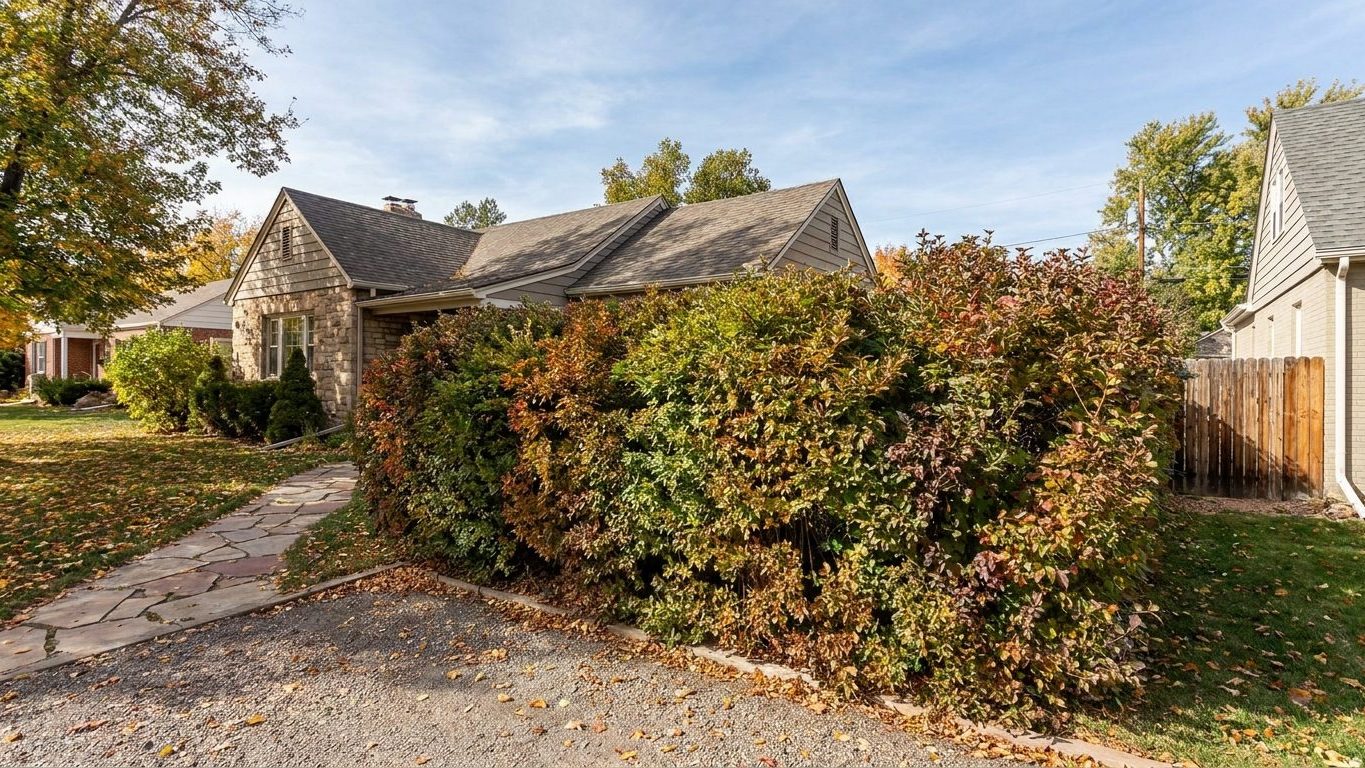

Nevada has no statewide hedge height limit. None. Whether your privet, juniper or oleander row is legal depends on the city or county where the property sits, and sometimes on a homeowners association on top of that. Anyone quoting a single Nevada number is guessing. What follows covers where the real rule lives, how to pull it up in about ten minutes, and which two limits apply almost everywhere: the sight triangle and the property line.
There is no Nevada hedge height law
Zoning power in Nevada sits with cities and counties, and rules about fences, walls and plantings fall under it. Las Vegas, Henderson, Reno, Sparks and Carson City each write their own, and so do the county governments that cover unincorporated land in places like Clark and Washoe counties. The same goes for the smaller towns scattered along the state’s highways. No office in Carson City publishes a master number you can check your hedge against, and the same is true in every other state. The Arizona hedge page and the Tennessee hedge page in this series start from the same fact.
Why a single “Nevada” figure is always wrong
Plenty of websites rank for this search by printing one height and calling it the state limit. What they have done is take one town’s ordinance and stretch it over a state that runs from dense Las Vegas Valley subdivisions to ranch country near the Idaho line. A figure like that tells you nothing about your lot. This page names no height as Nevada’s law, and it names no city’s figure either, because none has been verified and sourced here yet. A number without a source is worse than no number.
A hedge is often not a fence in the code
Many ordinances regulate fences as structures, with permits, setbacks and maximum heights. Living hedges may be handled in a separate section, in a landscaping chapter, or not at all. If your code defines “fence” as a structure made of wood, masonry or metal, a row of Texas privet may fall outside that limit entirely. Some codes go the other way and count any “fence, wall or hedge” together, so the same cap applies to all three. Do not assume either reading. Read the exact words the code uses.
The one rule that shows up nearly everywhere
At a street corner or the end of a driveway, nothing may block a driver’s view of oncoming traffic or pedestrians. Codes call it a sight triangle, a vision clearance area or something close to that. The height allowed inside that zone is usually far lower than the general fence height, and it often applies even where the code says nothing else about hedges. A tall hedge that is perfectly legal along your side yard can be a violation at the corner of the same lot.
How to find the rule that actually applies to you
Finding your rule takes three steps: work out which government covers your address, read its code, then confirm with a person. It is more reliable than any summary page, including this one, because codes get amended and a summary goes stale the day it is written.
Step one: confirm who governs your address
Your mailing address can mislead you. A street address with a big-city name on the envelope can sit in an unincorporated area run by the county instead. Check your property tax bill or the county assessor’s online parcel map, which show the jurisdiction. If the parcel lies inside city limits, the city code applies. If not, look to the county code.
Step two: open the municipal code
Most American cities publish their codes online through one of three companies. Search for your city or county name on each until it turns up.
| Publisher | Where to look |
|---|---|
| Municode | library.municode.com |
| American Legal Publishing | codelibrary.amlegal.com |
| eCode360 | ecode360.com |
Once you are in, head for the zoning chapter (sometimes called the development code or land use code). The rule you want usually sits under “fences,” “walls,” “accessory structures” or “landscaping.” Use the search box with several words in turn: fence, hedge, vegetation, shrub, sight triangle, visibility. Each can lead to a different section, and the hedge rule may be filed under a heading you would not guess.
Step three: call the department
Codes are written in legal language, and a definition buried in chapter one can change how chapter nine reads. Call the planning or zoning division, which some cities place inside a community development department. The building department can also point you to the right person. Code enforcement is another option, and its staff handle neighbor complaints about overgrown plantings every week. Ask three things:
- Does the code treat a living hedge as a fence, or separately?
- What height limit applies in my zoning district, front yard versus side and back?
- Where exactly is the sight triangle measured on my corner or driveway?
Ask for the answer by email, or at least write down the date and the name of the person you spoke with. If a neighbor complains later, that note counts for something. For a broader look at how this plays out across states, the hedges hub collects the same kind of state-by-state guidance, and the Oregon page is a useful comparison for how a neighboring state handles it.
The branches that cross the line
Height is only half of the neighbor question. The other half is what happens when a hedge grows past the boundary. This is not a municipal ordinance matter, and it is not something this page can declare as Nevada’s rule. What follows is the general principle used in most states, which comes from court decisions rather than statute and varies from place to place.
The general principle
In most states, a property owner may cut back growth that crosses onto their land, up to the boundary and no further. The cost falls on the person doing the cutting, not on the neighbor who owns the plant. The limit matters: you may trim what hangs over your side, but you may not kill or seriously damage the plant. Cutting so aggressively that a hedge dies can turn you from the aggrieved party into the defendant.
Roots follow similar logic in many places, though courts treat them with more caution because digging out roots can destabilize a tree or shrub. Two practical limits come with the trimming right. You generally cannot step onto the neighbor’s land to do it without permission, and the cut has to stay on your side of the line. A boundary that is only approximate, say a fence that was never surveyed, is the most common source of trouble.
What to do before picking up the loppers
Start with a conversation. A neighbor who knows a branch is hanging over your roof will often trim it in a weekend, and one friendly talk costs nothing. If you plan to cut anyway, take dated photos first, so the plant’s condition before the cut is on record. Check where the line really is, using a survey or the plat that came with your closing papers rather than a fence line or a guess.
If talking fails, or the hedge is damaging a wall, a drain or a roof, the next step is a lawyer licensed in Nevada, not an internet forum. Whether you have a nuisance claim, whether a trimming right survives a particular fact pattern, and who pays for damage are questions for someone who can read the actual case law and your deed. A city code enforcement office can address a height or sight-line violation, but it will not usually referee a dispute over overhanging branches between two private owners.
What to check before you plant
The cheapest time to get a hedge right is before the shrubs go in the ground. Pulling out a row of mature plants because a rule surfaced after the fact costs far more than a phone call. A short checklist covers most of the risk:
- The city or county rule for hedges, fences and visibility at corners and driveways, confirmed in writing.
- Any HOA covenants (CC&Rs) and architectural review requirements, which can be stricter than the city and are enforced separately.
- Utility easements along rear and side lines, where the utility can remove plantings without compensation.
- The true property line, from a survey or plat.
- Any vegetation or defensible space rules, if the lot sits in a wildfire-prone area.
Before you dig a single hole, call 811. The free service marks buried gas, power, water and communication lines, and a hedge row runs close to many of them because it follows the lot edges. Do this a few days ahead, since the locate request takes time to process.
Give the plant its mature size, too, not the size on the nursery tag. A shrub sold at two feet can reach many times that, and the code will measure what is growing in your yard, not what you planted. Setting a hedge back from the line by half its expected mature width keeps branches on your side and leaves room for trimming without a ladder over the fence. In a dry climate like most of Nevada, that spacing also matters for irrigation, since a hedge crowded against a wall or fence tends to dry out unevenly.
If the rule you find turns out to be tighter than you hoped, you have options short of giving up the hedge. Ask the planning department whether a variance or a permit process exists for taller screening, or choose a species that tops out below the limit. A clipped formal row and a loose informal screen follow different rules in some codes, so the way you shape the plants can matter as much as the plants themselves.
Common questions
Does Nevada have a maximum hedge height?
No. There is no state-level limit. Height is set by city or county ordinance, and many codes regulate fences while saying little or nothing about living hedges. Check your local code instead of relying on a statewide figure.
Where do I find my city’s hedge rules?
Search for your city or county on Municode, American Legal Publishing or eCode360, then look in the zoning chapter under fences, walls, accessory structures or landscaping. Follow up with the planning or zoning division to confirm how the code applies to a living hedge.
Can my neighbor trim my hedge if it grows over the fence line?
In most states a neighbor may cut back what crosses onto their property, up to the boundary, at their own expense, but may not kill the plant. That principle comes from case law and varies, so it is not a confirmed Nevada rule. For a real dispute, talk to a Nevada attorney.
Does the height limit apply to hedges near a corner or driveway?
Almost always, and the limit there is usually much lower than the general rule. Sight triangle or vision clearance rules keep corners and driveways clear for drivers. Ask your local planning department how the area is measured on your lot, because a hedge that is fine along the side yard can still violate the code near the street.