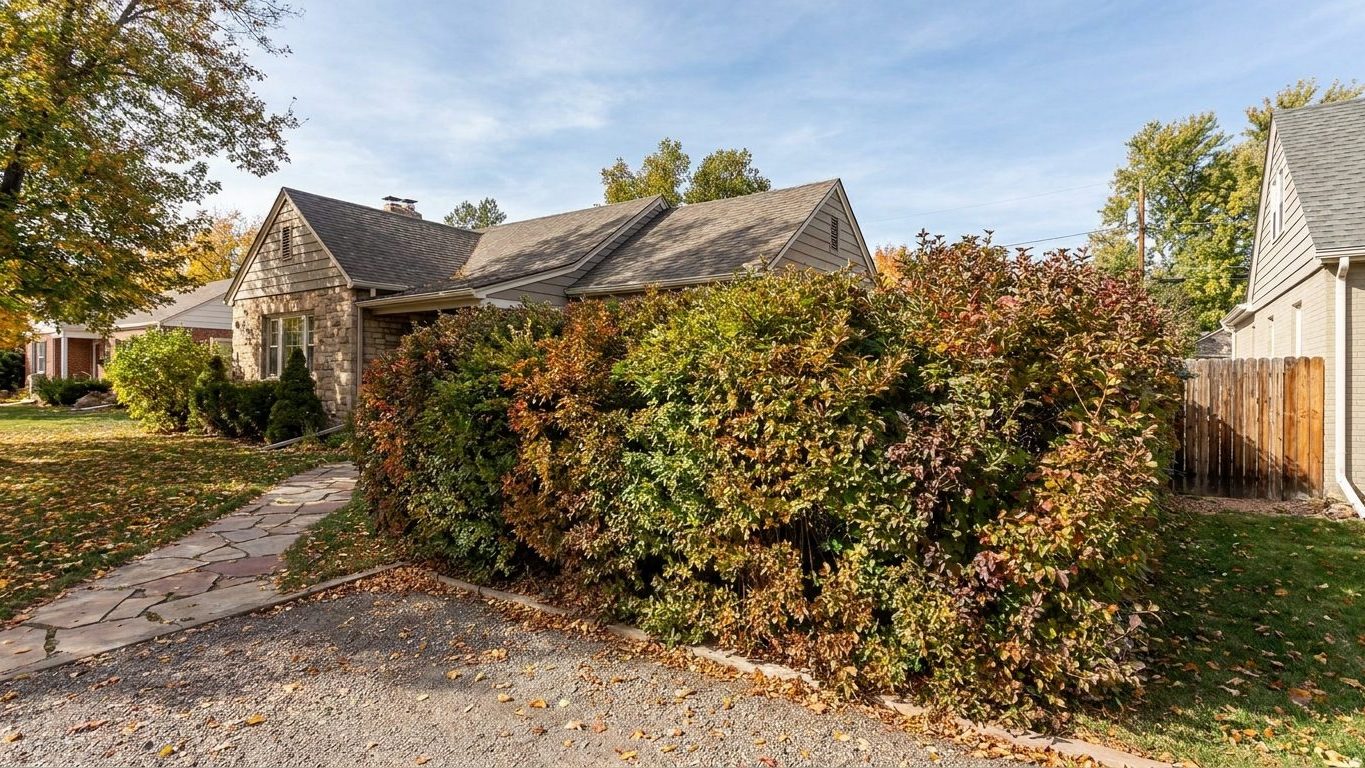

Search “hedge height law Oregon” and you’ll find pages quoting a single number as if it applied from Astoria to Ontario. It doesn’t exist. Oregon has no statewide hedge height limit at all, the answer lives in your city’s zoning code, and it can be a completely different number three miles down the road.
There is no Oregon hedge height law
This surprises people, but it shouldn’t. Oregon, like every other state, leaves fence and hedge height to local governments. There’s no chapter in the Oregon Revised Statutes that says a hedge may be four feet, six feet, or ten feet tall. The legislature never wrote that rule, because it was never the legislature’s job to write it.
Height limits on hedges and fences fall under land use and zoning, and in Oregon that authority sits with cities and counties. Portland’s zoning code can set one number for residential front yards. Bend can set another. A rural property outside city limits might answer to the county’s development code instead, which often looks nothing like a city ordinance. There is no single document that unifies these rules, because they were never meant to be unified.
This is exactly where the commercial sites that rank for this search get it wrong. They pull a number, present it as “Oregon law,” and move on. Some of them are quoting a rule from one specific city and stripping out the city’s name in the process. Others appear to be guessing. Either way, if you plant based on a number from a generic roundup article, you’re trusting a source that skipped the one step that actually matters: checking your own municipality’s code.
Why this gap exists
Height restrictions on hedges are a land use tool, and land use in the U.S. is handled locally by design. States set broad frameworks (things like how cities must plan for growth, or environmental review requirements), but the specifics of what your yard can look like, how tall your fence can be, how close you can plant to a property line, get decided at the city council or county commission level. That’s true in Oregon, and it’s true almost everywhere else. A few states have added narrow statutes on specific issues (spite fences are the classic example), but general hedge height isn’t one of them.
The practical result: two homes on opposite sides of a city boundary line can face completely different hedge rules, even though they’re neighbors in every sense except jurisdiction. One might allow a 10-foot hedge along the side yard. The other, governed by a different code twenty feet away, might cap it at 6 feet or regulate it under an entirely different section of the code, like “vision clearance” or “vegetation obstruction.”
None of this is documented city-by-city here, and it shouldn’t be guessed at. What follows is the method for finding your actual answer, which is more useful than any single invented number could be.
How to find the rule that actually applies to you
Your city or county’s municipal code is public, and in most of Oregon it’s already online. Three publishers host the vast majority of American municipal codes: Municode (library.municode.com), American Legal Publishing (codelibrary.amlegal.com), and eCode360. If you search “[your city name] municipal code,” one of these three will almost certainly come up. Bookmark it. It’s the same source your city planner would point you to.
Once you’re in the code, don’t search for “hedge” first. Search for “fence.” Most codes bury height rules for living barriers inside the fence section of the zoning chapter, or occasionally in a section called “accessory structures.” Look for chapter titles that include words like Zoning, Land Use, or Development Code, then drill into the section on fences, walls, and screening.
Watch for the wording that changes everything
Read the definitions section before you read the height numbers. Some codes define “fence” broadly enough to include living hedges. Others explicitly limit “fence” to built structures, meaning a hedge might be regulated somewhere else entirely, or not regulated for height at all outside of specific triggers like corner lots. This distinction matters more than people expect. If your code only restricts “fences” and defines that term as a constructed barrier, a hedge could technically fall outside that height cap, even if a fence of the same height wouldn’t.
Don’t assume. Read the actual definition your city uses, because two neighboring cities can use the word “fence” to mean two different things.
When to just call someone
If the code language is ambiguous, or you can’t find a fence or hedge section at all, call your city’s planning department (sometimes called community development or zoning administration). This is a five-minute phone call in most towns, and the person who answers deals with fence and hedge height questions regularly. Ask specifically: “Does the fence height limit in the zoning code apply to hedges and living vegetation, or just built structures?” That single question resolves most of the confusion homeowners run into.
For county land, outside any city’s limits, you’d instead contact the county’s planning or community development office, since county development codes are usually separate documents from any nearby city’s code.
The branches that cross the line
Height isn’t the only rule that matters, and it’s often not the one that causes actual neighbor disputes. The near-universal rule that does show up almost everywhere, city or county, Oregon or otherwise, is the sight triangle (sometimes called vision clearance or clear sight distance).
At intersections, corner lots, and driveway aprons, most municipal codes prohibit anything, hedge, fence, parked trailer, that blocks a driver’s line of sight within a defined triangular area. This limit is almost always lower than the general fence or hedge height allowed elsewhere on the same property, sometimes dramatically so. A hedge that’s perfectly legal along your side yard can still violate the code if it sits inside a corner sight triangle. This rule tends to survive in nearly every jurisdiction because it’s tied to traffic safety rather than aesthetics, so cities rarely relax it even when they loosen general fence rules.
If your hedge sits anywhere near a corner, a driveway, or an alley intersection, this is the rule to check first, before you even get to the general height limit.
What happens when a hedge crosses the property line
Separate from height, there’s the question of encroachment. If a neighbor’s hedge grows branches or roots across the boundary onto your property, the general legal principle recognized in most states is that you may trim back the overhanging growth up to the property line, at your own expense, but no further onto their side. You generally can’t cut in a way that kills the plant, and you can’t go beyond the line to “even it out.”
This comes from case law, meaning court decisions built up over time, rather than from a specific Oregon statute, and the exact contours can vary by state and even by county court interpretation. It’s a widely recognized principle, not a fixed script you can quote to a neighbor. If a disagreement escalates, especially over a hedge’s health, a boundary’s exact location, or damage caused during trimming, that’s the point where talking to a local attorney makes more sense than relying on general rules.
What to check before you plant
Before you put a hedge in the ground, especially one you’re planning to let grow tall for privacy, run through a short checklist rather than assuming the nursery’s plant tag tells you what you’re legally allowed to do.
- Confirm your city or county’s fence/hedge definition — pull up the code on Municode, American Legal Publishing, or eCode360, and read the definitions section before the height numbers.
- Check for a sight triangle rule if you’re anywhere near a corner, intersection, or driveway apron, since this limit usually overrides the general height allowance.
- Ask about setback requirements — some codes require a hedge planted above a certain height to sit a minimum distance back from the property line, separate from the height limit itself.
- Call the planning department if anything in the code is ambiguous, particularly around whether “fence” language covers living vegetation.
- Think about mature height, not planting height — a fast-growing variety that looks compliant today can outgrow the local limit in a few seasons, and you’re the one responsible for keeping it trimmed.
That last point trips up a lot of homeowners. A code doesn’t care what height you planted at; it cares what height the hedge is now. Choosing a variety based on its eventual mature size, and being honest with yourself about how often you’re willing to trim it, avoids most future disputes before they start.
Common questions
Is there a statewide hedge height limit in Oregon?
No. Oregon has no state statute setting a hedge or fence height limit. The rule is set locally, by each city’s or county’s zoning code, and it varies by jurisdiction.
Where do I find my city’s fence and hedge rules?
Search your city or county name plus “municipal code.” Most Oregon municipalities publish their code through Municode, American Legal Publishing, or eCode360. Once there, look in the zoning chapter under sections for fences, accessory structures, or vision clearance.
Does the fence height limit automatically apply to hedges too?
Not always. Some codes define “fence” to include living vegetation; others only cover constructed structures and handle hedges separately or not at all. Check your code’s definitions section, or call the planning department to confirm.
My neighbor’s hedge overhangs my yard. Can I cut it?
The general principle recognized in most states allows you to trim overhanging branches back to the property line, at your own expense, without extending onto the neighbor’s side or killing the plant. This comes from case law rather than a specific statute, so if there’s a real dispute over a boundary or the hedge’s health, a local attorney is the right next step.