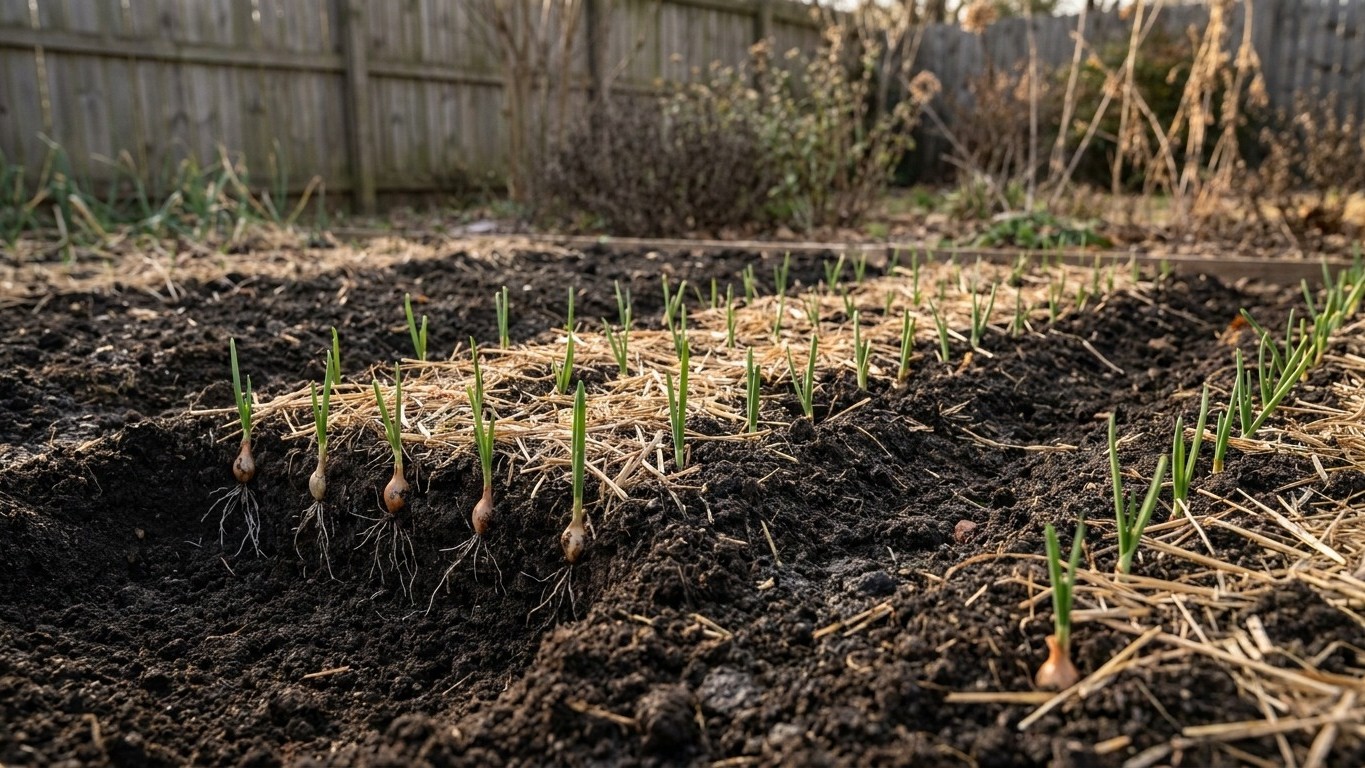

Voles, mice and wireworms go after garlic in the ground through fall and winter. Leek moth larvae, thrips and bulb nematodes take over in spring and summer. Most Vermont damage lands in two windows: the weeks right after planting, and the stretch from shoot emergence to harvest the following summer. Both windows hang on one date, the first fall frost, which at Burlington falls between October 3 and October 13.
The short answer for Vermont
That October 3 to October 13 range comes from the NOAA NCEI 1991-2020 Climate Normals, specifically the 32F freeze probabilities (the 30-70% band) at the Burlington station, USW00014742. It is a midpoint, not a safe date. In one year out of two, the first frost arrives later than that. Burlington also sits on Lake Champlain, the mildest corner of the state, so the Green Mountains and the Northeast Kingdom run substantially shorter.
Why does a frost date matter for pests? Garlic goes in the ground around that time and stays there until the following summer, so one planting meets a relay of different feeders. Soil dwellers and rodents come first. Egg-laying moths and flies arrive when the leaves are up. Thrips show up in warm, dry spells. Nematodes ride in on infested seed and work quietly the whole time. Shift the planting date and you shift which pests meet the crop at its weakest stage.
| Pest | When it is active | What it does |
|---|---|---|
| Voles, mice, chipmunks, squirrels | Fall through snowmelt | Dig up or gnaw cloves, tunnel under mulch |
| Wireworms | Fall and spring, in the soil | Bore into cloves and bulbs, mostly in beds converted from sod |
| Seedcorn and onion maggots | Cool, wet spring weather | Rot cloves and young bulbs from below |
| Leek moth | Spring into summer | Larvae mine leaves, then move to scapes and bulbs |
| Allium leafminer | Spring, where confirmed | Maggots tunnel leaves and bulbs; rows of small punctures on foliage |
| Thrips | Summer, especially dry spells | Silvery streaks, leaf tips dying back |
| Bulb and stem nematode | All season, from infested seed | Swollen, twisted stems and soft, spongy bulbs |
Working it out for your own garden
A state is not one climate, so treat the Burlington figure as a starting point you adjust. Elevation, a big lake and the coast of the nearest large water body can each move these dates by two weeks either way. Take the Burlington range of October 3 to October 13 and subtract two weeks: a colder garden might see its midpoint frost between September 19 and September 29. Add two weeks and a lake-moderated spot lands between October 17 and October 27. Those are shifted versions of the Burlington figures, not published values for any particular town.
Start from your own frost midpoint
Find the typical first freeze where you actually garden. Your own records are best. Neighbors who have grown vegetables for years come next, and county-level help from Extension comes after that (more on that at the end). Then remember what a midpoint means. If your date is October 8, half of all years bring the first frost after October 8. A pest plan built on a single date fails in exactly those years, which is why the windows below are described by what the garden looks like, not by a calendar square.
Lay the pest windows on top
Work forward from planting. The first window runs from the day the cloves go in until the ground freezes hard. Wireworms and maggots are already in the soil, and rodents are looking for easy calories before winter. The second window opens at snowmelt, when shoots poke through and mice and voles that spent the winter under snow cover are still hungry. The third opens as leaves lengthen in spring and leek moth adults start laying eggs on them. The fourth is early to mid summer, when scapes curl and thrips build up in dry weather. Harvest closes it, and curing garlic in the shade keeps it away from late egg-layers.
Leek moth timing follows temperature, not the calendar, so a cold spring pushes it back a week or two, and a high-elevation garden may see it later than a valley one. I can’t give exact flight dates here because they are not published in the data behind this page. The practical fix is to scout: look at the leaves every few days once they are up, and cover the bed with floating row cover before the first window-pane feeding marks appear. The row cover only works if it is sealed at the edges and the bed has not been planted next to last year’s alliums.
For the planting side of this arithmetic, see When to Plant Garlic in Vermont: Counting Back From the First Frost. The pest calendar slides along with whatever date you land on there.
What changes across Vermont
The Champlain Valley runs warmest and longest. Lake Champlain holds heat into fall, so frost comes later, soil stays active, and wireworms and maggots keep feeding well past the date you would expect in the hills. The same mild conditions give leek moth an easier time, because spring warms sooner and gives the larvae more time to feed. If you garden near Burlington, pest pressure tends to start earlier in spring and end later in fall than elsewhere in the state.
The Green Mountains flip that. Higher gardens see an earlier first frost and a later spring thaw, so the whole calendar compresses. Snow arrives earlier and often lies deeper, which is good insulation for garlic and for the voles tunneling beneath it. A thick, early snowpack is a cozy winter for rodents, and gnawed cloves often don’t show up until snowmelt. Spring pests such as leek moth and maggots tend to start later, so row cover goes on later too.
The Northeast Kingdom is the shortest and coldest of the three. The first frost lands substantially earlier than Burlington’s, and the hard freeze that follows can come while a late-planted clove has barely rooted. Deep cold slows insects but not rodents, and a late thaw there can leave the garlic exposed to a short, intense burst of spring activity. Gardens in lower valleys along the Connecticut River sit between these extremes, so use your own frost records rather than assuming a region’s average.
Gardeners comparing notes with growers farther south should be careful. A Virginia gardener counts back from a much later frost, as laid out in When to Plant Garlic in Virginia: Counting Back From the First Frost, and picks very different cultivars, covered in Garlic Varieties That Suit Virginia Winters. Their pest calendar does not carry over to a Vermont hillside.
The mistakes this climate punishes
Vermont’s winters are long, cold and often snowy, so the costly errors are about timing and cover, not about mild-winter disease. Four stand out.
Planting too late or too shallow to root
A clove needs time to root before the ground locks up. Plant it after the soil has gone cold and the roots never get a grip, so frost heave pushes it toward the surface. A heaved clove is easy prey for squirrels, chipmunks and crows, and it dies of cold even if nothing eats it. Planting too shallow gives the same result in a milder way. If you are weighing how deep and when, the frost midpoint is half the answer, and the fact that frost is later in one year out of two is the other half.
Mulching before the ground cools
Straw laid down while the soil is still warm is a cozy nest for mice and voles. Wait until the ground has chilled, then mulch, and keep the layer loose and not piled against the stems. Rodents move in fastest when a thick mulch goes down early and nothing disturbs it until spring. Pulling it back in April instead of May exposes tender shoots to late freezes, so it is a balance, but an early mulch is the bigger danger.
Planting next to old alliums or saving infested seed
Leek moth can overwinter in leftover plant debris, and bulb and stem nematodes persist in soil and travel in infested cloves. Replanting garlic where onions, leeks or garlic grew the previous year, or saving cloves from a bulb that looked soft and swollen, hands both problems a head start. Clear allium debris in fall, rotate to a different bed, and start from clean seed garlic when in doubt.
Choosing varieties without regard to winter
A variety that thrives elsewhere may sprout early, rest poorly or fail to size up in Vermont. The right one for your elevation matters as much as any spray. See Garlic Varieties That Suit Vermont Winters for choices that cope with the cold, and the main guide, Growing Garlic in Vermont, for the rest of the season.
Checking this against your county
County-level pest reports and frost figures are not in the data behind this page, and they matter, especially for newer arrivals such as allium leafminer, whose confirmed range keeps shifting. University of Vermont Extension is the place to ask whether a pest has been reported near you, and what the current guidance is for your region and elevation.
Common questions
Do deer eat garlic in Vermont?
Deer generally leave garlic alone because of the strong smell. The animals that cause trouble are small ones: voles, mice, chipmunks and squirrels, plus crows pulling up shallow cloves.
What is the worst garlic pest in Vermont?
It varies by garden. Leek moth is the one most Vermont growers watch for in spring. Bulb and stem nematodes are the hardest to undo, because they persist in soil and infested seed can carry them in.
When should I put row cover on garlic?
Put it on once leaves are up in spring and before leek moth adults start laying eggs, and seal the edges. The date depends on temperature and elevation, so scout the leaves every few days instead of relying on a calendar day.
Is the October 3 to October 13 frost date safe for planting?
No. It is the NOAA NCEI 1991-2020 midpoint for Burlington, so in one year out of two the first frost falls later. Gardens in the Green Mountains and Northeast Kingdom usually see frost sooner, so use your own records and check with Extension for your county.